FW
France declares war on ultra-fast fashion with new green law, will reshape global supply chains

France has become the first major economy to legislate specifically against the ultra-fast fashion business model, a watershed moment for the global apparel industry. By approving landmark legislation aimed at curbing the environmental impact of high-volume, low-cost fashion imports, the French Parliament has created a regulatory template that could reshape apparel sourcing, pricing and retail strategies across Europe.
More than an environmental measure, the legislation is a structural intervention into one of the world's fastest-growing retail models. Companies that built their success on thousands of daily product launches, ultra-low prices and cross-border direct shipping now face financial penalties, advertising restrictions and tighter operational scrutiny. If replicated elsewhere in Europe, the French model could alter the economics of ultra-fast fashion.
Targeting the volume model
Unlike conventional sustainability regulations that apply broadly across the apparel sector, France's legislation introduces a distinct category for ‘ultra-fast fashion’. Companies will be assessed primarily on two characteristics: the sheer volume of new products introduced daily and the pricing structure that encourages rapid consumption over repair.
The framework is widely seen as targeting Asian digital marketplaces including Shein, Temu and AliExpress, whose business models depend on constant product refreshes and direct-to-consumer cross-border shipments. Traditional European retailers such as Zara and Kiabi are largely insulated under the current framework, reflecting the government's intention to curb the most aggressive volume-driven retail models rather than the broader fashion industry. The move also signals an effort to protect domestic retailers from low-cost imports while aligning with France's wider environmental objectives.
Cost of compliance
The legislation introduces a phased environmental surcharge on qualifying garments that will increase significantly over the next four years.
Table: Rising financial toll of ultra-fast surcharges
|
Year of implementation |
Environmental penalty per garment |
Maximum penalty (% of pre-tax price) |
|
2026 |
€0.25 to €6.00 |
50% |
|
2028 |
€10.00 |
50% |
|
2030 |
€20.00 |
50% |
For retailers operating on razor-thin margins, the implications are substantial. A €5 garment could immediately incur a surcharge equal to half its pre-tax value under the penalty cap. By 2030, a €20 item could attract an additional €10 levy, severely eroding the price advantage that has fuelled ultra-fast fashion's growth. Beyond product levies, the legislation also prohibits advertising by designated ultra-fast fashion companies across traditional media and influencer marketing channels. E-commerce platforms will also be required to display messages encouraging garment repair, reuse and reduced consumption, reinforcing behavioural change alongside financial disincentives.
Supply chains under pressure
The law is expected to reverberate well beyond France's borders. Ultra-fast fashion retailers have relied on direct air shipments of millions of small parcels from manufacturing centres in China to European consumers. The new framework, combined with additional packaging taxes on lightweight imports, threatens to increase logistics costs while undermining the efficiency of cross-border fulfilment networks. As a result, companies may increase efforts to regionalize distribution, diversify sourcing and establish European warehousing operations.
For apparel-producing economies such as Bangladesh, the implications are equally significant. Manufacturers heavily dependent on high-volume, low-cost production could face order consolidation unless they move toward higher-quality, longer-lasting products that better align with Europe's evolving sustainability requirements.
Conversely, European value retailers, local apparel brands and circular fashion platforms such as second-hand marketplaces stand to benefit as consumers shift spending away from ultra-low-cost imports.
Industry divided
Despite broad political support, the legislation has exposed sharp divisions within the retail industry. French apparel organizations welcomed the bill as a necessary step toward addressing environmental costs that have long gone unpriced. However, several major trade bodies, including Alliance du Commerce, Fevad and the Federation of Commerce and Distribution have questioned whether the law will achieve its intended objective.
Industry groups argue that large global platforms possess the technological sophistication to restructure logistics networks, split shipments or adapt product listings to remain below regulatory thresholds, while smaller domestic retailers could face disproportionate compliance burdens.
Environmental organizations have expressed different concerns. Campaign groups argue that exempting established international retailers weakens the legislation's environmental credibility, pointing out that global brands including Zara, H&M, Primark and Uniqlo also depend on high-volume production models.
European legal test
Before the legislation reaches full implementation, it must also face European regulatory scrutiny. The European Commission has previously questioned whether certain provisions including advertising restrictions and targeted import penalties are compatible with EU rules governing digital commerce and the single market.
French authorities maintain that the measures are comparable to existing public-health restrictions applied to products such as tobacco and alcohol. However, the legislation's practical impact will ultimately depend on implementing decrees that define precisely how companies will be classified and how environmental performance will be measured. Much will hinge on France's environmental labelling methodology, which incorporates both production volumes and product durability into sustainability assessments.
Strategic pivot for global retailers
The timing is particularly significant for Shein, which has been actively expanding its European footprint. The company has invested in regional logistics hubs, local sourcing partnerships and temporary physical stores across France as it attempts to reduce dependence on cross-border fulfilment. Those investments may help cushion some operational disruptions, but they are unlikely to eliminate the financial impact of escalating environmental surcharges. Whether localized operations can preserve the company's ultra-low-price proposition will become clearer as implementation rules take shape.
Europe's green retail agenda
France's initiative also aligns with broader European reforms reshaping the textile industry. From July 2026, the EU's Ecodesign for Sustainable Products Regulation prohibits large companies from destroying unsold clothing, footwear and accessories. At the same time, Extended Producer Responsibility (EPR) schemes will require apparel companies to finance textile collection, recycling and waste management based on product durability and recyclability.
Together, these measures create a powerful regulatory framework that transforms textile waste from an environmental concern into a direct commercial cost. For the global apparel industry, France's legislation marks more than a national policy experiment. It signals that governments are willing to regulate fashion not only through sustainability targets but also by directly challenging the commercial logic of ultra-fast consumption. As other European markets weigh similar measures, the industry may be entering a new era where speed and low prices are no longer sufficient competitive advantages.
Primark expands US footprint with dual mid-year openings
Primark is accelerating its American growth trajectory, announcing the opening of two additional locations this July. The retailer will debut its seventh Texas storefront at Houston’s Willowbrook Mall on July 16, followed by its inaugural entry into the Indiana market at Indianapolis’s Castleton Square Mall on July 23. These upcoming launches, each spanning nearly 30,000 sq ft of retail space, bring the company’s total US store count to 44. This rapid roll-out follows the retailer's recent high-profile launch of a 54,000-sq-ft flagship in New York City’s Herald Square, signaling a move toward both high-density urban flagships and strategic regional expansion.
Value-driven retail in a competitive landscape
The retailer's US expansion is built on a ‘store-led’ model that prioritizes physical experiences to drive brand awareness in a highly competitive market. By maintaining price-sensitive offerings - such as denim starting at $12 and T-shirts at $5 - Primark is positioning itself as a primary destination for inflation-conscious consumers seeking fashion without compromise. Primark’s offering of quality fashion at exceptional value is more important than ever to today’s consumers, noted Kevin Tulip, President, Primark US. While the company utilizes digital platforms to build engagement and provide product visibility, it intentionally keeps its US sites non-transactional, compelling shoppers to visit physical locations to finalize purchases. This disciplined approach to bricks-and-mortar retail has been instrumental in growing the brand's presence across 13 states since its US debut in 2015.
Primark is an international value-fashion retailer founded in Ireland in 1969. It operates over 480 stores across 19 countries, offering apparel, beauty, and homeware. The company is currently scaling its U.S. presence, aiming for 60 stores by the end of 2026, supported by strong global profitability and sustained brand momentum.
Taiwan textile sector integrates circularity through material engineering
Taiwan’s textile manufacturers are aggressively shifting from basic recycled content toward sophisticated, circular material systems to address tightening global sustainability regulations. By emphasizing mono-material designs and textile-to-textile recycling, the nation’s mills are attempting to solve the industry’s long-standing challenge of complex, multi-fiber garment disposal. This technical evolution is best exemplified by Everest Textile’s latest breakthrough: a fully polyester-based, three-layer material that integrates 100 per cent Global Recycled Standard (GRS) polyester with an eco-friendly rTPEE membrane. Having recently secured the Outstanding Innovation Technology Award at the 2026 Taiwan Circular Economy Awards, this innovation demonstrates how manufacturers are reducing greenhouse gas emissions by up to 70 per cent compared to traditional petroleum-based synthetic alternatives.
Industrial cross-pollination and resource efficiency
The industry’s strategy extends beyond mere fabric production, favoring interdisciplinary material migration to maximize resource efficiency. Leading firms are now upcycling textile waste into high-performance resins for the electronics sector, while simultaneously importing precision optical film expertise to create solvent-free, functional membranes for activewear. We are moving beyond simple performance-led innovation toward responsible functionality, explains a lead researcher at the Taiwan Textile Federation. By converting agricultural byproducts - such as oyster shells and fish scales - into functional yarns, suppliers are curbing dependence on virgin synthetics. These developments align with the European Union’s upcoming Digital Product Passport (DPP) requirements, positioning Taiwanese suppliers as essential partners for global brands struggling to meet mandatory traceability and carbon-accountability standards.
Taiwan’s textile sector is a highly specialized ecosystem focused on high-performance functional textiles, polymer engineering, and sustainable manufacturing. Key markets include high-end sportswear, outdoor apparel, and industrial safety sectors. Growth plans prioritize circularity, mono-material engineering, and digital supply chain integration, supported by a long-standing foundation of advanced technical R&D.
Thailand T&A exports remain resilient amid shifting regional demand
Thailand's textile and apparel (T&A) sector is navigating a period of structural recalibration, with recent data revealing a nuanced divergence between upstream production and finished apparel. While aggregate export values for the sector reached US$1.84 billion in Q1, FY26 – a marginal 1.1 per cent Y-o-Y increase.
Internal performance metrics highlight contrasting fortunes.
Textile exports, specifically fiber and fabric shipments,recorded a growth of 6.37 per cent to US$1.139 billion, underscoring Thailand's enduring strength as a reliable supplier of high-quality intermediary inputs. Conversely, the finished garment segment experienced a contraction of 6.43 per cent, falling to US$701 million as global apparel demand remained suppressed by persistent inflationary pressures in key Western markets.
Strategic integration into regional manufacturing
The industry's current trajectory reflects a deliberate transition toward high-value, processed textile inputs rather than reliance on basic raw material volume. Thai manufacturers are increasingly optimizing their role as a critical downstream hub for regional supply chains, a shift validated by the rising share of imported fabrics intended for value-added conversion. Their ability to provide consistent craftsmanship and compliance-ready manufacturing helps keep them competitive despite the global slowdown in mass-market fashion, notes a regional industry analyst. This stability is boosted by Thailand's mature infrastructure and its ability to offer smaller, flexible development cycles that larger, low-cost manufacturing hubs struggle to accommodate. As the country looks toward H2, FY26, the focus remains on leveraging regional trade corridors and nearshoring advantages to offset softening external demand.
Eyeing long-term export stability with value-added production
The Thai textile and apparel sector is a mature, export-oriented manufacturing hub specializing in high-quality fabrics, technical textiles, and precision garment finishing. It serves major markets including the US, EU, and Japan. The industry currently prioritizes value-added production, sustainability, and regional supply chain integration to achieve long-term export stability.
H&M prioritizes margin expansion over physical scale in 2026 restructuring
Swedish retail giant H&M is signaling a definitive departure from aggressive physical expansion, opting instead for a disciplined portfolio optimization strategy that favors long-term profitability over total store count.
According to the company’s six-month report for FY26, the group operated roughly 3 per cent fewer stores in the Q2, FY26 compared to the previous year, with a net reduction of 128 locations over the past twelve months. This contraction is not indicative of corporate decline but represents a calculated effort to enhance productivity per square foot. By shuttering underperforming assets and reallocating capital toward high-potential markets and digital infrastructure, the retailer has successfully improved its operating margin to 12 per cent - a notable 160 basis point increase from the prior year.
Inventory management and digital integration
The retailer's financial performance in mid-2026 highlights the success of its ‘leaner’ operational model. Despite a 1 per cent decline in net sales in local currencies, H&M achieved significant margin gains by reducing inventory levels and curbing markdown activity. Daniel Ervér, CEO notes, while tighter inventory control occasionally hampered demand fulfillment, the long-term objective remains a more responsive, data-driven supply chain. The brand is reducing organizational complexity to move decision-making closer to the customer, states Ervér, emphasizing the integration of digital tools and AI-driven forecasting. This shift enables the company to maintain high-quality product availability while avoiding the excess stock that previously eroded retail margins. Looking toward H2 FY26, the group is intensifying investments in its digital ecosystem, ensuring that its physical and online channels function as a unified, high-efficiency network.
Accessible fashion with sustainable profitability
H&M Group is a multinational fashion retailer operating a diverse portfolio of brands, including H&M, COS, and ARKET. With a global network of over 4,000 stores, the group focuses on providing accessible fashion while transitioning toward omnichannel growth and sustainable profitability, supported by a 35-year legacy of retail innovation.
ELG emerges from bankruptcy with a narrowed focus
Formerly known as Saks Global, Exemplar Luxury Group (ELG) officially exited Chapter 11 bankruptcy, marking a significant transition for the American retail conglomerate. Formed in 2024 through the high-profile merger of Saks Fifth Avenue, Neiman Marcus, and Bergdorf Goodman, the company entered bankruptcy protection this past January under the weight of substantial debt incurred during its acquisition phase. The finalized reorganization plan has successfully reduced the company’s funded debt by approximately 75 per cent, from $3.4 billion down to roughly $1.2 billion, providing a more stable foundation for its future operations under the ownership of its senior lenders.
Streamlining footprint and inventory
As a part of its operational overhaul, the group has drastically reduced its physical footprint, shutting down a large portion of its off-price Saks Off 5th and Last Call locations to concentrate capital on its most profitable premium storefronts. ELG now operates 49 flagship locations - 15 Saks Fifth Avenue stores, 33 Neiman Marcus stores, and one Bergdorf Goodman flagship. This ‘right-sizing’ strategy is designed to prioritize full-price selling and personalized luxury experiences, aiming to mitigate the commodity-level price fatigue that previously eroded margins. The company aims to unite coveted brands with unrivaled customer experiences to drive growth for the broader luxury ecosystem, states Geoffroy van Raemdonck, CEO following the court’s approval.
Navigating a competitive retail landscape
The company now faces the critical challenge of winning back high-end consumers who migrated to competitors like Nordstrom or direct-to-consumer boutiques during its financial instability. With a growth target of 7 per cent in annual revenue through 2030, ELG intends to leverage its extensive customer data to curate personalized product assortments. However, analysts warn, success depends on more than just balance-sheet repair. Industry experts note, the organization must effectively prove its value proposition in a market where top luxury houses increasingly prioritize their own proprietary retail channels, potentially limiting the availability of exclusive inventory for traditional department store networks.
Targeting turnaround with operational efficiency
Exemplar Luxury Group (formerly Saks Global) is a multi-brand luxury retail entity managing iconic banners including Saks Fifth Avenue, Neiman Marcus, and Bergdorf Goodman. Focused on full-price, experiential retail for the affluent US market, the firm is currently executing a turnaround strategy centered on operational efficiency and sustainable growth.
Virudhunagar PM MITRA Park attracts Rs 2,192 crore investments
The PM MITRA Mega Textile Park in Virudhunagar, Tamil Nadu, has reached a significant operational milestone, securing committed investments of Rs 2,192 crore from 23 anchor investors ahead of its projected 2027 completion. Finalized through the Special Purpose Vehicle (SPV) board, this early capital influx signals a robust institutional confidence in the park's ‘plug-and-play’ infrastructure model. By consolidating the entire textile value chain - from spinning and weaving to high-end processing and garment manufacturing - the facility is engineered to mitigate the logistical inefficiencies that have traditionally hampered domestic export competitiveness.
Infrastructure as a competitive lever
Beyond land allotment, the project is rapidly advancing its utility framework to meet international sustainability standards. With nearly Rs 550 crore in infrastructure works currently under execution, the site is being equipped with a 15 MLD Zero Liquid Discharge (ZLD) common effluent treatment plant and a 20 MW solar power facility. This focus on sustainable processing is a strategic move to attract global brands that demand verified environmental compliance. The park’s design creates a frictionless environment for both MSMEs and large-scale integrated units to scale operations, notes a senior ministry official, highlighting how the proximity to the Tuticorin port will further reduce lead times for export-oriented apparel shipments.
Driving regional exports
The Virudhunagar PM MITRA Park is a flagship 1,052-acre integrated facility in Tamil Nadu designed to centralize spinning, weaving, processing, and garment production. It aims to drive regional exports, attract large-scale textile FDI, and generate 15,000 jobs. Currently under construction, it represents a key pillar of India’s 2030 textile manufacturing roadmap.
Tiruppur to boost performance with $11.5 billion knitwear exports by 2030
India’s preeminent knitwear manufacturing cluster, Tiruppur, has raised its performance trajectory by establishing an ambitious export baseline, targeting an expansion to $11.5 billion by 2030. To mitigate the historical vulnerability associated with cotton price volatility and shifting global buyer preferences, the cluster is executing a structural transition toward a balanced manufacturing mix. The updated strategy mandates that man-made fibers (MMF) and blended fabrics comprise 50 per cent of total regional garment production. This material diversification allows local manufacturers to capture higher-margin segments in the technical textile and global athleisure markets, which currently dominate international consumer demand.
Policy synchronization and supply chain interventions
The realization of this multi-billion-dollar export mandate is heavily contingent upon large-scale infrastructure deployment and central policy support. During recent bilateral stakeholder consultations, the Union Ministry of Textiles committed to accelerating the development of the 1,052-acre PM MITRA Mega Textile Park at Virudhunagar, which serves as a vital processing hub for the regional supply chain. The integration of integrated spinning, green processing, and advanced machinery modernization schemes will fundamentally enhance our cost competitiveness, noted KM Subramanian, President, Tiruppur Exporters’ Association. Key challenges, such as logistics costs and tariff uncertainties in Western markets, are being offset by the imminent implementation of new Free Trade Agreements (FTAs) alongside a dedicated state allocation of Rs 1,250 crore for industrial worker housing.
Prioritizing technical textile innovation
The Tiruppur industrial cluster is India's premier knitwear manufacturing hub, commanding nearly 60 per cent of the nation’s total knitwear export volume. Operating for over five decades, the cluster generates direct employment for more than one million personnel. Its modern operational roadmap prioritizes large-scale sustainable processing and technical textile innovation to achieve its long-term financial targets.
Scoop international re-imagines luxury retail as artisanal movement gains momentum
As Scoop International prepares to return to London’s Olympia National from July 19–21, 2026, the exhibition is reinforcing its position as a vanguard for the slow-fashion movement. Under the direction of Karen Radley, Founder and Creative Director, this edition moves decisively away from the high-volume procurement cycles that have historically dominated the trade show landscape. By curating a select cohort of international designers, Scoop is responding to a structural shift in the retail sector where buyers are increasingly prioritizing craftsmanship, ethical transparency, and narrative-driven collections over mass-market replenishment.
Strategic alignment with global consumer values
The industry-wide move toward ‘purpose-driven’ inventory reflects a significant recalibration of the consumer trade-off between price and value. Market data indicates, luxury and premium retailers are successfully mitigating the recent global slowdown in discretionary spending by de-emphasizing aggressive promotions in favor of high-value, small-batch offerings. Buyers today are not merely sourcing inventory; they are scouting for distinct stories that resonate with a more discerning, conscious clientele, notes Radley. This sentiment is supported by broader industry trends in 2026, where brands integrating traceability and sustainable material innovation are experiencing higher engagement from top-tier department stores such as Harrods and Galeries Lafayette.
Elevating material intelligence
The upcoming showcase highlights how independent brands are successfully navigating supply chain volatility. For instance, designers entering the UK market are increasingly adopting circular production models - such as utilizing bio-based textiles and artisanal heritage techniques - to ensure long-term viability. By fostering a professional environment focused on ‘real conversation’ rather than purely transactional volume, Scoop facilitates the necessary high-level connections between emerging labels and established global retailers. This approach ensures that exhibitors move beyond the risk of commoditization, securing a premium competitive advantage that aligns with the evolving demands of the 2026 retail ecosystem.
Supporting market expansion for emerging labels
Scoop International is a premier London-based fashion trade show founded in 2011. It specializes in premium womenswear, accessories, and lifestyle goods for department stores and independent retailers. The show supports market expansion for emerging labels, maintaining a robust profile as an exclusive hub for seasonal retail trends and innovation.
Click-and-Collect: Why retailers are turning pickup counters into sales machines
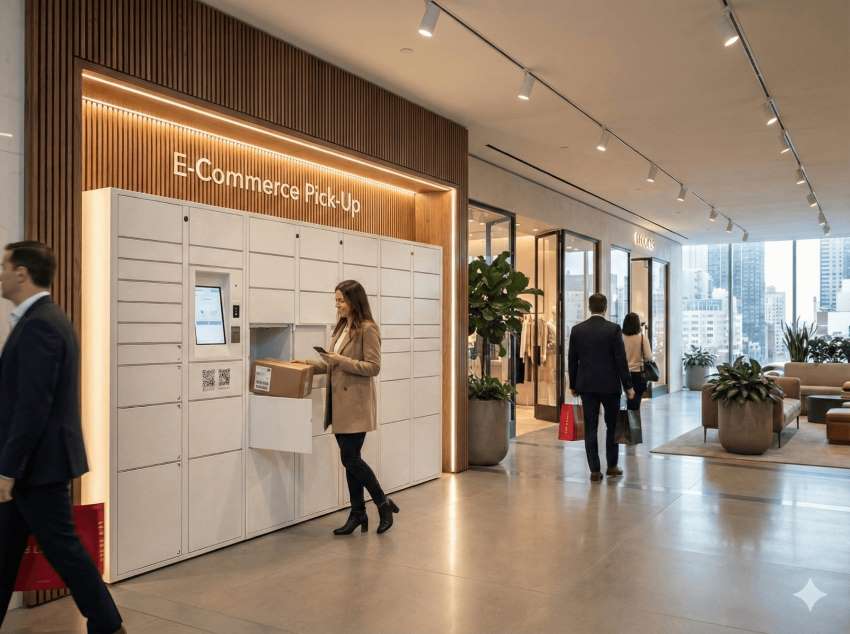
Modern retail has changed the role of the physical store. Once viewed primarily as a point of sale or inventory distribution hub, the storefront is now being redesigned as a sophisticated behavioural engine aimed at influencing purchasing decisions and maximizing profitability.
As e-commerce matures and consumers move seamlessly between online and offline channels, leading retailers are discovering that physical stores remain among their most valuable commercial assets, not because of what they sell directly, but because of how they shape consumer behaviour. What has led to this evolution is the rapid rise of click-and-collect services that are being transformed from simple fulfilment tools into strategic mechanisms for driving additional spending.
Few companies exemplify this shift better than Inditex, the parent company of Zara. The retailer continues to outperform many global apparel competitors through a combination of digital integration, supply-chain agility and carefully engineered store environments. In the first quarter of fiscal 2026, Inditex reported sales growth of 5.8 per cent to €8.7 billion while maintaining a gross margin above 61 per cent. Early second-quarter trading showed sales growth exceeding 11 per cent in constant currency, underscoring the effectiveness of its integrated online-to-offline retail strategy.
Designing the journey
The click-and-collect experience begins online, but its commercial value depends on what happens inside the store. So far, pickup counters were positioned near entrances to allow customers to retrieve purchases and leave quickly. Today's leading retailers are taking a different approach. Collection points are frequently located deeper within stores, requiring customers to navigate through key merchandise zones before reaching their order. This design philosophy reflects a change in retail thinking.
|
Feature |
Traditional model |
Behavioural commerce model |
|
Pickup Location |
Near entrance for quick exit |
Deep inside store |
|
Customer Objective |
Fast fulfilment |
Extended engagement |
|
Dominant Decision Mode |
Rational and task-oriented |
Emotional and impulse-driven |
|
Commercial Outcome |
Reduced visit time |
Increased basket size |
The objective is straightforward: increase exposure to new products and stimulate unplanned purchases. By extending the customer's path through the store, retailers create additional opportunities for visual engagement, product discovery and impulse buying. Behavioural economists often describe consumer decision-making through two systems of thinking. One is deliberate, analytical and rational; the other is fast, emotional and instinctive. Store layouts increasingly aim to shift customers from the former to the latter by surrounding them with sensory cues before they complete their intended task.
A shopper who enters solely to collect a prepaid order frequently encounters new arrivals, seasonal collections or premium merchandise during the journey. What begins as a logistical transaction can evolve into a significantly larger purchase.
The power of minimalism
Modern flagship stores are also becoming noticeably quieter and more restrained. Many retailers have removed aggressive promotional signage, discount banners and visual clutter from their premium locations. Instead, they rely on minimalist interiors, neutral colour palettes and gallery-inspired lighting to create an environment that elevates product perception. This approach serves an important commercial purpose.
In an environment filled with promotional messaging, consumers tend to enter comparison mode, actively evaluating value and searching for deals. Minimalist store design seeks to reduce those distractions and focus attention directly on the merchandise.
The result is a shopping environment where products become the primary visual stimulus. Retailers benefit from stronger full-price sell-through rates because customers spend less time evaluating competing price signals and more time engaging with the product itself. For fashion retailers in particular, where margins depend heavily on minimizing markdowns, the strategy can have a significant impact on profitability.
Stores that learn
Behind the sleek aesthetics lies an increasingly sophisticated layer of technology. Many global retailers now use RFID-enabled inventory systems that track merchandise movement throughout the store in real time. Unlike traditional inventory management tools that only capture transactions at checkout, RFID systems generate continuous data about how products move through the retail environment.
This information gives insights into customer behaviour at a granular level. Retailers can identify which product categories attract attention, which areas generate the highest engagement and which items reach fitting rooms but fail to convert into sales. The implications extend beyond inventory management.
Store layouts can be adjusted based on real-world behavioural data. Product displays, fixtures and merchandise placement can be modified rapidly to improve conversion rates, much like digital retailers optimize website layouts through continuous testing. Physical retail spaces are increasingly behaving like dynamic digital platforms, evolving in response to live consumer interaction.
Scarcity as a sales driver
Another critical element of the model is the use of scarcity. Zara's operating system is built around rapid product turnover and limited production runs. The company introduces thousands of new designs annually and replenishes stores at a pace few competitors can match.
This speed creates a sense of urgency among shoppers. Consumers understand that a product available today may not be available tomorrow. The psychological impact is significant. Traditional retail often allows customers to postpone purchases while waiting for promotions or comparing alternatives. Scarcity lessens that decision window and encourages immediate action.
For retailers, faster purchasing decisions translate into fewer markdowns, healthier inventory turnover and stronger margins.
One size does not fit all
While behavioural retail strategies have proven effective in fast-fashion environments, industry experts caution against applying them universally. Different retail categories require different customer mindsets.
Premium brands such as Massimo Dutti emphasize personalization and slower-paced customer engagement. Grocery chains often prioritize discovery, convenience and human interaction. Meanwhile, sectors such as luxury watches, consumer electronics and healthcare products depend heavily on trust, comparison and informed decision-making.
In these categories, reducing information or accelerating decisions may undermine customer confidence rather than increase sales. The lesson for retailers is not to replicate Zara's model directly but to align store design with the psychology of their target customer.
Closing the loyalty loop
The next phase of this strategy extends beyond purchasing altogether. Across several European markets, Zara has introduced circularity initiatives that encourage customers to return to stores for garment repair, donation and resale-related services. These programmes create additional reasons for shoppers to visit physical locations beyond making purchases.
By positioning these services alongside Click-and-Collect hubs, the retailer effectively creates a recurring traffic loop. Customers returning old garments are immediately exposed to new collections, increasing opportunities for future purchases.
The evolution reflects a broader retail reality. In the omnichannel era, the store is no longer merely a place where transactions occur. It is a behavioural platform designed to influence decisions, deepen engagement and extend customer lifetime value. As digital and physical commerce continue to converge, retailers that master the psychology of space may gain an advantage that extends far beyond traditional merchandising. The future of retail may depend less on what is being sold and more on how the journey to the checkout is engineered.