FW
Gujarat textile mills adapt operations amid raw cotton deficit
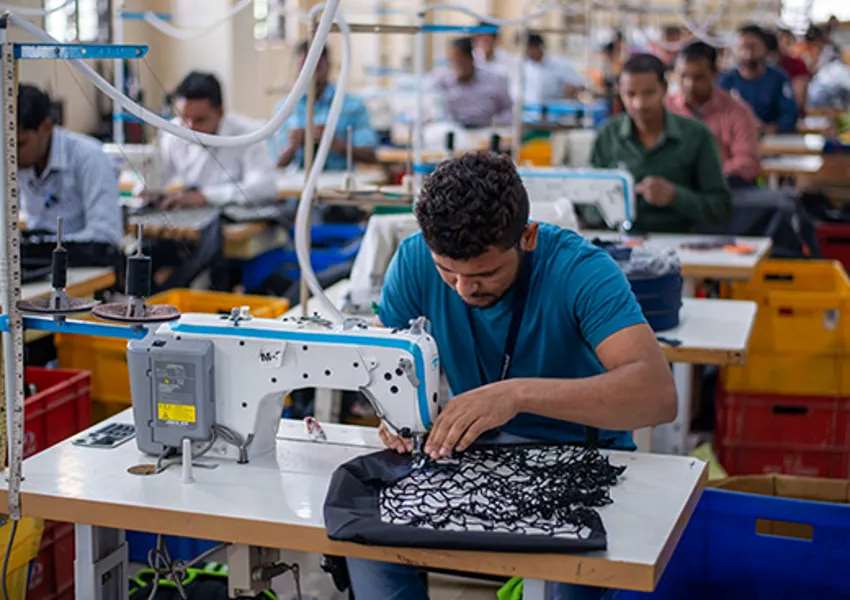
A 12 per cent contraction in local cotton acreage to 2.36 million hectare, driven by pest resistance and farmer crop shifts toward oilseeds, has curtailed raw lint availability across Western India. Raw cotton prices increased by 13 per cent to Rs 61,000 per candy, pushing yarn costs up 12 per cent while finished fabric realizations remained stagnant. Consequently, weaving clusters in Surat face estimated cumulative losses between Rs 2,500 crore and Rs 3,000 crore, forcing many processing units to reduce daily shifts by 50 per cent. Mills are currently selling below production costs to sustain operations, making temporary capacity curtailments unavoidable, says Ashok Jirawala, President, Federation of Gujarat Weavers Association.
Export realignment and duty relief strategies
Adding to domestic margin compression, updated US Section 301 tariffs enforce an effective 15.5 per cent duty on Indian apparel exports, squeezing profit margins for finished-goods manufacturers in Ahmedabad. To mitigate these pressures, apparel makers are leveraging the Centre's temporary suspension of the 11 percent cotton import duty to procure extra-long staple fibre and expand man-made fibre production. In response, automated weaving facilities are adopting high-speed air-jet machinery to reduce energy overheads and maintain price competitiveness against exporters in Bangladesh and Vietnam.
Regional textile sector profile
Gujarat's textile cluster powers 25 percent of India’s spinning output and one-third of its cotton crop, delivering yarn, denim, and synthetic fabrics globally. Established during the late 19th century, the regional industry is expanding into high-value technical textiles to sustain multi-billion-dollar revenue targets despite short-term market volatility.
Global textile mills counter sluggish market demand with capacity expansion
Global textile manufacturers are consolidating physical plant capacity to counter sluggish market demand and margin pressure. World installed short-staple spindle inventory contracted to 219 million units, while open-end rotors dropped to 9.6 million. Rather than expanding floor space, spinners are reallocating capital toward high-speed air-jet spinning technology, led by investments in China, to reduce labor overhead and accelerate throughput. Total raw material consumption eased to 42 million tonnes, though demand for synthetic and cellulosic fibers expanded.
Weaving stability and Asian supply dominance
Mill operators are choosing productivity enhancements over volume expansion to maintain operating margins, says Christian Schindler, Director General, International Textile Manufacturers Federation. Illustrating this structural shift, Chinese yarn producer Shandong Ruyi upgraded legacy ring-spinning frames to automated air-jet machinery, lifting output yields while lowering unit production costs. Concurrently, weaving capacity held firm at 1.67 million shuttleless looms, with Asia and Oceania controlling 83 percent of global operations, securing downstream apparel fabric supply.
Industry benchmark for global textiles
Established in 1904, Zurich-headquartered International Textile Manufacturers Federation (ITMF) serves as the central trade body for global textile and apparel value chains. Covering major manufacturing hubs across Asia, Europe, and the Americas, ITMF delivers market data and operational benchmarks to inform industry investments and sustainability strategies.
Dior finalizes Dublin for maiden Ireland runway show
French fashion house Christian Dior plans to hold its Pre-Fall 2027 runway presentation at Trinity College, the 18th-century Old Library in Dublin. To be heldon December 4, 2026 the show the event anchors a strategic evolution in destination marketing under Jonathan Anderson, Creative Director who oversees Dior’s couture, womenswear, and menswear divisions. Unveiling over 60 silhouettes, the collection emphasizes tailored wool fabrications, intricate tweed weaving, and specialized Irish textile craftsmanship.
Strategic market alignment
The presentation bridges luxury apparel with historical trade links, paying homage to Dublin-born Harper’s Bazaar editor Carmel Snow, who famously coined Christian Dior’s ‘New Look’ moniker in 1947. Showing at Trinity College Dublin is a dream come true, as starting my career in Dublin makes returning deeply personal, observed Jonathan Anderson. Staging presentations outside primary fashion capitals allows luxury houses to engage high-net-worth clientele while integrating regional textile traditions into commercial lines. Despite complex staging logistics within heritage sites, destination shows generate substantial global brand exposure and localized retail momentum.
Maison footprint & legacy
Christian Dior SE operates as a premier global luxury house specializing in haute couture, ready-to-wear apparel, leather goods, and fine accessories. Key markets span Europe, North America, and Asia-Pacific. The brand expands client engagement through international runway events. Founded in 1946 in Paris, Dior serves as a primary earnings driver for LVMH.
Italian textile machinery orders rebound by 25% in Q2, 2026
Italian textile machinery manufacturers experienced a sharp short-term momentum shift in Q2, FY26, with overall order intake rebounding by 25 per cent compared to the preceding quarter. Data released by ACIMIT, the Association of Italian Textile Machinery Manufacturers, highlights, domestic bookings increased by 39 per cent Q-o-Q, while international orders rose by 23 per cent, reversing the sluggish performance observed early in the fiscal year.
Export stability buffers sector
Despite persistent macroeconomic volatility, foreign buyers account for nearly 80 per cent of total incoming order volume. Overseas demand remained particularly robust across weaving, knitting, and finishing machinery segments. While domestic orders declined by 25 per cent T-o-Y - partly due to elevated baseline comparisons from 2025 - the industry’s solid foreign footprint continues to cushion overall revenue. The sector maintains a healthy capacity utilization rate of 79.7 per cent, with order backlogs guaranteeing approximately 3.5 months of assured production.
Strategic policy impact
The positive performance in international markets provides crucial operational stability while domestic buyers digest newly introduced national incentives, observes Marco Salvadè, President, ACIMIT. Capital deployment in the domestic market is expected to pick up momentum as Italian textile mills gradually leverage the government's 2026–2028 hyper-depreciation tax scheme enacted in June.
Generating over €2 billion in annual revenue
ACIMIT represents over 300 Italian manufacturers of textile machinery, covering spinning, weaving, knitting, dyeing, and finishing equipment. The trade body drives technological modernization and export growth, serving major global apparel hubs across Asia, Europe, and the Americas. Association members generate over €2 billion in annual revenue, drawing on decades of precision engineering heritage.
Lord & Taylor shifts to direct sourcing with heritage apparel relaunch
The historic retail banner Lord & Taylor is restructuring its apparel distribution model by reintroducing its proprietary private-label line, the Heritage Collection. Owned by Regal Brands Global following its acquisition from Saadia Group, the brand is abandoning marketplace aggregation to focus on controlled, high-margin, slow-fashion product lines. Price points for the new collection range between $100 for core separates and $1,000 for structured formal wear, positioning the label in the accessible luxury space.
Multi-channel wholesale expansion
To mitigate the lack of physical brick-and-mortar storefronts, the company is leveraging international licensing and selective wholesale partnerships. Product placement is slated to expand beyond the brand's direct-to-consumer digital platform into premier global boutiques and off-price distribution channels. Private label merchandising has historically provided essential margin buffers, and this line establishes a strong foundation for broader category expansions into home textiles and daywear, states Sina Yenel, Chief Strategy Officer, Regal Brands Global.
Boutique physical concepts
The strategic shift allows the brand to bypass the capital-intensive real estate footprints of conventional anchor stores while maintaining brand equity across multi-generational consumer segments. Future phases include targeted physical concepts, such as curated pop-ups and specialized shop-in-shops, designed to support wholesale partners without incurring long-term lease liabilities.
Brand legacy & strategy
Lord & Taylor operates as a digital-first apparel, home, and lifestyle brand managed by Regal Brands Global. It offers premium apparel, accessories, and home goods across North American and international markets. The strategy prioritizes omni-channel boutique wholesale, licensing agreements, and eventual boutique physical retail. Founded in 1826 as America's first department store, the brand pioneered modern visual merchandising and suburban retail expansion.
Compliance as the New Currency: Why global fashion is trading lowest-cost sourcing for resiliency
For decades, the global apparel sourcing playbook was deceptively simple: locate the cheapest labor pool, negotiate down raw material costs, and squeeze supplier margins to the penny. But inside the high-stakes deliberations at the Bharat Tex Roundtable, trade leaders, brand representatives, and policy architects delivered a stark verdict: the age of the lowest-cost bidder is officially dead.
Amid ongoing geopolitical conflicts, maritime bottlenecks, and stringent Western environmental mandates, compliance has ceased to be an ethical option or a corporate social responsibility line item. It has transformed into the primary entry ticket for international trade. In this new landscape, trust, transparency, and operational resiliency have replaced raw price as global fashion's ultimate currency.
The Death of the Pure Cost Model: Buying confidence over cut-price
During the roundtable’s core sessions, industry captains outlined how Western procurement strategies are undergoing a fundamental reset. Global fashion houses are no longer willing to risk catastrophic supply chain disruptions or regulatory bans in pursuit of cheap production.
With legislative frameworks like the EU’s Ecodesign for Sustainable Products Regulation (ESPR) and Corporate Sustainability Due Diligence Directive (CSDDD) actively reshaping market entry rules, global buyers are paying a premium for verifiable supply chain visibility, closed-loop recycling credentials, and Zero Liquid Discharge (ZLD) water processing setups.
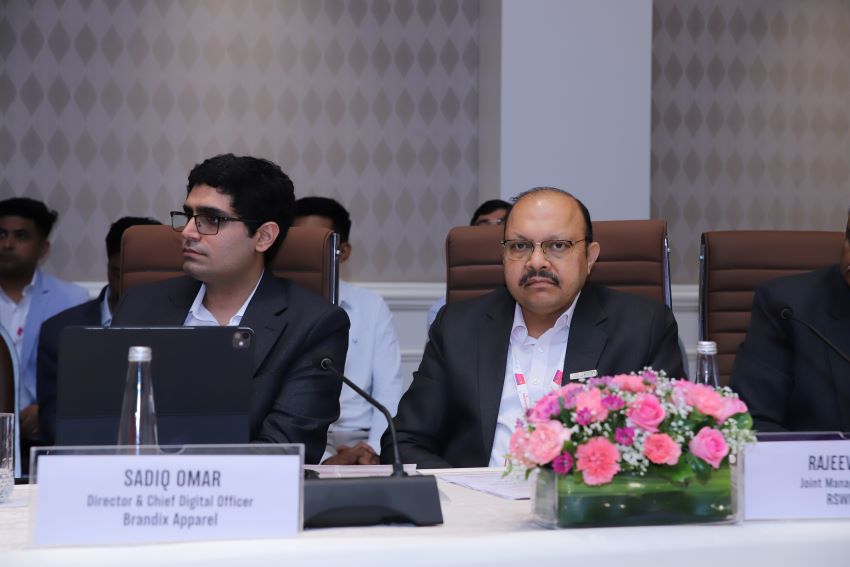
"Trust has become the most valuable currency in global trade... Conversations now are moving from where we can buy the lowest, to from where I can buy for confidence... Compliance is the competitiveness now" sharing the new trend, emphasized Rajeev Gupta, Joint Managing Director, RSWM Ltd.
Suppliers who rely solely on low-cost labor while operating in regulatory gray zones are rapidly finding themselves shut out of premium European and North American markets. Compliance is no longer a cost burden to be retrofitted after a plant is built; it must be engineered directly into the foundation of manufacturing facilities.
The Three-Question Buyer Test: The modern audit track
International brands are no longer satisfied with simple quality inspections or tier-1 factory audits. Instead, sourcing executives are applying a rigorous, end-to-end evaluation model across every level of the supply stack.
Today, every major export purchase order hinges on three fundamental questions regarding the product's origin, footprint, and lifecycle impact. First, buyers demand complete visibility into fiber origin and traceability to verify where raw material was harvested or synthesized and ensure an unalterable digital audit trail. Second, suppliers must prove their manufacturing footprint utilizes renewable energy, recycled water, and non-hazardous processing chemicals. Finally, modern procurement requires a low net environmental impact, measuring the precise carbon footprint per unit and verifying whether the garment can be chemically or mechanically recycled at the end of its life. "All my customers will ask three questions: Where did I source the fiber? Where does the fiber come from? Is it recycled?... Secondly, how do we produce? Am I using sustainable manufacturing? What are my carbon footprints?... And third, what is the impact of all my activity on the environment?", added Rajeev
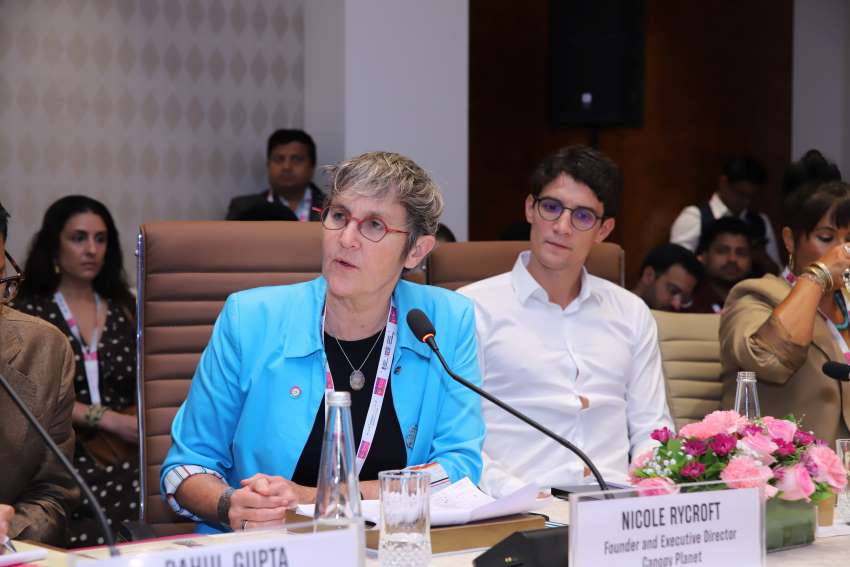
Global non-governmental organizations and brand advisors at the session emphasized that fashion houses are actively stress-testing their supply chains for these criteria today, rather than banking on regulatory extensions. Nicole Rycroft, Founder and Executive Director, Canopy Planet said adding further, "Brands are moving from a focus on compliance with regulations to actually looking at resiliency... They're not counting on a delay in any regulations... Circularity is no longer just a strategic edge. It's increasingly a market entry requirement."
The Geopolitical Resiliency Imperative: The case for integrated value chains
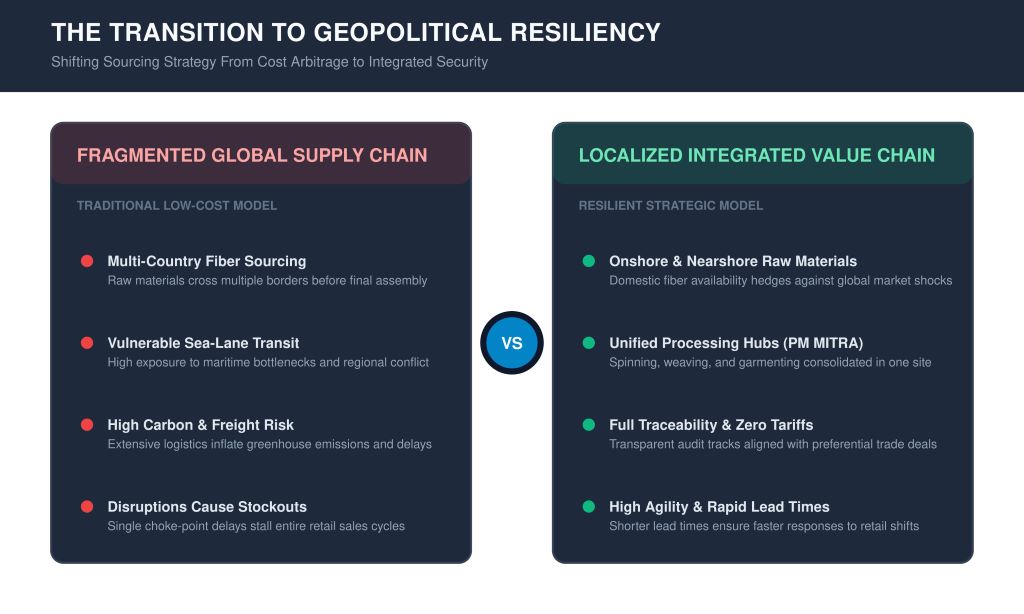
Beyond environmental legislation, geopolitical volatility has made long, fragmented supply chains liability-heavy. Ongoing maritime choke points; such as ongoing conflicts impacting crucial sea lanes like the Strait of Hormuz, have highlighted the extreme fragility of moving raw fibers across multiple international borders for intermediate processing.
The industry is rapidly shifting away from fragmented global supply chains, where multi-country fiber sourcing and vulnerable sea-lane transit create high carbon emissions, freight risks, and frequent inventory stockouts. In response, brands are turning to localized, integrated value chains. These resilient setups rely on onshore or nearshore raw material availability and unified processing hubs such as India's PM MITRA parks, where spinning, weaving, dyeing, and garmenting are consolidated. This integrated structure offers full traceability, eliminates intermediate tariffs, drastically reduces transport-related carbon footprints, and ensures rapid lead times to adapt to volatile retail demand.
This dynamic positions India uniquely on the global stage. Unlike competitors who rely heavily on imported yarn, fabric, or synthetic feedstocks, India possesses a complete, end-to-end textile stack ranging from abundant natural fibers and growing man-made fiber (MMF) capacity to massive spinning and garmenting bases. "India has one of the biggest advantages, that we have fiber, we have yarn, we have fabric, we have garments... India will definitely become a trusted partner, but not because it is cheaper, but because it can deliver sustainable products at a scale and with reliability" opines Rajeev Gupta
Winning the next decade of global trade
As India targets $100 billion in textile exports, the message from the Bharat Tex Roundtable is clear: volume alone will not capture the market. By pairing industrial policy with trade policy and embedding total transparency into the manufacturing stack, Indian exporters can leverage their complete value chain to become the global fashion industry’s most trusted, resilient, and compliant partner.
Manufacturing Meets Retail: China’s M2C blueprint redefines fashion economics

The traditional divide between manufacturing and retail is rapidly disappearing in China. For decades, global apparel production operated through a familiar hierarchy: factories manufactured garments, wholesalers aggregated inventory, brands created market appeal, and retailers sold products to consumers. Every intermediary extracted a margin, making the retail price several times higher than the manufacturing cost.
China is dismantling that structure through its Manufacturer-to-Consumer (M2C) model. Textile factories that once supplied global brands are increasingly selling directly to individual consumers through digital platforms, transforming themselves from anonymous suppliers into retail businesses. The result is a shift in the country's apparel ecosystem, where industrial manufacturers now compete alongside established fashion brands.
Driven by integrated e-commerce platforms, live-stream shopping and data-driven production planning, the M2C model is becoming a defining feature of China's fashion economy. More importantly, it is reshaping how apparel is designed, manufactured and sold, forcing global retailers to reconsider long-established sourcing and distribution strategies.
Eliminating the cost pyramid
Traditional apparel supply chains are built around multiple layers of intermediaries. After garments leave the factory, they typically move through sourcing agents, distributors, logistics providers, wholesalers and retailers before reaching consumers. Each participant adds operating costs and profit margins, often increasing the final selling price by 300% to 500% above manufacturing costs. China's M2C ecosystem removes most of these intermediaries.
Factories located in major textile manufacturing clusters such as Zhejiang and Guangdong can now list products directly on digital marketplaces including Taobao, Douyin, Pinduoduo and WeChat-based stores. Consumers effectively purchase garments from the same facilities that weave fabrics, cut patterns and stitch finished products. The pricing advantage is substantial. Without multiple distribution mark-ups, many products reach consumers at only 15 per cent to 30 per cent above production costs, fundamentally altering the economics of apparel retail.
|
Retail system element |
Traditional global supply chain |
Chinese M2C digital model |
|
Intermediary Layers |
Multi-tiered (Agents, Wholesalers, Distributors) |
Zero (Direct industrial factory-to-consumer link) |
|
Retail Price Markup |
300% to 500% over manufacturing cost |
15% to 30% over production cost |
|
Feedback Loop |
3 to 6 months (Seasonal retail buying cycles) |
Real-time via live-stream interactions |
|
Primary Channels |
Trade shows, wholesale orders, retail outlets |
Taobao, Douyin, WeChat, Pinduoduo ecosystem |
The transformation extends beyond pricing. Chinese manufacturers increasingly communicate directly with buyers through live-stream broadcasts, private chat groups and instant messaging, answering questions about fabric quality, sizing and delivery in real time. This direct engagement shortens decision cycles and builds stronger customer relationships than conventional wholesale models.
Producing only what sells
Perhaps the greatest advantage of China's M2C model lies in how it changes manufacturing itself. Traditional fashion production depends heavily on demand forecasting. Brands typically place seasonal orders months before products reach stores, exposing manufacturers and retailers to inventory risks if consumer preferences shift unexpectedly.
Chinese factories are replacing this approach with demand-led production. Instead of producing thousands of garments upfront, manufacturers launch new designs through micro-production batches of just 50 to 100 units. These products are showcased on live-commerce platforms or online storefronts, where customer engagement, click-through rates and sales performance are monitored almost instantly.
Successful products move rapidly into full-scale manufacturing, often within 48 hours. Designs that fail to attract sufficient demand are discontinued with minimal financial losses.
The production cycle follows a simple but highly responsive framework:
Consumer engagement → Real-time analytics → Small production run → Demand evaluation → Production halted or scaled up
This approach dramatically reduces unsold inventory—one of the apparel industry's largest financial burdens. Lower inventory risk also frees up capital that manufacturers increasingly invest in automation, smart production systems, digital analytics and flexible manufacturing technologies. Rather than relying on seasonal forecasts, factories are responding directly to actual consumer demand.
Reinvention in Shengzhou
The transition from export manufacturing to direct retail is already reshaping several industrial clusters across China. One of the clearest examples is Shengzhou, globally recognised as one of the world's largest neckwear manufacturing centres. For years, its factories depended heavily on bulk export contracts from overseas retailers and corporate clients.
As global demand for traditional neckwear weakened, many medium-sized weaving factories faced falling export orders and declining factory utilisation. Instead of waiting for international buyers, several manufacturers established their own digital storefronts on domestic e-commerce platforms. They shifted from producing standard export products to developing scarves, fashion accessories and casual neckwear targeted directly at Chinese consumers.
The transition also changed product development. By analysing platform search behaviour and purchasing data, manufacturers adjusted colours, materials and designs on a weekly basis rather than waiting for seasonal buying cycles. This flexibility enabled factories to align production closely with changing consumer preferences while reducing dependence on long-term contracts.
According to industry estimates, several participating manufacturers recorded gross profit improvements of approximately 22 per cent compared with traditional export-oriented business models. The Shengzhou experience illustrates how manufacturing clusters are evolving from contract suppliers into consumer-focused retail businesses.
Digital retail has new demands
The M2C model offers significant commercial advantages, but it also introduces operational challenges unfamiliar to many industrial manufacturers. Running a production facility requires a different set of capabilities than managing a consumer-facing retail brand.
Factories entering digital commerce must now oversee customer service, product returns, after-sales support, online marketing and brand reputation—functions traditionally handled by retailers. Rising competition has also pushed customer acquisition costs higher across China's major e-commerce platforms, making profitability more difficult for smaller manufacturers.
Maintaining consistent quality has become equally important. Marketplace algorithms reward sellers with strong customer ratings while reducing visibility for businesses that accumulate complaints or inconsistent reviews. Manufacturers therefore face growing pressure to maintain rigorous quality standards alongside efficient production. For factories accustomed to focusing solely on manufacturing efficiency, retail success increasingly depends on digital marketing, customer engagement and operational responsiveness.
Platforms driving the shift
China's M2C transformation has got a boost from powerful digital ecosystems that seamlessly connect industrial production with consumer demand. Among them, Taobao remains one of the country's most influential online marketplaces. Since its launch in 2003 under Alibaba, the platform has evolved into a massive commercial ecosystem connecting millions of manufacturers, merchants and consumers.
For apparel producers, Taobao provides far more than a sales channel. Its integrated payment systems, logistics networks, consumer analytics and recommendation algorithms enable factories to launch products, analyse demand and scale production with remarkable speed. The platform's continued investment in industrial digitisation and rural manufacturing clusters is expected to deepen factory participation in direct consumer retail over the coming years.
A new competitive reality
China's Manufacturer-to-Consumer model represents more than an e-commerce innovation it reflects a fundamental restructuring of the apparel value chain. By integrating manufacturing, marketing and retail into a single digital system, Chinese factories are capturing value that traditionally flowed to wholesalers, distributors and fashion brands. The model reduces inventory risk, shortens product development cycles and creates closer connections between producers and consumers.
For international apparel companies, the implications are profound. Brands that continue to rely on lengthy sourcing cycles and multi-layered distribution networks may find themselves competing against manufacturers that are faster, leaner and increasingly capable of building their own consumer brands.
As digital commerce continues to blur the boundaries between factory and retailer, China's M2C is emerging as a blueprint for the next phase of global apparel competition. The companies that can combine manufacturing efficiency with real-time consumer engagement are likely to define the industry's future.
Tariff parity secures Sri Lankan textile competitiveness in US market
Sri Lanka's garment and textile manufacturing sector has averted trade disruption following the United States Trade Representative’s decision to assign a 10 per cent Section 301 duty rate to the island nation. The designation followed Colombo’s swift implementation of an import ban on forced-labor inputs, preventing placement in a higher 12.5 per cent tariff band that now impacts competing origins like Vietnam. By establishing duty parity with regional peers including Bangladesh, India, and Cambodia, Sri Lankan apparel suppliers retain price competitiveness in their primary destination market.
Export inflows buffer macroeconomic pressures
The tariff alignment arrives alongside initial indicators of order volume recovery. Sri Lankan textile and apparel exports to the United States grew by 15.36 per cent in May 2026 to reach $394.14 million, according to trade data from the Joint Apparel Association Forum. The outcome provides operational relief to an export industry responsible for nearly $3 billion in annual shipments to North American retail partners.
Maintaining cost parity with regional manufacturing hubs prevents buyer migration, notes Yohan Lawrence, Secretary General, Joint Apparel Association Forum. Even a two-and-a-half percentage point duty differential directly alters landed cost calculations for global retail buyers.
Eyeing long-term financial growth
Established in the late 1970s, Sri Lanka's apparel manufacturing sector produces high-value activewear, intimates, and sustainable garments primarily for North American and European buyers. Generating nearly $5 billion annually, the industry employs 300,000 workers and targets technical textile expansion to sustain long-term financial growth.
Secondhand apparel dominates UK circular fashion sector
The United Kingdom’s sustainable apparel market is undergoing a structural realignment, with pre-owned garments capturing the majority of eco-conscious consumer spending. Out of £1.37 billion ($1.84 billion) spent annually on sustainable fashion, secondhand clothing accounts for nearly 93 per cent (£1.28 billion), leaving newly manufactured sustainable apparel with a modest £93 million share.
Valued at over £7 billion, the UK resale sector now represents approximately 25 per cent of all domestic fashion transactions. High-street retailers, including Marks & Spencer, Primark, and Zara, are embedding take-back, repair, and resale models directly into their business operations to retain cost-conscious shoppers.
Infrastructure hurdles and material recovery
Despite strong consumer demand, scaling the circular economy presents supply chain challenges. Britain generates roughly 744,000 metric tons of post-consumer textile waste annually, with a substantial portion still directed to incineration or landfills due to sorting limitations. Consequently, retail brands are adjusting garment construction standards to prioritize longevity, repairability, and automated fiber recycling.
Consumers increasingly view garment life extension as the primary measure of sustainability," states Eleanor Vance, Senior Circularity Analyst, Retail Vision Group. To maintain profit margins, apparel companies must manage resale platforms as core commercial channels rather than marketing side projects, she adds.
UK pre-owned apparel market profile
Originating through traditional charity shop networks, the UK pre-owned apparel sector has expanded into digital platforms and integrated high-street retail channels. Spanning womenswear, activewear, and vintage luxury, the market is projected to expand at 9% annually through 2029. Major retailers plan expanded take-back infrastructure to monetize secondary product lifecycles.
Chinese industrial hub in Chattogram to de-risk Bangladesh textile supply chain
Construction has commenced on the 800-acre Chinese Economic and Industrial Zone (CEIZ) in Anwara, Chattogram. To be developed jointly by the Bangladesh Economic Zones Authority (BEZA) holding a 30 per cent equity stake and China Road and Bridge Corporation (CRBC) holding 70 per cent, the flagship initiative targets $500 million in direct foreign investment.
The project fundamentally alters Bangladesh’s ready-made garment (RMG) ecosystem by establishing domestic production of synthetic fabrics, technical textiles, and garment accessories. Currently dependent on imported raw materials for over 60 per cent of woven apparel production, Bangladeshi manufacturers face elevated freight expenses and extended shipping schedules. Localizing Chinese fabric mills within Chattogram is projected to compress order fulfillment cycles by 10 to 15 days.
Infrastructure integration enhances export competitiveness
Supported by a Tk 4,189 crore government infrastructure package, the industrial zone incorporates a 20,000-deadweight-tonne multipurpose jetty, four-lane access highways, and a 25-million-litre daily capacity central effluent treatment plant. Positioned near the Karnaphuli Tunnel and Chittagong Port, the zone resolves longstanding logistics bottlenecks for high-value activewear and outerwear manufacturing.
Producing primary raw materials within Chattogram directly lowers landed costs, states SM Abu Tayyab, Director, Bangladesh Garment Manufacturers and Exporters Association. This upstream integration safeguards buyer margins and fortifies regional competitiveness.
Strengthening Bangladesh’s export capacity
Initiated under a 2014 bilateral memorandum, the 800-acre Anwara economic zone is a government-to-government manufacturing enclave focused on advanced textiles, electronics, and pharmaceuticals. Designed to generate 100,000 jobs and attract $500 million in foreign capital, the project targets 60 per cent factory plot readiness within three years to strengthen Bangladesh's export capacity.