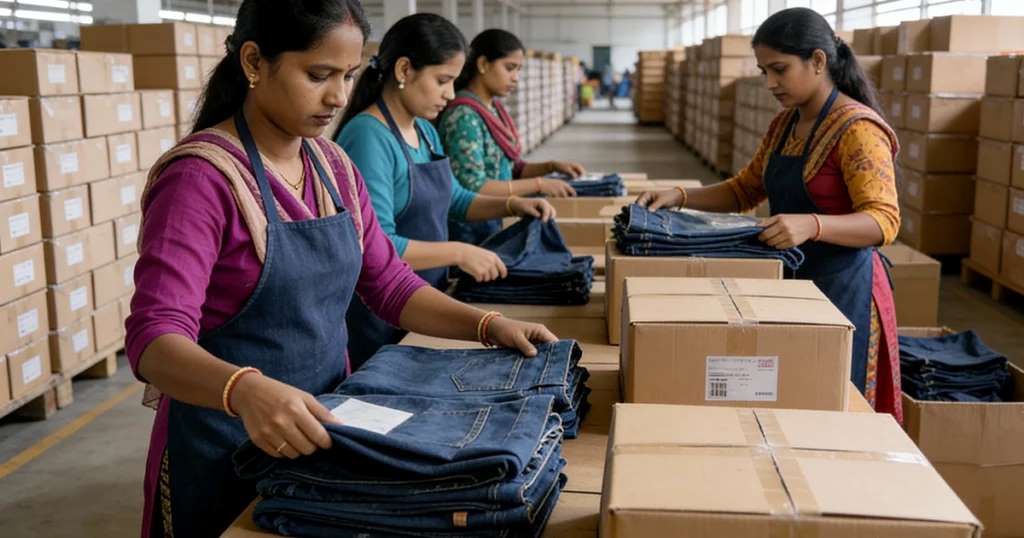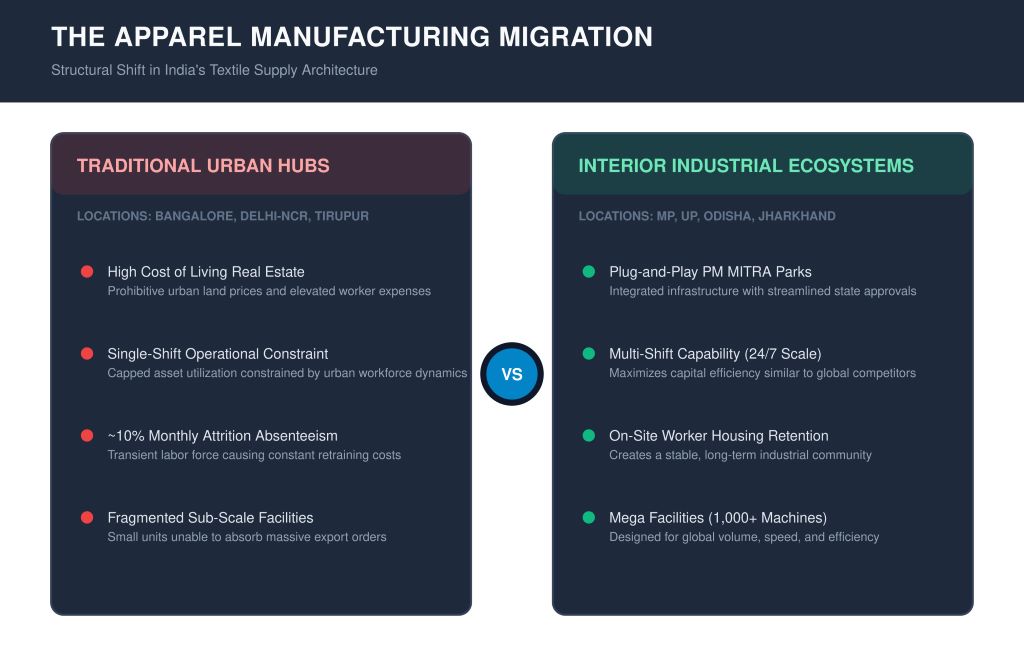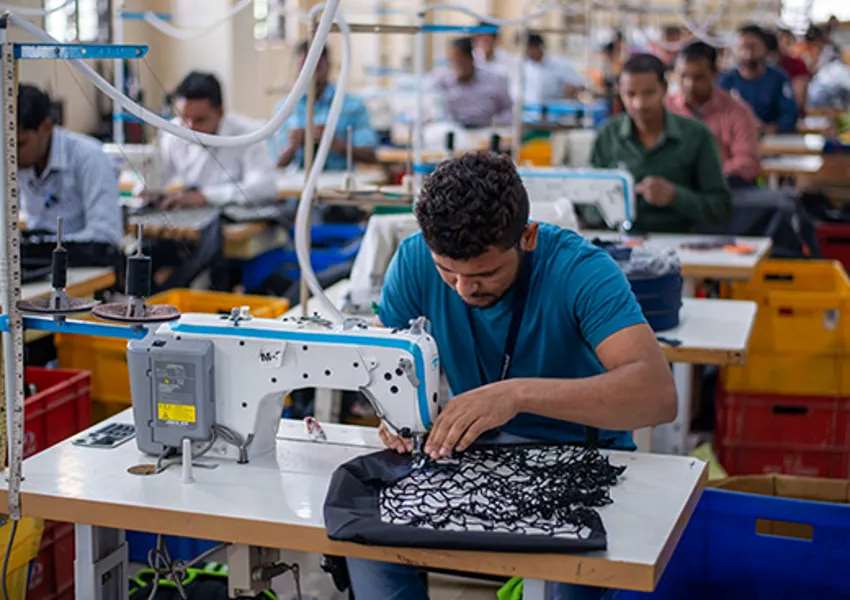
A sweeping overhaul of US trade policy has created one of the most competitive openings for India's textile and apparel exporters in recent years. Finalizing a new Section 301 tariff framework targeting imports from 60 countries, Washington has not merely altered customs duties, it has reset sourcing economics across the global fashion supply chain.
For India, the outcome is especially important. While the country's textile industry escaped higher proposed tariffs after diplomatic engagement and policy reforms, several of its largest Asian competitors now face steeper duties. The resulting price differential could influence procurement strategies for American retailers facing persistent margin pressures.
Tariff gap creates pricing edge
On July 24, 2026, the Office of the United States Trade Representative (USTR) announced permanent additional tariffs under Section 301 of the Trade Act of 1974 following investigations into forced labour practices and import restrictions. The new framework replaces temporary levies with a long-term tariff structure intended to reshape global manufacturing supply chains.
India was initially expected to face an additional 12.5 per cent tariff. However, following amendments to India's Foreign Trade Policy prohibiting goods produced through forced labour, the final duty was reduced to 10 per cent, the same rate already applicable under the previous temporary regime. The real commercial advantage lies in comparison with East Asian competitors. Vietnam and China now face 12.5 per cent additional tariffs, giving Indian exporters a 250-basis-point cost advantage in the US market.
Table: US Section 301 additional tariff structure
|
Country |
Initial proposal |
Final section 301 tariff |
Competitive position |
|
India |
12.50% |
10.00% |
Advantage over East Asia |
|
Bangladesh |
10.00% |
10.00% |
At par with India |
|
Cambodia |
10.00% |
10.00% |
At par with India |
|
Pakistan |
10.00% |
10.00% |
At par with India |
|
United Kingdom |
10.00% |
10.00% |
At par with India |
|
Vietnam |
12.50% |
12.50% |
250 bps disadvantage |
|
China |
12.50% |
12.50% |
250 bps disadvantage |
Note: Additional Section 301 duties apply over existing MFN (Most-Favored-Nation) tariffs.
Buyers recalculate sourcing
The US remains India's largest textile export destination, accounting for approximately $10.5-$11 billion in annual purchases and nearly one-third of India's textile export earnings. Although a 2.5 per cent tariff differential may appear modest, it becomes significant when applied across billion-dollar sourcing programmes.
Apparel retailers operating on thin margins continuously increase landed costs, making even small pricing advantages capable of influencing vendor selection.
Experts point out the revised tariff structure strengthens India's relative competitiveness. Confederation of Indian Textile Industry (CITI) chairman Ashwin Chandran says while the forced labour investigations require continued diplomatic engagement, the final tariff outcome positions India favourably against East Asian competitors.
CITI secretary general Chandrima Chatterjee opines that American sourcing teams now have a measurable financial incentive to diversify procurement towards Indian suppliers, particularly for cotton yarn, woven fabrics and ready-made garments.
Exports remains broad
India's export strength spans multiple product categories, reducing dependence on any single segment while supporting its long-term ambition of becoming a $100 billion textile exporter by 2030.
Table: India’ textile & apparel exports
|
Product category |
FY26 export value |
share |
|
Ready-Made Garments |
$14.53 bn |
45% |
|
Cotton Textiles & Yarn |
$9.36 bn |
29% |
|
Man-Made Fibre Textiles |
$4.82 bn |
15% |
|
Home Textiles, Jute & Others |
$3.92 bn |
11% |
|
Total FY26 Exports |
$32.63 bn |
100% |
|
Government Target (2030) |
$100.00 bn |
— |
Economics of a tariff advantage
The financial implications become clearer at the factory level. Consider a Tirupur-based apparel manufacturer exporting six million knitted cotton garments annually to the US at an average FOB value of $8 per piece. Under India's final 10 perc ent tariff, the additional duty amounts to $0.80 per garment. A comparable shipment from Vietnam incurs a $1.00 tariff. Across the entire order, this seemingly small 20-cent difference generates $1.2 million in landed-cost savings for the US buyer.
Table: Unit cost comparison
|
Sourcing parameter |
India (10%) |
Vietnam (12.5%) |
|
FOB Value Per Unit |
$8.00 |
$8.00 |
|
Section 301 Tariff |
$0.80 |
$1.00 |
|
Landed Cost (excluding MFN) |
$8.80 |
$9.00 |
|
Total Contract Value |
$52.8 mn |
$54.0 mn |
|
Buyer Benefit |
$1.2 mn savings |
Higher cost |
For global retailers placing multi-season orders, these savings can help offset freight volatility while improving merchandising margins, making Indian suppliers increasingly attractive.
Compliance becomes the new battleground
The tariff advantage, however, is not guaranteed to remain uncontested. The USTR has simultaneously introduced three-year Tariff Rate Quotas (TRQs) for Bangladesh, Cambodia, Indonesia and Malaysia. Once implemented, qualifying textile exports using US-produced cotton and textile inputs will be eligible for duty-free access within specified quotas. Although Bangladesh and Cambodia currently have tariff parity with India, these quota mechanisms could gradually redirect portions of apparel manufacturing and cotton sourcing toward competing countries.
Equally important are the compliance obligations attached to the new trade framework. Because the tariffs stem from forced labour enforcement, US Customs and Border Protection is expected to intensify farm-to-factory traceability requirements. Exporters will need verified chain-of-custody documentation covering cotton sourcing, spinning, weaving and garment manufacturing. Digital traceability systems, supplier audits and transparent documentation are therefore becoming commercial necessities rather than sustainability initiatives.
Opportunity depends on execution
India's tariff advantage offers a meaningful competitive opening, but history suggests that lower duties alone rarely transform export performance. Success will depend on how effectively manufacturers combine cost competitiveness with reliable delivery, production scale and supply chain transparency. Retailers are unlikely to shift sourcing purely because of tariffs; they will expect suppliers to demonstrate compliance, consistency and operational resilience.
For India's textile industry, the latest US trade reset provides favourable conditions. Converting that relative pricing advantage into sustained export growth will require disciplined execution across the entire value chain from cotton farms to finished garments.