FW

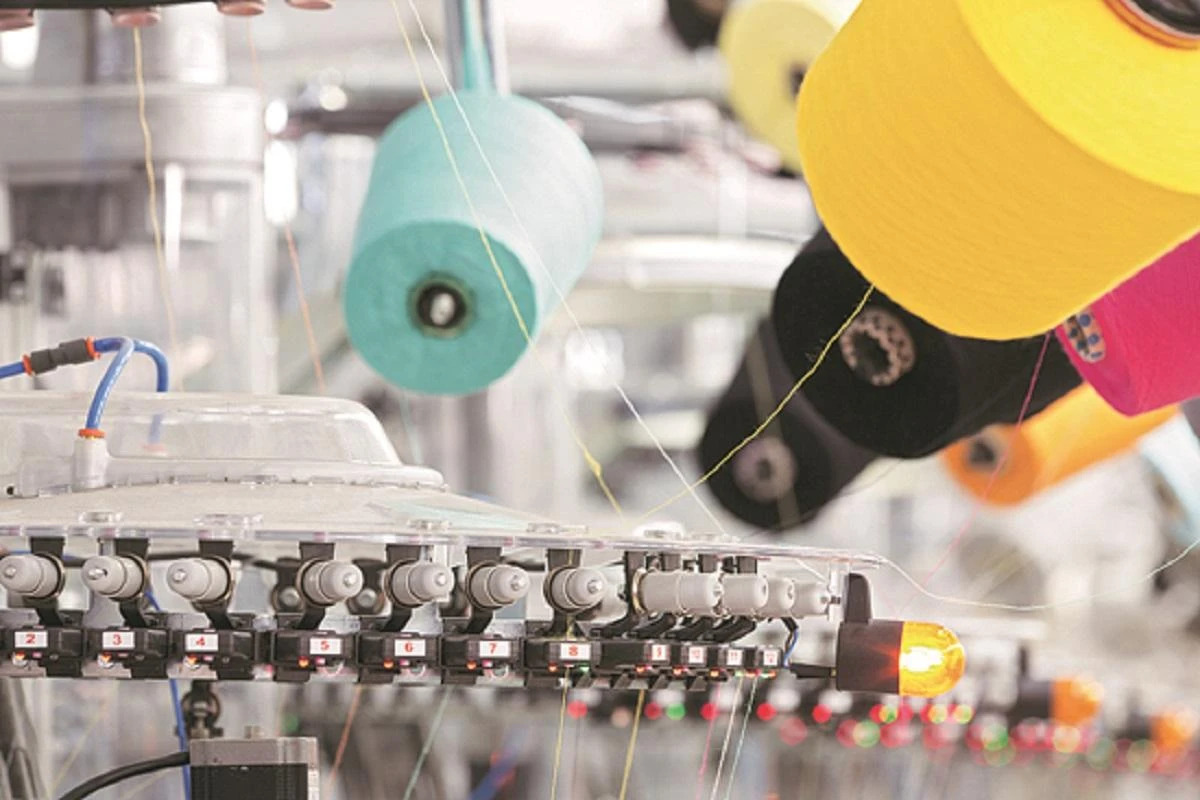
The recent launch of a state-backed compensation fund in Uzbekistan, designed to absorb the costs of Better Cotton Initiative (BCI) certification for local producers, signals a major tectonic shift in the global fibre and yarn market. Uzbekistan, which was formerly subject to an international boycott, has successfully transitioned into a fully integrated textile powerhouse, now achieving 100% domestic processing of its raw cotton into yarn.
This pivot from raw fibre export to value-added manufacturing, supported by new government incentives, directly eliminates the primary financial barrier for cotton clusters seeking key international sustainability credentials.
This strategic policy move is expected to inject a massive, newly certified cotton supply into the global marketplace, directly challenging major yarn-producing hubs across South and Southeast Asia. The sudden availability of ethical Uzbek cotton at a cost-competitive price point intensifies the competition for spinning mills worldwide and will likely exert notable downward pressure on global yarn pricing, particularly in the certified fibre segment. With leading global apparel giants publicly committed to sourcing BCI-certified fibre, the ease of entry for Uzbek supply accelerates a fundamental re-alignment of supply chains. As the nation targets $7 billion in textile exports by 2028, this fund solidifies Central Asia's position as a dominant, vertically-integrated player in the responsible apparel sector.
The highly anticipated overhaul of Britain's import system is set to reshape the competitive landscape for apparel retailers. Following intense lobbying from domestic giants, the Treasury has confirmed plans to scrap the “de minimis” duty exemption on low-value parcels (under £135), a move forecast to generate approximately £500 million ($655 million) annually for the exchequer. The decision directly addresses concerns from legacy high-street brands who argue the historical tax exemption created an uneven playing field, allowing tariff-free entry for direct-to-consumer imports.
Strategic challenge for Ultra-Fast Fashion
For overseas platforms, this regulatory pivot requires a significant supply chain reset. Ultra-fast fashion like Shein’s historical success—shipping low-value goods like a $5 accessory or £12 dress directly to the consumer, will now incur the new levy. Industry data indicates over 1.6 million low-value parcels enter the UK daily under the current threshold, representing a massive volume now subject to duties.
George Weston, CEO of Associated British Foods (owners of Primark, a brand historically reliant on high-volume, low-margin, in-store sales), commented, "This move closes a loophole that has disadvantaged British business." While the full implementation is delayed until 2029, the announcement accelerates the pressure on global players to either absorb the cost or decentralize logistics closer to the market to maintain their aggressive growth plans.
Rieter, a global leader in short-staple fiber machinery, is accelerating its transformation into a diversified powerhouse by preemptively restructuring its organization ahead of the planned CHF 713 million acquisition of OC Oerlikon's Barmag division. This strategic maneuver is designed to create a single-source system provider for both natural and man-made fibers, positioning the combined entity as a major force in the evolving $52 billion textile machinery market.
The ‘Dual-Fiber’ strategy and synergies
The key restructuring, effective January 1, 2026, involves merging its existing Machines & Systems and After Sales divisions into a new Short-Staple Fiber Division. Upon the anticipated completion of the Barmag acquisition in the fourth quarter of 2025, the Barmag business, a market leader in man-made fiber equipment with CHF 734 million in 2024 sales will be integrated as the new Man-Made Fiber Division. This move directly addresses the market trend where synthetic fibers now account for over 60% of textile machinery revenue, offering Rieter a crucial presence in high-growth segments like filament spinning and nonwovens.
The company projects annual savings of nearly CHF 30 million from operational streamlining and aims to enhance its technology leadership by intensifying development between its core Rieter business and specialized component brands like Accotex and Graf.
Navigating industry cycles and financial outlook
Rieter's decisive action comes amidst a persistently weak market environment characterized by geopolitical uncertainty, which has pushed several customer projects into 2026. The company recently adjusted its full-year 2025 sales forecast (excluding Barmag) to approximately CHF 700 million (down from up to CHF 800 million), with a projected negative net result due to acquisition and restructuring costs (CHF 30-35 million one-off charge).
CEO Thomas Oetterli states the combined entity will form a "market leader" whose structurally higher margins in the man-made fiber business are expected to enhance Rieter's through-the-cycle profitability, creating value for shareholders who supported the transaction's financing through a capital increase.
For over a decade, Lululemon Athletica embodied everything the premium athleisure revolution stood for technical mastery, community-driven branding, and an almost cult-like customer following. Its rise was clean and uninterrupted, a masterclass in premium positioning. But 2025 has delivered an uncomfortable reality check. The brand that once defined the category is now battling a simultaneous slowdown in its core North American market and mounting pressure to reinvent its product engine without losing the premium halo that made it a global phenomenon.
The company is not in crisis. Far from it, internationally, Lululemon remains a juggernaut nowhere more so than China. Its balance sheet is strong, margins remain healthy, and its store network is expanding. Yet beneath the surface, the brand is confronting an important truth: the machine that propelled years of hyper-growth is no longer self-sustaining in North America. Shoppers are fatigued. Competitors are hungrier. And product cycles that once felt timeless now read as repetitive. This is Lululemon’s first real inflection point.
North America stalls as tariffs bite
For a company that earns more than two-thirds of its revenue in North America, the latest quarterly numbers land like a warning shot. In Q2 FY2025, total net revenue grew 7 per cent but only because the international business carried the weight. In its home market, growth is almost at a standstill.
Table Lululemon Q2 FY2025 performance
Q2 Fiscal 2025 Result Implication Total Net Revenue Growth +7% (to $2.5 billion) Overall growth is slowing but still positive, buoyed by international. North America Revenue Growth +1% Near-stalled growth in the core market. North America Comparable Sales -4% (Decline) Direct evidence of falling demand and customer fatigue. International Net Revenue Growth +22% Primary engine for achieving the 'Power of Three x2' strategy. China Comparable Sales +17% Highlighted as a key high-growth market. Full-Year Revenue Guidance Revision From $11.15B-$11.30B to $10.85B-$11.00B Reflects lower expectations due to U.S. softness and tariff costs.
The table paints a stark divergence: while China grows at double digits and new global markets accelerate, the US is posting its weakest performance since the mid-2010s. Compounding the slowdown is an unexpected cost shock. With the removal of the de minimis exemption on imports, Lululemon now faces meaningful reciprocal tariff impacts. CEO Calvin McDonald has quantified this at 220 basis points of gross margin erosion, or $240 million in fiscal 2025 alone. The stock market delivered its own verdict: Lululemon shares are down over 50 per cent YTD as of October 2025, its sharpest sell-off since going public.
How predictability became a liability
For years, Lululemon’s formula worked beautifully: timeless silhouettes, high fabric quality, and periodic introductions of new colors or capsule collections. But the consumer is changing and so are competitors. Lululemon’s predictable playbook, once a strength, now feels stale to many long-term customers. CEO Calvin McDonald has admitted that the brand’s lounge and social categories 40 per cent of the total mix “became too predictable.” The symptoms were visible to anyone watching the brand closely:
Stale offerings: Core categories remained dominated by repeated silhouettes and a limited color palette, making once-beloved staples feel unexciting.
Slow trend response: While smaller brands like Alo and Vuori were sprinting to claim emerging microtrends, Lululemon lagged behind. The pickleball boom, the explosion in women’s golf apparel, and the rise of aesthetic-driven loungewear all delivered opportunities that Lululemon failed to seize quickly.
Quality question marks: Loyalists on Reddit forums and social media have complained about discontinued fabrics, thinning leggings, inconsistent sizing, and a perceptible shift away from performance-first design. For a brand built on technical precision, even perception issues can be damaging.
Fewer store visits, higher prices, more dupes
Store-level data points make the slowdown sharper. Customer traffic in US stores is down 8.5 per cent YoY, a clear reflection of waning product excitement. And in a high-inflation environment, Lululemon’s $98-$128 leggings are increasingly competing with $25 dupes on Amazon, TikTok, and big-box retailers.
Competitors today span every price tier. For example, Vuori dominates softness and versatility. Alo owns the social-media aesthetic. Athleta pushes performance credibility. Zara and Gymshark outpace Lulu in speed-to-trend. The premium athleisure category Lululemon once built is now swarming with challengers.
A crowded arena of giants and specialists
To understand Lululemon’s present-day threat matrix, it’s important to examine the competing brands grouped by type.
Table: Major competitors
Competitor Type Brands Core Focus/Edge Against Lululemon Global Sportswear Leaders Nike, Adidas, Under Armour, Puma Scale and Brand Recognition: Massive global market share, superior distribution networks, and a performance-first heritage. They can offer a wider range of technical products and cross-category penetration (e.g., footwear, major sports). Premium Athleisure & Lifestyle Alo Yoga, Vuori, Athleta (Gap Inc.), Sweaty Betty Specialized Niche & Design: Brands like Vuori have surged with a focus on versatile, incredibly soft, "everyday" athleisure that mimics the comfort of Lululemon's core fabrics. Alo Yoga capitalizes heavily on a stylish, celebrity-driven, social media-friendly aesthetic. Athleta offers a strong high-quality alternative, backed by Gap's scale. Value & Fast-Fashion Fabletics, Gymshark, Zara, Private Labels (e.g., Costco) Price and Speed: Offer similar aesthetics and often "dupes" of popular styles at significantly lower price points (e.g., Fabletics' subscription model). They can respond more quickly to fleeting social media trends.
Despite the challenges, Lululemon maintains a strong competitive position built on four core pillars.
1. Premium brand loyalty and pricing power: Lululemon has fostered a quasi-cult following and a strong community connection (e.g., through in-store yoga classes, brand ambassadors). This high brand affinity allows it to command premium prices that competitors often struggle to match without losing credibility.
2. Superior material innovation (the science of feel): The brand is renowned for its proprietary, high-quality technical fabrics (Luon, Nulu, Luxtreme), which provide a superior fit, comfort, and performance that is difficult for competitors to replicate consistently, thus justifying the premium price.
3. Direct-to-consumer (DTC) model: With over 780 company-operated stores and a strong e-commerce platform, Lululemon maintains full control over pricing, inventory, and the customer experience, reducing reliance on third-party retailers and protecting its premium image.
4. International growth engine: The successful execution of its ‘Power of Three x2’ strategy, aiming to quadruple international revenue by 2026, has made its global segment (led by China) a vital growth counterbalance to the sluggish North American market.
Lululemon’s most important gamble in a decade
Leadership knows the brand must change. And fast. The company has initiated the most sweeping overhaul of its creative and product strategy since the early 2010s. The centerpiece of this revival is Global Creative Director Jonathan Cheung, whose appointment signals a shift toward faster, more expressive, more fashion-forward design.
The new product mandate is to increase new style penetration from 23 to 35 per cent by Spring 2026; launch new sub-lines like Loungeful and Big Cozy; integrate AI-led design tools to speed trend recognition and prototyping; expand into more lifestyle-driven categories without diluting performance DNA. If this works, Lululemon can reignite the North American business and reclaim leadership in premium athleisure. If it doesn’t, the brand risks confusing loyal customers while failing to win over new ones. Analysts widely agree, the 2026 product reset will determine the next decade of Lululemon’s growth path.
Levi Strauss & Co. (LS&Co.), the nearly 175-year-old denim pioneer, is forging its next chapter by strategically embedding Artificial Intelligence into its operations. Following robust Q3 2025 results; net revenues up 7% to $1.5 billion and a record gross margin of 61.7%, the company is accelerating its shift to a Direct-to-Consumer (DTC)-first model, targeting a $10 billion retailer goal. The most recent and central initiative is the partnership with Microsoft to develop an integrated agentic AI platform centered on a "super-agent."
Rewiring the apparel workflow
This next-gen super-agent, powered by Microsoft Azure and embedded in Teams, is designed to unify and automate complex corporate workflows across IT, HR, and operations, with an internal rollout planned for early 2026. This move is part of a broader strategy where AI is also directly enhancing the customer-facing retail experience. The company has already launched 'Outfitting,' an AI-driven styling feature on its app that provides personalized recommendations, and is expanding STITCH, an AI assistant for store employees, to 60 US locations. As Chief Digital and Technology Officer Jason Gowans states, "AI sits at the center of that pivot... elevating employee creativity, unlocking productivity and helping us deliver connected, memorable experiences."
The DTC-First growth challenge
The new agentic AI platform acts as a critical operational backbone to support the aggressive DTC growth plan, which saw e-commerce revenues jump 18% in Q3 2025. By streamlining internal processes, the super-agent tackles the challenge of managing the massive influx of data from a growing DTC channel (46% of total net revenues). Microsoft’s Nick Parker notes, "Their commitment to purposeful innovation is redefining retail excellence." The combined internal efficiency and personalized consumer experiences are the key to Levi’s ambition, moving beyond its iconic 501 Jeans to become a head-to-toe lifestyle apparel brand known for agility and operational excellence.
Brand management powerhouse Marquee Brands has announced the acquisition of Stance, the innovative lifestyle sock and underwear label, positioning the group firmly in the rapidly growing premium apparel accessories sector. Founded in 2009, Stance is globally recognized for transforming the mundane sock into a high-margin fashion essential, leveraging bold design and successful collaborations with sports leagues and cultural figures. The addition of Stance expands Marquee’s collective retail sales footprint to $4.5 billion.
ULAC partnership and category entry
The acquisition’s immediate strategic thrust is driven by a global licensing partnership with United Legwear and Apparel Co. (ULAC), which will manage Stance’s product design, development, and distribution worldwide (excluding China). This structure targets the global socks and underwear market, which is projected to expand at a Compound Annual Growth Rate (CAGR) exceeding 7% through 2030, fueled largely by athleisure adoption.
Marquee’s plan is to immediately push Stance into new activewear and footwear categories. While the licensing model offers accelerated expansion, the core challenge remains, as Marquee CEO Heath Golden noted, preserving Stance's signature creative identity and "cultural touchpoint" while achieving mandated global scale.
Topshop, the iconic British youth fashion brand founded in 1964, is slated for a major global relaunch in 2026, including a rapid expansion into twenty new international markets. The move is the first major strategic initiative since ASOS sold a 75% stake in the label to investment firm Heartland in 2024, forming a joint venture aimed at bolstering the brand's global retail presence beyond its digital anchor.
Digital anchor, physical reach
The expansion is central to the JV's strategy to capture new demographics. Having returned to the French high street and secured a UK partnership with John Lewis, the focus shifts to leveraging the brand’s pre-existing appeal in new territories. The parent company, ASOS, reported a 60% rise in Adjusted EBITDA (to £132m) in FY25, driven by a strategic shift toward higher-quality sales. The Topshop relaunch is positioned to capitalize on this renewed financial discipline.
Margin growth meets maximalist demand
This global push faces a complex retail environment where the BoF-McKinsey 2026 forecast predicts only low single-digit growth. The challenge lies in balancing affordability with the high quality needed to justify improved gross margins, which ASOS successfully lifted by 370 basis points (to over 47%) last year. A spokesperson stated, "We are merging profitability with purpose, ensuring the 'cult denim' and expressive styles Gen Z craves are accessible but also deliver sustainable margin." The case study of its successful UK physical return signals appetite for the brand’s nostalgic yet maximalist aesthetic globally.
The Government of India is set to immediately trigger the $2.81 billion Export Mission Framework (EPM) guidelines this week, a move acting as a financial shield for the textile and apparel industry facing unprecedented US tariff shock. The sector, responsible for significant employment, saw a double-digit decline in October, with apparel exports shrinking 12.88% year-on-year, primarily due to the steep 50% tariff imposed by the US since August. This immediate injection aims to stabilize the reeling industry.
Direct financial blitz for MSMEs
The six-year, ₹25,060 crore EPM is structured around two sub-schemes: Niryat Protsahan (₹10,401 crore) and Niryat Disha (₹14,659 crore). The focus of Niryat Protsahan is a direct financial blitz for Micro, Small, and Medium Enterprises (MSMEs), which comprise a large part of the textile value chain. Measures include interest subvention (subsidy on loan interest) and collateral guarantees to ensure affordable trade finance. This direct fiscal support is crucial to help MSMEs sustain orders and avoid mass layoffs, addressing the challenge of costly capital compared to rival exporting nations.
Technical Textiles: The resilient growth bet
A new angle of the government's strategy is the powerful bet on Technical Textiles—specialized products like medical gear and construction fabrics, which offer higher margins than traditional apparel. The EPM's non-financial arm, Niryat Disha, will fund international branding and quality compliance, accelerating diversification away from traditional, highly competitive markets.
The EPM is set to fast-track the sector's goal of reaching $100 billion in T&A exports by 2030 by focusing on such resilient, future-ready products.
The upcoming Blossom Première Vision (PV) event, set for December 10 and 11, 2025, in Paris, hosting 65 premium textile suppliers (20% new), has established itself as the indispensable sourcing hub for the luxury apparel industry’s pivot toward compliance. The show floor directly reflects the urgency driven by stringent European eco-design laws, notably the French levy, which is set to fine ultra-cheap clothing up to €10 per garment by 2030, and the looming 2026 EU ban on destroying unsold goods.
PV’s Focus: Weaving compliance and heritage
The event’s selective exhibitor list emphasizes verifiable sustainability. Innovators, like the Italian Slow Fiber collective, are championing transparent, circular production models. Historic houses, such as France's Les Tissages Perrin (since 1929), are leveraging heritage techniques for durability and traceability. Suppliers confirm compliance is paramount, as the apparel segment holds nearly 50% of the $9.19 billion sustainable fashion market in 2025.
SS27: Outlook and strategic sourcing
Première Vision (PV), established in 1973 as the sourcing platform, is guiding the market by confirming that aesthetics for the Spring-Summer 2027 (SS27) pre-collections are now inseparable from traceability. This "Premiumization Driven by Purpose" is necessary, as data shows consumers are willing to spend an average of 9.7% more on ethically produced textiles. The selection of exhibitors—from organic ramie by Tosco to circular wool by Manteco—underscores Blossom PV’s role in steering the industry toward durable, compliant materials.

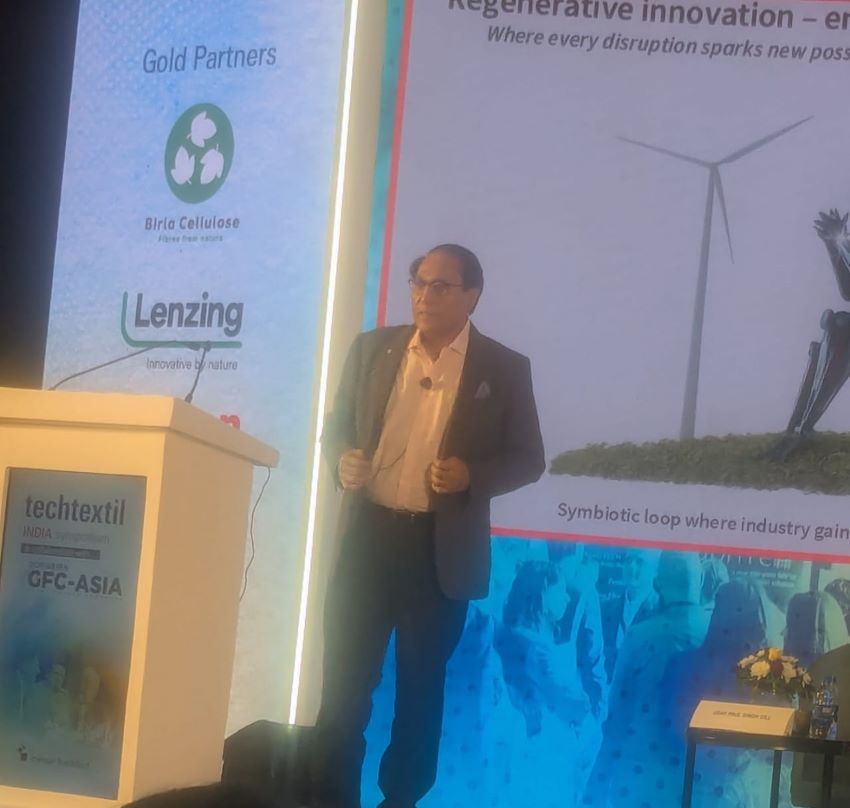
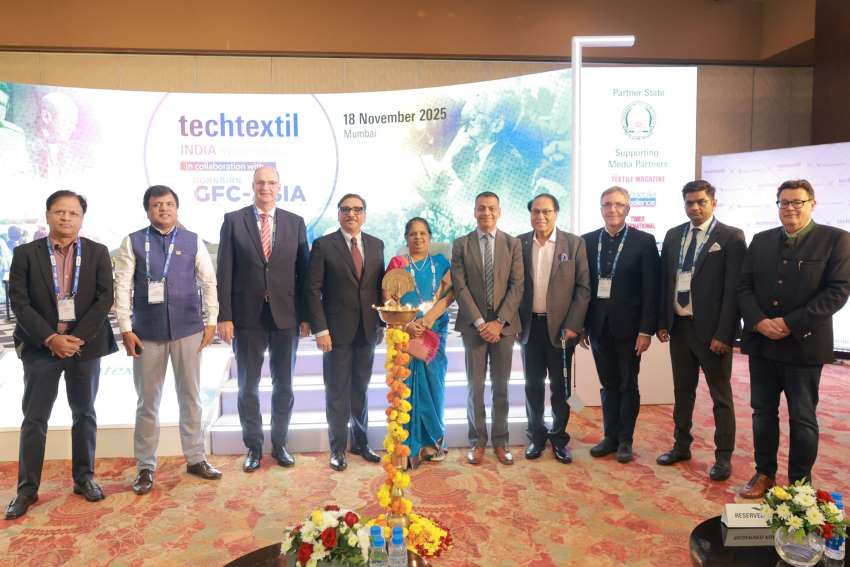
India is emerging as a global powerhouse in technical textiles, a growth recognized by the organizers of the world's leading technical textiles and textile processing trade fairs. Ahead of the Techtextil and Texprocess 2026 event in Frankfurt, Messe Frankfurt's Director Brand Management, Sabine Scharrer, highlighted during a lunch meeting addressing to the media, during Techtextil India, the strategic importance of India, declaring the country's technical textile sector is "important for the world."
Scharrer underscored the nation's rapid expansion and its growing role as a crucial market for innovative and high-tech textile applications.
Surging growth and market leadership
Citing impressive figures, Scharrer pointed to the significant participation from India in previous events, stating, "Last year, we welcomed 64 Indian companies, a total of more than 600 visitors." The momentum is driven by fundamental market strengths. The technical textile sector in India is experiencing a strong growth rate of up to 10 percent, with the segment's market value standing at a significant $29 million USD. Furthermore, India is identified as one of the leading export markets, excelling particularly in the segments of Inditech (Industrial Textiles) and Pactech (Packaging Textiles). Other sectors like Geotech (Geotextiles) and Home Tech (Home Textiles with technical functionality) also play a substantial role in the country’s high-tech textile landscape.
"Especially the technical tech sector is growing in India and that's why this country is so important for us and, frankly, important for the world," Scharrer emphasized, noting the sector's pivotal role in India, mirroring its importance in various European countries.
Focus on innovation and skill development
The sector's growth is supported by a strong foundation in research and development. Scharrer noted the "clear commitment" and industry meetings in India dedicated to R&D projects in technical textiles, which helps "grow the skills and the ethic of figures in the technical tech sectors." This focus is yielding tangible results in the form of smart innovations. India is seeing "a lot of smart innovations coming up," such as integrated services applied in fields like agriculture, defense, or medicine. Additionally, the country is setting a "big example" by enhancing standard products with advanced functionality.
"We're excited to see what the Indian producers will bring in the next edition also in April, frankly, and in the future," Scharrer concluded, anticipating strong engagement from the Indian technical textiles industry at the upcoming global fair.
Global gateway in Frankfurt
Techtextil and Texprocess 2026, scheduled for April 21-24, 2026, serves as the premier international platform, bringing together the entire value chain under one roof in Frankfurt, Germany. As one of the world's largest platforms for technical textiles, advanced fabrics, and garment machinery, the combined fair allows visitors to explore the full textile chain, from fiber production and advanced machinery to innovative fabrics, end-use applications, and recycling technologies. The global nature of the event, with 1,600 plus exhibitors in the last edition (65% from abroad), provides Indian participants with unparalleled access to international trends and technologies. On the Techtextil side, the event showcases high-tech materials across diverse applications, including medicine, mobility, construction, military, and security purposes.
Meanwhile, Texprocess focuses on the future of textile processing, featuring cutting-edge machinery, 3D/4D applications, scanning, optimization, and AI solutions. The event is further enriched by specialized areas, including the newly dedicated segments for textile chemicals/dyes and performance apparel textiles, and the expanding Nature Performance area which highlights sustainable, bio-based, and bio-degradable materials.
Dedicated focus on ‘Textile Chemicals & Dyes’
Techtextil 2026 will feature Textile Chemicals & Dyes as a separate, independent product segment for the first time, reflecting its growing economic importance and technical relevance, especially in performance textiles. This new area will be strategically located in Hall 9.0, placing it in immediate proximity to the Fibres and Yarns and Performance Apparel Textiles segments. This deliberate co-location is designed to create new synergies, facilitating direct dialogue between suppliers of pre-treatment, dyeing, and finishing agents and the users of technical and functional textiles. This centralized hub will emphasize the importance of chemicals and dyes in providing essential functions to textiles—such as water-repellent impregnation for outdoor wear, sterilization for medical fabrics, UV protection for construction materials, and flame-resistance for protective apparel—and will serve as a platform for addressing increasing demands related to environmental regulations and sustainable supply chains.
The Frankfurt fairs offer Indian companies a critical opportunity to expand their international reach, explore global trends, and solidify their position as leaders in advanced, value-added textile manufacturing on the world stage.