Merger of textile & commerce ministry opposed in Pakistan
Value-added textile producers in Pakistan have opposed the move to merge textiles and commerce ministry. Finance minister Muhammad Ishaq Dar had recently mooted a proposal to merge the two ministries. In a letter to the Prime Minister, value-added textile sector associations have expressed surprise at this recommendation made without consulting them and other stakeholders in the industry.
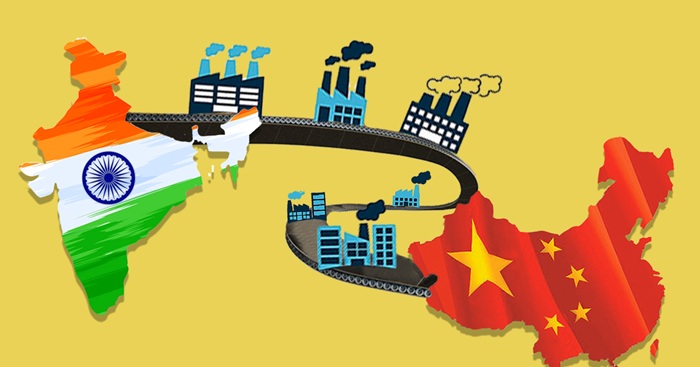
The letter adds that the textiles ministry was earlier set up due to their demands, since the sector makes up for 54.63 per cent of overall exports and generates 42 per cent of total employment. It was also noted that India has a full-fledged textiles ministry, despite the fact that Indian textile exports account for only 11.9 per cent of its exports. As per the letter, the textiles ministry should be given more powers to take vital decisions, since in its absence, it is not able to take vital decisions regarding implementation of the Textile Policy.
H&M continues its green initiative to reduce carbon footprint
Swedish retailer H&M has released its latest “Conscious Actions Sustainability Report 2014,” which underlines the company’s commitment toward reducing carbon footprint, while going green. The 13th annual report highlights successful initiatives implemented by the company over the last year which include use of only renewable energy and increasing the number of products made from recycled materials.
According to the recent research paper by Textile Exchange, ‘Organic Cotton Market Report 2013’, H&M continues to be the world’s No. 1 user of organic cotton. In addition, 7,684 tons of used garments have been collected for reuse or recycling since its in-store program kicked off in 2013 that’s as much fabric as what’s in more than 38 million T-shirts and in 2014, the retailer released its first closed-loop products made with 20 per cent recycled cotton. The goal now is to collect 100,000 tons of used garments by 2020.
The company also made use of around 40 million PET bottles to make recycled polyester, 24.6 per cent of the retailer’s shoes are now made with mainly water-based glues and it pledges to use only certified down from this year onward, as well as only 100 per cent certified wool from 2017. The company also unveiled its debut ‘Conscious Denim’ collection, which on average used 56 per cent less water and 58 per cent less energy during the production process. It has also decided to include second-tier fabric and yarn suppliers involved in making about 35 per cent of its products, in public supplier factory list.
Keeping the situation in Bangladesh in sight, the company apart from monitoring factory compliance, has collaborated with the International Labor Organization (ILO) and the Fair Labor Assocation (FLA) to promote industrial relations and social dialog between its suppliers and their workers.
www.hm.com
ZSK launches new embroidery machine
German market leader ZSK is known for industrial embroidery machines. It’s latest Technical Embroidery System JCW 0100-500 is a laying machine for fibers and wires. It offers an active wire and fiber supply system, a pneumatic clamping and stretching system, an automatic pull through system and it masters the automatic change of different medias. Many more options like a wire hit detection system or an automatic bobbin changer are available for ZSK’s technical embroidery systems with up to 11 heads.
Laying wire with this system is cost efficient, more reliable and environmentally friendly. Without any damage of the textile’s characteristic signals like fill level, movement or temperature can be measured and relayed. Various materials like carbon, glass and aramid fibres and wires can be processed. Single layered rovings are fixed to the base material by stitching. During the process, the base material is moved by the pantograph, enabling to lay rovings in any direction and quantity.
Another major advantage of this new process is the ability to lay rovings as per distribution of forces within a structural component. Some of ZSK's other offerings include the smallest embroidery machine, the Sprint, and multi-head tubular arm embroidery machines from the Jafa series.
www.zsk.de/
Ethiopia seeks investors in textile sector
The textile industry is the largest manufacturing industry in Ethiopia. There are a number of state-owned and private textile and garment factories. The industry contributes the lion’s share of employment in the manufacturing sub-sector. Now, the Ethiopian government has asked the country’s Investment Commission to guide prospective investors through every step of the way.
Textiles and garments, leather products, cement, metal and engineering, chemical, pharmaceuticals and agro-processing are identified as priority areas for investment. A large domestic market and an increasing number of skilled workers are turning Ethiopia into an investment destination. The main raw material, cotton, is available in sufficient amounts. In textiles and clothing, spinning, weaving and finishing of textiles from the raw material to the production of garments are areas investors can look at. There are also ample manufacturing opportunities for prospective investors in tannery and leather products involving fashion items such as handbags, shoes, jackets and leather garments.
The main textile products are cotton and nylon fabrics, acrylic yarn, wool and waste cotton blankets and sewing threads. There are possibilities for manufacturing knitted and crocheted fabrics, carpets and sportswear. Already Chinese, Turkish and European garment manufacturers are seeking to expand their operations.
Functional textiles gain at Techtextil
Techtextil to take place in Germany, May 4 to 7, 2015 is a trade fair for technical textiles and nonwovens. Companies will exhibit technology, processes, accessories, functional apparel textiles and nonwovens. With functional apparels and gaining ground customers are showing an interest in multifunctional jackets, which communicate, cool, illuminate, measure, protect at the same time.
Adding to the many features at Techtextil is an extensive complementary program. This includes the Techtextil symposium and the Techtextil innovation award. The innovative apparel show will display 40 inspiring textile and apparel designs, together with their processing technologies, on all four days of the trade fair. Also new, and intended especially for planners, architects, designers and interior architects, is an exhibition of photographs.
Texprocess will be taking place alongside Techtextil for the third time. Texprocess is a trade fair for the processing of textile and flexible materials. It offers innovative solutions that many textile manufacturers are not yet acquainted with. These two trade fairs provide an optimum reflection of the entire value chain, both from the point of view of producer and the product. Together they are expected to attract more than 1,650 exhibitors.
Bangladesh pays higher for cotton yarn imported from India
According to the YnFx Fibre and Yarn Exports-India report for March 2015, despite China being the largest importer of cotton spun yarn from India and Bangladesh, the second-largest, China has been paying much lower rate compared to the latter. For example, during February 2015, India exported 53.3 million kg of all kinds of spun yarns to China and 14.9 million kg to Bangladesh. Of these, 53.2 million kg and 13.2 million kg were cotton yarn, respectively and values were $140 million for China and $41 for Bangladesh. Thus the average unit value realization for exporting cotton yarn to China and Bangladesh works out to $2.64 per kg FOB India and $3.12 per kg FOB India.
The same values in February 2014 was $3.06 a kg and $3.55 per kg, respectively. Thus, the realisations have declined 14 per cent and 12 per cent for the two destinations from February 2014 and 2015. Among the 73 countries to which cotton yarn was exported in February 2015, Jordan paid the least at $2.31 a kg and Japan paid the highest at $6.16 per kg. However, the report points out that the differentiation may be attributed to the size of the volume, quality differentials, deliverability, and other technical aspects. But for China and Bangladesh, these qualifications are assumed to be neutral since the cargo-mix could be the same on an average. In February 2015, China imported cotton yarn at US cents 48 lower than Bangladesh and the same difference in 2014 was US cents 49 a kg. This implies that the difference has remained stagnant between both the markets.
Deciphering counts wise export of cotton yarn, to these two markets, shows the same result accepting in case of few counts. China was the largest importer of 32/1 cotton yarn with volumes at 24 million kg valued at $67.6 million while Bangladesh imported 0.41 million kg worth $1.3 million. Thus, unit value realisation works at $2.81 a kg for China and $3.15 a kg for Bangladesh. The differential between the two was US cents 34. Here, China had the advantage of larger volume over Bangladesh. In the same month, export of 30/1 yarn to Bangladesh stood at 3.15 million kg worth $9.8 million and the same to China was 1.80 million kg worth $5.30 million. Here, the unit value realisation was $3.10 a kg for the former and $2.98 for the latter. Again China was sold 30/1 at a price US cents12 lower than Bangladesh.
In similar comparison, China had advantage of US cents 7 for 40/1, US cents 21 for 20/1, US cents 63 for 24/1 and US cents 41 for 10/1 cotton yarns. In case of 28/1 cotton yarn, the volume to Bangladesh was much higher than China. Here, China bought Indian yarn at a higher price than sold to Bangladesh.
www.yarnsandfibres.com
Trade fair organizers unite
Messe Frankfurt, market leader of textile fairs worldwide, and Milano Unica, organisers of the renowned Italian textile trade fair, have extended their collaborative activities. The collaboration, which began in 2012, is further strengthened with the presence of Milano Unica in the Javits Convention Center during the New York City textile week in July 2015. The aim of the cooperation is to recall greater concentration of premium and luxury textile manufacturers and brands, and strengthen the presence of Italian fabrics in America and major markets of the world.
The NYC Textile Week will be held in July 21 to 23, 2015. This is North America’s largest sourcing event for apparel fabric buyers, research and product development specialist, designers, merchandisers and overseas sourcing professionals. It attracts manufacturers from Asia, the Middle East, North America and from many other regions. Apparel fabrics, trims and accessories for every product line will be displayed– women, men, juniors and children/infant wear.
In addition to the joint venture in the US, Messe Frankfurt and Milano Unica will continue their collaboration in China. The partners have signed a cooperation agreement, extending it for another two years, during Intertextile Shanghai Apparel Fabrics, whose last edition was held from 18 to 20 March 2015.
Bangladesh Denim Expo targets brisk business deals
The second ‘Bangladesh Denim Expo' is expected witness a high business activity as it prepares to kick-start on May 11. Meanwhile, Bangladesh has set a target or earning revenues worth $7 billion from export of denim products annually. This will speed up overall RMG exports to $50 billion per annum by 2021.
Around 25 domestic and foreign companies from Bangladesh, US, Germany, China, Japan, India, Italy, Thailand, Turkey, Hong Kong and Pakistan will participate in the two-day expo to display latest fabrics, finishes, washes, accessories, technology used in denim manufacturing. Bangladesh exported denim and denim related products worth $3.5 billion during the last fiscal year.
Participating Bangladesh companies include: Yogotex Fabric Company, Argon Denims, Mahmud Denims, Denim Expert, Zaber and Zubair Fabrics, Nassa Taipei Denims, South China Bleaching and Dying Fty, Shasha Denims and Amber Denims. International participants include: American & Efird (Bangladesh) of the USA, Paddock Jeans, Germany, Juki Bangladesh and YKK Bangladesh Pte, Japan, Garmon Group, Italy, Foshan Shunde Benjie Textile., China, Epic Group, Hong Kong, Denimco Tekstile Pazarlama AS, Turkey, Absolute Denim, Thailand, Malwa Industries, India, Kassim Denim, Kohinoor Mills, Rajby Textiles and Azgard Nine, Pakistan.
www.bangladeshdenimexpo.com
Myanmar to implement new export strategy for growth
Myanmar has decided to implement country's new national export strategy which will see expansion of its textile and garment industry. This will increase export earnings to $2 billion for this fiscal. The step would also help in boosting economic growth.
With almost 90 per cent foreign investment, the sector created 100,000 jobs in 2014-15, reveals the Myanmar Garment Manufacturers Association. According to the ministry of commerce, export income from textile and garment sector made up 40 per cent of the country's foreign exchange earnings from around the year 1990. Official statistics show foreign investment in the manufacturing sector reached $5.458 billion as of February this year since late 1988 when the country opened to foreign investors.
The manufacturing sector, which ranked third in the foreign investment line-up after power and oil and gas, accounted for about 10 percent of the total of $54.086 billion as of February this year. The five-year national export strategy, which also covers six other sectors and is aimed at tackling trade deficit, focuses on rice, peas and pulses, fishery products, timber and forest products, rubber and tourism.
www.myanmargarments.org
Bangladesh exports rise 7.4 per cent in March
Increasing consecutively for the fifth month in a row, Bangladeshi exports increased 7.4 per cent in March compared to a year earlier and touched $2.59 billion owing to strong sales of ready-made garments. According to the Export Promotion Bureau, exports from July to March, the first three quarters of the financial year, rose about three percent from the same period, last year to $22.9 billion, 5 percent short of the target.
Sales of ready-made garments, comprising knitwear and woven items, totaled $18.63 billion in the July-March period, compared with nearly $18.05 billion a year earlier. However, despite being the second largest exporter after China, issues like political unrest and non-compliance are hindering the growth of exports industry in Bangladesh and players are unsure about achieving the set growth target.
Bangladesh's exports in the 2014-15 financial year are expected to increase 10 per cent from a year earlier to $33.2 billion. Garment exports for the current financial year have been targeted at $26.9 billion, up 10 percent from previous year's $24.5 billion when clothing sales surged 14 percent.
www.epb.gov.bd
More...
F&A and Hometex witness positive business activity
The 12th edition of the fabrics and accessories show, 'F&A Show 2015’ and the 4th edition of home textiles fair, ‘Hometex’ that wrapped up on March 14, saw 3,556 visitors, a rise of 11 per cent over the last edition. Organised by SS Textile Media at KTPO in Bangalore, it got a positive response from over 103 exhibitors, and an overwhelming number of buyers. Many orders were picked up over the three-days of the fair.
Majority of visitors expressed their satisfaction with the innovation on display that included yarns, fabrics, accessories, handicrafts, textiles and home textiles. Fabric innovations for both men’s and women’s wear on display included a mix of plain and mesh in the same knitted fabric, bonded fabrics, fragrance releasing fabrics, zero-count fabrics, tere-rayon fabrics, 2 x 200's cotton shirting fabrics, georgette moss fabrics, a blend of the traditional bandhani, shibhori and indigo-dyed in a single fabric, and functional fabrics.
In accessories section, there were innovative 3D label, interlinings made from net resins, innovations in engraving technology in buttons, narrow fabrics in both spandex and latex, embroideries, Oeko-Tex certified zippers and many other new product developments in the category. Yarns exhibited with latest product developments on display included, water soluble PVA yarn, colour zero twist yarn, hollow yarn, grindle yarn, grindle blended with slub yarn, multi-colour fancy yarns, injection slub yarn, Flutter, Ferry, Lofty Linen and many other varieties of yarns.
The home textiles section exhibited products like blankets and foot mats made from mink and polar fleece, designer paper wall coverings, home furnishings, designer towels, bedsheets and curtains, comforters, colourful quilts, cushions, pillows and many more.
Exhibitors from India, Hong Kong, China, Taiwan and Singapore included two companies like Aditya Birla Group’s Linen Club and Grasim Bhiwani. JCT too had two stalls one for textiles and other one for home textiles division. JCT Homes, Raymond Home, Morarjee Textiles, Akij Textile Group from Bangladesh, Beijing Guanghui Textile Co from China and so on. Visitors came from all corners of South and Central India and even overseas and included representatives from global and Indian brands and retailers like George UK, a subsidiary of Wal-Mart, Adidas, Gokuladas Exports, Arvind Brands, VF Corporation, Madura Lifestyle, Crocodile, Ralph Lauren, Mothercare, Lifestyle, PVH, Shahi Exports and other reputed companies.
The second day of the F&A Show also had a panel discussion ‘What should India do to Increase its Share in the Global Textile & Apparel Markets.’ The eminent panelists included Gautam Chakravarty, CEO, Gokuladas Exports, Ashish Kumar, Group CEO (Lifestyle Apparel) at Arvind and Samrat Som, Business Head at Royal Enfield Apparel & Accessories. www.hometex.in
Arvind Mills, INVISTA tie-up to create innovative products

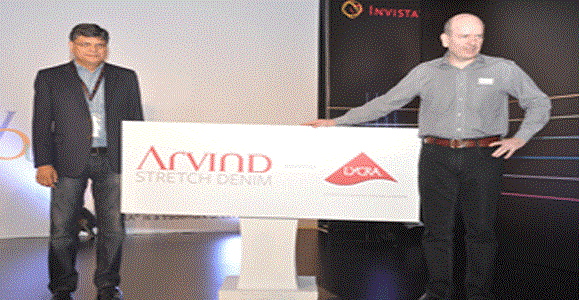
With growing emphasis on innovation, sustainability and fashion design worldwide, Arvind Mills, India’s top composite textiles player, tied up with globally acclaimed technology giant INVISTA. And Aamir Akhtar, CEO, Arvind Mills is optimistic their partnership will lead to bigger things as he says, “We have seen the partnership with INVISTA grow. Together, we will be unfolding a lot of things.”
A power house partnership
Endorsing Akhtar’s views, Huw Williams, Global Marketing Director, INVISTA, observes, “One of the most important things about strategic tie-ups is the culture fit. If you are working for a company that’s culturally aligned with you, this is a fine collaboration. We are trying to put premium products in the market. We have a common strategy and a common culture. Arvind has a huge industrial capability. They can make things efficiently as they have design capability, fabric innovation capability and can sell very effectively in a fragmented market. Our capability is fibre and fabric innovation. If you bring these two sets of capabilities together you create a win-win combination. Working with Arvind in western markets we have had great success with western brands and retailers.”
Innovative denim in the limelight
Giving an insight on Arvind’s innovative offerings Akhtar explains, “Arvind’s share in the value added segment is 55 per cent. We have launched a new technology. This is a new way of dyeing denim on the surface. It is not printing but indigo dyeing. With this, we can create deep dark indigos. Using this technology, we can come out with a whole range of knit denims, which has a strong demand now. Then there is ‘Neo Bubble’, which is lightweight denim for women’s wear, tops and ethnic wear. We have new dyed corduroys with stretch in different colours.” Throwing more light on ‘Arvind Stretch Denim powered by Lycra HangTag’ concept, Akhtar said, “Earlier, the fabric used to be sent out to different places through a complex supply chain and was difficult to tag. Now, ‘Arvind Lycra’ tag will go along with the fabric. The end user of the fabric, the cutter, the garment maker can convert it into garments when the tag is there. Once he sees the value in this brand, and its strong value proposition, as a promise, he would like to use the tags. The tag Arvind Lycra is also for B2C promotions.” Williams further explained the idea “The Arvind Lycra hang tag is an example of our collaboration. We are using Arvind’s distribution channels in India. The hang tag will be rolled out through their distribution channels in an easy to access way. We hope to see these hang tags appear on high quality garments.” The tie-up of these global brands in India is looked up to as a new era of innovation in textile industry. With the high profile tie-up between Arvind Mills and INVISTA, Indian textile industry has got a new dimension to face challenges in global as well as domestic markets.
Second Texworld Istanbul is under way
The second edition of Texworld Istanbul is being held April 7 and 8. This is a purchasing point for fashion fabrics. It brings together the most relevant apparel textile suppliers and buyers in the midst of a booming region. It’s the prime opportunity for fabric manufacturers to connect with the top buyers in the region and beyond.
Nearly 150 exhibiting companies from the Euro-Mediterranean region and Asia are taking part. Among these are companies from China, Hong Kong, South Korea, Taiwan, Indonesia, India and Pakistan as well as Egypt, Germany and Turkey.Products such as cotton, embroidery and lace, knitted fabrics, wool and wool blends, functional fabrics, linens, prints, fibers, yarns and denims will be showcased.
The first Texworld Istanbul was held in November 2014. It welcomed 115 exhibitors from 10 countries, attracting 5,248 professional visitors, with 25 per cent from abroad. Turkey is today one of the most important places for the international textile industry. It is located at the crossroads of south eastern Europe, the Middle East, Central Asia and North Africa. Most international fashion fabric manufacturers have not yet sufficiently explored the manufacturing industries in those four regions. Texworld Istanbul aims at assembling players from those unexplored regions under one roof, at one fair.
https://texworld-istanbul.tr.messefrankfurt.com/
California alpaca show on April 11
The California Classic Alpaca and Fiber Show will be held on April 11 and 12. A number of alpaca breeders from ranches in California, Nevada, Oregon and Arizona will be represented at the event. The show will feature some 200 alpacas. Visitors will get to touch and feel the alpaca’s soft fiber.
Visitors can learn more about the alpaca industry and meet alpaca breeders. Fiber enthusiast and artisans will showcase alpaca fiber (raw fiber, roving, and yarn) and examples of felting and fiber arts. Vendors will display alpaca fashions and hand-crafted items plus ongoing fiber demonstrations.
The alpaca is often compared to the softness of cashmere. It’s hypoallergenic, one-third the weight of wool, and is comfortably smooth against skin. The fiber comes from an animal that is manageable and hums to communicate. Alpacas require small acreage and are considered green livestock.
The highly prized fleece has inspired many to start cottage industries which involve shearing alpacas and spinning the fiber into yarn that can be made into high quality apparel while others market the fiber through the support of organized fiber co-ops. Alpaca breeders from all walks of life interact with each other by participating in shows and open houses, co-owning animals, and by sharing their acquired expertise.