Coats' Q1 revenue up four per cent
For the first half of 2015 Coats' revenue was up four per cent on a like-for-like basis and down three per cent reported. Adjusted EPS was up 20 per cent. Coats is the world’s leading industrial thread and consumer textile crafts business. There was a nine per cent increase in operating profit. The specialty business continued to deliver double digit sales growth, with product innovation playing a key role. There were further market share gains in the core apparel and footwear businesses. Both factors contributed to 15 per cent growth in industrial profit.
Performance in ongoing crafts business was impacted by reduced fashion hand knitting sales, although there was encouraging growth in some product ranges. Non-operating items, primarily foreign exchange losses on parent group cash and discontinued losses related to EMEA Crafts, had a negative impact on earnings. However, on an adjusted basis the group continued to deliver good growth. Consistent delivery of good levels of free cash flow provides a solid platform for ongoing investment in organic and inorganic growth opportunities.
Supported by its defined growth strategy, key differentiators and strong underlying business performance, Coats is well positioned for 2015 and beyond.
www.coats.com/
Egypt resumes cotton import
About a month back Egypt imposed a ban on cotton imports. This was aimed at bolstering local cotton production and marketing. But the ban has now been removed. One reason is that Egypt’s ready-made garment sector, worth an estimated $2 billion a year in exports, is heavily reliant on imported cotton. Bulk manufacturers feared losing their competitive edge as lower count cotton yarn from Egypt is more expensive.
Manufacturers had already been suffering from currency exchange controls imposed by the Central Bank of Egypt in February to limit black market dealings. Currency exchange controls restrict imports by local manufacturers if they cannot access foreign currency. And these controls, on top of the ban on cotton imports, were having a serious effect on manufacturers.
With subsidies to cotton farmers scrapped earlier in the year, imports are expected to rise by 30 per cent this year. Most of the cotton is imported from India, the US and West Africa. Exports of raw Egyptian cotton slumped from 120.3 million bales in 2012-13 to 83.8 million bales in 2013-14. Conversely imports surged from 51.3 million bales to 117.8 million bales in the same period.
Chinese textiles and apparel exports to the US face hurdles
China's expansion in the US textile and apparel makers does not seem very promising as the country is selling into an economy whose GDP growth has slowed down. As Lei Shengzu, Manager of China Textiles (Shenzhen) feels the outlook for the US textile and apparel market remains clouded as fewer people are buying clothes in the US unlike before. Buying power and consuming habits of US customers have changed over the years especially since the start of the slowdown in 2007.
As per the US Census Bureau, last year, the US imported $467 billion worth of goods from China, compared to $440 billion in 2013. However, through May 2015, imports from China have averaged $37.1 billion a month, which would project to a yearly total of $445 billion.
From 2000 to 2009, textile and apparel imports from China flattened. The total textile and apparel imports were $41.8 billion last year, compared to $41.7 billion in 2013, a rise of only 1.49 per cent, as per the Office of Textiles and Apparel (OTEXA) in the US Department of Commerce. In the first quarter of 2015, consumer spending was tepid, which was also a key factor in slowing the economic growth.
According to Commerce Department data released in May, the US GDP contracted at a 0.7 per cent seasonally adjusted annual rate in the first quarter, from an initial estimate of 0.2 per cent. Moreover, the US Federal Reserve forecasts a growth of 2.5 per cent for the next two years.
Lenzing to launch customer-service centre in Hong Kong
Lenzing Chief Commercial Officer Robert van de Kerkhoff and Technical Customer Service Director Albert Leitner, are to open Lenzing’s new customer service centre in Hong Kong soon. Lenzing, a leading manufacturer of man-made cellulosic fibres, recently announced the opening of this centre. With the launch of this centre, Lenzing’s customer service in North Asia would be strengthened. This will be one of the biggest centres amongst the 10 existing customer service sites.
Lenzing is well-known for its customer service for textile and nonwovens. It has a network of nearly 100 technicians, who offer customers a worldwide service in processing Lenzing fibres. Besides, they also offer special processing know-how in spinning, knitting, weaving and finishing to its global customers, which is in all stages of the textile and nonwovens industry.
Albert Leitner, Technical Customer Service Director stated that they had invested in the best equipment available in the market in Hong Kong. He also added that Hong Kong was the ideal place for this centre to serve their Asian customers efficiently.
The new centres’ main tasks are technical consulting, training and education through workshops and in-house trainings, product and process development, quality management and fabric certification for the fibre-brand license programme of Lenzing.
Optimism boosts growth in India's textiles industry

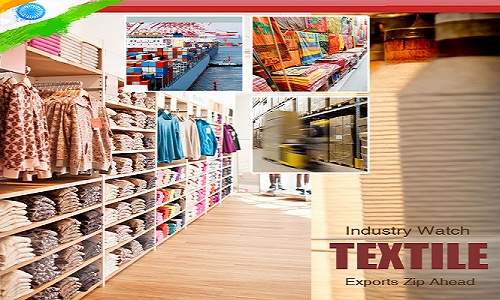
Being diverse it covers everything from hand-spun and hand-woven sector to capital-intensive, sophisticated mill sector. Besides, the close link to ancient cultures and traditions and agriculture make it unique compared to other countries. This also provides the industry with the capacity to produce a variety of products, which are suitable for different markets, both within and outside the country.
The industry has a potential to grow five-fold over the next 10 years and touch the $500 billion on the back of growing demand for polyester fabric. This includes domestic sales of $315 billion and exports of $185 billion. Currently, the domestic market comprises of $68 billion and exports of $40 billion. The total fabric production in the country is expected to grow to 112 billion sq. mt. by 2016-17. Moreover, India’s fibre production is expected to reach 10 million tons in the same period.
Peek into exports, imports
The textiles and clothing industry is also one of the largest contributors in exports across the world. Exports of textiles and clothing are estimated to touch $64.41 billion by end of March, 2017 as predicted by Working Group constituted by the Planning Commission. In 2015, export of textile products increased marginally by 0.46 per cent to $37,137.32 million as compared to $36,967.56 million in last year.
Also, India is not dependant on import when it comes to textiles. Majority of import takes place for re-export or special requirement. In the fiscal year 2015, the import of textile products increased by 13.98 per cent touching $5,511.95 million as compared to $4,835.93 million in 2014. The textile industry is trying to get a duty cut on man-made fibre as high cost of the key raw material for making blended garments is making Indian goods uncompetitive in the global market. The industry is in consultation with the finance and revenue departments regarding this. Man-made fibre draws and excise duty of 12.5 per cent, but it has import restrictions. These lead to a cumulative duty of 29 per cent.
Positive future ahead
The last five years have seen a spurt in investments in this sector. All segments of the industry, including dyed and printed attracted FDI worth $70.82 million or Rs 444.43 crores during April 2015. The government too has launched various schemes to support the industry. Minister of State for Textiles launched a scheme to promote usage of Geotechnical Textiles in the Northeastern states, in Imphal. Also launched was a new institution, Handicrafts & Carpet Sector Skill Council to promote skill development among artisans, crafts people and workers at grassroots level. Corporates too are supporting the industry in many ways through partnerships and joint ventures with industry players. Overall, the future looks promising.
Sutlej Textiles net profit down 16 per cent
Net profit of Sutlej Textiles and Industries declined 16.68 per cent in the quarter ended June 2015 as against the previous quarter ended June 2014. Sales declined 2.96 per cent in the quarter ended June 2015 as against the previous quarter ended June 2014.
Sutlej, incorporated in 2005, is engaged in manufacturing synthetic staple fiber yarn, man-made fiber blended yarn and cotton yarn and fabrics. The company operates in two segments: Yarn, which includes cotton and man-made fiber yarn, and fabrics and apparels, which includes woven of worsted or synthetic staple yarn, fabric processing and home furnishings. Sutlej has two spinning units, one weaving and processing unit and one home textiles unit.
The company was created out of a corporate restructuring exercise in which the textiles division of Sutlej Industries and Daman Ganga Processors were demerged. It is one of the flagship units of the multi-product conglomerate KK Birla Group, which has a dominant presence in fertiliser, engineering, textiles, sugar, tea etc.
Sutlej Textiles excels in all stages of textile production. Its versatile production facilities are vertically integrated, from spinning and weaving to dyeing and finishing, to making apparel. It has an international presence in a number of countries, including Russia, Spain, Singapore, Sri Lanka, and many more.
India: Gokak Textiles sales down 5 per cent
For the quarter ended June 2015 Gokak Textiles reported a net loss of Rs 8.36 crores as against a net loss of Rs 9.22 crores during the previous quarter ended June 2014. Sales declined 5.98 per cent to Rs 81.37 crores in the quarter ended June 2015 as against Rs 86.55 crores during the previous quarter ended June 2014.
Established In 1885, but modernised over the decades, Gokak Textiles is a manufacturer of cotton yarn and knitwear. It set the pace by first developing yarns for handlooms, then tyre cords and industrial yarns, next weaving and knitting yarns and today it caters to worldwide markets for quality yarns.
The company offers cotton yarn, blended yarn, industrial fabrics, terry towels, T-shirts, polos, undergarments and sweaters. The company’s products include socks, home furnishing, industrial and customized yarns. Its canvas products include tents, tarpaulins and animal and agriculture covers.
Gokak’s product is accepted in more than 35 countries worldwide. Approximately 50 per cent of the output is exported directly. At a meeting held on July 28, 2015, Gokak Textiles decided to issue non-cumulative, non-convertible, redeemable preference shares of Rs 10 each, aggregating to Rs 20 crores on private placement basis. It was decided not to seek listing of the proposed issue of preference shares.
Two panels to share posts at the BGMEA election
The Bangladesh Garment Manufacturers and Exporters Association (BGMEA) leadership selection is slated for September this year. According to sources, two leading panels are engaged in hectic negotiations to ensure that no other panels or candidates vie for any post in the elections. This is after arriving at a consensus about selecting the next BGMEA leadership. Sammilita Parishad and Forum, are the two forums that have already reached a consensus and have decided to share posts among themselves without elections. However, many members of the trade body have expressed their resentment towards this move.
In the polls to be held on September 8, a total of 35 directors will be elected from the Dhaka and Chittagong zones. These directors will further select the President and seven Vice-Presidents of the trade body for the next two-year term. Sammilita Parishad leader Siddiqur Rahman would be the President and it will also get four Vice-President posts, while Forum would get three Vice-President posts, according to negotiations.
BGMEA eirector however, stated that despite negotiations over sharing posts between the two panels, some members might contest for the posts individually as they (the members) have raised questions over the accountability of the leaders who will be selected. He further expressed fear that if the democratic right of the members for choosing their leadership goes, general members would be deprived of services.
According to Abdus Salam Murshedy, a former BGMEA President, all the past presidents of the trade body and the two platforms of its members had decided on this negotiation with the aim of putting the trade body on a strong footing.
FICCI representatives put forth their agenda to FM
Issues related to the textiles sector and an increase in allocation of funds under Technology Upgradation Fund Scheme and interest subvention for exporters was discussed by representatives from a FICCI panel recently, with Finance Minister Arun Jaitley. FICCI Textiles Committee chaired by Shishir Jaipuria, put forth a request for adequate allocation of funds under the Technology Upgradation Fund Scheme (TUFS), consideration of sanctioned loans under existing TUFS instead of proposed new scheme of TUFS, reduction in duties on man-made fibres and restoration of interest subvention for exporters.
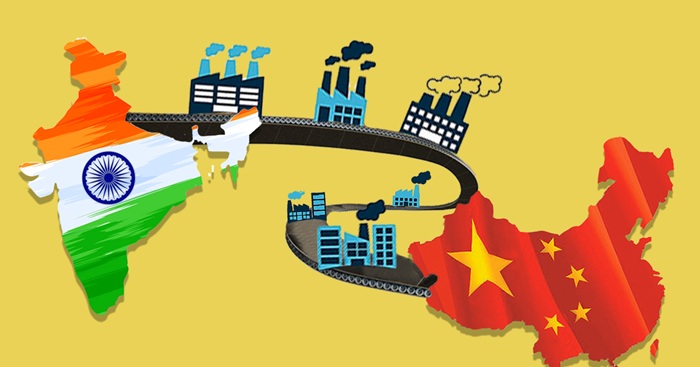
The FICCI body also felt that India, after taking the necessary steps can attain 20 per cent growth in exports over the next 10 years, as China was vacating the space in manufacturing. The panel said that with the exports incentives been rationalised the only support for Indian textile industry was perhaps the TUFS. The budget allocation for TUFS, for 2015 though, is reduced from Rs 1,840 crores to Rs 1,520 crores, as against last year. This is inadequate and FICCI has requested the Finance Minister to consider increasing the allocation under the scheme to Rs 5,000 crores.
Also, the chamber expressed apprehension on the proposal to restructure TUFS. It stated that under the current review, term loans already sanctioned would be considered in the new scheme, and this would affect the projects that were in the pipeline. To increase competitiveness and accelerate growth of exports, FICCI wishes that export finance should be provided at 7 per cent per annum, highlighting that restoration of interest subvention will provide a boost to the fragile export growth of the textile sector.
Cambodian industry fights minimum wage
The Cambodian garment industry is grappling with minimum wage issue. Compared to the US, it’s clear that Cambodian workers aren’t flourishing. Consumer prices in the United States are 45.73 per cent higher than in Cambodia, yet the US has 693 per cent more purchasing power. Rent prices in the United States are 170.23 per cent higher than in Cambodia, but Americans make 1,242 per cent more money each month than Cambodians.
Inflation and rising costs of living are affecting Cambodia’s 15 million residents. Factories in Cambodia are fighting an increase in wages. They say an increase in workers’ wages would drive away companies outsourcing to Cambodia. The garment industry’s minimum wage, the only sector in the country with a wage floor, is $128 per month but industry leaders and researchers are eyeing $177 as the proposed increase to be effective in 2016.
Phnom Penh, where a cluster of Cambodia’s garment factories are located, has a relatively high cost of living when compared to the wages being dispensed. The cost of living in Phnom Penh is higher than that of Beijing. It’s also more expensive to live in Cambodia’s capital than Czech capital, Prague.
More...
Contaminated cotton hurts Pakistan's exports
Pakistan lacks a cotton standardisation system. Despite being the fourth largest cotton producing country in the world, Pakistan’s cotton considered as one of the most contaminated crops in the world. Losses due to cotton contamination run to millions of dollars. If proper standardisation is followed, over 45 per cent of Pakistani cotton would be traded at premium. Pakistan's cotton is inherently of good quality and a six-year survey reveals that only 8 to 10 per cent cotton falls in grade IV.
Cotton is traded on a weight basis and farmers are only interested in high yields. They give no attention to quality parameters and clean picking. Pickers on the other hand are paid for quantity of cotton picked in a day, regardless of the trash content. On the other hand, ginners mix high quality and contaminated cotton to get a blend that loses its value.
Indeed textile mills have installed cleaning equipment in their mills but have paid no attention to clean cotton production and standardisation. For spinning they use the cheapest cotton. For quality production they import cotton from India or other countries but are reluctant to pay more for quality from Pakistani farmers.
India's spun yarn exports to China on the rise
Indian yarn exports to China have been sluggish since May 2014, falling year on year, however, there has been a little rebound in May 2015. In June 2015, exports jumped 105 per cent in volume and 80 per cent in value terms. The sudden rise can be attributed to relatively higher domestic prices compared to imported goods. The other factors include: firm cotton prices and prevailing state cotton reserve policy.
In June, 83 countries imported spun yarn from India with China topping and accounting for 40 per cent of the total. Bangladesh, the second largest importer of spun yarns, accounted for 11 per cent of all spun yarn exported from India. However, exports to Bangladesh declined one per cent in volume and 10 per cent in value terms. Egypt continued to be the third largest importer of spun yarns, with volume and value both down year on year. These three top importers together accounted for more than half of spun yarn exported from India in June.
In June India acquired four new markets including Honduras, Paraguay, Singapore and Kuwait. They together imported 1.90 million dollars worth of spun yarns. Romania, Norway, Philippines, Argentina, Malawi, New Zealand and Hong Kong were among the fastest growing markets in June, doubling their imports from India.
CBI files three cases against CCI officials in AP
CBI is said to have registered three cases against officials of the Cotton Corporation of India (CCI) and Agricultural Marketing Committees of some districts in Andhra Pradesh for releasing payment to middlemen based on forged documents.
CBI sources said R Jeya Kumar, then Branch Manager of CCI in Guntur, Rayapati Purnachandra Rao, D Rajasekhar Reddy, G Varun Raghuveer -- all three cotton purchasers and CCI centre in-charges of Guntur Nandigama and Mylavarama have been named in the cases.
According to the CBI officials, the accused allegedly procured 11.75 lakh quintals; 9.07 lakh quintals and 3.13 lakh quintals of cotton on different occasions from middlemen instead of cotton growers or farmers at notified marketing yards of Agricultural Marketing Committees ( AMC) under Minimum Support Price operations during the crop season 2014-15. The officers in question also issued fake consolidated certificates to the effect that the cotton kapas were purchased from bona fide farmers at the marketing yards of their respective AMCs.
The CBI raided residences and office premises of the accused at 18 places including Guntur, Krishna, West Godavari and Prakasam Districts in Andhra Pradesh and also in Tamil Nadu, and found several documents supporting the allegations.
Cotcorp.gov.in
Beyond Denim expands at Intertextile Shanghai
For the very first time at an Intertextile Shanghai Apparel Fabrics fair, the entire supply chain for a product category will be on display in the same area. The fair as a whole is the largest apparel fabrics and accessories event, and takes place at the brand-new National Exhibition and Convention Center in Shanghai from October 13-15. The Beyond Denim hall will house denim yarns, fabrics, garments, accessories and machinery to become a true one-stop global platform, and has been re-designed with a special denim style by American design studio Doneger Creative Services.
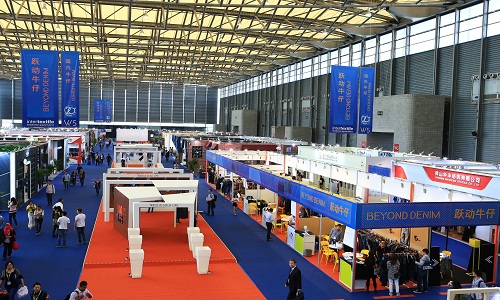
Messe Frankfurt’s Senior General Manager, Wendy Wen says the re-designed and significantly larger area will be a major draw for buyers. “The premium product areas of Intertextile Shanghai are already well-known in the industry and attract a lot of high-end buyers from around the world, including SalonEurope, the Milano Unica Pavilion, the Premium Wool Zone and Verve for Design. We believe with the changes we have made to the Beyond Denim concept, including the fact buyers can now find everything in this sector under one roof, this will elevate this area to the same reputation in the industry these others have.”
First held at the 2014 Autumn Edition, Beyond Denim expands in size this year by over 70 per cent as a wider range of exhibitors participate. This includes a large number of ready-to-wear denim suppliers from CHIC, the concurrent fashion garment fair. Doneger Creative Services has also created a Denim Forum which will showcase different denim products, trends and technology, and features five trend themes: Dwell, Western, Cyber, Artisan and Wanderer.
Amongst the many exhibitors taking part in this hall is a debut Italian company, as well as two Hong Kong suppliers. SEI S.p.A Italy will showcase its unique ‘Flexi Denim’ laser system which includes proprietary technology that allows for production speeds of up to three times faster than other machines with the same laser capacity. This system can substitute traditional methods of stone washing, whiskering, fading, sanding, ripping and more on denim and finished garments.
Lucky Textiles Group, Hong Kong specialises in corduroy, twill and denim products, and will feature products with features such as nanotech, iron-free (high & low temperatures), water & oil repellence, anti-pollution protection and more. H.W. Textiles, Hong Kong is a joint venture company with Japanese firm Kurabo. They boast spinning, dyeing and finishing capabilities, and will feature their Kuga, Rogi, Flexi, Vintage and Boy Friend Denim collections at the fair.
Many of China’s leading fabric and garment suppliers will also feature at the fair, including Advance Denim, Benjie Textile, Black Peony Group, Foshan Huafeng Textile, Foshan Lisheng Textile, Foshan Seazon Textile and Garment, Freedom Denim, Panther Textiles Holding, Prosperity Textiles, Shan Dong Dai Yin Textile Group and Zibo Haitian Textile.
Asian pavilions to the best Buyers looking to discover new and innovative products can find them in six country and region pavilions from India, Indonesia, Japan, Korea, Taiwan and Thailand. The Japan Pavilion promises to be one of the most innovative at the fair, with a number of exhibitors among the 36 participants showcasing state-of-the-art products and technologies according to Akira Kawashima, Senior Director, Textile Division of the Japan Fashion Week Organization, organisers of the pavilion.
The Taiwan Pavilion, organised by the Taiwan Textile Federation, will also be home to some innovative and unique products. Far Eastern New Century Corp is focusing on sustainable, smart-textile and multifunctional fabric ranges, which includes anti-static heat-generating fabrics, quick-dry fabrics and stretchable and lightweight eco fabrics. Singtex Industrial, meanwhile, are exhibiting their award-winning P4DRY fabric which is made by printing ground coffee onto the cloth to absorb moisture and reduce odours. And their AIRMEM eco-friendly biofilm uses modified coffee oil and hydrophilic agents to improve moisture permeability and water repellency.
While Korean suppliers are known for their innovative and functional fabrics, they also place much emphasis on the latest trends as Yoon Young-Sang, Vice Chairman of pavilion organiser Korea Fashion Textile Association explains. “Korean products at the fair will reflect the trend sentiments, which for Autumn / Winter include fabrics of natural texture and natural fabrics with functionality. Functional fabrics from Korea have excellent value for money, and are drawing a lot of attention, particularly for sportswear and casualwear.”
Eight Group Pavilions added attraction
In addition to innovative products from Asia, cutting-edge fabrics can be found in the eight Group Pavilions to feature at this year’s fair. The pavilions, which are organised by leading fibre and yarn companies and feature their partner mills, include Birla Cellulose (Grasim), DuPont, Hyosung, Invista, the Korea Chemical Fibers Association (KCFA), the Korea Textile Trade Association (KTTA), Lenzing and Oeko-Tex. All pavilions are housed in hall 5.2, including the Oeko-Tex Pavilion which features in the All About Sustainability zone. Always a popular stop for buyers to discover cutting-edge products is the Lenzing Pavilion, which returns again to this edition 10 years after first appearing.
Fringe programs and concurrent events
Thanks to a huge range of concurrent fairs and fringe programme events, Shanghai will be the centre of the global textile industry in October. With three well-established concurrent fairs taking place in the same venue – Yarn Expo Autumn, CHIC and PH Value – the entire textile supply chain is now covered, and has already shown at the Spring Edition the strong synergy effects for both exhibitors and visitors this brings. Also on the second day of the fair on October 14, Planet Textiles 2015: The Sustainable Textile Event will take place, featuring some of the industry’s foremost experts as speakers.
Fairgoers can also discover the latest trends and gain market updates through the fair’s fringe programme. This includes the Intertextile Directions Trend Forum, Fabrics China Trend Forums, China International Fabrics Design & Fabrics Creation Competition, and a wide range of seminars and product presentations.
Intertextile Shanghai Apparel Fabrics – Autumn Edition 2015 is co-organised by Messe Frankfurt (HK); the Sub-Council of Textile Industry, CCPIT; and the China Textile Information Centre.