New Delhi to host yarn show
The Yarn Fabric and Accessories trade show will take place in New Delhi, from December 14 to 17, 2015. The aim is to meet the needs of rapidly evolving and expanding yarn and fabric market in the Asian sub continent. The event will enable stakeholders in the textile and apparel industry to converge on a single platform for networking, exchange of ideas, sharing of current experiences, showcasing the latest innovations and products and developing a vision for the future.
The show is the only one of its kind in South Asia, conceived to cover the entire textile value chain. Among the exhibits are natural and manmade fibers, yarns, fabrics, fine yarn-dyed shirting, polyester-wool and polyester-viscose, linen, dress materials, denim, cotton twills and drills, trimmings and embellishments, buttons, buckles, studs, eyelets, lining and interlining, labels, tags, barcodes, badges.
Visitors will comprise apparel manufacturers, exporters, buying houses, retail chains, apparel brands, wholesalers, importers, fashion designers and merchandisers, design studios and institutes, and trade body representatives. More than 250 companies are expected to participate, including some from abroad, from various supply chain segments like fiber, yarn, fabric, dye-stuff and chemicals, trims and embellishments, packaging and display.
The show is planned by Vision Communications, the monthly magazine Attire World and Accessories Guide.
www.yfatradeshow.com/
ATE gearing up with tech solutions for India's lingerie segment

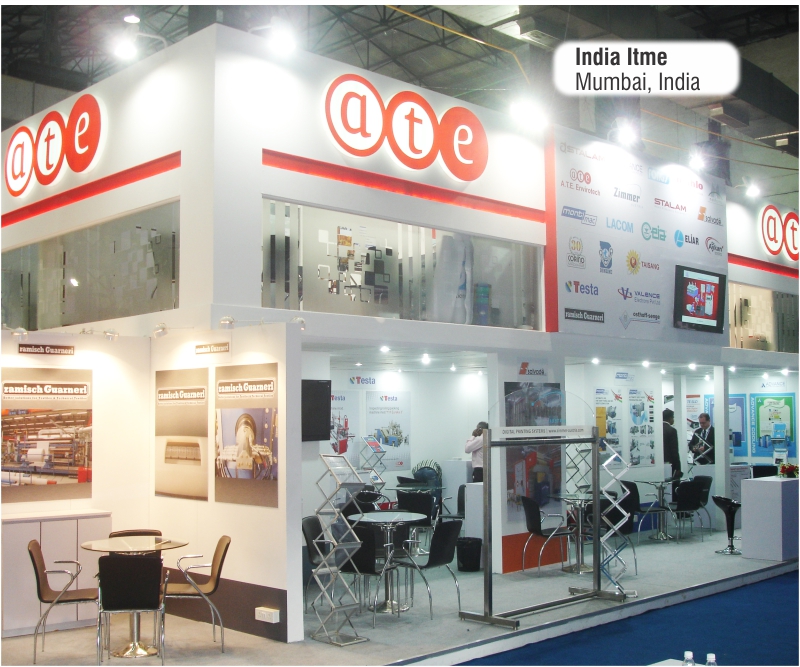
Elaborating on their plans, K B Prasad, VP-Textile Engineering, Garment & Home Textile Machinery, ATE Enterprises says, “We started supplying technological support to the sewing industry players. Lingerie is the next category we are moving to since it has a lot of scope for automation. For now, they buy machines from China and other countries but face problems with after sales support. We will address this issue.
Offering automation solutions to garment makers
Mumbai-based ATE has been focused on garment industry offering technological solutions by partnering with international machinery makers. Today, it has become a trusted machinery supplier to big manufacturers in the country. “We think big. People trust us when they buy machines. We take care of their spare part needs and after sales,” explains Prasad. At the recent Galleria Intima fair in Delhi, ATE represented several machinery groups such as Juki, Morgan providing cut to pat machines for intimate wear. “We have big customers like Rupa and Amul. One challenge is that unlike other garment segments this segment is yet to accept automation in a big way and we need to break this resistance. Undergarments are still considered a matter of a few overlocks but there are a variety of fabrics to be handled like spandex, elastic material, where simple sew won’t work,” explains Prasad.
Juki machines supplied by ATE are equipped with pullers to handle elasticity and synchronise the sewing part. This eliminates puckering and unevenness. ATE also displayed machines from H&H, Hong Kong that allows an operator to handle two tasks at a time. Talking about its USP, Prasad says, “This can increase the operator’s efficiency and productivity, while he could get more wages. Buyers are ready to invest in such machineries but are hesitant about hiring more workers. So these machines can solve this issue.”
ATE added hot air technology or thermo bonding technology. “We are giving stitchless technology. It’s bonding with a tape where no hemming is needed. It’s applicable to inner wear and outer wear. China has been using this technology for years. It has just come to India. Players like Gokuldas and Arvind are using these machines. Arvind’s stitchless shirts were made on our machines. We can make swim wear, sportswear on these machines and they are ideal for waterproof material,” Prasad adds.
Another brand under its fold is Turkey’s Inmac owned by the Intex group. Intex sells machines all over the world. In India, Intex has carried out around five successful projects with Inmac. “Sports Garments, White House, Ori Jeans, Wonder Blues have bought Inmac machines from us. Ori manufactures for Diesel brand. Another name is Zodiac. They repeatedly buy our machines for garment dyeing, their shirts are dyed on our machines. Now we are moving ahead in terms of knits dyeing. We see a big market in east India for this. Next we will move into Ludhiana and Tirupur,” informs Prasad.
www.ateindia.com
India may see fall in cotton production
Cotton output in India is likely to drop by up to 15 per cent this year due to insufficient rain and pest attacks. Farmers are worried as rainfall over the last one month has been scanty, putting the crop under stress. In Gujarat, a major cotton producing state, rainfall has been patchy and 28 per cent below normal. The yield could decline by 10 per cent to 15 per cent due to lower acreage and poor rains in Gujarat. The situation is also worrisome in Maharashtra. In Punjab and Haryana, the crop is at risk of damage from whitefly attack. The region has faced pest attacks but not so serious as it is now. Farmers in Punjab and Haryana may lose up to 30 per cent of the crop. They are forced to follow agents of pesticide companies and spend a fortune to save their crops.
Prices would be supported by low global output, rising local demand and the rupee’s depreciation. Globally yield could decline as the area under cotton has come down in major cotton-producing countries like China, the US and Pakistan. In the US, heavy rains due to El Nino are affecting cotton crop. Damage due to pest attack is reported from Pakistan.
Texworld Paris to be held from September 14-17, 2015
The much awaited, Texworld Paris, will be held at Paris Le Bourget from September 14-17, 2015. The event is a meeting ground for textile and fashion professionals, a place to witness latest innovations and trends, in the harmonious name of ‘Prelude’, this season. Autumn/Winter 2016-17 collections will revolve around this theme and tones and textures. Louis Gérin and Grégory Lamaud, the fair’s two artistic directors, and a group of designers, reflect on the influence of fashion on the future of society. Their vision of future synergies, in which the artist is at the centre of design is documented in their Trend Book.
There are six themes: Simple Tessitura, Imitation Fugue, Sacrilegious Harmonies and Rhapsodic Transgression. Denim will be the focus and is christened, ‘Graphic Percussion’, while accessories is entitled ‘Chiselled Score’. The concept will be interpreted on the Trends Forum, by most astounding materials, daring embroidery, new textures and the most creative developments of the season.
Two seminars are scheduled for Monday and Wednesday, wherein artistic developers will develop the link between materials and colours and share their inspiration and the new aesthetic directions taken by textiles and fashion in winter 2016/17.
Besides, young alumni of the Esmod Fashion School are being invited to Texworld Paris to showcase their graduation collections on Tuesday and Thursday afternoon. Michael Scherpe, CEO of Messe Frankfurt France said that they encourage designers and industry to come together so that young graduates can enter the professional world and understand its demands.
Greenpeace accuses outdoor clothing brands of using toxic chemicals
Greenpeace, the international environmental group has accused outdoor clothing makers including The North Face, Columbia and Patagonia for failing to eliminate toxic chemicals in their products. The accusation by Greenpeace comes after its scientists found traces of perfluorinated chemicals (PFCs) in the waters of high-altitude lakes around the world, including the Lago di Pilato in the Apennine mountain range of central Italy.
Greenpeace said in its recent study how slowly the environment breaks down these chemicals, which outdoor clothing makers routinely use in their waterproof gear. The company said that brands like Puma and Adidas have already adopted ‘ambitious elimination targets’ for PFCs and some companies also offer collections of PFC-free waterproof clothing. But The North Face, Columbia, Patagonia, Salewa and Mammut, according to Greenpeace are showing “little sense of responsibility when it comes to eliminating hazardous chemicals such as PFCs”.
Greenpeace criticism comes at a time when apparel companies are trying to portray their apparel manufacturing processes as eco-friendly. Patagonia in particular, for instance, has been touting that it uses recycled and ethically-sourced materials and it is also involved in creating a national park in Chile. The company is a B corporation, meaning it includes social and environmental performance alongside its financial goals. Two years ago it started a venture fund, ‘$20 Million and Change’, to invest in socially and environmentally responsible start-ups.
www.greenpeace.org
Australia reduces tariff on Pakistan's textiles by 50 per cent
Pakistan's textile, clothing and footwear will benefit with a reduction in duty by the Australian Government. Engineer Khurram Dastgir Khan and Commerce Minister, Pakistan revealed this after a meeting with the Australian High Commissioner. Due to the consistent efforts by incumbent government, especially the Commerce Ministry, Australia has slashed duty on Pakistani products, mainly textile products by 50 per cent—from 10 per cent to five per cent.
Duty is slashed on 226 tariff lines. Of these, only eight are non-textile items and the remaining 218 are related to the textile sector, of which 63 are home textile. Australia has slashed duty on items of Pakistan's interests and expertise.
Khan added that the Commerce Ministry would chalk out a plan, aimed at facilitating Pakistani textile sector entrepreneurs with Australian buyers. Besides, an Australian trade mission would visit Pakistan in October 2015 to review the current state of bilateral trade relationship. He further mentioned that Pakistan has requested Australia to include Iran in regional connectivity agenda, and they were quite positive about it. Textile, leather, cotton, etc, is exported by Pakistan and at present, the country’s hopes for Australia’s support in agriculture, and to facilitate access of Pakistani dates and Kinnows to the Australian market.
In 2013-14, trade between the two countries was about $550 million and trade balance is almost same for the two countries.
Vietnamese companies upgrading businesses with TPP in sight
Vietnam's garment businesses have ramped up investments in upgradation of their units and improving product and design quality in the light of the benefits launched by the Trans-Pacific Partnership (TPP) recently. Though there are many other sectors expected to benefit from TPP, the garment and textile industry is supposed to be the biggest beneficiary of this partnership. In fact, the growth results of six garments and textile companies listed on the stock exchange reveals all six clocked a promising growth rate in terms of revenue and profits in the second quarter of this year.
These companies with a year-on-year growth of 20.74, generated around $79.9 million revenue in Q2. With a net revenue of nearly $32.4 million,Thanh Cong Trade Investment and Garment Joint Stock Company topped the list of companies generating high revenues. The firm is infusing about $30 million during the next four years in its weaving and dying garment segment. The firm was followed by TNG Trade and Investment Joint Stock Company, which clocked a net revenue of $22.2 million.
Thousands of Indonesian small-scale industry workers jobless
Almost 36,000 jobs are at risk in Indonesia as more than 100 textiles and garment manufacturers are on the brink of collapse due to declining domestic demand. As Ade Sudrajat, Chairman, Indonesia Textile Association (API) points out, products manufactured two-three months ago still remain in warehouses. Small scale industries are the ones that are majorly affected as these hire about 360 workers on an average and sell their goods solely in the local market. Factories could not produce because of a lack of demand.
In April-June 2015, the Indonesian economy expanded at 4.67 per cent. This is the slowest in five years as people’s purchasing power dipped from lower commodity prices in the global market, and sluggish government and private investment. As per Central Statistics Agency data, as of February, about 7.45 million of Indonesia's working age adults are out of work, which is up by 300,000 people from the same period a year ago.
Sudrajat hopes that there will be a 40 per cent cut in electricity tariffs by the government, which would help the local manufacturers compete with imported textiles. He further urged the government to erect trade barriers for some textile imports to protect the local market.
China loses cotton advantage
High domestic cotton prices and low polyester prices in China have made its cotton spinning sector less competitive. Prices started diverging in 2009-10 and cotton prices have remained substantially above those of polyester since then. Lack of competitive pricing for cotton, coupled with turmoil in its stock markets, has curtailed growth in China’s cotton spinning sector. Consumption is projected to reach around 7.7 million tons, far below the peak of 10 million tons in the mid- 2000s.
In recent years, mill use has shifted to lower cost countries, primarily in Asia, as cotton spinning has become less competitive in China. In 2015-16, world consumption growth will likely be limited, because international cotton prices remain higher than prices of competing manmade fibers.
World cotton consumption is forecast to grow by two per cent and reach 25 million tons, which remains below the volume consumed just before the global economic recession. In addition to China, India and Pakistan are the largest consumers of cotton and these three countries alone account for 64 per cent of world cotton consumption.
Consumption in India and Pakistan is anticipated to increase by three per cent. However, world cotton area is projected to be down seven per cent in 2015-16 to be just under 31 million hectares due to significantly lower prices in 2014-15.
Digital printing sees strong growth
The worldwide digital textile printing market for garments, home decor and industrial applications is experiencing strong growth of around 34 per cent CAGR. Europe continues as the biggest market for digital textile printing due to strong regional manufacturing industries while Asia Pacific is gaining momentum as it embraces digital printing technologies as a mainstream solution.
The shift away from mass production to more customised, colorways, and complex print designs is driven by importers, brand owners and consumers who are looking for differentiated quality products. These along with distinct operational benefits such as reduced inventory, and just in time manufacturing are the driving force that is fueling the growth in digital textile production.
Requirements for a more sustainable and environmentally friendly production are a key driver in this market. As owners and retailers become more sensitive to their product impact on the environment, as well as addressing consumer needs for creativity and customisation, they are increasingly looking to digital producers as thought leaders that are fundamentally changing the supply chain and helping them become sustainable and profitable.
Digital textile printing uses large format inkjet printers. With digital printing technology photographic and tonal graphics with multiple shades and colors can be printed on textiles.
More...
Pakistan's mills want incentives
Cotton exporters in Pakistan want incentives from the government so that cotton exports would bring stability in prices and farmers can get a fair return for their produce. They want the government to protect the interest of all stakeholders from farmers to spinners and weavers and allege that farmers are being exploited by monopolists. They warn that Pakistan would have to import raw cotton and cotton yarn to run its textile mills if it did not protect the interest of farmers.
Mills want the Trading Corporation of Pakistan to stabilise prices and save farmers from financial losses. They want a support price for seed cotton. Ginners want a ban on the shift of sugar mills to areas which have been declared as cotton belts. They say, a shift of sugar mills would change cropping patterns and harm cotton growing areas and the textile sector as a whole.
Textile mills and spinners in Pakistan have decided to buy cotton from farmers strictly according to need. Their complaint is that while a country like India gives incentives to cotton growers, ginners, and the textile sector, the government in Pakistan is reluctant to give any incentive to the stakeholders of cotton production.
Russia sees 20 per cent rise in clothing, footwear prices
A study by the Fashion Consulting Group firm reveals, the rapid devaluation of Russian ruble may result in clothing and footwear prices going up by 20 per cent in the country. Anna Lebsack-Cleymans, CEO of Fashion Consulting Group said in a statement that retailers will have to raise prices if they don't have production facilities in Russia. Olga Shteinberg, Fashion Consulting Group's press officer stated that an increase in prices will be seen in stores operating in medium and upper-medium segments of the industry. This rise in prices will impact the previous collections of some retailers as well as new collections.
The Russian currency rallied from previous lows in the first half of the year. However, the ruble started to slide again in June this year on the back of low oil prices. The fall of the ruble against the US dollar accelerated in August. Ksenia Ryasova, CEO of the Finnish brand Finn Flare, said that because of the devaluation last month, prices of the autumn collection went up by 15 per cent. Medium and upper-priced segments have been hit hardest by the ruble devaluation.
However, Ryasova added, medium segment stores such as Finn Flare cannot lower the quality of their goods, unlike cheaper retailers do. Doing so, would cause an outflow of customers. Sharp ruble devaluation and a drop in consumer demand over the past year has affected the retail sales in Russia. Falling real incomes and rising prices have forced Russians to slash their spending on clothes.
Garment manufactures look at East Africa as a huge market
Garment manufacturers still look at East Africa despite the fact that the potential is hindered by infrastructure and cumbersome Customs processes. Exports from Ethiopia, Kenya, Uganda, and Tanzania are expected to grow as they attract more investment.
According to McKinsey & Company, East Africa will remain a niche market for garment manufacturers over the next decade. However, its success depends on the existence of free trade agreements with the US and the European Union (EU). East Africa will comprise of only a small slice of the global sourcing market, but the industry’s impact will still be important for the region. This is when the annual exports over the next decade are slated to be $700 million. Ethiopia, Kenya, Tanzania, and Uganda comprise of 0.07 per cent of global exports, earning $337 million.
With investment rising, East Africa may be a new alternative for selected large players in basic categories. This would lead to annual exports to grow to $1 billion in five years and $1.7 billion annually in the next 10 years. East Africa may move beyond cut, make, and trim (CMT) facilities. This process however, may take several years before significant numbers of vertically integrated, domestic players appear in the region. Funds to upgrade facilities and skilled workers to become a major force in the apparel sector over the 10 years will be extended to the industry.
One of the drivers for this is duty-free access to the US provided by Africa Growth and Opportunity Act (Agoa). However, the region’s garment manufacturers are looking at the EU to diversify markets. McKinsey also informs that global buyers’ preferences indicate real interest in Kenya and Ethiopia.
Galleria Intima: Indian lingerie industry gets a global platform

In its 4th year Galleria Intima held on Aug 26 and 27, organised by the Intimate Apparel Association of India (IAAI), moved to the national capital this year. Following the ‘Make in India’ initiative launched by Prime Minister Narendra Modi, IAAI aimed at facilitating greater and meaningful collaborations across all the categories of the intimate apparel sector.
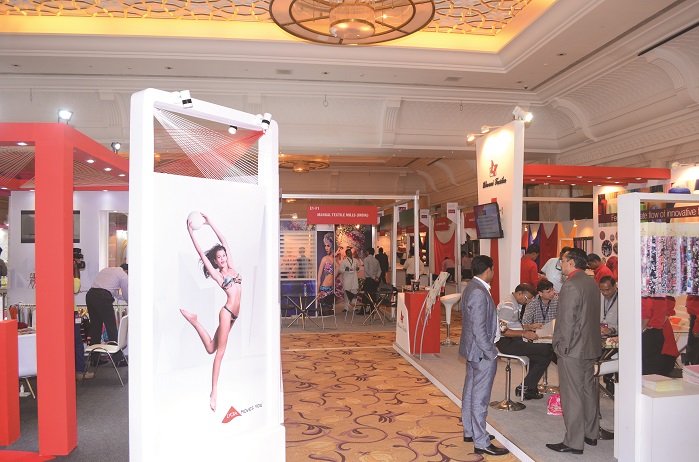
Elaborating on the show concept, Rakesh Grover, President, IAAI, says,“We want manufacturers to come and make in India and set up huge plants in the country in terms of garments and raw materials. We are open to knowhow tie-ups with other countries.This platform gives Indian manufacturers an opportunity to grow to world standards. In five years we hope to be on par with international standards.”
Lingerie industry gets a boost
The Indian intimate wear industry is changing with consumers now demanding styles prevalent in the foreign countries. “A delegation of our members visited Eurovet exhibition in Paris. We saw a different world of products there and realised that this is what people back home demanded. We felt the new generation had to be offered those styles, designs, colours. The major problem was how to source them and lack of knowhow to make such products. So we thought of doing a similar exhibition in India by inviting quality suppliers of raw materials from across the world as well as from India,” avers Grover, talking about the inspiration behind Galleria Intima.
The Galleria Intima exhibition on a small scale was organised in Goa. “We got a good response from manufacturers and evolved into a sourcing exhibition and a technology upgradation platform. We now exhibit new technologies of cutting and sewing, production, software management and computerized systems. We want to upgrade the industry as a whole. We have done seminars in Europe, China and presented the changing realities in India. We also aim to increase exports from India. Right now, we have a four per cent global share in intimate wear. We want that to go to 10 per cent,” he asserts.
This edition received a good response from international buyers and exhibitors from China, Hong Kong and other countries. IAAI also holds buyer-seller meets in different cities and plans to upgrade the scale of such events.
From Goa to Delhi, the show goes on…
The change of location from Goa to New Delhi was a deliberate move since latter is convenient for business and is more accessible. Says Grover, “Goa is more of a leisure destination and because of poor connectivity, Goa event didn’t get many visitors. Delhi is connected to the rest of India via road, rail and air. And people combine their schedules so that the exhibition becomes one of the parts of their plan. So we decided to move Galleria Intima to Delhi.”
According to him, the inner wear industry is the only one that’s growing and every brand is witnessing a growth of 25 to 30 per cent. “The share of organised players is growing. Right now organised market is 40 per cent and unorganised is 60 per cent. Consumers have grown and matured and their demands have grown. They want more styles and colours and they are ready to pay the price for a good product. This has opened up the industry. Multinationals have come in and widened the price points. And the young generation is open to new things,” Grover sums up.
www.galleriaintima.com