Bangladesh to train workers
Bangladesh has launched a project to train workers and mid-level managers in different sectors over the next five years. This is necessary to achieve its development goals. More than 43,800 workers and mid-level officers will be trained in phases. The length of the training courses will vary from a month to six months and the educational qualification for the trainees has been fixed between primary school certificates and graduation levels.
Workers will receive training on 15 different subjects, including enhancing managerial capacity, supervision, technology, sewing operations and computer literacy. The first phase of the project has already been completed, under which 2,096 garment workers were given training.
Training institutions will have to manage jobs for 70 per cent of the trainees after completion of the certificate courses. If the training partners fail to do so, their performance would be considered poor. In the absence of skilled trainers in Bangladesh, foreigners take away billions from the country by way of salaries and allowances.
Productivity improvement for garment workers is very important for achieving the country’s export target of 50 billion dollars by 2021. Every year some two million people enter the job market in Bangladesh but most of them do not have the necessary skills.
El Salvador garment exports up five per cent
For the first half of 2015, El Salvador textile exports were 21 per cent more than in the first half of 2014. Exports of readymade apparel were up five per cent. The annual increase in foreign sales was seven per cent while it aAt the end of 2014 the increase was only 0.4 per cent.
For the first half of the year 2015, 12 per cent of sales abroad were those of textiles and 88 percent were those of readymade. Of sales abroad in the first half of this year, 77 per cent went to the United States, 12 per cent to Honduras, four per cent to Guatemala and six per cent to other markets. Exports of cotton shirts generated 28 per cent revenues and cotton socks generated seven per cent.
The country has established a vertically integrated synthetic textile manufacturing cluster. The cluster includes: polyester and nylon yarn, circular and warp knit stretch fabrics. A strategic relationship has been developed between textile mills, garment factories and retailers that would reduce costs, increase efficiency and flexibility.
Factories and mills have engaged in capacity building programs and meeting compliance standards.
Vietnam gets ready for treaties
Since the beginning of this year, Vietnam has earned $12 billion from exporting garments and textiles. The free trade agreement with the EU could help Vietnam increase export value of its garment products by 50 per cent in the first year and 20 per cent annually in succeeding years. The industry will have even greater opportunities once Vietnam signs the FTA with the EU. Once the Trans Pacific Partnership agreement is signed, Vietnamese exporters can increase their market share in the US.
Finding new markets will allow businesses to increase export revenues and market share, strengthen their position in traditional markets, and be more likely to achieve the $28.5 billion target set for this year. In the meanwhile, Vietnam has to work at identifying weak elements and strengthening internal chain links among garment companies and material manufacturers to make the most of each other’s products. This will allow the country to meet the origin requirements of FTAs and the Trans Pacific Partnership Agreement.
To take full advantage of trade deals, Vietnam’s garment and textile sector should maintain its current growth rate and invest in technology and improve designs, patterns, and quality to gain a firm foothold in the international market.
EU Trade Commissioner to skip Dhaka sustainability meet
Cecilia Malmstrom, Trade Commissioner of the European Union (EU) would be skipping a crucial review meeting on Sustainability Compact in November this year, in Dhaka. Officials said she would not be present because of government's failure to enact rules on Bangladesh's labour law.
Amid persuasion from global buyers, especially readymade garments, in July 2013, the law was amended. The B’desh government, since then promised to formulate implementation rules of the law several times, but has not done so far. Tapan Kanti Ghosh, Commercial Counsellor at Bangladesh mission in Belgium, in June informed Dhaka that Malmström would skip the review meeting unless the gazette of rules on implementation of Bangladesh Labour Law is published before July 8. He added that she wanted to see more progress before she arrived in Dhaka.
Tofail Ahmed, Commerce Minister, wrote to Malmström in the first week of July inviting her to attend the review meeting in Dhaka, said officials. Malmström however, replied to the minister in the first week of September about her inability to attend the programme due to 'busy work schedule'. Officials though, believe that she is skipping the meeting as the government did not publish the gazette notification of implementation rules of the labour law.
Monsoon revisits, raises hopes of cotton growers
With monsoon showers making a return, cotton crop growers in the Marathwada and Vidarbha regions of Maharashtra and the rest of the country are optimistic. Experts feel the country will witness a bumper cotton production at around 400 lakh bales with nearly 120 lakh hectares coming under cotton cultivation.
As K R Kranthi, Director, Central Institute of Cotton Research (CICR) says, except some spots such as Telangana and Mahbubnagar, the crop is good across the country. Normally around 16 lakh hectares in the region comes under the cotton cultivation, yielding an output of 30-32 lakh bales. This time, says Kranthi, it could be in the range of 37-38 lakh bales.
However, higher yields mean fall in prices. On the other hand, around 32 farmers allegedly committed suicide in the Marathwada region in the first week of September alone due to draught situation. China too has stopped importing cotton and therefore even exports are down. Cotton prices are currently low at Rs 4,000 per quintal and in July the stocks were around 183 lakh bales. Even if the domestic consumption is around 250 lakh bales there is still a surplus, said Kranthi.
www.cicr.org.in
Welspun shares on an upswing amid bumpy stock market
Shares of textile manufacturer Welspun India have more than doubled over the last six months against the falling performance of other companies and fluctuating stock markets due to declining Chinese yuan. The company has emerged strong in manufacturing textiles—towels and bed sheets. Experts suggest that the bullish run at the stock market signals at steady growth it has been witnessing led by buoyant exports.
Around 95 per cent of Welspun’s revenue is driven by exports to global retailers in the US such as Walmart Stores and JCPenney. Experts point out that several things worked in favour of the company. First, it was able to grab a market share from competing countries such as China and Pakistan owing to cotton stocks at stable prices and government initiatives such as low-cost funds under the Technology Upgradation Fund Scheme. Also the company, in FY11 and FY12, pulled shutters on its unprofitable businesses like standalone retail stores in India, factories in Mexico and Portugal.
Its June-quarter earnings were better than expected as revenue grew 18 per cent year-on-year to Rs1,388 crores, led by a strong 15 per cent volume growth. Operating profit margins expanded to 25.9 per cent backed by vertical integration, volume growth and higher contribution of innovative products, according to Centrum Wealth Research note dated July 21, 2015.
However, Edelweiss Research is careful about the performance of Welspun stock in future, which is up 2.1 times in the past year and is trading at 10 times one-year forward price-to-earnings multiple. The firm feels that the high market share penetration of towel/sheets in the US may limit upsides and the enhanced capacity by various players in this segment in India may have an impact on the company’s growth momentum beyond FY17.
Indian curbs may hurt Bangladesh jute sector
India has imposed restrictions on the import of jute and jute goods from Bangladesh. This is likely to give Bangladesh’s jute sector a rough time. If the country’s jute mills cannot export the ordered goods immediately, they cannot pay salaries and bonuses to mill workers, which may create labor unrest. And if jute mills stop production, jute farmers may be deprived of fair prices during the peak season.
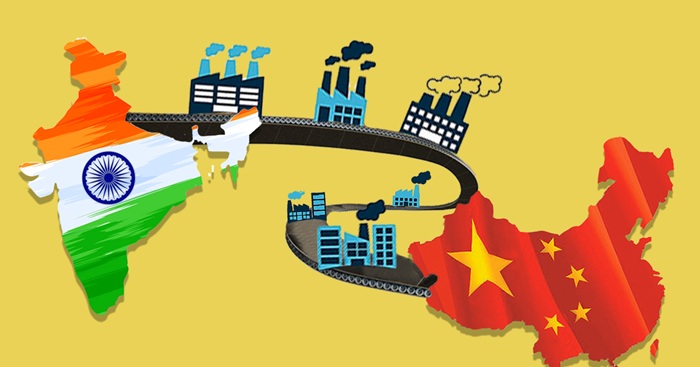
The jute industry in India has demanded imposition of a countervailing duty on imports of jute goods from Bangladesh. Under the SAARC treaty, there is zero duty on import of jute goods from Bangladesh. This, says the Indian jute industry, creates a non level playing field between jute manufacturers of India and Bangladesh. It says subsidised jute goods from Bangladesh are flooding the Indian market, hurting the interests of Indian jute manufacturers.
Indian manufacturers want an export incentive scheme, a level playing field vis-à-vis Bangladesh and an increase in duty drawback rates. They also want the use of jute geo-textiles to be expedited. This product has been found to be beneficial and cost effective in road construction, river bank protection as well as hill slope stabilisation.
'Made in Europe' revolutionising the global garment industry

Contributing in a big way
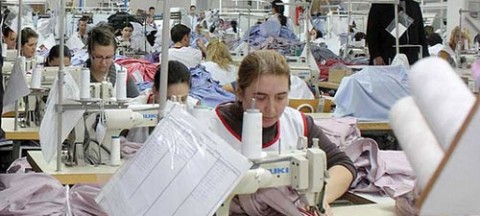
Some of history’s most important textile and fashion inventions and today's most celebrated manufacturers, innovators and artists hail from the continent. ‘Made in Europe’ is a label steeped in heritage, unparalleled quality and award-winning craftsmanship. Hundreds of leading brands, retailers, internationally acclaimed designers, thousands of talented emerging designers and forward-thinking entrepreneurs, researchers and educators belong to this vibrant and colourful land.
In the EU, textile and clothing sector remains a SME-based industry today. Companies of less than 50 employees consist of over 90 per cent of the workforce and produce almost 60 per cent of the value added. One of the most globalised industries, clothing and textile has a chain of production, wholesale and retail of just one product at times, that span dozens of stakeholders and many continents.
In 2014, over each quarter, EU clothing imports increased manifold. Now they consist of about half of the world's entire clothing production with China manufacturing an estimated 65 per cent of the world's textiles.
Fashion Revolution Day
Human development can benefit greatly and positively with European trade in clothing and textiles. However, it needs to be ensured that this is done in an empowering, participatory and sustainable way for the entire global value chain. Fashion Revolution Day is all about this vision. On the April 24 every year, people from all over the world get together to challenge the current industry-wide system and demand that fashion be used as a force for good.
Unfortunately, today, consumers don't know how and where things are made, and producers have become invisible. This scenario gives rise to conditions that allow disasters to happen and obscures responsibility and accountability when things go wrong, for example, the Rana Plaza tragedy in Bangladesh.
Fashion is the world's second most polluting industry, says a Danish Fashion Institute (2013) report, second only to oil. Nearly 25 per cent of chemicals produced worldwide are used for textiles. And the industry is often cited as the number two polluter of clean water (after agriculture). Also, the ways things work today, the industry contribute to a loss of time as Europe has seen the decimation of techniques such as Harris Tweed weaving, haute couture embroidery and specialist leather making over several decades.
To avoid this discontent and discord, Fashion Revolution believes in building an industry that values people, the environment, creativity and profit in equal measure. The Revolution believes that stakeholders should start by making the industry more transparent. This would collectively help them see and begin to understand how it truly works, and only then industry player can begin to fashion a new way of working.
As this is the EU’s Year of Development, it is the right time to dwell on how the players can legislate a cleaner, fairer, more sustainable future for the fashion industry within Europe and with those the continent trades with in this sector.
Women prisoners stitch school uniforms in Telangana
Inmates of the Special Prison for Women, Chanchalguda, Hyderabad are stitching 5,000 school uniforms for boys and girls. These uniforms, stitched by women prisoners will be worn by students of various social welfare schools in Telangana. For the first time, a garment manufacturing unit has been set up in the jail at a cost of Rs 10 lakh sanctioned by the Telangana prisons department authorities. Experts have trained 25 women prisoners in tailoring and designing.
Basheera Begum, prison superintendent said that the unit has 25 sewing machines, which run on power. In Telangana, there are 14 social welfare hostels for boys and girls, out of which some have already placed an order with the women's prison for stitching the uniforms for students. The social welfare department would otherwise pay the amount to private tailors, which they now pay to the jail.
DG Prison's V K Singh has also asked prison authorities to contact several other government departments to get orders for stitching. A prison official said that they wanted to work with government departments to meet their requirements and stitch uniforms. However, they are also looking forward to any work orders from private organisations.
The whole purpose of getting the women prisoners to work in any units set up in the prison is to equip them for employment after their release apart from earning revenue for the jail and pay inmates’ wages.
Russia's fashion market dips 20 percent due to inflation
The Fashion Consulting Group (FCG) predicts pressure from a depreciating ruble would result in Russia’s $33 billion fashion market losing by about 20 percent this year. As per FCG review of the fashion market in the country, inflation significantly influences consumption, which includes clothing and footwear, and thus the market is changing substantially. Last year, the fashion market dipped 8 per cent compared to the previous year, while import dynamics were positive due to pre-orders, because orders in the fashion industry are usually made five or seven months in advance.
FCG further stated that middle-class consumers are moving to lower price points and people’s incomes have been affected by the weak ruble. Thus, many Russians now spend half of their budget on food and much less on clothes. The fashion industry particularly and retailers have been affected by the country’s slow economy, with some global brands quitting the country.
Last year in March, Adidas announced plans to shut 200 shops this year because it was affected by the devaluation of the ruble and other emerging market currencies. Reinhard Doepfer, Chairman, European Fashion and Textile Export Council says despite this, the process of construction and opening of shopping centres continues. Since the beginning of 2015, more than 15 new brands have entered the Russian fashion market. Also, e-commerce trade is gaining momentum in Russia now, with Chinese online retailers Alibaba and JD.com expanding in the country.
More...
Pakistan's apparel sector disillusioned after PM
The Prime Minister of Pakistan, Nawaz Sharif had called a meeting of exporters associations after two and a half years. This is, after 50 per cent of the tenure of the incumbent government. At the meeting Sharif, gave time to the spinning sector representatives All Pakistan Textile Mills Association (APTMA), while allotting little time to the vital value added textile export sector, said Muhammad Jawed Bilwani.
Bilwani also stated that the PM didn’t understand who to give more time to, the Spinning sector with exports of $just 1.8 billion or the value added apparel sector, which contributes $5.267 billion in exports. He added it is clear from this meeting that the PM did not understand, nor realise the crucial importance of the value added apparel sector, and has turned a blind eye and is being misled by APTMA. Bilwani feels that this is the reason the country’s exports are far behind, while Bangladesh’s exports are on the rise.
Globally, exports of a country rise rapidly as the main target is apparel sector whose value addition is higher, while the spinning sector's value addition is much less. The value added apparel sector, generates largest forex earnings and employment. Besides, the government has also not appointed a textile minister. Bilwani has urged the PM to take notice of the apparel sector and call a meeting separately of the value added apparel sector for a clear presentation.
Cambodia faces decline in export orders
The Garment Manufacturers Association of Cambodia says that at least 15 factories have removed workers, due to a lack of job orders. Union leaders on the other hand are demanding higher minimum wages. Cambodia’s manufacturing industry is one of the largest employment generator providing jobs to around 600,000 people. However, issues like low wages have been leading to strikes and conflict among workers, who have to deal with the rise in cost of living. More wage negotiations are expected to take place later this month.
Union leaders have announced they plan to negotiate for higher minimum wage than demanded earlier. Unions had been pushing for a minimum monthly wage of $177, up from $128, but now they will seek $207 per month.
The industry started suffering after labour disputes hit in 2013, with workers’ agitation leading to large-scale strikes around the country for increase in wages. Some of the demonstrations were led to riot like situation. To ease tension, the government increased monthly minimum wage from $61 to $80 in 2013, to $100 last year, and to $128 in January. After adding other benefits like housing assistance, transportation and other allowances, a worker’s minimum earnings reach to more than $150.
www.gmac-cambodia.org
Bangladesh RMG safety reforms moving in right directions
The Rana Plaza factory tragedy in 2013 drew international attention of factory workers in the country, and prompted the National Retail Federation (NRF) and other associations to collaborate to improve worker conditions. A couple of years ago, the National Retail Federation (NRF) partnered with global retailers and other associations to build the Safer Factories Initiative and the Alliance for Bangladesh Worker Safety.
Since then companies such as Gap, Sears, and Costco, along with organisations such as American Apparel & Footwear Association, Retail Industry Leaders Association, etc seek to prevent future tragedy through rigorous examination of Bangladesh’s garment industry. Thus, recently NRF representatives were in Bangladesh to review the progress to safeguard workers and improve their working conditions.
David French, NRF Senior Vice-President for government relations said they saw firsthand that significant progress was made to improve conditions at factories in the country and work was on track to see more improvements in the future. NRF Vice-President for Supply Chain and Customs Policy Jonathan Gold and French also toured factories and ports and met with local stakeholders and Alliance executives.
According to Alliance’s report, efforts have led to 661 factory visits, 591 approved corrective plans, and 6,177 payments to displaced workers. Besides, until July, 2015, 528 factories completed at least one remediation visit. Moreover, the Alliance also established a helpline in 414 factories connecting workers with resources. One of the Alliance’s biggest priorities though, this progress doesn’t ebb as the initiative enter the third year of its five-year commitment.
Tirupur spinners use mobile-app to track demand-supply
Mobile technology has now reached the textile town Tirupur in Tamil Nadu. Spinners are now using a newly designed mobile app that helps them track the demand-supply challenge. Indian Texpreneurs Federation is the force behind this app. It has selected 80 mills operating in polyester and polyester yarn with a capacity of 20-lakh spindles for this pilot project. The app lets the mills update the last-sold price of their yarn, stock position and related market data. The survey will be conducted periodically in a month to arrive at a standard price list of yarn from Tamil Nadu mills.
The application while protecting the identity of the mill entering the data about prices and stock, provides pure statistics such as average yarn selling price over the last week and average stock positions. The result of this exercise over the last four months was that the excess capacity gave buyers an upper hand and led prices of polyester cotton yarn down from Rs 185kg.Over the past few weeks in operation, the new system has helped Tirupur mills to find buyers for their yarn as high as Rs 161 kg.