US, EU consumer confidence boosts apparel sales as India's exports rise: Wazir Advisors report
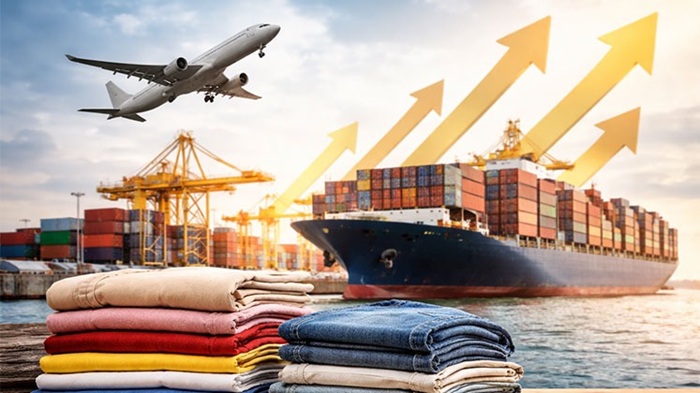
The US and EU continued strong apparel import growth in September. It went up 9 per cent and 13 per cent YoY, respectively, highlights Wazir Advisors latest apparel consumption and trade data for major supplier and buyer nations. The monthly study ‘Apparel trade scenario in key global markets and India’ highlights the US and EU continued strong import growth in September 2024.
Imports and exports on the rise
In September 2024, the US and EU registered strong import growth in apparels while smaller markets like the UK and Japan registered a decline with year-on-year decreases of 11 per cent and 15 per cent, respectively.
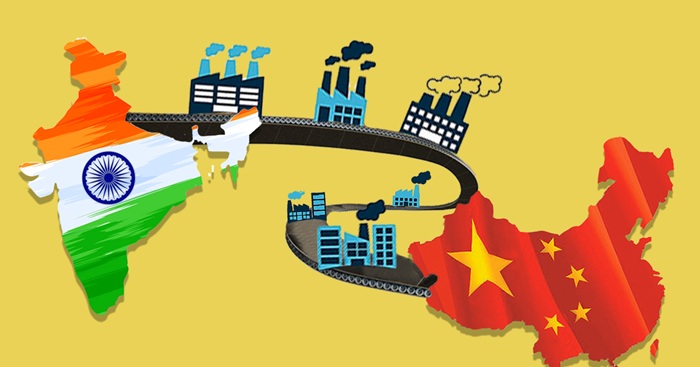
At the same time, both China and India recorded significant export growth in October 2024. China's exports went up 9 per cent year-on-year, while India's exports saw remarkable 35 per cent increase. The report also highlights, with significant growth in October, India’s projected exports will range between $15.5 billion and $16 billion, which is around 8-10 per cent increase over 2023.
Interestingly, a look at the share of major suppliers in key markets reveals, the scenario has not changed much in the US market. China still leads with almost 22 per cent market share since 2022 to 2024. Vietnam, Bangladesh, India in that order remained the other top suppliers to the US with 18 per cent, 9 per cent and 6 per cent share since 2022. The scenario is similar in the EU with China leading the pack. However, in the UK, China’s share has gone up since 2023 from 19 per cent to 27 per cent in January-September 2024. Bangladesh’s share has fallen from 15 to 11 per cent. India continues to be the fifth largest supplier with around 4 per cent share.
Mixed retail performance
The study also delved into US and UK apparel sales in October. It revealed US apparel store sales were around 2 per cent higher than the previous year, while home furnishing store sales were up by 11 per cent. However, online clothing and accessory sales dropped by 2 per cent in Q3 2024 compared to the same period in 2023.
Meanwhile, the US inflation rate slightly increased to 2.6 per cent in October, and job growth was modest due to factors like the Boeing strike and hurricanes. Nevertheless, consumer confidence grew to 108.7, reflecting optimism about potential interest rate cuts. What’s more, for last several quarters, several major retailers including Walmart, Target, Kohl’s among others, have reported lower inventory levels compared to same period in the previous year.
In the UK on the other hand, apparel store sales in September 2024 increased by 5 per cent year-on-year, reaching £4.5 billion. However, UK clothing e-commerce sales experienced a 6 per cent decline in Q3 2024 compared to Q3 2023.
The study indicates, global apparel trade in October 2024 was mixed. While major markets like the US and EU continued to drive import growth, smaller markets faced challenges. India's impressive export performance, particularly in October, highlights its growing prominence as a global apparel supplier. The US retail sector showed signs of resilience, with physical store sales increasing. However, the decline in online clothing and accessory sales suggests a shift in consumer preferences. In the UK, while physical store sales grew, e-commerce sales contracted, indicating a potential slowdown in online shopping.
The US economic indicators, including a modest job growth and rising inflation, point to a cautious outlook. However, the rise in consumer confidence suggests optimism about future economic prospects. Moving forward, it will be crucial to monitor the impact of geopolitical factors, economic conditions, and consumer behavior on the global apparel trade and retail industry.
Gucci promotes Francesco Falai as the brand’s new Chief People Officer
Resuffling its senior management team, luxury brand Gucci has promoted Francesco Falai, Senior Vice President-Global People to the post of the brand’s new Chief People Officer. To assume office on Jan 01, 2025, Falai will succeed Luca Bozzo, Head-HR, when Stefano Cantino will replace Jean-Francois Palus as the brand]s new CEO.
Armed with a degree in economics from the University of Florence, Falai is an alumni of the SDA Bocconi business school in Milan. He started his career at Florentine leather goods producer Pelletteria Fontana, before moving on to Salvatore Ferragamo’s sales department. In 2005, he joined Prada and worked with the brand for 12 years in different positions.
In 2012, Falai was named Head -HR Worldwide for the commercial and retail departments at Prada-owned footwear label Church’s. In 2017, he joined Gucci to oversee human resources worldwide for the retail and omnichannel functions, and gradually expanded his remit until the latest promotion.
In his new role, Falai aims to lead Gucci’s HR strategy, inspiring excellence in execution and encouraging the organisation’s transformation and expansion. He will collaborate with stakeholders across the company to boost the staff’s contribution to the business.
Besides promoting Cantino from deputy managing director to CEO, and hiring Leberichel, Gucci recently also hired other senior executives, like Marcello Mastrogiacomo, as Vice-President - Digital Marketing and Media, and Daniela Raganato, Global Media Director, while in September Davide Buzzoni was named Global Communications Director.
JD Sports’ lowers full year profit forecast for FY24 to $1.195 million-$1.295 million
Fashion retail company JD Sports’ has lowered its full-year pre-tax profit forecast for FY24 to a range between $1,195 million and $1,295 million. Made amidst challenging retail environment, this decline is a result of the softer sales registered by the company in Oct’24 despite strong sales recorded in Aug’24 and Sep’24.
In Q3, FY24, JD Sports reported a 0.3 per cent decline in like-for-like (LFL) sales. However, the company’s year-to-date LFL sales increased by 0.5 per cent increase. Spurred by a growth in the company’s footwear sales, JD Sport’s physical sales outpaced its online sales during the quarter. The company’s organic sales rose by 5.4 per cent Q-o-Q while they increased by 6.1 per cent Y-o-Y.
Increased promotional activity, unseasonable weather and cautious consumer sentiment in key markets, especially in North America and the UK led to stable sales in Oct’24, notes Regis Schultz, CEO. Despite these challenges, the company’s gross margin for the period improved by 0.3 percentage points to reach 48.1 per cent.
Pursuing its expansion strategy, JD Sports opened 79 new stores during Q3, FY24 bringing the total to 181 new stores for the year. By the end of Q3, the company operated 4,541 stores globally, including recent acquisitions.
Is China's losing its grip on global textile & apparel imports?

For decades, China reigned supreme as the world's leading textile and apparel (T&A) manufacturer and exporter. Its dominance in the global market has been undeniable, supplying a significant portion of clothing and textiles to countries worldwide. However, recent trends suggest a potential shift in this dynamic.
While China's market share peaked in the mid-2000s in the US market, both in terms of value and units, there has been a gradual decline in recent years. This decline, while subtle, indicates the US is increasingly diversifying its sourcing, potentially looking beyond China for its T&A needs.
What led to the change…
There are several reasons for this change. Rising production costs is foremost. As China's economic growth has led to higher labor and manufacturing costs, making it less competitive compared to other emerging economies in Southeast Asia. Moreover, ongoing trade disputes between China and major economies like the US have prompted businesses to explore alternative sourcing destinations.
Meanwhile, the COVID-19 pandemic exposed the vulnerabilities of relying heavily on a single source for critical goods. Consequently, companies are actively seeking to diversify supply chains and reduce dependence on China. Growing awareness about environmental and social issues associated with textile production in China has encouraged brands to seek more sustainable and ethical sourcing options.
Global trends
In fact, this shift is not limited to the US market. Evidence suggests a broader trend of diversification in textile and apparel imports globally.
For example, Australia despite fluctuating diplomatic relations, China remains Australia's primary apparel supplier. However, its share has decreased from a peak of 66.11 per cent in 2020 to 59.12 per cent in the first quarter of the current year. This indicates a growing inclination towards alternative sourcing destinations.
The EU too has been actively seeking to reduce its reliance on Chinese T&A imports. While China remains a significant supplier, countries like Bangladesh, Vietnam, and Turkey have increased their market share in recent years. This diversification strategy is driven by factors like cost competitiveness, sustainability concerns, and a desire to support regional economic growth.
In future, while China will likely remain a major player in the global textile and apparel market, its dominance is gradually eroding. The future points towards a more diversified landscape, with businesses spreading their sourcing across various countries. This shift presents both challenges and opportunities for different players in the global T&A industry.
The challenges include, maintaining cost competitiveness. As production shifts to other countries, maintaining cost competitiveness will be crucial for businesses. Ensuring ethical and sustainable practices is also a must. Companies must prioritize ethical and sustainable sourcing practices across their diversified supply chains. And businesses need to be agile and adaptable to navigate geopolitical risks and potential disruptions in global trade.
The opportunities
The opportunities are numerous for emerging economies. The shift away from China creates opportunities for emerging economies in Southeast Asia and other regions to expand their T&A industries. Diversified supply chains enhance resilience and reduce dependence on a single source, mitigating risks associated with disruptions. The trend towards diversification allows companies to prioritize sustainability and ethical practices in their sourcing decisions.
Thus the global T&A industry is undergoing a change. While China remains a key player, its dominance is gradually reducing as businesses seek to diversify their sourcing. This presents both challenges and opportunities for stakeholders in the global T&A landscape. Adaptability, ethical sourcing practices, and a focus on sustainability will be crucial for navigating this evolving terrain and ensuring a thriving future for the industry.
Pakistan conferred with ‘Best Pavilion Award’ at Global Sourcing Expo
Led by Jam Kamla Khan, Federal Commerce Minister, Pakistan was conferred with the ‘Best Pavilion’ award at the Global Sourcing Expo, held at the Melbourne Convention Centre from Nov 19-21, 2024. The event featured exhibitors from major exporting nations, including China, India, Vietnam, Cambodia, and South Africa, making Pakistan’s recognition amid fierce competition particularly noteworthy.
The Pakistani pavilion was praised for its standout design, engaging displays, and the exceptional quality of its showcased products. This success highlights Khan’s visionary approach, which emphasises excellence in international representation and promotes Pakistan’s diverse export offerings. His directives to Trade and Investment Officers (TIOs) to create world-class pavilions at international exhibitions have bolstered Pakistan's presence on the global stage.
Sponsored by the Trade Development Authority of Pakistan (TDAP), the Pavilion featured 21 companies representing Pakistan’s textile, leather, and home textile sectors—key contributors to the $190 million out of $300 million in annual exports to Australia. The award was accepted by Zahid Hafeez Chaudhri, Pakistan’s High Commissioner to Australia on behalf of TDAP at the event’s Welcome Reception.
This award reflects Pakistan’s commitment to excellence and innovation in its export sectors that aim to enhance the competitiveness of Pakistani products and help them shine in the most competitive markets worldwide, said Khan.
Global market for sustainable fabrics to reach $27.8 billion by 2029: BCC Research
A recent study by BCC Research forecasts, the global market for sustainable fabrics will reach $27.8 billion by 2029, growing at a compound annual growth rate (CAGR) of 8.1 per cent from 2024-29. This rise is driven by a combination of factors, including increasing environmental concerns within the textile industry, the growing popularity of organic and eco-friendly fashion, and heightened awareness of health risks associated with textile chemicals.
The sustainable fabric market is segmented by material, application, and region, with the clothing sector set to maintain its dominance through 2029. Asia-Pacific leads the market, accounting for nearly 40 per cent of the global share. The region's prominence is due to its large apparel and textile manufacturing hubs, including China, India, and Bangladesh, among other countries. A shift toward sustainable production practices is gaining traction across the Asia-Pacific, spurred by rising consumer demand for environmentally friendly products.
As sustainability becomes a priority in fashion, more manufacturers in the Asia-Pacific region are investing in greener practices, reflecting a broader global trend towards eco-conscious production. This shift is helping to reshape the industry, as consumers increasingly favor sustainable options in their clothing choices, pushing brands and manufacturers to adopt more responsible practices.
Overall, the growing focus on sustainability, health, and eco-friendly fashion is expected to drive significant growth in the global market for sustainable fabrics, making it a key area of interest for industry stakeholders in the years ahead.
Gap Inc’s net income rises to $274 million in Q3, FY25
In Q3, FY25, ending Nov 2, 2024, Gap Inc increased its net income to $274 million from $218 million in the same period last year. The company’s operating income rose to $355 million, compared to $250 million a year ago. Its net sales expanded by 2 per cent to $3.8 billion while comparable sales grew by 1 per cent Y-o-Y.
Expressing pride over the results, Richard Dickson, CEO, notes, the company’s net sales have grown for four consecutive quarters. The company is optimistic about the future and has raised its 2024 guidance for sales, gross margin, and operating income, citing strong business fundamentals. It estimates, its net sales will increase by 1.5 to 2 per cent this year, compared to previous guidance of less than 1 per cent. The company’s 2023 sales stood at $14.9 billion.
The company’s gross margin is expected to increase by about 220 basis points as against the prior forecast of 200 basis points. Operating income is projected to rise by around 60 per cent, up from the previous estimate of 50 per cent.
Benefitting from the holiday season, Gap Inc is already seeing positive results from campaigns like Gap's ‘Give Your Gift.’ Key categories such as activewear and denim have performed well, particularly at Old Navy, Gap, and Athleta. Wider leg and looser fit denim styles are proving popular, while activewear continues to be a significant growth area.
By division, the Q3, FY25 net sales of Old Navy rose by 1 per cent to $2.2 billion, while Gap brand’s net sales also increased by 1 per cent to $899 million. Comparable sales for Gap increased by 3 per cent, marking the fourth consecutive quarter of growth. Banana Republic saw a 2 per cent rise in net sales to $469 million, with strong performance in men's wear. However, comparable sales declined by 1 per cent, indicating ongoing adjustments in women's categories. Athleta’s Q3, FY25 net sales grew by 4 per cent to $290 million, with comparable sales rising by 5 per cent, driven by new products and effective marketing.
Emphasising the importance of ‘brand invigoration,’ particularly at Old Navy and Gap, which has led to market share gains, Dickson says, the company’s online sales rose by 7 per cent to 40 per cent of the company’s total sales.
Gap Inc. also introduced a new Gap store in Manhattan’s Flatiron district, showcasing the brand's refreshed aesthetics with dedicated spaces for key categories like fleece, denim, and khakis, as well as modern interpretations of its heritage. Dickson expressed confidence in the company’s assortments and momentum as it heads into the crucial holiday season.
India’s cotton production to decline to 29.9 million bales in 2024-25
India’s cotton production is expected to decline to 29.9 million bales in 2024-25, the lowest in six years, due to reduced plantings and stagnant yields. A decade ago, in 2013-14, Indian farmers harvested a record 39 million bales, with one bale equating to 170 kg. While domestic needs have so far been met by the 30-31 million bales of annual production, the current fall threatens India’s textile export sector. In 2023-24, India’s cotton textile exports reached $10.4 billion, including garments, fabric, and yarn. Additionally, the country exported raw cotton worth $1.1 billion.
India aims to achieve $100 billion in textile exports by 2030. Cotton accounts for roughly one-third of the nation’s exports, with the rest being man-made and other natural fibers like wool, silk, and jute.
Improving cotton yields is seen as crucial for maintaining India’s edge in textile exports. Better yields will help cotton compete with man-made fibers (MMF), which are cheaper and offer enhanced functional properties like breathability, says Prabhu Damodaran, Convenor, Indian Texpreneurs Federation. Cotton remains a preferred material across markets and that every additional $1 billion in apparel exports could generate at least 150,000 jobs, he emphasises.
Valued at $165 billion, India’s textile exports are projected to grow to $350 billion by 2030, indicating an increase in demand for raw cotton beyond the current 31 million bales requirement in 2024-25. The sector employs 45 million workers directly, with another 6 million farmers involved in cotton cultivation.
In recent years, a spike in international cotton prices has led manufacturers to turn to MMF. The share of synthetic fibers in the textile sector has surged from 10 per cent to 30 per cent in the last 2-3 years, according to Raja Shanmugan, a textile exporter from Tiruppur, Tamil Nadu. He warns that India’s lower cotton output could force manufacturers to rely on imports if farmers switch to other crops.
USDA forecasts, India may become a net cotton importer in 2024-25, only the second occurrence in 20 years. This shift is partly due to falling global cotton prices, which may affect the competitiveness of Indian exports.
China’s T&A exports rise by 3% Y-o-Y to 1.76 trillion yuan in Oct’24
According to the latest data released by the General Administration of Customs, China’s textiles and apparel exports (T&A) saw rapid growth in Oct’24.
In CNY-denominated terms, China’s textiles and apparel exports increased by 3 per cent Y-o-Y to 1.76 trillion from Jan- Oct’24. Among these, textile exports increased by 5.8 per cent Y-o-Y to 829.52 billion yuan, while apparel exports rose by 0.7 per cent Y-o-Y to 932.75 billion yuan. In Oct’24, China’s T&A exports increased by 8.5 per cent Y-o-Y and 2.3 per cent M-o-M to 180.65 billion yuan. During the month, China’s textile exports increased by 12.6 per cent Y-o-Y to 87.83 billion yuan while apparel exports rose by 4.9 per cent Y-o-Y to 92.82 billion yuan.
In US$-denominated terms, from Jan-Oct’ 24, China’s cumulative T&A exports totaled increased by 1.5 per cent Y-o-Y to $247.89 billion. Among these, textiles exports reached $116.69 billion, increasing by 4.1 per cent Y-o-Y while apparel exports declined by 0.7 per cent Y-o-Y to $ 131.2 billion In October alone, China’s T&A exports increased by 11.9 per cent $25.48 billion. Of this, textile exports expanded by 16.1 per cent Y-o-Y to $12.39 billion while apparel exports rose by 8.1 per cent Y-o-Y to $13.09 billion.
Andhra Pradesh to announce new textile policy: S Savita, Minister for Handlooms & Textiles
S Savita, Minister for Handlooms and Textiles, Andhra Pradesh, shares, the TDP Government plans to announce a new textile policy for the state.
The government will also set up a textile park in Yemmiganur as part of the 2015 Independence Day celebrations in order to assist the community of weavers. It has allocated 90 acre for the park, Savita added.
Like many other industries, the textile sector allegedly suffered during the previous YSRCP government. The YSRCP Government set aside nearly 14 acre of the textile park’s land for housing projects, causing the beneficiaries to petition the court for a stay in order to preserve the property.
Additionally, the government will also establish textile parks in Rayadurgam, Mylavaram, and Pamidi, etc. It would also create a textile park and a handloom park at Chirala.
The government also aims to raise funds from the Central Government for weavers’ welfare, notes Savita. Additionally, it would provide tools with 90 per cent subsidy. The Central Government has also approved funds worth $3.55 million to establish a huge textile park in Dharmavaram, she adds
More...
Tariff Troubles: How US apparel prices are feeling the pinch

The escalating trade war and resulting tariffs are taking a toll on the US apparel industry, driving up prices for consumers and squeezing businesses. The American Apparel and Footwear Association (AAFA) has warned the current tariff policy, particularly the Section 301 tariffs imposed on goods from China, is boosting inflation in the apparel sector. These tariffs, implemented in 2018 under the Trump administration, have led to a 40-year high in clothing and footwear prices.
"Tariffs are taxes paid by US-based businesses and American consumers, not on China or other supplier countries," stated Steve Lamar, president and CEO of AAFA. "These tariffs disproportionately harm lower-income American consumers and female consumers with higher tariffs on lower-priced products and on women's clothes and shoes."
Impact on pricing
A study by the Peterson Institute for International Economics estimated that the tariffs on Chinese goods resulted in a $51 billion increase in annual consumer costs for apparel and footwear. This translates to an average price increase of 5.7 per cent for clothing and 4.8 per cent for footwear. For example, H&M, one of the world's largest fashion retailers, reported a 3 per cent decrease in operating profit in 2019, partly due to increased sourcing costs from China. The company was forced to raise prices on some items to offset the impact of tariffs.
Table: Price increase
|
Product category |
Average tariff |
Price increase |
|
Women's apparel |
16.10% |
7.10% |
|
Men's apparel |
11.80% |
5.10% |
|
Children's apparel |
11.30% |
4.90% |
|
Footwear |
10.70% |
4.80% |
Source: Peterson Institute for International Economics
Reasons for tariffs
The tariffs were primarily introduced to address concerns over China's trade practices, including intellectual property theft and forced technology transfer. The US government argued that tariffs were necessary to protect American businesses and jobs. However, experts warn further increase in tariffs could push inflationary pressures and lead to higher prices for consumers. A study by the US International Trade Commission projected that a 25 per cent tariff on all Chinese imports would increase apparel prices by an average of 13.4 per cent. . "Tariffs are not the answer to our trade challenges," said Myron Brilliant, executive vice president and head of international affairs at the US Chamber of Commerce. "They are a blunt instrument that is harming American businesses and workers."
Meanwhile the National Retail Federation has called for the elimination of tariffs, arguing that they harm American businesses and consumers. The US Chamber of Commerce has also advocated for tariff removal, stating that they create uncertainty and hinder economic growth. "The tariffs are a hidden tax on American families," said Matthew Shay, president and CEO of the National Retail Federation. "They are making everyday necessities more expensive and hurting our economy."
The ongoing trade war and the resulting tariffs are having a significant impact on the US apparel industry. While the tariffs may have been intended to protect American businesses, they are ultimately hurting consumers by driving up prices. A resolution to the trade dispute and the removal of tariffs would provide much-needed relief to the apparel sector and American shoppers.
BSL’s Q2, FY25 net profit increases 9.3% to Rs 2.5 crore
Leading textile firm, BSL’s Q2, FY25 net profit increased by 9.3 per cent to Rs 2.5 crore while its revenue for the quarter grew marginally to Rs 179 crore as against Rs 178 crore in the corresponding quarter of the previous fiscal year.
Nivedan Churiwal, Managing Director, BSL, says, the company’s H1, FY25 revenue also increased by 341.8 crore while net profit expanded by Rs 4.8 crore demonstrating strong demand in the market and sound operational execution.
BSL has successfully maintained its growth trajectory by expanding into new markets and strengthening connections with its current customer base, creating a strong foundation for further growth. Having a positive outlook for the upcoming quarter, the company anticipates an improvement in the performance of the domestic and international textile sector, he adds.
BSL operates a vertically integrated unit integrating spinning, weaving, processing, and manufacturing capabilities. Besides ‘BSL,’ the company also sells premium fabrics under the ‘Geoffrey Hammonds’ brand.
Uniqlo India to hit Rs 1,000-crore sales milestone this fiscal
A subsidiary of Japan’s Fast Retailing Co, Uniqlo India aims to hit the Rs 1,000-crore sales milestone this fiscal year, maintaining its annual growth trajectory of 30 per cent. Kenji Inoue, Chief Operating Officer, says, the company aims to embark on a retail expansion besides increasing local sourcing.
India is a key market for Fast Retailing, which recently reported annual global sales of 3 trillion yen (approximately $20 billion). The company has set its sights on tripling sales to 10 trillion yen in the future, with India playing a crucial role in that strategy. It has been an annual growth of 30 per cent and believes, the Indian market has tremendous potential.
Since opening its first store in India in October 2019, Uniqlo has expanded its footprint to 13 locations. By Nov’24-end, this will increase to 15 stores, with new outlets launching in Mumbai’s Phoenix Palladium and West Delhi.
Uniqlo India reported a 31 per cent rise in revenue to Rs 814.84 crore and a 25 per cent increase in profit to Rs 85.17 crore for the financial year ending March 31, 2024. The company has achieved profitability within three years of starting operations in India, reaching that milestone in FY’22.
When asked about reaching the Rs 1,000-crore target, Inoue confirmed the company’s ambitions, noting that the success of new stores like the one at Phoenix Palladium will be instrumental.
Uniqlo India also aims to enhance its local production by sourcing 18 per cent of its products locally by 2025, as against the current 15.5 per cent. Inoue emphasised the company’s dedication to ‘producing global standard goods in India’ and meeting local sourcing requirements as part of their expansion strategy.
With its growth not limited to the Northern and Western regions, the company is focusing on South India as it aims to ensure that the quality of service and product mix in each store aligns with customer expectations, Inoue explains.
In addition to its physical stores, Uniqlo is expanding its digital presence. Currently, 15 per cent of its sales come from the official online platform, Uniqlo.com, which reaches 17,000 pin codes across the country. The company intends to continue strengthening its online sales through its website and mobile app.
Uniqlo is the largest brand in the Fast Retailing Group, which is based in Tokyo and includes other brands like GU, Theory, PLST, Comptoir des Cotonniers, Princesse tam.tam, J Brand, and Helmut Lang. With India’s growing consumer base and its emphasis on quality and sustainability, Uniqlo is positioning itself as a key player in the Indian fashion market, setting ambitious goals for the future.
Badri Cotysn achieves ARR of Rs 500 crore in six years
Swiftly ascending to becoming one of India’s top recycling companies, Badri Cotysn has, in just six years, achieved an impressive Annual Recurring Revenue (ARR) of Rs 500 crore, recycling an astounding six million PET bottles every day. At the heart of its operations is a state-of-the-art facility in Mandideep, Bhopal, where advanced technology converts waste into high-quality polyester fiber.
Established in 2018, by Sumit Gupta and Amit Gupta, Badri Cotysn aims to produce quality recycled materials while building a sustainable and scalable business model. The company aims to be one of India's top three plastic recyclers, supplying industries in textiles, automotive, and geo textiles.
Located in Madhya Pradesh's Raisen district, The Mandideep facility features an 800 kW rooftop solar installation, which powers the facility's operations, significantly reducing its carbon footprint. The plant transforms discarded PET bottles into a range of products, including Recycled Polyester Staple Fiber (r-PSF), recycled PP & HDPE granules, and PET flakes—sustainable alternatives to virgin materials. Badri’s efforts are bolstered by partnerships with major brands like Coca-Cola, ITC, and Pidilite, which utilie Badri's Extended Producer Responsibility (EPR) credits to offset their own plastic waste impact.
As demand for recycled materials rises, Badri Cotsyn has expanded internationally, with a growing presence in European and Middle Eastern markets. In the past year alone, exports have tripled. The company plans to further increase its capacity with a new Rs 150 crore facility in Bhopal, expected to triple revenues in the next three to four years. This new site will focus on meeting the surging demand for recycled plastics, especially for food-grade applications.
Through this integrated approach, Badri Cotsyn offers a compelling model of how tech-enabled solutions can drive change in recycling, presenting a blueprint for a more sustainable future in India and beyond.