South Africa trims cotton estimate by five per cent
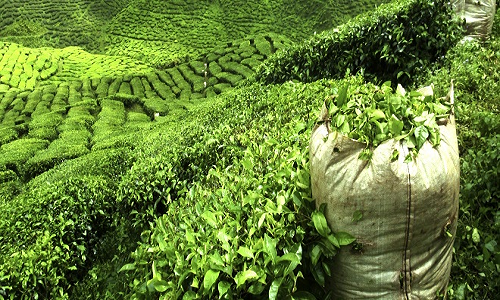
South Africa has cut its 2015-16 cotton production forecast by about five per cent, bringing the total drop in full year output to an estimated 44 per cent as farmers switch to more profitable corn crops in a drought period. Farmers who irrigate their land opted to plant maize, because of the good maize price. That was why there was such a big drop from last year.
Maize is the local term for corn. The country’s agriculture sector contracted an annualized 14 per cent in the final quarter of 2015 amid the worst drought in a century and the commodity price rout. South Africa will probably produce 52,820 bales of cotton in the 2015-16 season while an estimated 900 bales will come from Swaziland.
The expectation for lower cotton output follows the trend in global production, which is on track to decline 15 per cent this season due to falling yields. Going forward, crop plantings may increase depending on the weather.
South Africa is working to revitalise its cotton textile and apparel industry, which has been damaged by the availability of inexpensive imported clothing, by focusing on sustainability.
The idea started with cotton farmers, who felt an urgent need to revive and expand employment opportunities through farming, and they thought that a focus on environmental and social responsibility would be a good way to rebuild.
Increasing awareness push brands to adopt sustainable sourcing
"Undoubtedly, an industry’s consumer number in the billions is bound to have a significant environmental impact. In the run-up to last December’s UN Climate Conference, seven top fashion brands released a joint statement detailing their concerns for a warming world. Not only was climate change grave news for the planet, it was potentially awful for the bottom line."
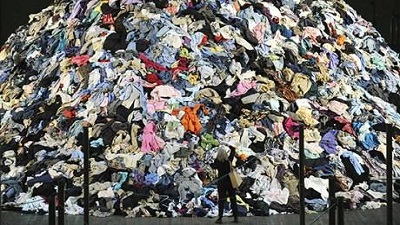
A clothing company has to have a sustainability strategy that actually works. The question is whether or not there’s a way to truly produce clothing right. The textiles and apparel industry, accounts for 10 per cent of global carbon emissions. Producing a single ton of fabric can require up to 200 tons of water. The first ingredient in polyester is petroleum. Any way you spin it, apparel’s impact on the planet is less than ideal.
have Undoubtedly, an industry’s consumer number in the billions is bound to a significant environmental impact. In the run-up to last December’s UN Climate Conference, seven top fashion brands released a joint statement detailing their concerns for a warming world. Not only was climate change grave news for the planet, it was potentially awful for the bottom line. While not offering any new pledges , the declaration did momentarily swivel eyeballs on the industry’s commitments to - and awareness of - the problem at hand. Levi Strauss & Co., for example, a signatory to the declaration, reaffirmed its 2012 pledge to cut emissions by 25 per cent by 2020. And the company is indeed on target to meet its goal.
Sustainable initiatives
Given the scale of the apparel industry’s supply chains, tensions among green washing, true climate action and ‘better-than-nothing’ argument demand more than a mere attention. Patagonia, the outdoor clothing brand long recognized as a leader of sustainability initiatives in the field, is a staunch proponent of private sector climate action. Sitting on a panel in Paris in December, Patagonia CEO Rose Marcario argued that they are moving faster than a lot of governments.
Of course, the company still makes huge amount of clothing and is far from carbon neutral. The winking ‘Don’t Buy This Jacket’ campaign predictably resulted in the purchase of more than a few jackets. Indeed, the company is seeing double-digit annual growth. Under its ‘1 Per cent For the Planet’ initiative, the company donates 1 per cent of net sales to non-profit environmental organizations each fiscal year.
A company has to have a sustainability strategy that actually works. The question is whether or not there’s a way to truly produce clothing right. Maybe that means carbon neutrality, or perhaps the elimination of commodity-driven deforestation. Or maybe there’s just a central contradiction in trying to fix the problem of there being too much stuff by making more stuff. You can see how this quickly devolves into an argument for nudity.
Patagonia does think critically about the agricultural practices it supports and the production standards it employs. Several of Patagonia’s sustainability-minded trends - a plant-based (as opposed to petroleum-based) Wetsuit, for example - have gone on to be adopted by bigger players in the industry.
The longevity factor
According to Tom Cridland, founder of an eponymous fashion brand, most of the solutions to the industry’s environmental problems boil down to longevity. The brand’s flagship product, the 30 Year Sweatshirt, is billed as, well, exactly what the name implies. Wardrobe staples shouldn’t be made systematically to fall apart, feels Cridland.
Certainly, there are some fairly obvious things you can do as a maker of apparel to improve the environmental impact of your supply chains and several of them encompass more than the concept of longevity. One can recognize that supply chain extends further back than the factory. You can opt for non-petroleum based, organic fibers, such that soil can sequester carbon. If you’re going to use pesticides, use the right ones. Reward countries with strong forestry policies. Be conscious of the energy mix of the country in which your mills and factories are based, and power your factories with renewable energy wherever you can. Partner with shipping companies that use eco-friendly fuels. Avoid air transport. Become a Benefit Corporation. Reuse your cooling water, recover heat from your hot water, and improve the boiler efficiency of your mills. Build your clothing to last.
And companies like Patagonia are doing many of these things. It’s a sentiment echoed by another recent entrant to the sustainable fashion space. Zady, an online fashion brand dedicated to greening its supply chains, argues for the same existential justification. Zady CEO Maxine Bédat argues that the fashion angle allows the message to reach consumers that might not already be thinking about these issues.
Fashion, especially trend-centric fashion, has been relatively slow to embrace real sustainability initiatives. As Bédat explained, the reason it has taken a long time for the apparel industry to understand the connection between itself and climate change - and other issues related to Sustainable Development Goals more generally - is that it’s complicated. It’s not as simple as how much fuel you’re using in your cars or airplanes. As a consequence, consumers simply haven’t been exposed to the same simple messaging as, say, that which comes with remembering to turn off the lights when you leave a room.
SPJIMR and KVIC to revive traditional village industry clusters
SP Jain Institute of Management & Research (SPJIMR) recently entered into an agreement with the Khadi and Village Industries Commission (KVIC) to provide project evaluation consultancy for a scheme that will drive regeneration of traditional industries across 400 traditional village industry clusters in India.
According to the agreement, SPJIMR will provide project consultancy for the scheme, which is titled the 'Revamped Scheme of Fund for Regeneration of Traditional Industries', or SFURTI. The scheme has been formulated by the Ministry of Micro, Small and Medium Enterprises (MSME), Government of India.
KVIC will intervene in more than 400 clusters all over the country and cover more than 40,000 artisans. SFURTI is to be implemented by KVIC through a well-knit system of Nodal Agencies (NA), Implementing Agencies (IA), Technical Agencies (TA), Cluster Development Executives (CDE) and other resource providers.
AEPC is pleased with the Union budget
India’s apparel sector is pleased with the overall Budget announcements and schemes being initiated for the upcoming financial year. Apparel sector’s long requisition was also addressed in this year’s budget, with a reduction on basic customs duty made from a total of 5 per cent to 2.5 per cent.
Adding on to the exports-related announcements made in the Budget 2016-17, Ashok G Rajani, Chairman, Apparel Export Promotion Council (AEPC) said, that a total additional exports of Rs 7,500 crores in 2016-17 are envisaged with the incentives announced in this Budget. In the year 2016-17, fabrics worth around Rs 1,000 crores would be eligible for imports and custom duty of Rs 110 crores would be saved by garment exporters.
However, the AEPC felt that the increase in service tax from 14.5 to 15 per cent will adversely affect the growth of apparel sector. Moreover, 2 per cent excise duty on branded readymade garments and textiles with sale price of more than Rs. 1,000 is a cause of worry for the apparel industry. The Budget has also proposed that 60 per cent of retail sale price or the tariff value be made eligible for excise or countervailing duty (CVD) on readymade garments and made-up textile articles. Previously, the tariff value for calculating excise or CVD was fixed at 30 per cent of retail sale price.
Fiji’s TCF sector is having the best phase since its independence
Kaushik Kumar, Chairman, TCF Council, Fiji says, infrastructure upgrades such as airport renovations, large scale road works happening in the country and this is a positive sign. First, it provides a lot of encouragement for people looking at investing in Fiji. “As far as the TCF (textiles, clothing and footwear) sector is concerned, we can transport our produce around the country more easily and enhanced airport infrastructure means the possibility of more freight capacity to our main markets,” he says.
Fiji has also adopted a bold trade policy framework aimed at enhancing the reach and reputation of Fijian-made produce around the world, whilst the Ministry of Industry & Trade is doing much to promote the ‘Made in Fiji’ brands. Originally people just thought Fiji was a nice holiday destination. When they actually come out and see what Fiji produces, it is certainly an eye-opener.
In Fiji, the TCF industry started in the early 1980s with a handful of local players involved in exports. A tax-free scheme was introduced which encouraged foreign investors and local investors to invest in new factories and boost exports. One of the driving forces at that stage was Fiji’s market access into Australia under the SPARTECA agreement.
Kumar says they saw quite a big boom between the late 1980s right up to the mid-90s, when the garment industry went from a handful of operators to over 100 factories. “We grew from an employment base of 3,000 to 18,000 employees, with exports reaching $450 million,” he observed.
Over the last three years Fiji registered steady a growth in the TCF sector. Over the last five years, 3,000 additional jobs have been created in the TCF sector. The sector’s order books look pretty full and everyone seems to be very optimistic. 2016 does look pretty good. Moreover, there are a couple of factories that have big expansion plans in the near future.
Australian wool market eases
The Australian wool market has eased slightly as lackluster demand and a strong local currency have failed to incite buyers to break from their top up buying activity. Lower spec types were again largely ignored or discounted in favor of better style wool and the gap between the mediocre and the best widened further.
Superfine and medium merino indicators all retreated by 20 to 40 cents as buyers operated mostly on Chinese indent orders, which had been reduced in local currency terms before the sale thanks to a stronger Australian dollar. Shorter wool, pieces, lambs and cardings fared slightly better with lower volumes leading to a more or less unchanged price level while crossbred wools in the main continued to drift south.
The tone of the market seemed to improve a little by the end of the final day, and prices across the nation for the mainstream merino types are also similar, which is usually a sign for a more positive outcome the following week. Activity in the processing chain around the world continues to be mixed with reports from China less exuberant than other markets such as India and Europe. In China most mills are now back at work and given the general sluggishness of Chinese manufacturing sector workers returned on time from their holidays.
World cotton stocks may fall eight per cent
World year-ending stocks of cotton are projected to decrease by eight per cent. This represents about 86 per cent of world cotton consumption in July to June of 2015-16. This is the first reduction in world ending stocks since 2009-10.
Interestingly, the fall in end of season stock is estimated due to lower crop and is not supported by demand which is also falling. There are two reasons for falling demand. One is the lower price of polyester, an alternate fiber, which has also fallen significantly following a sharp fall in crude oil prices. Many users including its biggest cotton consumer China have shifted to that manmade fiber.
Second China’s demand for cotton is also falling and most other cotton producing nations have experienced a similar trend. The development has also changed global equations in cotton consumption with countries like Vietnam and Bangladesh who have seen a spurt in cotton consumption.
World cotton consumption is projected to decrease by two per cent. Cotton consumption in China, the world’s largest consumer, has declined continuously since 2009-10. In 2015-16, cotton consumption in China is expected to be down five per cent from last season. India’s cotton consumption is expected to decline by two per cent.
China may revert to cotton imports
China is poised, after six years when its cotton consumption has tumbled by one-third, to revert to raising its demand for the fiber – although that will not prevent a further fall in international prices. Cotton demand in China, the top consumer of the fiber, in 2016-17 will grow by a million bales.
An increase would be the first since 2009-10, when it reached a record 50 million bales, before China's policy of providing guaranteed and elevated values for growers, in keeping domestic prices far above international ones, rendered its mills uncompetitive.
For several years, China’s cotton price support policy was a detriment to cotton consumption. However, the prospect of extra supplies hitting the market bodes will for prices, which will average 67 cents a pound next season. Weak world demand growth, and low prices of manmade fibers such as polyester, besides the pressure of China's surplus disposal policies are blamed for undermining cotton price prospects.
Fears of China opening up its stake reserves, which are estimated at 49 million bales, to hefty sales have been cited as a big reason behind the fall in New York cotton futures this week to the lowest since 2009. However, an end to the retreat in Chinese cotton imports is expected. These are projected to stabilise at five million bales in 2016-17.
Denim show opens in Bangladesh

A two-day Denimsandjeans.com Bangladesh show begins March 2, 2016, to promote denim fabric companies to the global denim brands and also to share knowledge with international producers to get acquainted with the latest technologies.
A total of 30 companies are participating in the event. Of them, ten are international companies from China, India, Pakistan, USA, Turkey, South Korea, Japan, Thailand, Singapore and Germany. The theme of the show “High Fashion Denim” is inspired from the shows happening around the world.

Denimsandjeans.com Bangladesh is an international denim trade show, which takes place twice a year. The exhibition is a comprehensive showcase of the entire denim value chain: fabric, finishes, washes, accessories.
The trade show celebrates and explores the world of denim. It’s an exclusive event only for authorized trade visitors. Selective vendors can network, build contacts and meet others involved in the denim industry. Companies involved in sustainable solutions will also be present providing advice for protecting people and the planet.
The show offers international fashion buyers a one-stop sourcing platform for all aspects of jeans wear. The show acts as a hub for players on the international denim scene to mingle with colleagues, make new contacts and broker deals.
The mega denim show is one of the most awaited exhibitions and has been attracting global attention ever since its inception.
Like the last edition, this time too at Dhaka, apart from traditional customs of exhibitions, Bangladesh fashion universities and others will be involved in a contest related to denim products for an international audience.
The third FASHIONIM, a global fashion event dedicated to the denim industry, will for the first time showcase designs of fashion students from different colleges in Bangladesh. Only designs of those designers would be showcased who were finalists at the Bangladesh Fashion Students’ Contest. The event to be held in Dhaka is being organised on the sidelines of the denim show.
At the last FASHIONIM event held in October 2015, denim collections from three countries were exhibited. These were Vincunha Textile from Brazil, Envoy from Bangladesh and Bhaskar Denim from India. Around 400 guests from reputed retailers, factories, buying houses and brands were part of the event last time. For people connected with the denim industry in Bangladesh, it is of great interest to come for the show to get an update on the latest trends in the industry. The main theme driving the show was eco-sustainability.
Pakistan’s textile industry to get leaner, fitter
International brands and sourcing agents are working toward promoting sustainability in the textile sector of Pakistan. The issues being addressed include working conditions, enterprise improvement and improved communication. Policy dialogue on better labor governance, compliance with national labor laws and international labor standards, advisory and training services to improve working conditions for workers in the Pakistani textile value chain are the key activities.
Issues that impact the livelihoods of people working in the textile sector and in the value chain will be examined. Workers and employers will jointly work toward workplace compliance. It’s hoped this will ultimately reduce industrial conflicts and increase overall efficiency and productivity.
A platform will be provided to stakeholders to generate debate on issues prevailing in the sector including legislative and institutional reforms, enforcement and implementation mechanisms and recommendations to address them. Institutional capacity building and workplace improvement programs will be at the forefront.
Pakistan’s textile exports to the EU market have risen by 21 per cent. The country will hold an expo exclusively for textile products from April 7 to 10, 2016. This will be an open forum for Pakistani manufacturers and producers to exhibit their products and directly interact with foreign investors.
More...
A quarter of Bangladesh’s exports goes to the US
Trade between Bangladesh and the United States rose 8.5 per cent in 2015. Exports from Bangladesh accounted for $6 billion of the total, and 90 per cent of this was clothing. The United States accounted for a quarter of all Bangladesh's exports.
US investment in Bangladesh rose to about $2 billion in 2015 from $1.5 billion the year before. Bangladesh’s exports include textile and clothing products, shrimps, tea and golf club shafts, while it imports raw cotton, chemicals, machinery and equipment and pharmaceuticals.
Designated as a least developed country, Bangladesh received trade benefits under the US Generalized System of Preferences but the facility has been suspended since June 2013, following the death of more than 1,100 garment workers the Rana Plaza collapse in Dhaka.
The Bangladesh readymade garment industry has grown over the space of a few short decades to become the second largest in the world. The sector has become a key driver of the Bangladesh economy and the nation’s development. The readymade garment sector accounts for over 80 per cent of the nation’s export earnings and employs some 4.2 million workers, an estimated 60 per cent of whom are women.
EuroFibers signs distribution agreement with Prisma Shielded Dyneema
EuroFibers BV has signed a distribution agreement with Gruschwitz GmbH. The agreement is EuroFibers’ first direct distribution agreement in Prisma Shielded Dyneema. Both companies are well acquainted premium distributors of DSM Dyneema in Europe. Gruschwitz, located in South Germany, serves the German speaking countries and Eastern Europe as its sales area because of its market knowledge and dense network, Gruschwitz is the partner of choice for EuroFibers to sell and brand Prisma Shielded Dyneema in these areas.
EuroFibers has a dedicated mission in offering smart fiber solutions that enhance features of High Performance Fibers like Dyneema, Twaron, Technora, Vectran and Zylon. According to Marcel Alberts, Managing Director, appointing Gruschwitz as distributor of Prisma Shielded Dyneema forms part of the company’s strategy to focus on innovation and further build the Prisma brand in and outside Europe. EuroFibers will continue to provide extensive technical support to all direct and indirect customers through its network of experts.
Ditmar Schultschik, Managing Director of Gruschwitz, is very excited about the agreement and said that they have been premium distribution partner for uncoated Dyneema® in the German speaking and Eastern Europe countries for almost 5 years now. With the addition of Prisma shielded Dyneema to our current product range, we can now serve our customers even better.
NCC predicts 2016, a challenging year for US cotton
The National Cotton Council’s (NCC) Cotton Economic Outlook 2016 says, this year will also be challenging for US cotton industry. Export markets continue as the primary outlet for US raw cotton fiber. China, traditionally US cotton’s largest export market, is importing considerably less in the 2015 marketing year - US sales to China are about 80 per cent less than this time last year.
The NCC sees total US exports at 9.5 million bales for the current marketing year, down 15.5 per cent from 2014. This estimate may prove to be optimistic as the weekly pace will need to increase throughout the remainder of the 2015 marketing year to reach 9.5 million bales. NCC’s estimate reflects the situation in China where massive cotton stockpiles and expectations for limited quota mean that raw cotton imports by China are expected to fall further in 2016 to 4.75 million bales, down from 5.5 million in 2015. China’s mill use also is projected to decline in 2016. As per the NCC projection, a 2016 U.S. crop of 14 million bales, with 13.4 million upland bales and 595,000 extra-long staple bales produced on 9.1 million acres. NCC - projected U.S. off take of 13.8 million bales in 2016 still would result in an increase in ending stocks of 193,000 bales.
Sluggish cotton demand, smaller imports by China, weakness in other commodity markets and a stronger dollar are prevalent factors in the current price climate.
PRGMEA urges govt to facilitate exports growth
The Pakistan Readymade Garments Manufacturers' and Exporters' Association (PRGMEA) has sought early discharge of export relating statements made by the government in recent past. It has also sought a direct intervention from the prime minister in this regard.
PRGMEA leadership, including the Senior Vice Chairman Sohail A Sheikh and Chief Co-ordinator Ijaz A Khokhar, has demanded zero-rating regime announced by the Prime Minister forthwith and not from July 2016 besides issuance of bonds for the exporters as per the federal finance minister. PRGMEA says the government should honour commitment and restore exporters' confidence. The government had assured of releasing bonds within one week but nothing has happened despite lapsing a considerable period. A trust deficit has hampered the liaison between the government and business community, which is needs to be removed, suggested Khokhar.
PRGMEA’s senior vice chairman said no one from the government is serious about stopping freefall of exports amidst GSP Plus status from the EU. He urged the PM to intervene and take appropriate steps to save the export-oriented sectors. Apart from the sales tax refunds, billions of rupees under the textile policy initiatives like DLTL are still held up for which funds should be released immediately, added Sheikh.