Cooperation is the buzzword to create sustainable denim
"Industry leaders behind Rational Denim are hoping their collaborative project around responsibly produced denim will help pave the path for others to follow. Major players like Archroma, Garmon, Lenzing and Royo, each an expert in its respective area of supply chain, share the same belief that denim garments can be made in a more responsible way. And that’s exactly what the four set out to prove when they decided to team up."

Industry leaders behind Rational Denim are hoping their collaborative project around responsibly produced denim will help pave the path for others to follow. Major players like Archroma, Garmon, Lenzing and Royo, each an expert in its respective area of supply chain, share the same belief that denim garments can be made in a more responsible way. And that’s exactly what the four set out to prove when they decided to team up.
Sharing innovations
The ‘Roadmap to Rational Denim,’ to give the project its full title, debuted at Kingpins in Amsterdam recently, showcasing a prototype collection produced with the most efficient use of resources - particularly water - from fiber to finish. According to Alberto De Conti, Chief Marketing Officer at Garmon, they were drawn to the idea of being part of a group of companies that’s truly science-driven; a pool of industrial realities bringing to the table results that are rooted in sound research and development. Rational Denim takes a respectful distance from a number of so-called ‘sustainable’ market initiatives that are superficial, if not artificial. It is about delivering a pragmatic, highly responsible, very credible approach to denim product innovation and making it available to the creative minds throughout the world. As per Archroma’s estimates, nearly two trillion liters of water are consumed monthly in the production of 167 million pairs of jeans.
Each company contributed its expertise in a particular part of the denim manufacturing pipeline, to that end: Lenzing brought its class-leading fiber Tencel to the table; Archroma offered its Advanced Denim dyeing technology for indigo alternatives; Royo, with its years of experience using Tencel, produced the fabrics, both 100 per cent Tencel and cotton blends; and Garmon’s Green Screen-approved products simplified the finishing process.
An exhibition space was set up so that designers in search of inspiration could discuss their projects and ideas with representatives from the participating companies at Kingpins.
Flexibility and scope
The impression the denim players received was that a denim article produced in a fully sustainable way, cotton to final garment, and would not be attractive enough, with a totally different look to what is considered conventional denim. The stakeholders wanted to prove that this perception did not have a rational and that it was actually the other way round points out Miguel Sanchez, Head of Archroma. Not only could Rational Denim offer the same type of looks expected in conventional denim, but it could also widen the scope of colors, effects and final looks that are expected in a continuously evolving article like jeans.
Sanchez added that the most important aspect of the project is that the Rational Denim concept allows this flexibility, all within a production model where water and other resources are saved in each single step along the line. Andrew Olah, Founder and organizer of Kingpins, adds the project showed that sustainability is not a boundary. It is a source of inspiration and desire for fashion with soul and care.
Nevertheless, something is still holding denim mills back from integrating more sustainable practices, while a technology such as Archroma’s Advanced Denim is said to cut water consumption by 92 per cent, as well as energy usage by 30 per cent and waste by 87 per cent.
Suggested De Conti that fabric mills find themselves squeezed between the marginal, premium price they have to pay for responsible innovation in fibers, dyes and chemicals, and the reluctance shown by some of their brand and retail customers to take part of that burden onboard. As the Rational Denim tagline puts it, creativity without sustainability no longer makes sense.
Sanchez opined that brands are the connection between two dimensions - the end consumer and production - and brands should play an active role in informing end consumers about what it takes to make the jeans and the implications for the environment, so that everything isn’t about look and price.
India targets $48.5-billion textile and clothing exports
Aiming for an over 21 per cent rise in outbound shipments from the actual level of 2015-16, the government of India has fixed textile and clothing export target at $48.5 billion for the current fiscal, textile Minister Santosh Kumar Gangwar said. The country’s overall textile and garment exports remained almost flat at $40 billion in the last fiscal, said a senior textile ministry official. Still, the exports fell short of the official target of $45-47.5 billion for 2015-16.
With demand from China remaining tepid and recovery in the developed markets like the US and the EU still fragile, the ambitious shipment target for the current fiscal would be hard to achieve, especially in view of stiff competition from countries like Vietnam, Bangladesh and Pakistan.
According to official sources, for its part, the textile ministry has sought a quick resolution of the India-EU free trade agreement, which would pave the way for duty-free access of Indian textile and garment items to the EU, which account for over a third of the country’s garment exports.
Gangwar said the ministry has spent over Rs 6,500 crores on various schemes for the promotion and development of the textile sector. Roughly 5 lakh additional jobs have been created in the past two years in the textiles sector, he added.
EURATEX hosts international conference, ‘Best in Partnerships’
Commemorating its 20th anniversary, EURATEX hosted its international conference, ‘Best in Partnerships’ devoted to inter-sectorial partnerships to boost European manufacturing recently. The European Commissioner for Internal Market, Industry, Entrepreneurship and SMEs, Elżbieta Bieńkowska delivered the keynote addressed and said that textile and fashion industry is a strategic sector in the EU and it is really performing well. The European Commission is undertaking a number of actions to meet three main challenges of the sector: innovation, international competition and skills shortage.
In his address, EURATEX’s president Serge Piolat emphasised that textile and fashion sector is appreciating the European Commission’s willingness to build a dialogue with the industry. EURATEX proposed a concrete action plan to the European Commission to strengthen internationalisation of the SMEs, assure fair conditions for the European companies through stricter market surveillance, provide better access for SMEs to EU research funds and boost innovation investments at regional level through RegioTex initiative. ‘We are strongly committed to show meaningful results and we have equally high expectations of concrete actions from the policy-makers’, said Piolat.
The textile and fashion industry invited other sectors to identify common challenges and discuss new areas of cooperation. The conference was organised in a new format of Industrial Dialogues when two at a time representatives of different sectors had a free discussion between them and with the audience. The topics addressed were circular economy, creative industries, education and skills and international trade.
Technical textiles to fuel US trade
According to the 2016 Technical Textiles Top Markets Report brought out by the US Department of Commerce’s International Trade Administration, advances in medical technology, rising incomes and higher standards of living, increased spending on healthcare and an expanding construction sector are some of the key drivers fuelling growing demand for US technical textiles.
The report looks at the state of play for US exports of technical textiles. It forecasts an increase in trade of 4 per cent annually through 2017, and cites innovation, new technology and trade relationships developed under existing and future free-trade agreements as sustaining the projected growth.
It also highlights nine key countries offering particular opportunities for growth in the US technical textiles field – Brazil, Canada, China, India, Korea, Mexico, Singapore, Taiwan and Vietnam. Mexico and Canada are the two biggest markets for US exports, accounting for 55 per cent of total trade, and according to the report a boom in Mexico’s car manufacturing industry has had a direct effect on demand for industrial fabrics. The report advises the US to maintain awareness of the value of the North American market, adding that the future of the industrial textile industry will largely depend on new technology, and how it is applied.
Ikea to source more cotton from India
Swedish furniture major Ikea is planning to increase sourcing of cotton from India for its textile requirements as it gears up to start retail operations here by next year. The company, which is working with around four lakh farmers in India through local partners under its better cotton initiative (BCI) programme, is sourcing almost one-third of its global requirements from India.
According to Ikea Cotton Leader Pramod Singh, till now, Ikea does not retail in India. Given the retail plan which we have till 2025, obviously sourcing of sustainable textiles from India would increase dramatically even for the local market.
Meanwhile, Ikea is planning 25 stores in India by 2025, and has sourced goods worth 315 million Euros from India, in which textiles contributed around 70 per cent. While Singh did not share details of cotton sourcing, in 2015, the company had sourced around 35 per cent of its cotton from India followed by Pakistan at 21 per cent.
As a response to how much cotton sourcing from India can increase going forward, Singh said, if you add the retail expansion in India, the percentage is going to increase and will not remain the same. Indian cotton is used by not only Indian suppliers, but Ikea’s suppliers in Bangladesh, he said, adding that ‘India is the source of one - third cotton of Ikea.
China’s new platform for fashion business
LINKINGplus, which will take place from November 7 – 9, 2016 in Xiamen during Xiamen Fashion Week, is the new platform for professional matchmaking in the fashion business. Protagonists of the fashion shows among others are A William Tang, Aimer, Fun by Joeone and more. China's well-known brands such as Septwolves, Joeone, SE7VEN, Lilanz, K-Boxing, ANTA, Beni Bear, Edenbo, E-Joyous, it's Q, FGN, PEAK are located in Xiamen region.
With about 2.5 million residents in Southeast China, Xiamen is a coastal city and one of the economic centers of China's coastal region. The region around Xiamen represents one of the main clusters in the apparel sector in South China, close trade relations exist with Taiwan.
For the first time during Xiamen Fashion Week, a B2B platform for the fashion industry entitled ‘LINKINGplus’ will be launched at the Xiamen International Conference Center Hotel & Xiamen International Conference Center. LINKINGplus connects brands from around the world with Chinese fashion brands, the Chinese garment industry, investors, showroom owners, wholesalers and retailers mainly from Xiamen, but also from other regions including Taiwan. LINKINGplus is a smaller but efficient platform with about 100 participants and about 1,000 visitors.
The event is an additional tool for Asia’s largest fashion fair CHIC, China International Fashion Fair, taking place twice a year in Shanghai - seen to obtain further knowledge of the Chinese market in this trade mission and to establish personal contacts for the market entry in China.
EU signs economic partnership deal with six African nations
The European Union and six countries of the Southern African Development Community (SADC) have signed an Economic Partnership Agreement (EPA), the first of its kind between the EU and an African region pursuing economic integration.
The Economic Partnership Agreement with Botswana, Lesotho, Mozambique, Namibia, South Africa and Swaziland is a development-oriented free trade agreement. The EU is the largest trading partner of this group. In 2015, the EU imported goods worth almost 32 billion euro from the region, mostly minerals and metals. The EU exported goods of the nearly same value, consisting mostly of engineering, automotive and chemical products.
The agreement provides for a number of protective measures, for instance, for nascent, fragile industries or for food security reasons. It guarantees Botswana, Lesotho, Mozambique, Namibia, and Swaziland duty-free, quota-free access to the European market. South Africa will also benefit from enhanced market access, going beyond the existing bilateral arrangement.
All participants commit to acting toward sustainable development, including by upholding social and environmental standards. The EPA also establishes a consultation procedure for environmental or labor issues and defines a comprehensive list of areas in which the partners will cooperate to foster sustainable development.
For the South African market specifically, particular advantage has been granted to EU producers of traditional quality products with a worldwide reputation – for example, wines and food products.
China continues on growth track
After a rocky start to the year, China has been aided in its growth prospects by a record surge in credit in the first quarter. Key indicators for May are expected to show that the economy continues to find its footing and growth is on track to hit the goal of 6.5 per cent to 7 per cent for 2016.
This week the reference rate was set at weaker-than-expected levels, helping to send the currency to its biggest decline in four months against a trade-weighted basket that includes the yen and the euro.
China’s growth forecasts have been upgraded by 0.2 percentage points for this year and the next, following signs of resilient domestic demand and growth in services that offset weakness in manufacturing. Beyond the pace of GDP growth, China’s currency gyrations are also increasingly important across the region. While the dollar still drives volatility in most Asian currencies, the yuan is at least as important for fluctuations in the Malaysian ringgit and the South Korean won.
Where the US still dominates, however, is in the bond markets: Moves in US treasury yields continue to steer Asian bond trading. And even if Asian central banks do not match rate tightening by the US Federal Reserve, financial conditions in the region may tighten if US yields increase.
Government increses focus on Indian textile sector
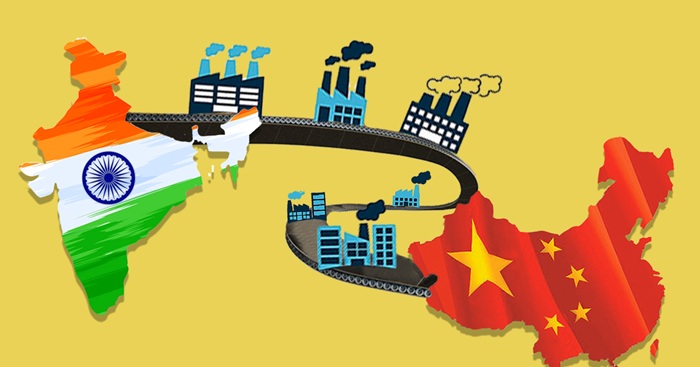
The textile sector in India may get access to credit at affordable rates. A national textiles policy will be announced soon. Efforts are also on to increase competitiveness of the Indian textile and apparel sector in global markets. India is looking at taking advantage of rising wage costs in China.
Textile and apparel exports managed a resilient performance in FY ’16, mainly on account of high growth registered in carpets, handicrafts, jute and even readymade garments. The amended Technology Upgradation Fund Scheme was rolled out in January 2016 with a budget provision of Rs 17,822 crores for the next seven years. It is expected to attract an investment of Rs one lakh crore and generate jobs for 30 lakh people.
Also, the Integrated Processing Development Scheme was rolled out to provide up to 50 per cent assistance for common effluent treatment plants with a zero liquid discharge system, subject to a ceiling of Rs 75 crores. A 50 per cent subsidy may be granted to power looms operating on solar energy.
The aim is to increase the earning of handloom weavers to Rs 500 a day. The total subsidy to be given is Rs 3.75 lakh to persons belonging to the general category, Rs 5.62 lakh for the OBC category and Rs 6.75 lakh to SC/ST.
Surge in China’s imports from Hong Kong
China’s headline figure for dollar-denominated imports got a boost last month, if only a small one, from a record surge in the value of shipments from Hong Kong. China’s imports from Hong Kong were up 242.6 per cent year on year in May. This was the fastest rate on record based on customs data going back to 1994. Where imports from Hong Kong accounted for 0.6 per cent of all China’s imports in May 2015, last month that share had more than tripled to 1.9 per cent. It’s estimated that this is not underlying demand but has probably more to do with capital flows than anything else.
However, the relative size of imports from Hong Kong – even at their recent, unusually high levels – ultimately has only a small impact on China’s headline figure for dollar-denominated imports. China’s foreign exchange reserves dropped in May, falling to their lowest level since the end of December 2011, but in line with a broader trend of stabilisation as Beijing continued its efforts to stem capital outflows.
Hong Kong’s import growth contributed only 0.4 percentage points to the headline import figure’s change from April’s reading of 10.9 per cent to 0.4 per cent in May.
More...
Spinners thrive in Andhra Pradesh
In Andhra Pradesh, the spinning industry continues to run smoothly and bring cheer to the otherwise gloomy industrial scenario in the district. As of the top 10 industries established in the district during 2015-16, nine are textile spinning units with a combined investment of Rs14, 500 crores. With this, the combined production of all spinning mills is 15.74 lakh spindles during 2015-16. However, ITC remains the biggest player.
Availability of raw cotton, skilled manpower, and incentives in the form of power subsidies, besides ease at which proposals are processed, are some of the factors responsible for the investments. Moreover, with cotton being produced in 65,000 hectares, spinning and ginning industries have always fetched good returns. Of the combined annual turnover of Rs11,540 crores of large and mega projects during 2015-2106, spinning mills accounted for Rs 6,500 crores.
The year 2012-13 had been bad for the ginning industry, which reeled under prolonged power cuts and went into recession. Soon after the new government came to power in 2014, industries were promised 24x7 power, and the industrial scenario began to look up. In 2015, the single-desk policy made covered the entire process of applying and processing online in 7 to 21 days. Under the Udyog Aadhaar memorandum, even incentives are being provided online.
Mode in France Tokyo celebrates 20 years
From July 27 to 29, Mode in France Tokyo will celebrate 20 years and introduce a new visual identity and a logo designed by Andrea Crews. The illustration uses the French colours and its strength is what it suggests. Explains Andrea Crews Studio founder Maroussia Rebecq that the image is created like a page in a magazine. It depicts a women walking through Paris streets where she lives wearing everything that a woman in tune with her times does; she's confident and happy. It's an international image of a French woman. And since we don't see her face, she could be every woman.
Created by the Federation Française du Prêt à Porter Féminin, Mode in France Tokyo has helped put fashion brands in touch with Japanese professionals who may not travel to 20 years later, at every session (January/July) the show brings together over 50 French fashion brands and 1,500 buyers, showrooms, and Japanese retailers. The ‘select shops,’ emblems of the new Japanese retail scene, are on the streets of fashionable neighbourhoods or in ‘fashion building’ shopping complexes. They are constantly searching for new products, cross-market products, and innovative lifestyle concepts.
The Federation has tracked these changes and is repositioning Mode in France Tokyo to better respond to this new context. The event will be held at the Westin Hotel in the Ebisu district and will present an original product offer mixing womenswear, accessories, and lifestyle goods in a 1,600 m2 space.
GST final draft ready to go to state FMs’ Committee meeting
A group of central and state government officials set up to frame the law for proposed goods and services tax (GST) has submitted its final draft that could be taken up at a meeting of the empowered committee of state finance ministers soon. The draft law may be made public after it's deliberated by the empowered panel headed by West Bengal finance minister Amit Mitra.
In the upcoming monsoon session of Parliament, the government is expected to make a renewed push for the passage of the constitutional amendment bill to roll out GST armed with more members in the Rajya Sabha and a broad-based national support for this reform.
The constitutional amendment will merely allow for this single tax, which is not possible under the current structure of taxation. At present states are not empowered constitutionally to tax services and the central government cannot tax goods sold in retail. Empowering both the states and centre to levy this tax, the constitutional amendment will seek to change this.
Meanwhile, the government has been seeking to persuade Congress to drop its resistance to GST and help get parliamentary approvals. GST seeks to replace central and state taxes such as excise duty, service tax, value-added tax, entry tax and octroi with a single levy and create a unified national market.
India’s geo synthetics market set to double
The Indian geo synthetics market will double in the next four years, even though domestic manufacturers are struggling to build awareness about their products. The country’s current focus on upgrading infrastructure and increased importance of environmental issues will be the biggest growth drivers. The main growth will be within infrastructure projects – roads, railways, dams and shore protection.
India has the world’s second largest road network, and 95 per cent of the roads are flexible pavements. These surfaces often use geo synthetics to help stabilise their foundation. The utilisation of cost-effective material such as geo synthetics is important to achieve the desired life of the pavement as well as to facilitate their faster construction.
Almost every type of geo synthetic is manufactured in India or is readily available through imports. Geo grids and high-strength geo textiles for construction on soft soil are popular products in India. Since there are heavy rains in some parts of India, the use of drainage geo-composite would be very beneficial.
The secluded and rainy Northeastern region is an ideal place for extensive use of geo synthetics due to frequent landslides, seepage problems, poor quality of construction material and high seismic activity.
However the popularity of geo synthetics in India is hindered by a lack of specified standard of products suitable for Indian soil and weather conditions.