Nike launches latest addition to Giannis Freak 7 shoe range
Nike has introduced - Giannis Freak 7, the latest addition to the Nigerian-Greek professional basketball player Giannis Antetokounmpo's signature shoe range. Meticulously designed to support the ‘most lethal Euro step in all of basketball,’ this new silhouette caters to Giannis and other dedicated hoopers who push the limits of their game.
Boasting an innovative ‘Antetokounmpo’ traction pattern, the Giannis Freak 7 shoe range is designed to offer a rigid feel on its lateral side for sharp cuts and quick stops, while providing a smooth medial ride for seamless transitions. This allows players to create crucial separation and leave defenders behind.
Complementing this advanced traction is a full-length, wall-to-wall Cushlon 3.0 midsole. This groundbreaking feature delivers exceptional comfort and responsiveness, crucial for athletes who spend countless hours honing their skills. The midsole, outsole, and upper all incorporate mechanically engineered grooves, allowing for optimal flex and compression to enhance the Euro step's power and agility.
Emphasizing on the shoe's critical features, Antetokounmpo says, the Giannis Freak 7 offers an incredible grip and is stable enough to move side to side when I play. The shoe brings the performance I need to power my game in a design that reminds me of my heritage and how much I’ve worked to get here.
The shoe's upper part is inspired by both Giannis' heritage and Nike's design history, subtly referencing Greek sandals to provide superior heel lockdown and foot containment during sharp cuts. Giannis' surname is even spelled out in the traction pattern, and his signature logo is subtly integrated into the upper. The lead ‘Ignition’ colorway embodies the intensity Giannis brings to the court, designed to inspire young athletes to match his notorious work ethic.
Ross Klein, Senior Director-Men’s Basketball Footwear Product Design, Nike, notes, the show reimagines the iconic Greek sandal into a containment structure tailored for the demands of Giannis’ trademark and explosive Euro step. The silhouette fuses modern energy and fluid motion with the traction and lateral containment needed to perform at the highest level, he adds.
The Giannis Freak 7 also underscores Nike's unwavering dedication to basketball, its athletes, and the sport's vibrant culture. By actively listening to athletes at all levels, from EYBL to professional play, Nike is continually shaping the future of basketball footwear. Their industry-leading designs empower athletes to leverage their athleticism as a competitive advantage. Nike further enriches these footwear innovations with colorway stories, materials, and finishes that resonate with the bold and confident energy of the next generation of hoopers.
Through creating top-tier products for elite athletes and making them accessible to all who love the game, Nike champions the players at the heart of basketball, fueling its future and culture for current all-stars and the next generation alike.
Nike launches latest addition to Giannis Freak 7 shoe range
Nike has introduced - Giannis Freak 7, the latest addition to the Nigerian-Greek professional basketball player Giannis Antetokounmpo's signature shoe range. Meticulously designed to support the ‘most lethal Euro step in all of basketball,’ this new silhouette caters to Giannis and other dedicated hoopers who push the limits of their game.
Boasting an innovative ‘Antetokounmpo’ traction pattern, the Giannis Freak 7 shoe range is designed to offer a rigid feel on its lateral side for sharp cuts and quick stops, while providing a smooth medial ride for seamless transitions. This allows players to create crucial separation and leave defenders behind.
Complementing this advanced traction is a full-length, wall-to-wall Cushlon 3.0 midsole. This groundbreaking feature delivers exceptional comfort and responsiveness, crucial for athletes who spend countless hours honing their skills. The midsole, outsole, and upper all incorporate mechanically engineered grooves, allowing for optimal flex and compression to enhance the Euro step's power and agility.
Emphasizing on the shoe's critical features, Antetokounmpo says, the Giannis Freak 7 offers an incredible grip and is stable enough to move side to side when I play. The shoe brings the performance I need to power my game in a design that reminds me of my heritage and how much I’ve worked to get here.
The shoe's upper part is inspired by both Giannis' heritage and Nike's design history, subtly referencing Greek sandals to provide superior heel lockdown and foot containment during sharp cuts. Giannis' surname is even spelled out in the traction pattern, and his signature logo is subtly integrated into the upper. The lead ‘Ignition’ colorway embodies the intensity Giannis brings to the court, designed to inspire young athletes to match his notorious work ethic.
Ross Klein, Senior Director-Men’s Basketball Footwear Product Design, Nike, notes, the show reimagines the iconic Greek sandal into a containment structure tailored for the demands of Giannis’ trademark and explosive Euro step. The silhouette fuses modern energy and fluid motion with the traction and lateral containment needed to perform at the highest level, he adds.
The Giannis Freak 7 also underscores Nike's unwavering dedication to basketball, its athletes, and the sport's vibrant culture. By actively listening to athletes at all levels, from EYBL to professional play, Nike is continually shaping the future of basketball footwear. Their industry-leading designs empower athletes to leverage their athleticism as a competitive advantage. Nike further enriches these footwear innovations with colorway stories, materials, and finishes that resonate with the bold and confident energy of the next generation of hoopers.
Through creating top-tier products for elite athletes and making them accessible to all who love the game, Nike champions the players at the heart of basketball, fueling its future and culture for current all-stars and the next generation alike.
New Balance names pop sensation Rosalia as new brand ambassador
American sportswear giant New Balance has officially named Spanish pop sensation Rosalía as its new global brand ambassador.
To kick off this partnership, the Grammy-award-winning artist stars in a five-part cinematic campaign. The film begins with Rosalía at the New Balance headquarters in Boston, culminating in the reveal of a custom painting featuring the debut New Balance x Rosalía logo.
The campaign also showcases New Balance's newest lifestyle shoe, the 204L. This shoe blends the low-profile aesthetic of retro runners with early 2000s tech, all wrapped in an all-over suede design. The new New Balance 204L is set for a global release in July through New Balance retail channels.
A highly acclaimed artist and producer, Rosalia has won two Grammy Awards and twelve Latin Grammy Awards for her unique pop songs. She rose to international fame in 2018 with her sophomore album, ‘El Mal Querer.’ This record earned her a Grammy and eight Latin Grammys, including Album of the Year, making her the first Spanish-language artist to be nominated for Best New Artist at the Grammys.
Four years later, she released her critically acclaimed ‘Motomami’ album, which she entirely wrote, performed, recorded, and produced. The album was followed by a sold-out world tour.
Chris Davis, Brand President and Chief Marketing Officer, New Balance avers, Rosalía reflects the celebration of independence that the New Balance brand has represented since 1906. She will help the brand rewrite the rules through a coauthored strategy focusing on product and storytelling.
Allbirds Inc signs three new distribution agreements across Eurasia
With a current market capitalization of $84.7 million, sustainable footwear brand Allbirds, Inc has signed three new distribution agreements across Eurasia. These new partnerships include Beosport for the Balkans (effective January 2026), 911 Fashion for Israel (effective October 2025), and Tradist Distribution for Turkiye and Central Asia (effective July 2025). These agreements bring Allbirds' total global distribution deals to 16.
Annie Mitchell, CFO, Allbirds, states, the brand’s strategic decision to transition to a distributor model in international geographies is proving to be highly successful. The company has partnered with world-class distributors and extended its brand reach with a profitable operating model" over the last 18 months. However, InvestingPro’s financial health assessment indicates Allbirds faces challenges with cash burn, and analysts anticipate a continued sales decline this year, she adds.
Founded in 1996 and based in Belgrade, Serbia, Beosport specializes in premium sportswear and lifestyle brands in Southeast Europe. 911 Fashion, established in 2001 in Tel Aviv, is a GOTS certified fashion and lifestyle distributor with 35 retail locations in Israel. Tradist Distribution, headquartered in Istanbul, focuses on distributing premium lifestyle, footwear, and bag brands across Turkiye, Eastern Europe, and Central Asia.
Founded in 2015, Allbirds is known for its sustainable footwear design, utilizing materials like Merino wool, tree fiber, and sugarcane.
In Q1 2025, Allbirds recorded net revenue of $32 million, slightly exceeding its guidance midpoint. The company improved its adjusted EBITDA loss by 11 per cent to $19 million, though its gross margin decreased to 44.8 per cent. Allbirds also secured a $75 million asset-based revolving credit facility and launched an At-the-Market (ATM) program to potentially sell up to $50 million in Class A common stock. The brand has also expanded into Central and South America and Southern Europe with Kiwi Life Group and Trendy King. Looking ahead, Allbirds plans over 15 new footwear styles to debut in mid-July and projects full-year 2025 net revenue between $175 million and $195 million, expecting a return to top-line growth in Q4 2025.
European General Court rules against sprd.netrd.net’s attempt to infringe the ‘I love’ trademark
The European General Court has ruled against German company sprd.netrd.net's attempt to trademark the iconic 'I love' symbol (featuring a heart) for use on clothing items like t-shirts and pullovers. The court upheld an earlier decision by the European Union Intellectual Property Office (EUIPO), citing the mark's fundamental lack of distinctiveness.
The ruling emphasizes, being a universally understood message, the 'I love' phrase fails to serve as a unique brand identifier. The sign's common usage and immediate recognition don't qualify it as a distinctive trademark within the clothing sector, the court highlighted. This case underscores the challenges businesses face when trying to trademark widely recognized symbols that lack an inherent, unique association with a specific brand.
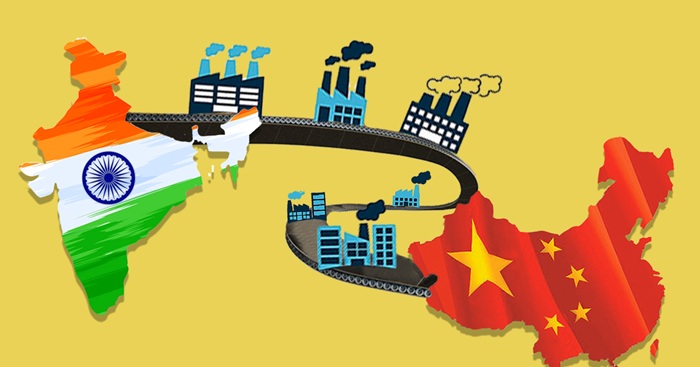
China Plus One: Is India ready to complement, not replace, the global apparel giant?
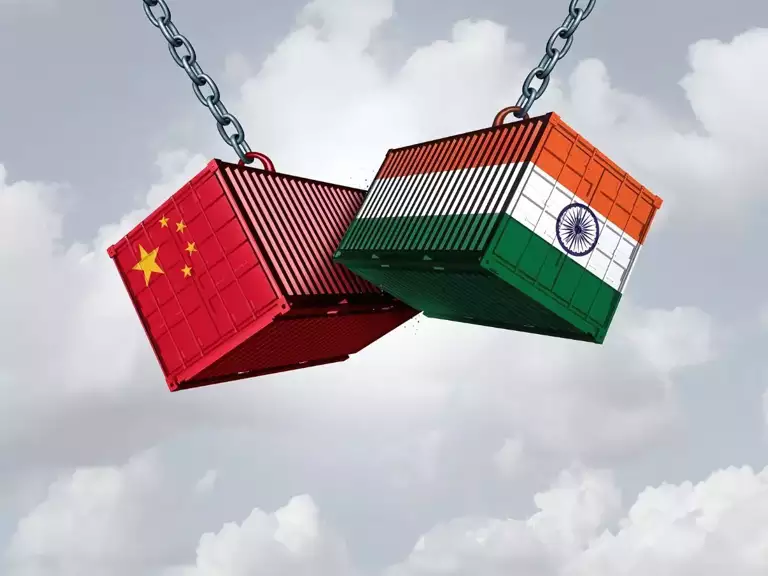
The global supply chain, once heavily concentrated in China, is undergoing a profound re-evaluation. Geopolitical shifts and recent disruptions have prompted a clear mandate: diversify. While China remains a manufacturing powerhouse, the question that has emerged topmost in global textile and apparel markets is: Will India weave its own global story in textiles and apparel?
The procurement paradox
As Elena Petrova, Head of Global Sourcing for Zenith Apparel points out, it's never just about the lowest wage. Her directive: reduce reliance on any single region by 20 per cent. Initially, India's lower tariffs and seemingly cheaper labor promised savings. However, the reality of execution quickly surfaced.
Petrova’s internal reports, mirroring data from the World Bank and ILO, highlight a critical productivity gap. She says, China's output-per-worker in our apparel lines is still 1.3 to 1.5 times higher than in comparable Indian facilities. This isn't a talent deficit in India; it's about China's ingrained systemic efficiency, refined workflow discipline, and decades of mature Quality Control (QC) systems. Petrova, emphasized the ‘cost per unit. If lower hourly wages in India translate to 30-50 per cent more hours for the same quality garment, your unit economics don't improve much. Many Indian apparel units have longer pre-production lead times units, a consistent challenge cited in industry analyses. For high-volume, high-consistency basic garments, China's combination of speed, scale, and predictability remains unmatched.
Table: China vs India work a comparison
|
Metric |
China (Approx.) |
India (Approx.) |
|
Output-per-worker |
1.3-1.5x India's |
Lower |
|
Manufacturing Share of GDP (2004) |
~17% |
~17% |
|
Manufacturing Share of GDP (Current) |
World's largest |
~13% |
|
Primary Export Strength |
Mass production, synthetics, scale, full-package |
Cotton, handlooms, value-added, small batches |
|
Logistics/Infrastructure |
Advanced, integrated supply chains |
Fragmented, infrastructure bottlenecks |
|
Technological Investment |
High, continuous automation |
Investing, but from a lower base |
|
Lead Times (Pre-production) |
Optimized |
Often longer |
Stakeholder’s views
Isabella Rossi, founder of 'EcoChic', a boutique brand focused on ethically sourced, sustainable fashion, views the landscape differently. "For us, it's about finding the right partners for the right products. China excels in synthetic fibers and large Minimum Order Quantities (MOQs). Our brand's core is natural fabrics – organic cottons, bamboo, hemp – and intricate handwork."
This is where India shines. "India's rich heritage in textiles, its mastery of handloom, embroidery, and diverse fabric printing, is unparalleled," Rossi explains. "They offer flexibility in smaller order quantities and custom designs rarely found in mass-production hubs. We accept a slight premium for this craftsmanship and robust ethical sourcing, which reports confirm positions India well for value-added and sustainable segments."
A multi-decade evolution
Anya Sharma, a senior analyst at 'Global Supply Chain Insights', frames the shift as a complex, multi-decade evolution rather than an abrupt replacement. As per Sharma, the 'China Plus One' strategy has gained momentum due to geopolitical tensions and the sheer scale of China's dominance. Companies like Gap Inc. reducing reliance on China while increasing sourcing from India, Vietnam, and Bangladesh exemplify this, building a more resilient, diversified network.
The systemic distinctions are clear:
Infrastructure & integration: China's strength is in its vertically integrated supply chains and sophisticated infrastructure – expressways, state-of-the-art ports. India, despite investments through initiatives like PM MITRA Parks and 'Make in India,' still faces a fragmented supply chain, higher logistical costs, and a complex regulatory environment.
Skill development & automation: China's state-backed vocational programs have produced millions of skilled workers over decades. India is progressing, but from a lower base. The investment gap in textile machinery is substantial, directly impacting productivity.
Policy & competitiveness: Indian government actively pushes competitiveness via schemes like PLI (Production Linked Incentive) and RoSCTL (Rebate of State and Central Taxes and Levies). However, the absence of comprehensive Free Trade Agreements with major consumer markets, unlike Vietnam and Bangladesh, still disadvantages Indian exports with higher tariffs.
For example, NexGen Athletics, a sportswear major, that traditionally sourced 80 per cent of its technical apparel from China. Facing tariffs and de-risking pressure, their strategy involved a gradual shift. China remained primary for high-volume synthetics and complex bonded garments due to its man-made fiber expertise. For a new line of organic cotton activewear and specialized accessories requiring intricate stitching and smaller runs they onboarded new partners in India.
The initial phase included extensive on-site training, QC protocol sharing, and machinery investment in India. "Transferring designs wasn't enough," stated Mark Jensen, NexGen's VP of Operations. "We had to transfer knowledge, build relationships, and adapt to different operational rhythms. The learning curve was steep, but the long-term benefits of a diversified, resilient supply chain, leveraging India's strengths in natural fibers and value-added processes, are undeniable."
A collaborative future
The idea of India replacing China is overly simplistic, point out experts. China's manufacturing prowess, built over decades of investment, won't be easily superseded, particularly in mass-volume, high-efficiency synthetic textile production. Its role is evolving, potentially shifting towards upstream component supply and investment in other hubs.
India, with its vast workforce, rich textile heritage, labor cost advantages, and growing focus on sustainability and specialized production, is emerging as a critical, complementary sourcing destination. Its journey involves maturation through sustained investment in infrastructure, skill development, and policy reforms to bridge productivity gaps.
The future of global textile and apparel sourcing is not a zero-sum game. It's a complex space where China and India, alongside other emerging hubs, will play increasingly specialized and interconnected roles, contributing to a more resilient, diversified, and globally responsive supply chain. The true question isn't whether India is ready to replace China, but rather, how effectively it can complement and compete within an ever-shifting global economic landscape.
Worlverine Worldwide appoints new members to Board of Directors
Wolverine WorldWide Inc has appointed Cheryl Abel-Hodges and Jack Boyle to its Board of Directors, effective July 1, 2025.
Currently serving as the Chief Executive Officer, Tommy John, Inc since 2023, Hodges was earlier engaged as the CEO of the PVH Corp-owned brand Calvin Klein. She has also held executive leadership roles at the brand including Group President, Calvin Klein - North America, and The Underwear Group, where she led the brand’s North American wholesale and retail businesses. She holds a bachelor’s degree from the University of Albany and also serves on the Board of Directors of Haworth, Inc.
Having recently retired from Fanatics Holdings, Inc, Boyle served as the President-Buying and North America , Fanatics Commerce. In this role he oversaw the strategic direction of merchandising and vendor management across all direct-to-consumer channels for over 900 sports partnerships. Prior to Fanatics, he was employed at the Kohl’s Corporation for a decade in various merchandising leadership positions, He also worked in the Merchandising Deparment at Famous-Barr, a division of The May Department Stores Company. He holds a bachelor’s degree from the University of Missouri, and also sits on the Board of Directors of Destination XL Group, Inc.
Founded in 1883, Wolverine World Wide, Inc is one of the world’s leading designers, marketers, and licensors of branded casual footwear and apparel, performance outdoor and athletic footwear and apparel, kids’ footwear, industrial work boots and apparel, and uniform footwear. The Company’s portfolio includes Merrell, Saucony, Sweaty Betty, Hush Puppies, Wolverine, Chaco, Bates, Hytest, and Stride Rite.
According to Tom Long, Chairman, Wolverine Worldwide, both Abel-Hodges and Boyle have extensive experience in merchandising, brand management, and omnichannel retail, and have demonstrated the ability to lead organizations through high growth periods. Their vast experience leading brands, building teams, and focusing on consumers will contribute significantly to the company.
US’ tariffs may have devastating impact on Bangladesh’s export sector, warns BGEMA
Rubana Huq, Former President, Bangladesh Garment Manufacturers and Exporters Association (BGMEA) has voiced grave concerns following US President Donald Trump's announcement of a 35 per cent tariff on Bangladeshi imports. Huq warns, this significant tariff could have a devastating impact on Bangladesh's vital export sector.
The tariffs will prove disastrous for Bangladesh's export sector, states Huq. Highlighting the competitive disadvantage this places Bangladesh in, she explains, when Vietnam exports garments at a 20 per cent tariff, we will have to pay 35 per cent. And we are still not certain whether the existing 16 per cent will also be added.
The potential addition of the existing tariff would exacerbate the situation, leading to what Huq described as a ‘terrible’ scenario. Expressed uncertainty regarding ongoing negotiations, she notes, it is not known whether the government is negotiating or has negotiated with the United States.
Despite the immediate concerns, Huq believes, a window for diplomacy remains open with Bangladesh having time until August to reduce these tariffs through discussions.
ThredUp to release Q2, FY25 results on August 4, 2025
A leading online resale platform for apparel, shoes, and accessories, ThredUp plans to release its second quarter financial results for the period ending June 30, 2025 on August 4, 2025 after the close of US markets.
ThredUp is at the forefront of transforming the resale market through innovative technology and a commitment to promoting secondhand first. By simplifying the process of buying and selling pre-owned items, ThredUp has emerged as one of the world's largest online resale platforms for clothing, footwear, and accessories.
The platform offers a seamless experience for sellers, enabling them to easily declutter their closets and unlock value for themselves or their chosen charities, all while contributing to a more sustainable planet. Buyers benefit from access to a vast selection of value, premium, and luxury brands in a single destination, with prices up to 90 per cent off estimated retail.
ThredUp's success is built upon its proprietary operating platform, which includes distributed processing infrastructure, advanced software and systems, and deep data science expertise. Through its ‘Resale-as-a-Service’ (RaaS) offering, ThredUp empowers some of the world's most prominent brands and retailers to integrate customizable and scalable resale experiences directly for their customers. To date, ThredUp has processed over 200 million unique secondhand items from 60,000 brands across 100 categories, fundamentally changing consumer shopping habits and fostering a more sustainable future.
US President Trump expands tariffs to 12 additional countries
US President Donald Trump announced a significant expansion of tariffs this week, initially targeting South Korea and Japan with a 25 per cent duty on imports. Within hours, Trump extended these new tariff hikes to twelve additional countries: Myanmar, Laos, South Africa, Kazakhstan, Malaysia, Tunisia, Indonesia, Bosnia and Herzegovina, Bangladesh, Serbia, Cambodia, and Thailand. Described by Trump as a broad effort to rectify ‘unfair trade imbalances,’ this move reflects his ongoing push to reduce America's trade deficit.
Communicated via letters to foreign leaders posted on Trump's Truth Social account, these new tariff rates are set to take effect on August 1. Trump warned. any retaliatory measures by these nations would result in further duty increases from Washington. He emphasized, while the United States remains open to trade, it demands ‘more fair and balanced’ terms. Notably, he offered an exemption for foreign manufacturers willing to shift their production to the US.
Trump asserted, these tariffs are crucial to correct years of ‘Tariff, and Non-Tariff, Policies and Trade Barriers’ that have led to what he deems unsustainable trade deficits, posing a threat to the US economy and national security. According to the Associated Press, trade tensions persist with the European Union and India, and more protracted negotiations are anticipated with China, whose imports are already subject to a 55 per cent tariff.
In his letters to Japan and Korea, Trump explicitly stated, starting on August 1, 2025, the US will charge Japan/Korea a Tariff of only 25 per cent on any and all Japanese products sent into the country, separate from all Sectoral Tariffs. Goods transshipped to evade a higher Tariff will be subject to that higher tariff.
More...
AMI to launch Textiles Recycling Expo USA in Charlotte
AMI will launch the inaugural edition of Textiles Recycling Expo USA from April 29-30, 2026, at the Charlotte Convention Center in North Carolina. Aiming to replicate the success of its European counterpart, the exhibition and conference will provide a crucial platform for the industry to tackle the escalating issue of textile waste, encompassing fabrics, clothing, footwear, fibers, and non-wovens.
Having debuted on June 4-5, 2025 in Brussels, Belgium, the original Textiles Recycling Expo was widely lauded as a landmark event. It attracted an impressive 126 exhibitors and 3,336 visitors from 67 countries, making it the largest gathering focused on textile recycling to date.
There is a significant interest amongst American consumers for this European event, notes Zied Chetoui, Event Manager. The industry needs to set up a dedicated meeting place to foster dialogue and progress within the North American textile recycling community, he adds.
Industry estimates reveal, Americans discard over 10 million tons of textiles annually, with only a small fraction currently being recycled. The US fashion and waste management sectors are under increasing pressure to boost recycling rates and minimize landfill waste. The Textiles Recycling Expo USA will directly address these challenges, promoting information exchange, innovation, and collaboration to build a more circular and sustainable future for the industry.
The event will feature an expansive exhibition hall showcasing leading suppliers of relevant technologies and services. Additionally, an open conference theater will host keynote presentations, panel discussions, and case studies, delving into critical topics such such as regulatory developments, market trends, technical innovations, supply chain advancements, and investment opportunities.
Andy Beevers, Events Director at AMI, explains, Charlotte was selected as the location for the expo as the city and surrounding areas make up a major hub for textiles production, recycling and research. The city also has great transport connections and excellent exhibition facilities, he adds.
Eurozone registers 0.7 % M-o-M decline in retail sales during May 2025
The Eurozone expects GDP growth in Q2, FY25 to remain negative as retail sales declined 0.7 per cent M-o-M in May 2025. This coincides with a -0.3 per cent drop in overall services activity in April. This concrete data supports expectations of negative GDP growth for the second quarter (April-June).
While retail sales demonstrated strength early in the year, fueled by wage growth despite consumer apprehension, May's figures present a ‘reality check.’ Though potentially influenced by holiday timing, this decline clearly indicates a downward trend in consumer spending.
Despite this downturn, the potential for a retail sales rebound remains significant due to recovering purchasing power across the Eurozone. However, stubbornly high saving rates, driven by persistent uncertainty and low consumer confidence, are currently hindering a stronger recovery in European retail.
Further compounding the economic concerns, Eurostat's broader services data for April reveals a weak start to the second quarter. The -0.3 per cent decline from March was primarily driven by substantial drops in ICT and real estate activities. While the Purchasing Managers' Index (PMI) for services showed slight improvement in June, it suggested stagnation rather than a robust recovery.
The confirmed weakness in the services sector, coupled with the retail sales slump, reinforces the view that GDP growth in Q2, FY25 may indeed be negative. This outlook is further underscored by the potential for a reversal in the frontloading of US imports, which could negatively impact the trade balance. Following a strong Q1, economic activity in Q2 is likely to serve as a ‘reality check,’ with the overall trend remaining sluggish.
Garment imports reveal a tale of two strategies, EU builds, US diversifies
A recent analysis of global garment import trends from 2013 to 2024 reveals a divergence in strategies and market dynamics between the European Union and the US. While the EU has consistently increased its garment imports, revealing a growing appetite for international textiles, the US market has largely remained stagnant, and in some areas, even seen a decline. This contrasting picture points to a reshaping of the global garment trade, with implications for both importing blocs and exporting nations.
A tale of two markets
From 2013 to 2024, EU garment imports have shown a consistent upward trajectory, with substantial growth. In stark contrast, US garment imports have largely fluctuated, ending the period at levels similar to where they began.
Table: Global garment imports: EU vs US ($ millions)
|
Year |
EU imports ($ mn) |
US imports ($ mn) |
Trend (2013-24) |
|
2013 |
105,000 |
80,000 |
EU: Significant Increase |
|
2024 |
152,000 |
80,000 |
US: Remained Stable |
Data approximated from source PDF.
Shifting sourcing strategies
The divergence becomes even clearer when examining specific exporting nations. Below is a simplified overview of garment import data for the EU and US from various countries, highlighting the start (2013) and end (2024) values, along with a general trend summary.
Table: Country-specific garment imports: EU vs US ($ mn)
|
Country |
Imports in 2013 (EU) |
Imports in 2024 (EU) |
EU Trend |
Imports in 2013 (US) |
Imports in 2024 (US) |
US Trend |
|
China |
37000 |
34500 |
Remained Steady |
29500 |
15500 |
Declined |
|
Bangladesh |
13000 |
27500 |
Significant Increase |
5000 |
7000 |
Slight Increase |
|
Vietnam |
2700 |
7000 |
Increased |
7800 |
15000 |
Significant Increase |
|
Cambodia |
2200 |
6500 |
Significant Increase |
2500 |
3800 |
Increased |
|
Pakistan |
1600 |
4500 |
Significant Increase |
1400 |
2200 |
Increased |
|
Sri Lanka |
1200 |
2100 |
Increased |
1650 |
1650 |
Remained Stable |
|
Myanmar |
150 |
3300 |
Significant Increase |
20 |
200 |
Slight Increase |
|
Morocco |
3200 |
4500 |
Increased |
100 |
300 |
Slight Increase |
|
Turkey |
11500 |
13800 |
Increased |
500 |
1250 |
Increased |
|
Tunisia |
2900 |
2950 |
Remained Stable |
150 |
300 |
Increased |
|
UK |
2900 |
1600 |
Declined |
100 |
160 |
Slight Increase |
What’s driving the trends?
There are several reasons for the disparate trends:
• Economic growth and consumer demand: Stronger consumer demand and economic growth within the EU compared to the US might be driving the increased import volumes.
• Trade policies and agreements: The EU's extensive network of trade agreements and preferential tariffs with various garment-producing nations could be facilitating higher import volumes. The US, on the other hand, might have different trade priorities or less favorable agreements with certain key suppliers.
• Diversification of supply chains: The US appears to be actively diversifying its garment sourcing, particularly away from China, which has led to stagnation or decline in overall import figures, even as imports from other nations like Vietnam increase.
• Geopolitical considerations: Geopolitical factors and specific country-related risks or opportunities could be influencing sourcing decisions for both blocs. For instance, the significant growth in EU imports from Myanmar might be tied to specific investment or trade initiatives.
• Fashion trends and market specifics: Differences in fashion trends, consumer preferences, and retail strategies between the EU and US markets could also play a role in shaping import demands.
Outlook, a continuing divide
The data suggests that the EU and US are on distinct paths regarding garment imports. The EU's consistent growth highlights its role as a key driver of demand in the global textile market, while the US appears to be undergoing a recalibration of its supply chains. This ongoing difference will likely continue to reshape the global garment industry, impacting production hubs, logistics networks, and ultimately, consumer choices worldwide. As these trends evolve, close monitoring will be essential to understand the full economic and social ramifications for both importing powerhouses and the nations that clothe them.
Global textile recycling market to rise to $7.2 billion in value by 2032
Growing at a CAGR of 4.90 per cent from 2025-32, the global textile recycling market is projected to reach a value of $7.2 billion by 2032.
This market expansion is likely to be propelled by several key factors including environmental regulations that are becoming increasingly stringent worldwide. For example, the European Union mandates separate textile waste collection by January 1, 2025, to boost reuse and recycling.
The rise of circular economy initiatives, particularly in fashion, sees brands investing in closed-loop systems to transform old garments into new products. Consumer awareness of fashion's environmental footprint is also growing, influencing purchasing decisions towards sustainable and recycled options.
Furthermore, technological advancements like AI-powered sorting and efficient fiber recovery are making recycling more viable, while brand collaborations (eg: Patagonia, H&M) are expanding take-back programs and eco-friendly collections.
The textile industry is notoriously resource-intensive and polluting. With over 17 million tons of textile waste generated in the US alone in 2018, the potential for growth in this sector is immense. Textile recycling offers substantial benefits, including reducing landfill waste and conserving water, energy, and raw materials by lessening the reliance on virgin fibers.
Regionally, Europe is set to maintain its dominance due to strong regulations, early adoption of sustainable practices, and well-developed recycling infrastructure in countries like Germany and Sweden. The Asia-Pacific region, particularly China, India, and Bangladesh, is expected to witness the fastest growth, driven by increasing awareness and significant investments in recycling infrastructure. China aims to recycle 25 per cent of its textile waste and produce 2 million tons of recycled fiber annually by 2025. North America is also an important market, with the US enhancing its infrastructure through public-private partnerships.
The market employs mechanical recycling, which is cost-effective and dominant for natural and synthetic fibers, and chemical recycling, which breaks down fabrics at a molecular level for high-purity recovery, despite being more expensive and less scalable currently.
Despite this positive momentum, challenges persist, including a lack of infrastructure for collection and processing, contamination issues from mixed fibers and dyes, relatively low consumer participation, and the economic viability of recycling compared to producing virgin fibers.