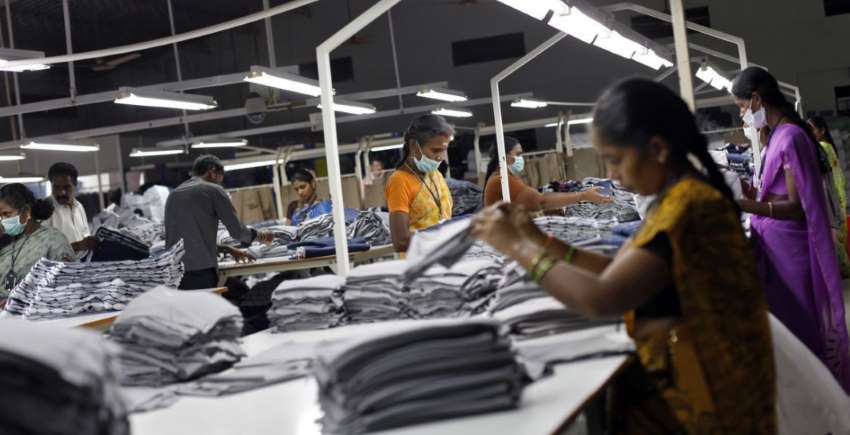
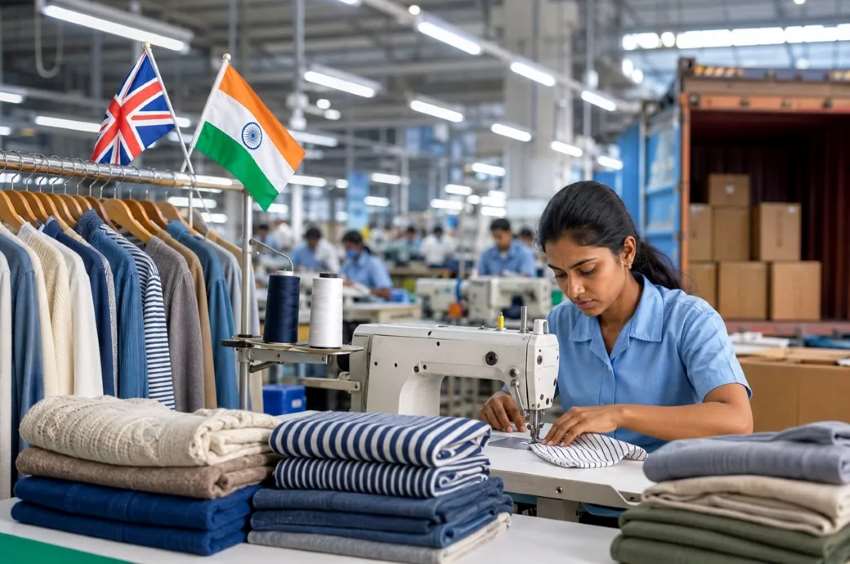
Welspun is in the midst of a massive transformation driven by sustainability. It is refining systems and processes. But its biggest interventions are around the creation of vibrant and progressive farming communities. In Maharashtra and Gujarat the main cotton producing regions for Welspun farmers are given complete farm management solutions right from the field to the market. This project is spread over 250 villages and indirectly impacts 50,000 farm workers. The ambition is to build models of sustainable farming despite the small plot sizes of most farmers. An entire cut and sew unit is run only by women including the security guard of the unit. At the heart of the sustainability processes at Welspun is a process of chemical fingerprinting to identify the origin of the cotton fiber used. This system allows tracing of cotton from farms to the gin and to the spinning and to the weaving stage as well as the point of sale.
The fashion and textile industry is the second largest polluter in the world, coming second to the oil sector. Global efforts to mitigate carbon emissions to stem the impact of climate change are now shaking up things as almost all big players in the fashion and textile industry are reeling under the ceaseless pressure to transform.
- 1
- 2
- 3
- 4
- 5
- 6
- 7
- 8
- 9
- 10
The 2027 Mandate: Why denim’s future hinges on verifiable data
For decades, the global denim industry has relied on a narrative of durability, heritage, and authenticity. That narrative is now... Read more
Europe’s textile core unravels as costs, imports and policy pressure bite
Europe’s textile and apparel sector, long seen as a benchmark for craftsmanship and industrial depth, is slipping into a prolonged... Read more
Automation, innovation, regulation are the forces shaping textiles in 2026
The global textile sector has entered a new era. Early 2026 saw the industry breach a $1.06 trillion valuation, reflecting... Read more
The new Brussels rulebook, every EU apparel order is now a balance-sheet risk
The humble export order sheet is undergoing a transformation. What was once a straightforward commercial instrument: SKU, volume, FOB price,... Read more
Why 2026-27 could be a defining cotton year for India’s farm-to-fashion economy
The global cotton economy is entering a more constrained phase, and for India, the implications run far beyond the farm... Read more
Luxury resale’s next big battle is no longer digital, it is about who controls s…
For nearly a decade, the luxury resale story was written in the language of platforms. Market leadership was measured by... Read more
Digital Arms Race: Indian apparel giants deploy AI to neutralize tariff crisis
The Indian textile and apparel sector is in a digital survival phase in 2026, shifting from traditional labor-intensive models to... Read more
Europe’s Textile Endgame: Why Project FAE is becoming fashion’s most critical in…
Europe’s apparel majors are no longer treating circularity as a branding layer. With Project FAE or Feedstock Activation Europe, the... Read more
Engineering color at source, dye-free production is cutting cost, water, and tim…
For over a century, coloring has been anchored in wet processing, an energy-intensive, chemically saturated stage that happen post spinning.... Read more
The €11 bn deadlock, can Europe’s textile recycling catch up?
Europe is at a tipping point. Fast fashion consumption, led by rising incomes and a growing global middle class, has... Read more