Exploitation has become the dominant business model in global trade, says a global trade union study by the International Trade Union Confederation (ITUC). More than 160 million workers make up the hidden workforce. They are employed indirectly in supply chains and subject to labor abuses but help big companies earn trillions of dollars.
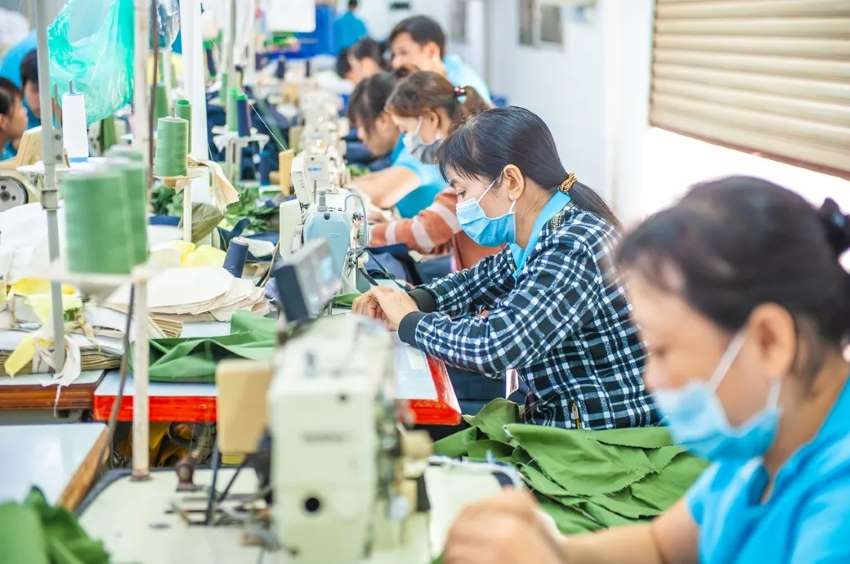
Some of those workers are in Cambodia, where low wages are the major attraction to businesses. Transparency is lacking in the multiple layers of contractors and subcontractors employed by major companies. There are no safe, secure, regulatory environments that provide fundamental rights.
In 50 major companies, including Nestle, Coca-Cola, General Electric and Walmart, only six per cent of the workers in their supply chains are directly employed. The 50 companies have combined revenues of $3.4 trillion. Big companies have to work toward ensuring supply chain transparency, safe and secure work, a living wage and collective bargaining rights for all workers.
The situation for workers is made worse in countries like Cambodia because of domestic regulatory systems that are weak thanks to an unwillingness among governments to hold large companies accountable. If countries where multinationals are headquartered were to legislate to mandate due diligence, then it’s possible to prosecute companies across borders.
- 1
- 2
- 3
- 4
- 5
- 6
- 7
- 8
- 9
- 10
Global cotton enters a deficit year in 2026 as supply drop meets logistics risk
The global cotton economy has entered a fragile and sensitive phase. Early projections for the 2026-27 season suggest that world... Read more
India’s textile trade gets a Pacific push as New Zealand FTA removes tariff barr…
India and New Zealand have inked a ‘once-in-a-generation’ Free Trade Agreement (FTA), one that will have a profound impact on... Read more
Lululemon’s world-first nylon circularity push signals a new apparel arms race
The global apparel industry’s circularity narrative is entering a more technically demanding phase. Polyester recycling once the flagship of sustainable... Read more
Beyond the DTC Rush: Levi’s hybrid channel strategy sets a new retail benchmark
The global apparel sector is entering a phase where channel strategy is no longer a tactical lever but a core... Read more
The New Rules of Resale: EPR turning secondhand into fashion’s strategic growth …
The global fashion industry is facing a decisive regulatory and commercial reset. What began as a sustainability narrative around reuse... Read more
The 2027 Mandate: Why denim’s future hinges on verifiable data
For decades, the global denim industry has relied on a narrative of durability, heritage, and authenticity. That narrative is now... Read more
Europe’s textile core unravels as costs, imports and policy pressure bite
Europe’s textile and apparel sector, long seen as a benchmark for craftsmanship and industrial depth, is slipping into a prolonged... Read more
Automation, innovation, regulation are the forces shaping textiles in 2026
The global textile sector has entered a new era. Early 2026 saw the industry breach a $1.06 trillion valuation, reflecting... Read more
The new Brussels rulebook, every EU apparel order is now a balance-sheet risk
The humble export order sheet is undergoing a transformation. What was once a straightforward commercial instrument: SKU, volume, FOB price,... Read more
Why 2026-27 could be a defining cotton year for India’s farm-to-fashion economy
The global cotton economy is entering a more constrained phase, and for India, the implications run far beyond the farm... Read more