Cambodia’s exports of garments and footwear rose by 7.2 per cent in 2016 from 2015. Garment exports to the European Union grew by 14 per cent in 2016. About 640 factories hold export licenses. More than 7,00,000 workers are employed in the sector and over 80 per cent of them are women, most of them between 16 and 25 years old.
In Cambodia, with the support of the ILO Better Factory Program, a system of labor inspections in the garment sector has been developed. Advice and capacity development is provided to worker management committees to bridge their communication gap and foster understanding and respect, minimising conflicts and refusal to work. Project interventions at Cambodia’s garment factory level also focus on two more areas: nutrition and transport security.
Malnutrition is prevalent among female garment workers and contributes to mass fainting, frequent sick leaves and low performance and productivity in the factories. Workers’ nutrition is being improved through awareness raising and information as well as through advising on the establishment of factory canteens providing quality food. Transport security is being improved. At present garment workers are usually transported on trucks that are not made for public transport and often do not comply with any road safety standards.

- 1
- 2
- 3
- 4
- 5
- 6
- 7
- 8
- 9
- 10
Apparel’s inflation premium in the US signals a tough road for retailers
The latest inflation data from the U.S. Bureau of Labor Statistics has conveyed an important warning for the fashion and... Read more
The Alchemy of Adornment: Decoding the ‘Runway Trends’ and ‘Sartorial Shifts’ of…
As the global luxury sector navigates shifting economic currents, Milan continues to solidify its role as the definitive compass for... Read more
Engineered to Perform: How bio-based textiles are rewiring the $1.15 trillion at…
The global athleisure industry is entering a reset as the next phase of competition shifts from celebrity endorsements and logo... Read more
China’s inward turn, domestic demand is rewriting the export model
China is undergoing one of its most consequential economic recalibrations in decades, driven by geopolitical instability, rising Western protectionism, and... Read more
Why Shein sees itself as a technology company, not a fashion brand
The modern fashion industry has traditionally been defined by creativity, merchandising expertise and global sourcing networks. Yet few companies have... Read more
India’s textile sector turns crisis into competitive advantage
India’s textile and apparel industry has emerged from one of the most turbulent periods in its recent history, transforming a... Read more
India’s Export Divide: Textile mills advance, apparel makers face global headwin…
India’s textile and apparel (T&A) sector entered FY2027 with a striking internal contradiction. While the country’s overall merchandise exports increased... Read more
China’s inward turn, domestic demand is rewriting the export model
China is undergoing one of its most consequential economic recalibrations in decades, driven by geopolitical instability, rising Western protectionism, and... Read more
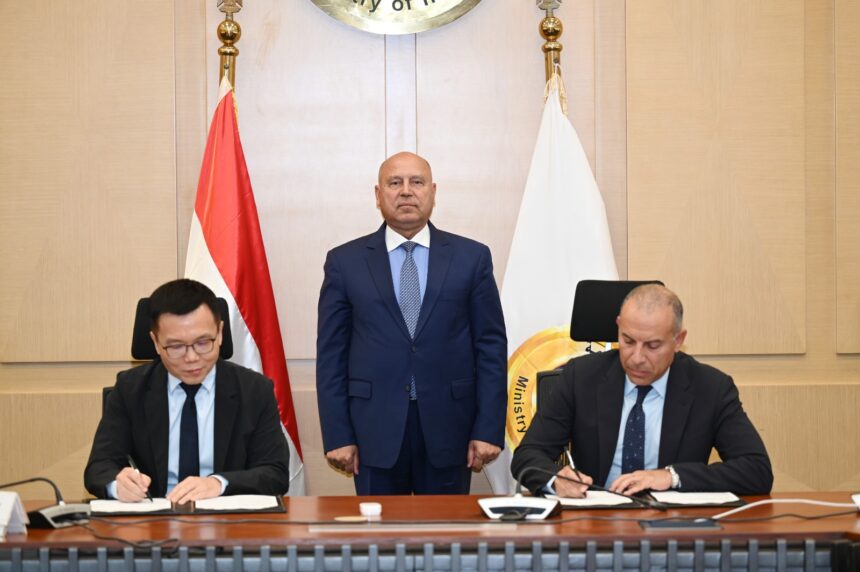
Egypt bets on a $2 bn green textile city to become Europe’s next sourcing hub
Egypt is making a decisive play to become one of the world's most important apparel manufacturing destinations after securing a... Read more
EU textile imports hit $295.66 bn as price wars mask manufacturing stress
The European Union’s textile and apparel imports grew to $295.66 billion in 2025, a 9.4 per cent year-on-year increase from... Read more