In the wake of Britain’s exit from the European Union {EU}, Sri Lanka would face negative consequences across the board in many areas, according to the country’s economists and exporters.
Said Head of the Department of Economics, Faculty of Arts of the University of Colombo, Prof. Ven Bellanvila Wimalaratana, the Brexit, which he deemed was a divorce of sorts, which would cause an initial shock in the markets in the short term (one year to one and a half years to a maximum of two years), would locally directly adversely impact the currency market, trade including exports (including textiles), economic growth performance, investments including foreign direct investments (FDIs), tourism, and international aid and other support received by the country, thereby causing mostly negative implications.
Wimalaratana highlighted that while there were a number of Sri Lankans working in Britain and the countries of the EU and some were permanently settled there, their remittances too would be affected. While we are at present not receiving much in the way of FDIs, we may not be able to expect FDIs as much as we hoped we would, he remarked.
Meanwhile, Secretary General of the Joint Apparel Association Forum (JAAF), Tully Cooray said that there would not be immediate changes but added that they were adopting a wait-and-watch approach. He said that they would have to request the UK for a fresh preferential system in the event the country decides to deviate from the current customary practices.
- 1
- 2
- 3
- 4
- 5
- 6
- 7
- 8
- 9
- 10
The New Rules of Resale: EPR turning secondhand into fashion’s strategic growth …
The global fashion industry is facing a decisive regulatory and commercial reset. What began as a sustainability narrative around reuse... Read more
The 2027 Mandate: Why denim’s future hinges on verifiable data
For decades, the global denim industry has relied on a narrative of durability, heritage, and authenticity. That narrative is now... Read more
Europe’s textile core unravels as costs, imports and policy pressure bite
Europe’s textile and apparel sector, long seen as a benchmark for craftsmanship and industrial depth, is slipping into a prolonged... Read more
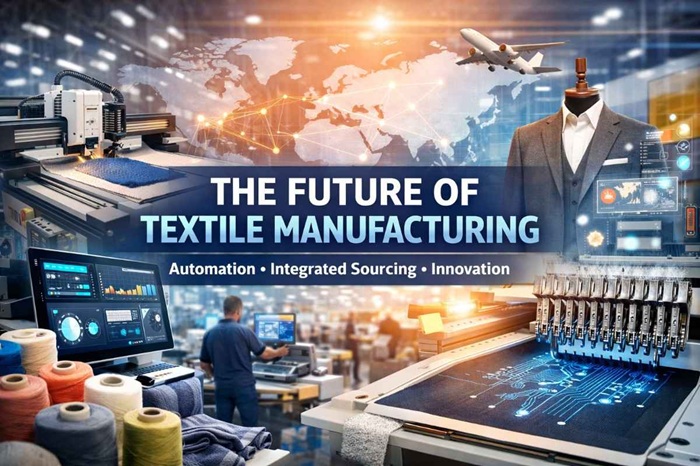
Automation, innovation, regulation are the forces shaping textiles in 2026
The global textile sector has entered a new era. Early 2026 saw the industry breach a $1.06 trillion valuation, reflecting... Read more
The new Brussels rulebook, every EU apparel order is now a balance-sheet risk
The humble export order sheet is undergoing a transformation. What was once a straightforward commercial instrument: SKU, volume, FOB price,... Read more
Why 2026-27 could be a defining cotton year for India’s farm-to-fashion economy
The global cotton economy is entering a more constrained phase, and for India, the implications run far beyond the farm... Read more
Luxury resale’s next big battle is no longer digital, it is about who controls s…
For nearly a decade, the luxury resale story was written in the language of platforms. Market leadership was measured by... Read more
Digital Arms Race: Indian apparel giants deploy AI to neutralize tariff crisis
The Indian textile and apparel sector is in a digital survival phase in 2026, shifting from traditional labor-intensive models to... Read more
Europe’s Textile Endgame: Why Project FAE is becoming fashion’s most critical in…
Europe’s apparel majors are no longer treating circularity as a branding layer. With Project FAE or Feedstock Activation Europe, the... Read more
Engineering color at source, dye-free production is cutting cost, water, and tim…
For over a century, coloring has been anchored in wet processing, an energy-intensive, chemically saturated stage that happen post spinning.... Read more