FW
Better Cotton champions traceability for sustainable fashion
Better Cotton, the world's largest cotton sustainability initiative, will play a pivotal role in the World Trade Organization's Public Forum by hosting a panel discussion on traceability within fashion and textile supply chains. The session, titled 'Traceability as the Key Enabler for Improving the Sustainability of Cotton Value Chains,' is scheduled for September 15th in Geneva, Switzerland.
Jacky Broomhead, Senior Traceability Manager at Better Cotton, will moderate the discussion, featuring experts like Maria Teresa Pisani from the UN's UNECE, Gregory Sampson from the ITC, Jeremy Thimm from GOTS, and Josh Taylor, also from Better Cotton. This panel will examine how traceability can enhance sustainability in cotton value chains, particularly in light of tightening diligence regulations, investor demands, and evolving consumer expectations.
Better Cotton's upcoming traceability solution, after two years of development, will provide supply chain visibility by tracking transactions between stakeholders. This technology will empower fashion retailers and brands to identify the origin of their cotton and the percentage of Better Cotton in their products.
Furthermore, traceability will strengthen the connection between farmers and supply chains, laying the groundwork for Better Cotton's Impact Marketplace, rewarding farmers for adopting sustainable practices.
Jacky Broomhead emphasized the need for collaboration to ensure that traceability benefits the entire textile industry and remains accessible and inclusive. The discussion at the Public Forum promises to shed light on the path toward more sustainable cotton supply chains.
Propper International enhances efficiency with Coats Digital's GSDCost solution
In a strategic move, Propper International Inc, a major supplier to the United States armed forces and other law enforcement markets, has teamed up with Coats Digital to implement the GSDCost solution. This innovative collaboration aims to revolutionize Propper's production operations by leveraging data-driven methodologies. The adoption of GSDCost promises to usher in a new era of streamlined efficiency, enhanced line balancing, and improved capacity planning processes for Propper International.
Propper International, known for manufacturing over 120 million garments for the U.S. Department of Defense and catering to a global workforce of 1,400, seeks to boost its manufacturing prowess further. The decision to adopt GSDCost stems from the need to replace time-consuming manual procedures with accurate, data-backed processes. The solution is projected to yield efficiency improvements ranging from 3% to 7% in its inaugural year.
Eric Marambio, Engineering Manager at Propper International Inc., expressed enthusiasm for the transformational potential of GSDCost. He highlighted structured sewing operation methods, achievable production goals, and accurate Standard Minute Values (SMV) calculations as some of the invaluable benefits the tool offers. The user-friendly interface and robust data sharing capabilities are expected to elevate Propper's product ranges quickly and successfully.
This collaboration aligns with Propper's goal to eliminate deficiencies in time, cost, and method analyses while ensuring efficient production management through real-time reporting. By reducing reliance on Excel spreadsheets, Propper aims to bridge the gap between planners and operators, thereby minimizing confusion, incorrect line balancing, and resource wastage.
Georgina Vazquez, Project Manager at Coats Digital, commended Propper's choice of GSDCost as a means to optimize production using scientifically proven methods. The implementation promises to enhance efficiency, ultimately positioning Propper International as a leader in the industry.
Coats Digital's GSDCost solution, based on the GSD methodology, is recognized as an international standard in the sewn products industry. It facilitates collaboration, transparency, and sustainability throughout the supply chain, allowing for accurate cost prediction and a more efficient garment manufacturing process. This strategic partnership exemplifies Propper International's commitment to excellence and growth in the market.
Santoni Shanghai Acquires Terrot to Build Circular Knitting Ecosystem
Santoni Shanghai Knitting Machinery Co., Ltd., a leading manufacturer of circular knitting machines, has acquired Terrot GmbH, a German company with a long history in the industry. The acquisition will help Santoni Shanghai to build a more integrated and scaled-up ecosystem for circular knitting machines.
The global circular knitting machine market is expected to grow significantly in the coming years, driven by the increasing demand for breathable and comfortable knitted fabrics. Santoni Shanghai believes that the acquisition of Terrot will help it to better seize this market opportunity.
Terrot is a well-respected company with a strong reputation for quality and innovation. Its products are used by leading textile manufacturers and brands all over the world. The acquisition will give Santoni Shanghai access to Terrot's technology and expertise, which will help it to develop new and innovative products.
The acquisition is also a strategic move by Santoni Shanghai to consolidate the circular knitting industry. The company believes that by combining its resources with Terrot's, it will be able to create a more efficient and competitive industry.
The acquisition is subject to regulatory approval. If approved, it is expected to close in the coming months.
In addition to the headline, here are some other key points from the text:
• The acquisition will help Santoni Shanghai to build a more integrated and scaled-up ecosystem for circular knitting machines.
• The global circular knitting machine market is expected to grow significantly in the coming years.
• Terrot is a well-respected company with a strong reputation for quality and innovation.
• The acquisition will give Santoni Shanghai access to Terrot's technology and expertise.
• The acquisition is a strategic move by Santoni Shanghai to consolidate the circular knitting industry.
German Industry Leaders to Host Symposium on Warp Knitted Elastic Fabrics in Surat, India
German Industry Leaders to Host Symposium on Warp Knitted Elastic Fabrics in Surat, India
Leading German companies Brückner, Groz-Beckert, the Karl Mayer Group, and Thies are hosting a symposium on warp knitted elastic fabrics in Surat, India. The event will take place on October 11 and 12, 2023, at the Marriott Hotel Surat.
The symposium is open to representatives of the Indian textile industry.
Background
• Warp knitted elastic fabrics are in high demand due to their versatility and stretchability.
• The Indian textile sector is well-positioned to capitalize on this demand.
• However, the manufacturing process for warp knitted elastic fabrics is different from traditional methods.
Symposium Objectives
• The symposium aims to provide information and guidance to the Indian warp knitting industry.
• It will cover topics such as:
o The production of warp knitted elastic fabrics
o The latest technologies and innovations in warp knitting
o Best practices in the industry
Highlights
• Warp knitted elastic fabrics: A versatile and stretchable fabric that is in high demand.
• Indian textile sector: Well-positioned to capitalize on the demand for warp knitted elastic fabrics.
• Different manufacturing process: The manufacturing process for warp knitted elastic fabrics is different from traditional methods.
• Symposium objectives: Provide information and guidance to the Indian warp knitting industry.
• Benefits of attending: A unique opportunity to share knowledge and experience, foster growth and innovation, and gain valuable insights.
Flipkart's Shopsy expects 2x growth during annual festive sale
The company has been preparing for the sale for four months.
They have analyzed customer behavior, identified demand patterns, and prioritized categories and products.
Flipkart's value commerce division, Shopsy, is expecting a remarkable growth of more than double in all significant performance indicators during its annual festive sale known as the "Grand Shopsy Mela," which commenced on September 11.
A senior executive from the company revealed during a discussion with ETRetail that preparations for this yearly festive sale commenced approximately four months ago. Their strategic efforts encompassed the comprehensive analysis of customer behavior, identification of demand patterns, prioritization of categories and products, and determination of price points to emphasize.
Ayushi Gudwani: Pioneering the Evolution of Women's Fashion
Entrepreneurial Vision Ayushi Gudwani, the Founder and CEO of FS Life, has redefined the landscape of women's fashion with her innovative approach.
After a fruitful 7-year stint at McKinsey & Co., where she specialized in strategy, growth, and scalability, Ayushi embarked on an entrepreneurial journey in September 2016.
Her motivation stemmed from personal frustration in finding well-fitted and comfortable western workwear in India.
Solving the Fit Challenge
Ayushi recognized the underexplored market for women's workwear and undertook extensive research, personally measuring 200 women to gather valuable sizing data.
This data formed the foundation of FS Life's sizing algorithm, catering to Indian body types from XS to XXL, even offering tailored options.
Adapting to Changing Times
With the pandemic reshaping workwear demands, FS Life underwent a significant transformation.
Fable Street expanded into a multi-category western wear brand, introducing evening wear and more. This success story paved the way for the launch of two sister brands - March and Pink Fort - within a short span.
Awards and Recognition
Despite her non-fashion background, Ayushi's risk-taking and dedication bore fruit. She earned accolades such as BW 40 under 40 (2022), Fortune India 40 under 40 (2021), 'Queen of Workwear' by India Today (2022), and the 'Incredible Women Achiever' title from the Indian Chamber of Commerce (2022).
Ayushi's achievements
Her good work also earned her a place among five women entrepreneurs invited to the Global Victoria Women’s (GVw) 2020 Summit in Australia.
Future Prospects In September 2022, FS Life secured 50 crores in Pre-Series B funding from Fireside Ventures, positioning itself for further online expansion and the launch of offline stores.
Global garment sector could lose $65 billion due to climate change
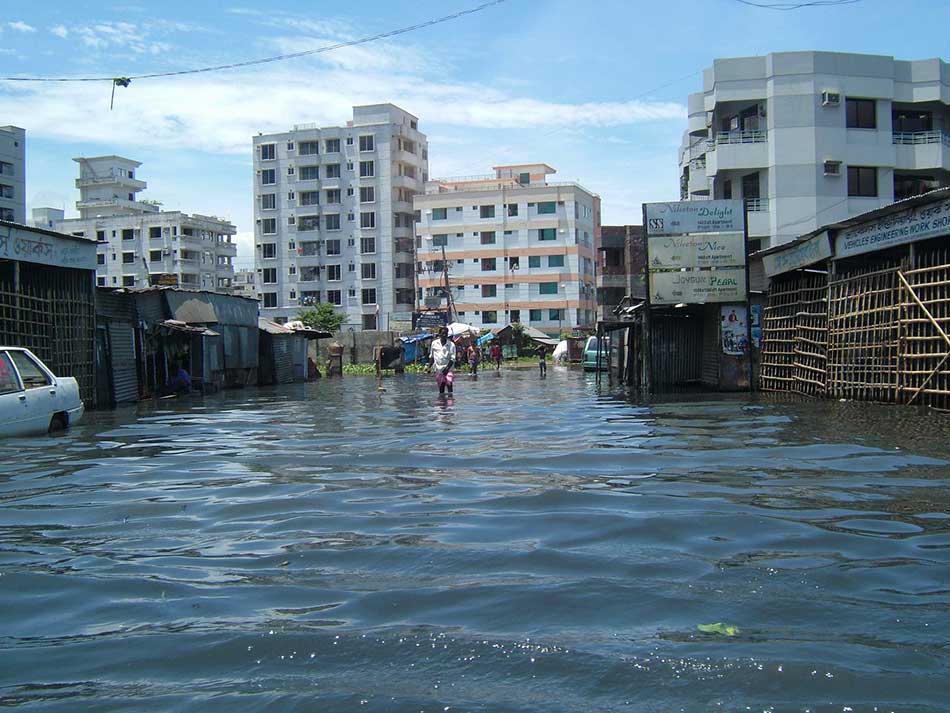
The impact of climate change is here and how. Random flooding is commonplace and summer heat waves are the new normal. From the US to Australia, from Japan to Germany, climate change the new reality the world is grappling with alongside inflation, political conflict and wave after wave of uncertainty.
In this mix, there is the writing on the wall for readymade garment manufacturing hubs that the continual cycle of flooding and heat waves will have a huge detrimental impact. Analysis by Cornell University’s Global Labor Institute and Schroders has stated this could mean not only losses to the tune of $65 billion but also a loss of over a million jobs in this sector by 2030 – bearing the brunt of this colossal damage would be primarily Pakistan, Bangladesh, Cambodia and Vietnam, followed by parts of China, India, Sri Lanka, Mauritius, Myanmar, Thailand and Nicaragua amongst others.
The study included 32 garment manufacturing hubs spread across the world. Researchers mapped the supply chain footprint of six global apparel brands across the four production centers. The findings show workers and manufacturers for all six face productivity impacts from extreme heat and flooding
The realty on sectoral impact
Researchers looked at the climate vulnerable apparel industries in Bangladesh, Cambodia, Pakistan and Vietnam, which collectively represent 18 per cent of global apparel exports, house approximately 10,000 apparel and footwear factories and employ 10.6 million workers. In a communiqué, Angus Bauer, Head of Sustainable Investment Research at Schroders commented: “Rising heat stress and intense flooding represent $65 billion in would be export earnings and nearly one million forgone jobs for key apparel producing regions for 2030, increasing significantly for 2050. These issues pose material risks for brands, retailers and investors as they manifest either through productivity losses, stranded assets or both. This research highlights the urgent need for action. Investors must begin to engage with apparel companies and their stakeholders to ensure they start to measure and address the significant challenges of physical climate impacts on workers and business models. Furthermore, apparel companies must look to partner with suppliers, and work with peers, worker organisations and policy makers to design suitable adaptation strategies that consider the impact on workers. Adaptation planning could have positive returns on investment for the industry and is a critical addition to mitigation efforts.”
In the same communiqué, Cornell University’s Global Labor Institute’s executive director Jason Judd said, “Flooding and extreme heat pose significant risk to every constituency in global apparel production — workers, manufacturers, regulators, investor and brands themselves. But no one is factoring the on-the-ground costs of climate breakdown into their planning. The apparel industry and regulators have mostly framed their climate responses around mitigation issues—emissions, water usage, and recycled fabrics. They are ignoring the climate issues that are dramatically and directly affecting suppliers and their workers now. The Global North’s climate nightmares are already in evidence in Bangladesh, Pakistan, Cambodia and elsewhere. Life, let alone work, will become very difficult in these and many other hotspots that apparel brands and retailers depend on for production.”
The way forward
Readymade garment factory workers need protection from extreme heat conditions in the work place. Currently nothing exists in place to provide these vulnerable employees relief from constant deluge and rising heat waves. These alarming situations should be given the status of health hazard and adequate investments must be made to protect their lives and lifestyle. In order to deal with the day-to-day costs of climate breakdown, workers need social protection systems in place and living wages.
Steady rise of yarn prices ties Bangladeshi apparel exporters in knots
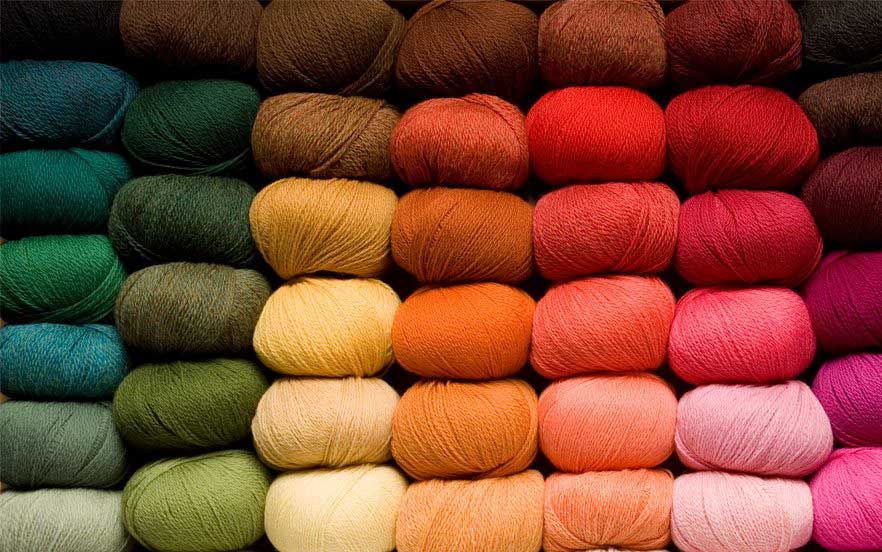
Bangladesh’s biggest foreign exchange revenue is from readymade garment exports wherein it enjoys the position of being the world’s second largest exporter after China. When this South Asian nation’s apparel exporters face a challenge due to escalating yarn prices in the domestic market, it puts this competitive sector that works in slim margins and places the sector in a precarious position. Bangladesh’s textile mills have cited multiple reasons why they have been forced to increase the price of yarn and they are legitimate reasons.
Buy local yarn, save the dollar
Bangladesh has been facing serious foreign exchange shortage for last few years and managed to secure a IMF loan, at the beginning of the year. The Bangladesh Textile Mills Association (BTMA), has been continually urging local manufacturers and exporters of readymade garments to buy locally produced yarn and save forex spent on importing. Industry leaders, economists and government advisors have also promoted this idea on how to support the local textile mills and prevent stockpiling of inventory and save the dollar for importing more important items.
Moreover, local garment manufacturers prefer using locally-made yarn instead of imported ones to maintain the current lead times of 45 to 60 days demanded by buyers, whereas earlier it was 90 to 120 days. However, textile mills have had to contend with high energy costs and higher cost of raw material, necessitating them to increase yarn prices. The most -consumed 30-carded yarn, used for less expensive, more basic projects, has been selling between $3.50 and $3.60 per kg whereas it was $2.90 to $3.10 a month ago, say textile mill owners. Faruque Hassan, President, Bangladesh Garment Manufacturers and Exporters Association (BGMEA), say as orders for readymade garment export as well as for locally produced textiles have increased, mills have leveraged the demand to increase the price of yarn to make up for years of losses and static inventory.
RMG manufacturers face the heat
Readymade garment makers are rightfully perplexed by the price rise as it cuts drastically into their already slim margins, prompting them to head for sources that are cheaper. BGMEA spokesperson Mohammed Ali Khokon stated that in the first week of July 2023, the price of 30-card yarn in the domestic market stood at $ 3.20 per ounce and that within the month, jumped to $ 3.50, and increase of $0.30 cents. Indeed, Khokon understands that textile mills have been operating under losses for a while with energy and raw material costs on an upward spiral, it hits the RMG sector hard.
Apparently, BGMEA members had agreed to pay a slight premium to purchase locally-produced yarn in show of solidarity and support but the recent price spikes are beginning to hurt their interests. Many BGMEA members are of the idea that yarn be imported as they can sources at lesser price. However, there are two roadblocks to this as well – the lead time will become longer and affect the running of production to meet deadlines. The other crucial problem is that Bangladesh’s foreign currency reserves are being built on by the government, making it difficult for individual manufacturers secure dollars for importing yarn that is readily available in the country.
At the moment, Bangladesh needs to leverage the increase in orders and make the most of their competitive pricing – the two bodies BTMA and BGMEA need to work with the government to sort out the bottleneck.
India: KKR invests Rs 2,069.50 crore in Reliance Retail Ventures Limited
This investment values RRVL at a pre-money equity value of Rs 8.361 lakh crore
KKR's follow-on investment will translate into an additional equity stake of 0.25% in RRVL on a fully-diluted basis
RRVL, through its subsidiaries and associates, operates India's largest, fastest growing, and most profitable retail business
RRVL's vision is to galvanize the Indian retail sector through an inclusive strategy serving millions of customers
Founded in 1976, KKR has approximately $519 billion in assets under management as of June 30, 2023
KKR's follow-on investment in RRVL furthers its relationship with Reliance Industries Limited
Here is a more detailed explanation of each subtitle:
This investment values RRVL at a pre-money equity value of Rs 8.361 lakh crore. This means that the total value of RRVL, before the investment, is Rs 8.361 lakh crore.
KKR's follow-on investment will translate into an additional equity stake of 0.25% in RRVL on a fully-diluted basis. This means that KKR will own an additional 0.25% of RRVL after this investment.
RRVL, through its subsidiaries and associates, operates India's largest, fastest growing, and most profitable retail business. RRVL is a subsidiary of Reliance Industries Limited, and it operates a wide range of retail businesses in India, including grocery stores, fashion stores, and electronics stores.
RRVL's vision is to galvanize the Indian retail sector through an inclusive strategy serving millions of customers. RRVL wants to make retail more accessible and affordable for all Indians.
Founded in 1976, KKR has approximately $519 billion in assets under management as of June 30, 2023. KKR is a global investment firm that has invested in a wide range of businesses, including technology companies, retail companies, and financial services companies.
KKR's follow-on investment in RRVL furthers its relationship with Reliance Industries Limited. KKR has previously invested in Reliance Industries Limited's digital arm, Jio Platforms.
Techtextil India 2023: Opens
The Biggest Technical Textiles Trade Fair in India.
The headline highlights the key information in the text, namely that the 9th edition of Techtextil India is opening today at the Jio World Convention Centre in Mumbai. The headline also mentions that the trade fair is uniting 160+ industry players and showcasing 200+ brands, which gives an indication of its scale and importance.
The text you provided also mentions that the technical textiles sector is set to see a brighter future, and that the trade fair will provide a platform for networking and knowledge sharing. These are all important aspects of the trade fair, and they are reflected in the headline.