FW
India: IHGF DELHI FAIR SPRING 2024
The Export Promotion Council for Handicrafts (EPCH) organizes the IHGF Delhi fair, one of Asia's largest events for Gifts & Handicrafts. The 57th edition of this fair will be held at the India Expo Centre & Mart on February 10, 2024, at 6:00 pm. The fair has two editions every year, one in Spring and one in Autumn.
Go to destination
The IHGF Delhi fair is a unique global platform for Indian artisans and manufacturers to showcase their exquisite handicrafts to global buyers. The fair showcases a wide range of products, including carpets, home décor, furniture, jewelry, fashion accessories, and much more.
The 57th IHGF Delhi fair is anticipated to attract over 3,000 exhibitors and 100,000 visitors from around the world. The fair is a must-awaited for anyone interested in sourcing high-quality Indian handicrafts.
Impact on businesses and consumers:
The IHGF Delhi fair is a major event for the Indian handicraft industry. It provides a platform for artisans and manufacturers to connect with global buyers and export their products. The fair also helps to promote Indian handicrafts and culture on a global stage.
For consumers, the IHGF Delhi fair is a great opportunity to shop for high-quality Indian handicrafts at competitive prices. The fair also offers a wide range of products to choose from, so there is something for everyone.
EU Proposes Revision of Textile Labelling Regulation to Foster Sustainability and Transparency
The European Commission has proposed a revision of the EU Textile Labelling Regulation (TLR) to promote sustainable practices and enhance transparency in the textile sector. The revision will cover both physical and digital textile labelling, with a focus on incorporating sustainability and circularity provisions aligned with the Ecodesign for Sustainable Products Regulation.
The revision seeks to bring about significant changes, including:
Standardizing fibre composition testing methods, rules on leather, and sizing standards across EU Member States.
The revision is also expected to bring some challenges, such as:
A potential transition from the current GINETEX symbols to a new EU-standardized code for product care information, which could lead to misalignments with widely accepted international standards.
The Commission is expected to initiate the revision in the 4th quarter of 2023. While the concrete content has not been made public yet, it is reasonable to expect that brands will need to implement more comprehensive and standardized labelling practices to ensure that consumers have access to accurate information about the composition and origin of textile products.
EU Sustainability Regulation Update: New Obligations for Businesses
The European Union (EU) is set to implement a number of new sustainability regulations, with significant implications for businesses. The Empowering Consumers Directive, Corporate Sustainability Due Diligence Directive, and Waste Shipment Regulation are all in the pipeline, with businesses given varying periods to prepare for compliance.
The Empowering Consumers Directive will ban unfounded generic environmental claims, unverified emissions offsetting schemes, and planned obsolescence
In addition to these new regulations, the EU is also revising the Waste Framework Directive, implementing mandatory Extended Producer Responsibility (EPR) schemes for textiles, and improving waste collection. The EU Commission has also unveiled a strategy to combat microplastics from plastic pellets, but does not anticipate proposals for textiles during the current Commission's mandate.
In the Americas, new laws, such as the Climate Corporate Data Accountability Act and Climate-Related Financial Risk Act, are aimed at enhancing climate-related financial risk disclosures and greenhouse gas reporting. Their impact on companies awaits further amendments and regulations.
The EU's Green Claims Directive also aims to regulate sustainability claims, but lacks standardized substantiation methods, raising concerns about varied approaches and potential penalties for non-compliance.
The Global Fashion Summit: Boston Edition 2023 highlighted the need for comprehensive fashion policy beyond climate initiatives, emphasizing labor rights, fair wages, and transparent sustainability communication.
Impact on businesses:
The EU's new sustainability regulations will have a significant impact on businesses, requiring them to adopt more sustainable practices and improve their transparency. Businesses will need to invest in new technologies, processes, and training to comply with the new regulations.
Brunei High Commissioner Meets BGMEA President to Discuss Trade and Investment
The High Commissioner of Brunei Darussalam to Bangladesh, H.E. Haji Haris Bin Haji Othman, met with BGMEA President Faruque Hassan on October 10 to discuss trade and investment opportunities between the two countries. The meeting was also attended by the First Secretary of the High Commission, Rozaimee Abdullah, and a Director of BGMEA, Neela Hosna Ara.
Hassan highlighted the potential for exporting readymade garments to Brunei Darussalam and stressed the industry's commitment to producing high-quality clothing and reaching out to new and existing markets. He asked the High Commissioner for assistance in finding ways to increase garment exports to Brunei Darussalam.
Both sides agreed that there is significant scope for cooperation in trade and investment, which would benefit both countries. They also discussed ways to strengthen bilateral ties between Bangladesh and Brunei Darussalam.
Lenzing innovates material transparency in protective wear
Lenzing Group, a prominent global producer of wood-based specialty fibers, is revolutionizing the protective wear industry with its cutting-edge Lenzing Fiber Identification System. By implementing this technology for their LENZING FR (flame-resistant) cellulosic fibers, Lenzing ensures unparalleled material traceability and quality control, setting a new standard for authenticity and sustainability in protective garments.
Lenzing remains committed to reducing carbon emissions by producing LENZING FR protective wear from renewable modal-based fibers. They also offer carbon-neutral LENZING FR fibers, certified by ClimatePartner, to address sustainability needs in the industry.
Supply chain transparency is gaining prominence, and Lenzing's Director of Workwear & Protective Wear, Oliver Spöcker, emphasizes the importance of technology like the Fiber Identification System in guaranteeing the authenticity of materials used in protective wear.
LENZING FR fibers, made from responsibly sourced wood, are now traceable at every production stage, boosting confidence in supply chains. With FSC and PEFC certifications and BioPreferred designation by the USDA, Lenzing's commitment to sustainability is evident.
In terms of carbon emissions, Lenzing's fully integrated production process results in 80% lower greenhouse gas emissions compared to generic modal fibers. Carbon-neutral options are also available.
LENZING FR fibers, certified by EU Ecolabel, are revolutionizing protective garments across various industries. Lightweight, breathable, and flame-resistant, these fibers offer comfort and durability, meeting stringent industry standards.
Lenzing's introduction of an environmentally friendly firefighter garment, with over 50% LENZING FR fiber content, underscores their commitment to circularity and sustainability, promoting a greener future for protective wear.
Source Fashion Largest ever show in Feb 2024
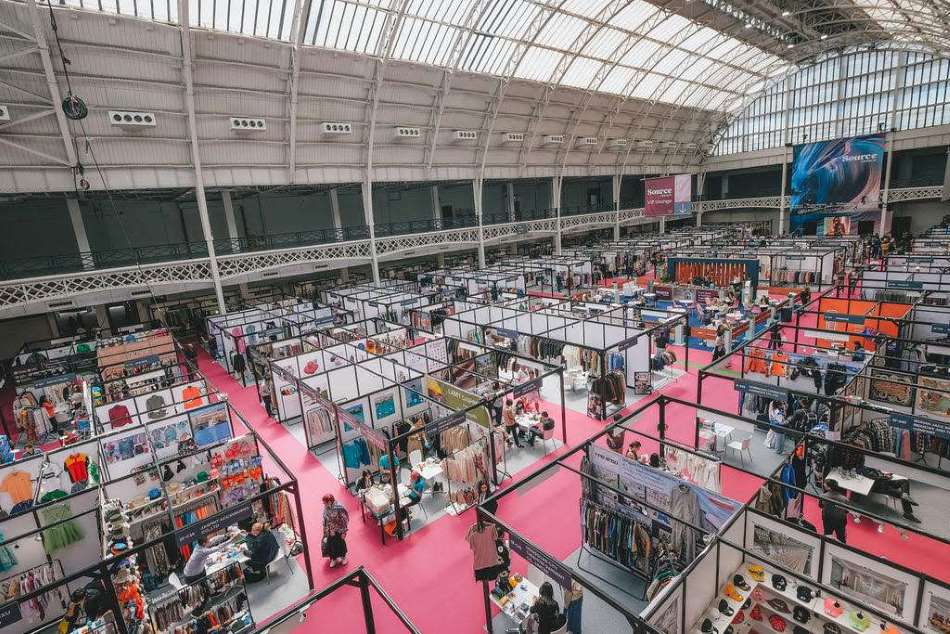
Source Fashion, Europe's premier platform for responsible sourcing, continues its rapid growth, announcing a remarkable 50% increase in exhibitors for its upcoming February 2024 edition, bringing the total to over 320 exhibitors from around the world. This expansion solidifies Source Fashion's reputation as a pivotal gateway to the UK fashion industry.
Taking place from February 18th to 20th at Olympia London, Source Fashion offers an unparalleled experience for decision-makers involved in buying, sourcing, and procurement. What sets this event apart is its unwavering commitment to sustainability and transparency. Every exhibitor undergoes a rigorous audit, ensuring these principles are integral to their business model.
The next show will unite manufacturers from various countries, including the UK, India, Portugal, Turkey, Madagascar, China, Sri Lanka, Nepal, Peru, Philippines, Ethiopia, and more. Notably, the event will feature debuting manufacturers from Mongolia, Lithuania, and Tunisia, showcasing their unique products.
Suzanne Ellingham, Director of Sourcing at Source Fashion, expressed her excitement about the event's growth, highlighting the diverse range of high-quality apparel and accessories from around the world. From luxury wool knits to denim, the event covers a wide spectrum of fashion sectors.
What sets Source Fashion apart is its role as a bridge connecting global manufacturers and suppliers with retailers seeking responsible sourcing. This event transforms ideas into reality, offering everything from raw materials and fabrics to contract manufacturing with in-house design services.
The past July 2023 show saw participation from notable brands like John Lewis, Selfridges, H&M, ASOS, and many more, affirming the event's status as a go-to for industry professionals. Jean-Pierre Aguis, Fashion Category Sourcing Manager at John Lewis, praised the interesting conversations and valuable contacts he made, particularly with suppliers from Madagascar.
Vito D'Antoni, Product Developer and Production Manager at Lulu Guinness, lauded the convenience and the diverse range of products available in one place, highlighting the event's appeal.
With a dedicated content stage and inspiring Source Catwalk shows, Source Fashion promises to be an essential event for the fashion community. Held at Kensington Olympia in London, it's poised to shape the future of responsible and sustainable fashion. Source Fashion is the place to be for anyone in the industry, offering a wealth of opportunities and insights.
EUROSTAT: Apparel import data for January-August 2023
The apparel import of the European Union (EU) from the world has declined by 9.61% during the first eight months of 2023, according to data released by EUROSTAT. This represents a decrease from US$ 67.66 billion in January-August 2022 to US$ 61.15 billion in January-August 2023. The quantity of apparel imported by the EU also declined by 14.64% during the same period, from 3 billion kilograms to 2.56 billion kilograms.
Bangladesh, the EU's second-largest apparel supplier, saw its exports to the EU decline by 13.71% in value terms during January-August 2023, from US$ 15.45 billion in January-August 2022 to US$ 13.33 billion. In terms of quantity, Bangladesh's exports to the EU declined by 15.07% during the same period, from 906.85 million kilograms to 770.17 million kilograms.
China, the EU's largest apparel supplier, saw its exports to the EU decline by 14.13% in value terms during January-August 2023, from US$ 18.86 billion in January-August 2022 to US$ 16.19 billion. In terms of quantity, China's exports to the EU declined by 13.05% during the same period, from 800.34 million kilograms to 695.88 million kilograms.
Turkey, the EU's third-largest apparel supplier, saw its exports to the EU decline by 10.89% in value terms during January-August 2023, from US$ 8.24 billion in January-August 2022 to US$ 7.35 billion. In terms of quantity, Turkey's exports to the EU declined by 23.23% during the same period, from 318.92 million kilograms to 244.83 million kilograms.
Despite the overall decline in apparel imports from the world, the EU's unit price of apparel imports increased by 5.89% in January-August 2023. This increase was driven by higher prices from China, Turkey, Vietnam, Sri Lanka, and Indonesia. Bangladesh was the only top supplier to experience a lower unit price during this period.
Overall, the apparel import data for January-August 2023 suggests that the EU apparel market is facing some challenges. However, it is important to note that this data is only preliminary and may be revised in the future.
NaiaTM Renew at the Textile Exchange Conference
Eastman Highlights Molecular Recycling and Responsible Supply Chain at Textile Exchange Conference
NaiaTM Renew, a sustainable fiber made from 60% sustainably sourced wood pulp and 40% certified waste materials, was featured at the 2023 Textile Exchange Conference, where Eastman showcased its expertise in molecular recycling and responsible supply chain management.
A Showcase of Sustainable Materials and Innovative Recycling Technology
Eastman's patented molecular recycling technology breaks down waste materials into basic molecular building blocks, which are then used to create new, high-quality fibers that are indistinguishable from those made from virgin fossil sources. This technology offers a sustainable solution to the problem of textile waste, which often ends up in landfills or incinerators.
In addition to its commitment to molecular recycling, NaiaTM is also certified by FSC and PEFC, and has been awarded the Canopy Dark Green Shirt. NaiaTM also supports the reforestation project of SOS Mata Atlantica in the Atlantic Forest, Brazil.
Many fashion brands, including Patagonia, Vince, Reformation, and COS, are using NaiaTM cellulosic fibers in their recent collections.
Overall tone:
The article is positive and upbeat, highlighting the sustainability and innovation of NaiaTM Renew fibers. It also emphasizes Eastman's commitment to responsible supply chain management.
Former Workers of Croatian Garment Factory File Complaint Against German Buyer OLYMP
Former workers of the Croatian garment factory Orljava are filing a complaint against their German buyer, OLYMP, to the German National Contact Point for the Organisation for Economic Co-operation and Development (OECD).
The complaint alleges that OLYMP failed to act in accordance with the OECD Guidelines for Multinational Enterprises by failing to conduct appropriate risk-based due diligence and failing to meaningfully engage with relevant stakeholders in relation to its decision to stop working with Orljava.
Workers' Demands:
The workers are demanding that OLYMP:
Ensure indemnification to the 172 workers that lost their jobs at the time of Orljava's closure for damage caused by delayed payment and high inflation
Mitigate the harm caused to workers, which could include supporting them in finding alternative employment and/or consulting with them about resuming production for the brand in Požega, where the Orljava factory was based.
Background:
Orljava was a state-owned garment factory in Croatia that had been operating for decades. OLYMP was its main customer. In 2021, Orljava became insolvent and was declared bankrupt. All 172 workers lost their jobs.
Freudenberg launches sustainable thermal insulation breakthroughs
Freudenberg Performance Materials Apparel, a prominent player in the apparel industry's technical solutions segment, is introducing two cutting-edge thermal insulation products, DOWN FEEL WA 150LB and FIBERBALL WB 400LB, under their comfortemp brand. What sets these products apart is their use of low-level Bisphenol A (BPA) recycled PET fibers (rPET), emphasizing Freudenberg's dedication to innovation and sustainability.
These new additions to the comfortemp range offer eco-conscious and high-quality alternatives to traditional down insulation, elevating both comfort and environmental responsibility. DOWN FEEL WA 150LB is an ultra-light, loose fiber insulation with exceptional loft, while FIBERBALL WB 400LB uses clusters of fine fibers for optimal breathability and minimal clumping after washing, ensuring lasting comfort.
What sets these products apart is their commitment to eco-friendliness. They are crafted from 100% GRS-certified rPET fibers and exceed OEKO-TEX STANDARD 100 Class I certifications, which are the most stringent, suitable even for babies. Notably, these products contain less than 1 ppm BPA, showcasing Freudenberg's commitment to unwavering quality standards.
Merry Chen, Head of Global R&D and Product Compliance at Freudenberg Performance Materials Apparel, stressed their dedication to sustainability, ensuring safer, responsible products that prioritize quality and performance. The products not only exemplify their commitment but are part of the House of Sustainability (HoS) initiative, offering innovative solutions for a more sustainable apparel industry.
In addition to DOWN FEEL WA 150LB and FIBERBALL WB 400LB, Freudenberg introduces HO 80xR to their European comfortemp range, showcasing their environmental commitment and circular design principles, with 70% recycled polyamide fibers. These innovations are set to make waves globally and support a more sustainable future in the apparel industry.