FW
JD Sports’ revenues grow by 2.7% during FY24
Despite a tough market, JD Sports’ revenues grew by 2.7 per cent to £10.4 billion during the year. This growth was fueled by the opening of over 200 new stores, which exceeded sales expectations by 20 per cent. The company plans to open another 200 stores this year.
However, the company’s profits dipped by 8 per cent to £912.4 million during the year. This was attributed to lower revenue in the second half and investments for future growth. Impacted by brand disposals, the company’s revenues in the UK market declined by 8.3 per cent to £3.51 billion during the year. Its footwear sales thrived with an increase of 8.2 per cent, offsetting a decline in apparel sales due to mild weather impacting winter clothing sales.
Highlighting the strong revenue performance in a challenging market, Régis Schultz, CEO, says, the company is confident of meeting its targets for the full financial year. The first quarter of the company is already on track with expectations, he adds.
Global home textile market to reach $195.3 billion in 2032
Driven by evolving consumer preferences, sustainability concerns and technological innovations, the global home textile market is poised for substantial growth According to IMARC Group's latest report, the market reached a value of $125.6 billion in 2023 and is expected to grow at a CAGR of 5.02 per cent from 2024 to 2032, reaching $195.3 billion by 2032.
A key driver of this growth is the increasing focus on personalized living spaces. With rising disposable incomes, homeowners are investing in high-quality home textiles to create environments that reflect their personal style while providing comfort and functionality. This trend extends beyond mere aesthetics, encompassing eco-friendly and technologically advanced textiles that align with broader societal shifts towards sustainability and innovation.
Sustainability has become a cornerstone in the home textile market, with consumers showing a growing preference for eco-friendly materials and ethical production practices. This demand has spurred innovation in recycling, organic materials, and sustainable sourcing, as manufacturers strive to reduce the carbon footprint of their products.
Technological advancements are also revolutionising the industry, enabling manufacturers to produce high-quality, durable, and innovative textiles at a faster pace and lower cost. Technologies such as 3D printing, automated weaving machines, and AI-driven design tools are enhancing efficiency and customization options, leading to textiles with enhanced functionalities like improved fabric strength and water resistance.
Among product segments, bed linen holds the largest share in the market due to its essential role in everyday comfort and the frequent need for replacement or upgrade. Polyester emerges as the dominant fabric segment, valued for its durability, ease of maintenance, and versatile aesthetic appeal.
Offline channels currently dominate distribution, as consumers prefer to assess the quality and texture of textiles firsthand. However, the market is experiencing a surge in e-commerce, providing consumers with easier access to a wide range of products from around the world.
In terms of regional breakdown, Asia Pacific emerges as the largest market, driven by its expansive population, rising disposable incomes, and the growing influence of local and traditional textile designs.
In conclusion, the global home textile market is undergoing significant transformation, fueled by rising consumer spending on home renovation, sustainability concerns, technological advancements, and the expanding reach of e-commerce platforms.
Calvin Klein names Veronica Leoni as Creative Director for ‘The Collection’
Alongside plans for a runway return, PVH Corp -subsidiary, Calvin Klein Inc has named Veronica Leoni as the new Creative Director for its high-end sub-brand, Collection.
A 2023 LVMH Prize finalist and founder of Quir, Leoni brings a wealth of experience from prestigious fashion houses including Jil Sander, Céline, Moncler, and The Row. In her new role, she blends her extensive industry expertise with Calvin Klein’s modern aesthetic to craft a quintessential representation of the brand. She will collaborate closely with Eva Serrano, Global Brand President, Calvin Klein to infuse inspiration from the Collection into the mainline portfolio and the red carpet. Leoni will report directly to Serrano.
Rooted in timeless and innovative designs, The Collection will feature men’s and women’s apparel, underwear, and accessories, and will make its debut in Fall 2025. Leoni’s purposeful design approach and work ethic, coupled with the brand’s shared value will help it create a collection that resonates globally.
Expressing her excitement over the appointment, Leoni affirms, her aim is to amplify the brand’s bold self-expressions by focusing on its style and creativity. Her appointment proves to be key step in a series of strategic initiatives led by Serrano to uphold Calvin Klein’s legacy and inspire the next generation of consumers.
14th edition of Intex Bangladesh launches in Dhaka
The 14th edition of Intex Bangladesh was launched in Dhaka with an aim to foster connections among textile professionals and propel the Bangladeshi garment industry forward.
With participation from over 200 international suppliers and manufacturers spanning 7 countries, the event serves as a vital platform for global sourcing within the textile industry. It aligns with Bangladesh's vision of becoming a leading source of value-added textile products by 2030, emphasising the importance of innovation and quality in the industry.
In addition to showcasing Bangladeshi textiles, the event features a dedicated ‘Made in India Textiles Pavilion’ alongside exhibitors from Sri Lanka and other Asian countries, fostering regional collaboration and trade.
The Interactive Business Forum provides a space for insightful discussions and knowledge sharing on topics such as achieving export targets and implementing sustainable practices within the industry.
Aiming to strengthen supply chains, Intex Bangladesh addresses production gaps, and drives innovation within the Bangladeshi garment sector, positioning it competitively in the global market.
The event is supported by key Bangladeshi garment industry associations like BGMEA and BKMEA along with a strong backing from industry stakeholders, ensuring its relevance and impact.
Next Denimandjeans Vietnam scheduled from June 26-17, 2024
The next edition of Denimandjeans Vietnam will be hosted on June 26-27, 2024 at Riverside Palace in Ho Chi Minh City, Vietnam.
Featuring over 40 exhibitors, the trade show will attract global B2B and B2C experts from the denim and fashion industries. Some of the prominent local and international exhibitors at the event will include industry specialists like AG Denim, Artistic Milliners, US Group, and Kassim.
Enriched with a variety of initiatives, the event this year, will host over six seminars on the latest technologies and innovations in the denim industry by renowned denim experts from around the world.
A special section dedicated to Japanese selvedge denim manufacturers will be earmarked to showcase top-notch selvedge denim from esteemed companies such as Nihon-Menpu, Yama-ashi, Shinohara, Tanchi, Kurabo, Kaihara, and Kuroki, enhancing the exhibitor lineup with their high-quality offerings.
First post-pandemic edition of Kingpins China attracts over 40 exhibitors
Held for the first time since 2019, Kingpins China attracted over 40 exhibitors from May 23-25, 2024 in Hangzhou, China. The hybrid B2B and B2C tradeshow attracted several prominent industrial partners, designers and denim enthusiasts.
One of the noted exhibitors at the event included Lenzing whose team from Tencel denim showcased their latest sustainable wash wardrobe, developed in collaboration with nine domestic denim mills. Processed with eco-friendly washing techniques, this collection featured outfits ranging from workwear to casual lifestyle clothing.
One of the major highlights at the brand’s booth included the Tencel x Advance Denim Capsule Collection demonstrating various innovations using Tencel fibers in denim textiles.
The Tencel team engaged with domestic brands, e-commerce retailers, buying offices, and some international brands. On the second day, Dennis Hui, Global Business Development Manager-Denim, Lenzing, participated in a panel discussion alongside Rebecca Li from The Lycra Company and Amy Wang from Advance Denim. Moderated by Ada Wen, Chief Editor, Asia Denim Magazine, the panel delved into the topic of ‘Beyond Cotton.’ The B2B event concluded with a fashion show and an after-party, sponsored by beer brand Foison Textile.
Running concurrently with the Kingpins China Show, new B2C event, DenimKon, featured a trend area and hosted 15 workshops, including a denim flower-making session by Tencel x Advance Denim. Visitors enjoyed activities such as lucky draw giveaways, denim accessory displays, limited outfit retail, and natural dyeing workshops by Prosperity Textile, Zhangzhen Textile Arts, Sansen Denim, Panther Denim, etc. Additionally, seminars on making sustainable choices offered further insight for consumers.
The event also hosted exhibitions of vintage garments and other displays, providing attendees with inspiration and educational opportunities.
Pierre-Emmanuel Angeloglou to be Fendi’s new CEO from June 01, 2024
Pierre-Emmanuel Angeloglou, Managing Director, LVMH Group will assume his new role of CEO of the renowned Italian fashion house Fendi from June 01, 2024.
Angeloglou will take over the role from Serge Brunschwig, who has led the brand since 2018. He joined LVHM in 2019 as Director-Strategic Missions for Fashion and Leather Goods, Louis Vuitton. Before his tenure at LVMH, Angeloglou was the Global President of L'Oréal Paris, where he was instrumental in driving the brand's global strategy and expansion.
His move to LVMH in 2019 was a pivotal step in his career. His exceptional performance in this role led to his promotion to head the men's division by the following year. His leadership and strategic vision in this capacity earned him further recognition and a subsequent promotion to the position of executive vice president.
FWF partners SLCP to improve working conditions in global garment supply chains
The Fair Wear Foundation (FWF) has signed a MoU with the Social & Labor Convergence Program (SLCP) in Amsterdam to enhance collaboration between the two parties and improve working conditions in global garment supply chains.
The collaboration will focus on the three key areas including data convergence, policy advocacy, and industry engagement. The agreement will utilise SLCP's data within Fair Wear's Human Rights Due Diligence (HRDD) facilitation hub. This integration is expected to eliminate redundant audits, enhance the quality of facility-level information for Fair Wear member brands, and support the effective implementation of HRDD.
Additionally, anonymised and aggregated SLCP data will be used to inform Fair Wear Foundation's country risk scoping tool.
Further, Fair Wear Foundation and SLCP will work towards unified policy positions and increase engagement with key stakeholder to drive systemic change across the garment and textile industry.
Janet Mensink, CEO, SLCP, states, the use of SLCP in the Fair Wear HRDD hub exemplifies effective data sharing to reduce duplication and drive improvements in working conditions.
Alexander Kohnstamm, Executive Director, Fair Wear Foundation, describes the MoU as an ‘important step’ towards industry-wide alignment on impactful HRDD implementation, crucial for ensuring that new European legislation benefits garment workers.
The partnership between Fair Wear Foundation and SLCP is underpinned by their joint recognition of the OECD Due Diligence Guidance for Responsible Business Conduct as the leading HRDD framework. Both organisations advocate for a smart mix approach to HRDD in supply chains.
Pakistan to offer incentives to boost apparel exports from Punjab
Shafay Hussain, Minister of Industries, Commerce and Investment, Punjab pledged to offer incentives surpassing those by Bangladesh to attract Chinese investors for setting up industrial parks to boost apparel exports from the state.
During his recent visit to the All Pakistan Textile Mills Association (APTMA), Hussain stated, Chief Minister Maryam Nawaz has formed a high-powered committee to study global best practices for setting up and operating garment cities based on the ‘Plug and Play Model’ in Pakistan. These industrial parks will feature state-of-the-art infrastructure to attract both foreign and local investments. The committee will provide recommendations on all aspects of establishing Garment Parks, either within existing industrial estates or at new locations.
He hoped, APTMA would offer technical assistance and expertise to the Punjab government in this initiative. Additionally, the minister committed to resolving the issue of waiving penalties related to outstanding social security payments by textile mills in the province.
Further, Hussain highlighted the association’s ongoing efforts to establish a consistent policy framework, unaffected by governmental changes, in the state He also assured of introducing comprehensive security measures for Chinese investors in the province.
Global technical textiles market to reach a value of $340.52 billion by 2030
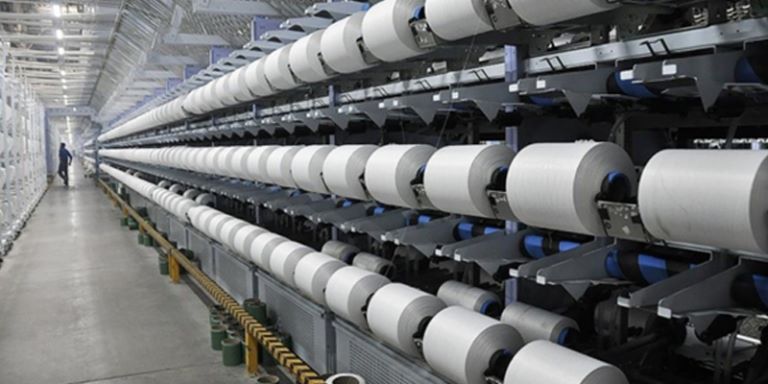
The global technical textiles market is set to grow at a 7.1 per cent CAGR from 2024-2030 to $340.52 billion by 2030 from $220.17 billion in 2024.
As per a report by Maximise Market Research, the Asia-Pacific dominates the global technical textiles market with rapid industrialisation, infrastructure development and rising disposable income levels fuelling growth. It is followed by North America which boasts of a mature technical textile market driven by strong demand from industries such as automotive, aerospace, and healthcare, and a strong focus on innovation and sustainability.
On the other hand, the market in Europe is characterised by stringent regulations promoting eco-friendly practices and a growing emphasis on smart textiles and functional apparel.
The global technical textiles market encompasses a wide range of products including fibers, fabrics, nonwovens, and composites designed to exhibit specific performance characteristics such as strength, durability, flame resistance, and chemical inertness. These textiles are extensively utilised across various industries including automotive, construction, healthcare, aerospace, and sports.
Growth in the technical textile market is influenced by factors ranging from technological advancements to shifting consumer preferences and global economic conditions. One key factor driving market growth is continuous innovation in material science and manufacturing processes, fuelling the development of advanced technical textiles with enhanced performance characteristics. Innovation also fuels competition among market players, resulting in a constant influx of new products and applications across various industries. Additionally, evolving regulatory standards and sustainability concerns shape the market, prompting manufacturers to invest in eco-friendly materials and production methods to meet stringent environmental requirements and cater to the growing demand for sustainable solutions.
The technical textile market is also influenced by macroeconomic trends and industry-specific factors. Economic fluctuations, geopolitical tensions, and supply chain disruptions can significantly impact market demand and pricing dynamics. The market is subject to the cyclical nature of end-user industries such as automotive, construction, and healthcare, where changes in consumer spending and investment patterns can influence the adoption of technical textiles. Emerging trends, such as the rise of smart textiles and the integration of digital technologies into textile products, add another layer of complexity, creating both opportunities and challenges for industry participants. Understanding and navigating these dynamic forces are crucial for stakeholders aiming to thrive in the ever-evolving technical textile market landscape.