


FW
Fashion industry adopts a three-fold approach to sustainability
"Textile dyeing is the second-largest polluter of clean water globally. Polyester microfibres add to the ever-growing volumes of plastic in the environment. As most garments are non-biodegradable, they present serious threats to our oceans and wastelands. Growing cotton increases the impact of toxic chemicals in agriculture. In the past 20 years, consumer purchases have increased by 60 per cent. And almost 80 per cent of these discarded textiles end up at landfills. Only 20 per cent of clothing globally is reused or recycled, and less than 1 per cent collected clothing is recycled."
 For a long time it’s been difficult to find synergies between the fashion industry and international development arena. While one is focused on trendsetting and design the other emphasises on poverty alleviation, peace and security. More recently however, there has been visible collaboration on the sustainability agenda.
Need to tackle unequal distribution of commodities
Textile dyeing is the second-largest polluter of clean water globally. Polyester microfibres add to the ever-growing volumes of plastic in the environment. As most garments are non-biodegradable, they present serious threats to our oceans and wastelands. Growing cotton increases the impact of toxic chemicals in agriculture. In the past 20 years, consumer purchases have increased by 60 per cent. And almost 80 per cent of these discarded textiles end up at landfills. Only 20 per cent of clothing globally is reused or recycled, and less than 1 per cent collected clothing is recycled. The fashion industry needs to be more mindful of diminishing natural resources, environmental pollution and the exploitation of nature, people and animals. It needs to tackle unequal distribution of commodities.
Brands adopt ethical fashion
Ethical fashion encompasses a broader and more rigorous set of criteria for meeting sustainable standards. Ethical fashion brands adhere to human rights and embrace International Labour Organization (ILO) standards, fair compensation to workers, and healthy, safe working environments, and reject sweatshops, child labour and slavery.
In addition, ethical fashion takes fair treatment of animals into consideration. After much criticism from environmental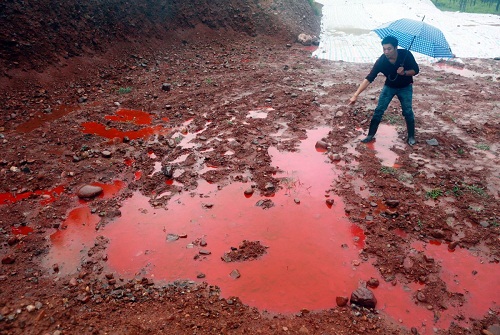 groups, big fashion houses like LVMH, Furla and Michael Kors have substituted fur and leather with alternative animal-friendly materials. Stella McCartney, an industry leader, has shown commitment to disruptive fashion innovation. Her brand has shifted to ‘vegan fashion’, using fungi instead of leather, and replacing silk with yeast proteins.
Transparency to change fashion business
Consumers are demanding transparency in policies, supply chains, business models, and labor and environmental practices from brands. This will not only lead to more accountability but ultimately change the way the fashion business is conducted.
As Thomson Reuters Environmental, Social, Governance (ESG) data shows, sustainability practices of many fashion houses are not on par. Burberry’s latest annual financial report states that “the cost of finished goods physically destroyed in the year was £28.6 million.” The brand admitted destroying raw materials in order to fight counterfeit goods and probably also to avoid having their products end up in a discount pile, which would tarnish the brand’s image of exclusivity.
Circular design approach to restore sustainability
To make fashion sustainable, brands should move away from the linear system of production, to a circular approach focused on restorative, reformative and transformative design. Fashion houses have been opting for cradle-to-cradle (C2C) initiatives to close the product lifecycle loop for sustainability. Recently, Adidas partnered with Parley to create shoes using ocean waste from beaches. Due to the products’ overwhelming success, companies have decided to ramp up their eco-friendly collaboration with a long-term sustainability framework.
While the fashion industry has been talking about transparency, ethical standards and reducing environmental degradation, it is yet to take concrete action on it. To remain avant-garde, fashion houses need to think beyond the next season and participate in the sustainable fashion revolution.
UK pushes for recycled fibers
Clothing companies in the UK that design products with lower environmental impacts may be rewarded. And those don't use recycled fabrics could be taxed more. The tax on virgin plastics, due to come into force in 2022, may be extended to synthetic textile products to encourage the use of recycled fibers.
Since the voluntary approach to improving sustainability has not really worked, retailers with more than a certain turnover may be made to comply with environmental targets. Companies will be required to perform due diligence checks across their supply chains to ensure their products are made without child or forced labor.
Consumption of new clothing in the UK is estimated to be higher than in any other European country. But this comes with a huge social and environmental price tag: carbon emissions, water use, chemical and plastic pollution. Consumers in the UK get rid of over a million tons of clothes every year.
To end the era of throwaway fashion companies that offer sustainable designs and repair services may be offered incentives. However, these ideas may not be easy to implement in practice. One issue is whether recycled fabrics would work and who would wear them. Will consumers like recycled fabrics in their clothing?
India to hold bilateral discussions with China for RCEP
Facing pressure to finalise its market opening commitments under the Regional Comprehensive Economic Partnership (RCEP) pact, India will hold intense bilateral discussions with China on the sidelines of the ongoing round in Bali to narrow differences on import duty cuts and the implementation period that both seek under the trade pact.
RCEP, being negotiated between India, China, the 10-member ASEAN, Japan, South Korea, Australia and New Zealand, can potentially result in the largest free trade bloc in the world covering about 3.5 billion people and 30 per cent of the world’s GDP. Apart from goods, the areas being negotiated include services, investments, intellectual property and government procurement. India has been holding discussions with China since January to come to an understanding on the level of import duty cuts it can promise but differences remain. New Delhi has tried to argue that it will not be possible for it to offer tariff elimination on more that 72 per cent of the traded items as apart from agriculture there were a lot of sensitive industrial goods that needed some protection.
New khadi schemes in the offing
The Khadi Gramodyog Vikas Yojana will be extended for a year. This is expected to benefit over 50 villages. A new scheme Rozgar Yukt Gaon has been introduced. The aim is to create entrepreneurs in the khadi sector thereby generating employment opportunities for thousands of new artisans.
Rozgar Yukt Gaon will be rolled out in 50 villages by providing 10,000 charkhas, 2000 looms and 100 warping units to khadi artisans, and would create direct employment for 250 artisans per village. The total capital investment per village is estimated at Rs 72 lakh as the subsidy and Rs 1.64 crore in working capital from the business partner. Advanced skill development programs will be conducted through existing centers of excellence.
Four design houses will be set up across the country with an investment of Rs 5 crores each to create modern designs and ethnic wear with regional variations.
Khadi sales in 2018 jumped 32 per cent, lifted by the increase in fabric production by at least 40 per cent. The Khadi and Village Industries Commission (KVIC) plans to take khadi to the global markets. In 2018 KVIC managed to exhibit khadi products in over ten countries by displaying to the world the most niche products.
Barcelona to host Itma in June
Itma will be held in Spain from June 20 to 26, 2019. The event will showcase fibers, yarns and fabrics as well as the latest technologies for the entire textile and garment manufacturing value chain.
More than 1,600 exhibitors are expected to fill the gross exhibition area of 2,20,000 sq mts. Some 120,000 visitors are expected from 147 countries. Exhibitor categories showing the largest growth include garment making and printing and inks sectors. A number of first-time exhibitors will demonstrate their robotic, vision system and artificial intelligence solutions; and the number of exhibitors showcasing their technologies in the printing and inks sector has grown 30 per cent since Itma 2015.
The official Itma app is new for 2019. The app, which may be downloaded free of charge from the Apple App Store or Google Play, offers key information on the exhibition to help attendees plan their visit. Maps and searchable exhibitor lists, as well as general show information, are all available in the app.
With the Innovation Lab, another new feature, Itma hopes to better drive industry focus on the message of technological innovation and cultivating an inventive spirit and encourage greater participation by introducing new components, such as the video showcase, to highlight exhibitors’ innovation.
Global fiber production up four million tons
World fiber production in 2018 rose by four million tons over previous year. The share of natural fibers in world fiber production fell from 41 per cent in 2008 to less than 30 per cent in 2018.
Jute markets in Bangladesh and India increased in value and decreased in volumes terms in 2018. Lower jute production caused by poor weather means consumption exceeds production, and stocks are being reduced. It is likely that prices could continue to increase during 2019.
Prices for sisal have shown a downward trend since the last quarter of 2017 with lowest price level from July onwards. Production of wool fell in 2018 because of drought in sheep-raising areas of the southern hemisphere. Wool production has been on the decline since 2000, with global warming and lower rainfall patterns causing the lowest wool sheep numbers since 1920. Global wool production is expected to remain stable or contract slightly during 2019. The fine wool price has been on a constant upward trend during the past five years. The opposite remains true of the strong wool sector, with prices still well below average and stocks remaining high.
World production of synthetic filament is 50 million tons; of this polyester filament alone is about 45 million tons.
Freudenberg to showcase innovative materials at Techtextil
Freudenberg Performance Materials, a leading supplier of innovative technical textiles, will host a series of expert interviews at its booth at Techtextil, a leading international trade fair for technical textiles and nonwovens that takes place from May 14-17, 2018 in Frankfurt. Freudenberg will be presenting innovative acoustic pads that feature high noise absorption in the vehicle interior. The lightweight pads help customers to reduce the weight of vehicles. Freudenberg acoustic pads are suited for use in various automotive applications, such as door panels, headliners, trunk linings, wheel arches and more.
Freudenberg’s series-produced gas diffusion layers (GDL) contribute to making this technology more economical, the company says. Their thickness uniformity and material homogeneity are designed to increase electrical and thermal conductivity and improve the transport of gases and liquids within the fuel cell. Also on show will be Freudenberg’s wound pads, made from hydrophilic PU foams with a direct coating of silicone adhesives, which are said to be more effective than the commonly used foams with transfer coatings.
Finally, Freudenberg will be presenting the padding made from continuous fibre balls, which functions as a perfect substitute for down in clothing. The novel insulation material is made from 100 per cent recycled polyester fibre balls and combines the advantages of both padding and down. It is the ideal solution for the sports and outdoor sector but is also suitable for use in fashion garments.
Brisk business for Indian companies in Bangladesh RMG segment
Indian companies are seeking better opportunities in Bangladesh. Bangladesh’s economic dependency on apparel exports is the major reason that attracts many companies to Bangladesh. For instance, there is scope for exporters in Bangladesh to explore possibilities in embroidery.
Garment manufacturers in Bangladesh have faith in Indian products and in some cases have given priority to Indian companies compared to Chinese. Though there are already technology suppliers in Bangladesh, Indian companies are confident of success due to various reasons like quality product, service, and customized solutions. This is especially true of companies which are into trims or allied products like self-adhesive tapes, self-adhesive labels, holograms, barcodes etc.
GTN Industries, based in Hyderabad, has been in Bangladesh for more than 10 years and is working with top clients. The company supplies high-quality yarns like premium 100 per cent supima cotton and more. Out of its total production, the company sends around 20 per cent to Bangladesh. For the last two years, the company has been focusing on mercerised yarn in Bangladesh and thinks this market will grow in future.
Cheran Machines, based in Coimbatore, a manufacturer, supplier and exporter of garment and textile printing machineries, is also focusing on Bangladesh market.
Cambodia hopes for seven per cent growth this year
Cambodia is expected to grow by seven per cent in 2019. Growth will be driven by garment exports, tourism, construction and real estate and agriculture. However, the country faces a threat of trade sanctions from the European Union. This could lead to the suspension of Cambodia’s duty-free trading access to the EU market.
If this happens, Cambodia is contemplating steps including the cancellation of various fees and reduction of electricity tariffs to support exporters. These measures are expected to help reduce operating costs for exporters by about 200 million dollars a year.
The EU is a key trading partner for Cambodia, especially for garments and footwear. As a least developed country, Cambodia has enjoyed exports of all products, except arms and ammunition, to the EU market with zero per cent tariff since 2001.
The Southeast Asian nation exported products worth $18 billion in 2017, of which $7 billion, or nearly 40 per cent of the total amount, went to the EU market. The EU has started the 18-month process that could lead to the temporary suspension of Cambodia's duty-free trading access to the EU market due to concerns over human rights and labor rights in the kingdom.
Bangladesh earnings from sweater exports up 18 per cent
Bangladesh’s export earnings from sweaters rose by 18.57 per cent in the first seven months of the current fiscal year. This was possible due to improvements in production quality and the introduction of upgraded technology.
Shipments from November to January picked up, contributing to an additional rise in export earnings. Bangladesh offers quality products at comparatively reasonable prices. Manufacturers have also introduced new technology to improve the quality of goods, so production capacity and the standard of goods have also increased. Since Bangladesh has the capacity to execute bulk work orders, buyers are placing more orders.
Relocation of businesses from China as a fallout of the US-China trade war has also played a major role in increasing export earnings. As a spillover effect of the trade war, companies have shifted their sourcing from China to Bangladesh. China is moving towards higher-end goods and tech-based production and leaving low-cost products—which is another positive advantage for Bangladesh in attracting more buyers.
But despite the growth, the apparel sector has some serious challenges ahead as manufacturers have to implement the new wage structure, although buyers are unwilling to pay more. Additionally, Bangladesh is losing its competitive edge to the global market due to the appreciation of the currency against the dollar, while its competitors are devaluing their currencies.











