


FW
Demand for technical textiles increases but challenges galore
"Data from the Taiwan Technical Textiles Association (TTTA) reveals, the island’s output of technical textiles more than doubled at the beginning of the decade reaching NT$130 billion (US$4.2 billion) in 2017. It already accounts for roughly one-third of Taiwan’s total textile output.Based on their use, technical textiles can be divided into 12 sub-categories: agricultural (Agrotech), construction (Buildtech), functional apparel (Cloth-tech), civil engineering (Geotech), curtains and other domestic textiles."
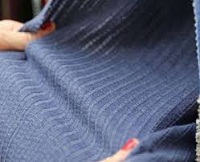 Data from the Taiwan Technical Textiles Association (TTTA) reveals, the island’s output of technical textiles more than doubled at the beginning of the decade reaching NT$130 billion (US$4.2 billion) in 2017. It already accounts for roughly one-third of Taiwan’s total textile output.Based on their use, technical textiles can be divided into 12 sub-categories: agricultural (Agrotech), construction (Buildtech), functional apparel (Cloth-tech), civil engineering (Geotech), curtains and other domestic textiles (Hometech), filters and other industrial applications (Indutech), healthcare (Medtech), transportation (Mobiltech), environmental protection (Oekotech or Ecotech), packaging materials (Pack-tech), protective textiles (Protech), and athletics (Sportech).
Growth in automobile production spurs demand
Currently, demand for Mobiltech and Buildtech is particularly increasing thanks to such factors as strong growth in automobile production in China and China’s Belt and Road infrastructure drive. Among the hot products in Mobiltech are air-bags, automotive engine oil filters and high-speed train gangways. Buildtech includes fabrics used to separate different types of cement, for example in the construction of roads, airports, and subway tubes.
As Huang Po-Hsiung, General Secretary, TTTA says, profit margins for technical textiles are higher than for functional textiles.Many Taiwanese manufacturers supply these technical textiles to international brands such as Nike, Adidas and Under Armour, as they are more specialised and involve less standardised low-value production. It further revealed Taiwan has seen steady annual output growth rates of 3-5 per cent over the last decade and growth remained robust even during the global financial crisis.
Demand for nonwovens increases
According to Huang, most Taiwanese technical-textile makers focus on nonwovens, a category of fabric for which the fibers are bonded together by chemical, mechanical,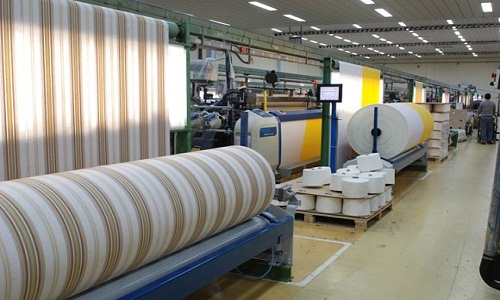 heat, or solvent treatment, as opposed to being knitted or woven. Taiwanese new investment in non-woven factories has already reached NT$6 billion, illustrating the manufacturers have been enjoying good profits. The outlook is also rosy for smart textiles, a sector where Taiwanese textile and electronics companies cooperate in the development of fabrics with embedded washable sensors.
Cars today typically use between 25 and 50 kg of technical textiles. Fabrics that can help save energy have become more sought-after with the advent of electro mobility, vehicles powered by electric drivetrains rather than fossil fuels. Tests by German carmaker Audi have shown new innovative types of fabric used to heat car seats can reduce electricity consumption for heating by 50 per cent.
Challenges the segment faces
Willy Shih, General Manager, KaeHwa Industrial, a Changhua-based maker of breathable film used in diapers, packaging, and coveralls to protect lacquerers or medical workers, points the speculative hoarding of raw materials in China has contributed to higher raw material prices. The ongoing US-China trade war is also likely to drive down global prices of intermediate products, including technical textiles.
Another difficulty derives from Taiwan’s inability to sign trade agreements with major export markets. KaeHwa in recent years has been compelled to shift some production from Taiwan to Malaysia, to avoid 15-20 per cent ASEAN import duties on Taiwan-made technical textiles. Under the China-ASEAN free-trade agreement, such imports into China from ASEAN countries are tariff-free. The company is considering opening a second factory in Malaysia to serve both the ASEAN and China markets under the preferential tariff regime.
Brands add an altruistic dimension to their businesses
"Sustainability, the buzzword in consumer goods right now, is doubly important for the fashion industry. Lindsey Tramuta, in the February issue of Fortune, reveals the industry, in the last 15 years, has doubled its production, adding to the already sizable problem of clothing waste. As the Secondary Materials and Recycled Textiles Association notes, around 85 per cent of discarded apparel in the US ends up in landfills even though 95 per cent of it can be recycled. Issues related to production ranging from vast amounts of water used to grow and process virgin cotton, to pesticides and the hazardous chemicals used in dyes add to woes."
 Sustainability, the buzzword in consumer goods right now, is doubly important for the fashion industry. Lindsey Tramuta, in the February issue of Fortune, reveals the industry, in the last 15 years, has doubled its production, adding to the already sizable problem of clothing waste. As the Secondary Materials and Recycled Textiles Association notes, around 85 per cent of discarded apparel in the US ends up in landfills even though 95 per cent of it can be recycled. Issues related to production ranging from vast amounts of water used to grow and process virgin cotton, to pesticides and the hazardous chemicals used in dyes add to woes.
Recycling to improve sustainability
The issues of the extremely low wages paid to farmers, textiles workers and those involved in making the end-product along with their sub-human working conditions are also a matter of concern for the industry.
Few mainstream brands are tackling these problems quite head on as Patagonia—the trendy outdoor brand known for its down jackets. The brand, since its inception in 1973, has been outspoken on environmental issues, and has practiced what it preaches. The brand works with its design team to make its clothes sustainable.Around 70 per cent of its product line is made using recycled or renewable fiber.
Aiming for carbon neutrality by 2025
Patagonia aims to be carbon neutral by 2025, including its entire supply chain and company-operated retail. Its eventual goal is to be carbon positive and capture more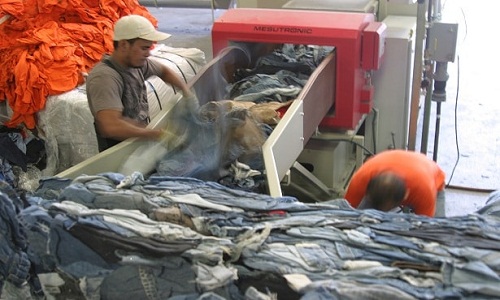 carbon than it emits. Some of the ways the company plans to do this include: sourcing carbon-positive cotton from India, which the farmer can use to receive carbon rebates from the Indian government; increasing the amount of recycled materials in its products; and investing in renewable energy.
And it’s not just established brands like Patagonia that are trying to shrink their environmental footprint. The ecological impact of the fashion industry has inspired a swath of startups to imagine a better way of doing things. Children’s wear brand Art+Eden uses organic cotton—made without pesticides—and dyes.
Sustainability as a part of CSR
Sustainability is also emerging as an important aspect of the corporate social responsibility (CSR) of brands. Patagonia, for instance, doesn’t view sustainability and making a profit as two separate things. The brand believes that they can run a healthy profitable business and also make the world a better place simultaneously.
Likewise Art+Edenuses some of its revenues to provide school meals in her native India. The brand’s primary focus is to grow its business successful then use these funds for the betterment of the society. It aims be venture-social, not a social-venture.
Isko hosts Responsible Denim event
World’s largest producer of denim, Isko hosted a ‘Responsible Denim’ gathering to share experiences and knowledge on the development of field-to-fabric integrated approach across the value chain. Isko being the only denim manufacturer which has bagged the EU Ecolabel and Nordic Swan Ecolabel plans to find better solutions to give shape to a better and greener future.
The event saw a denim presentation by Lambert + Associates and an Isko Earth Fit presentation. It also included a special panel discussion on how the denim industry can become more sustainable. An educational exhibition to raise awareness and responsibility in the industry among manufacturers, designers and brands was also organised. The third Eyether collection created by Francois Girbaud and Creative Room with the use of innovative Isko fabrics was also launched at the event.
The company also showcased its Isko Earth Fit which is the product of its Responsible Innovation strategy. It is world’s only denim collection which was awarded EU Ecolabel and Nordic Swan certifications which addressed the product’s entire life cycle.
US and China try to end trade dispute
The United States and China are moving toward ending their trade dispute. The two countries have reached a broad consensus on alleviating the trade imbalances, but there are still some differences.
Negotiators are drawing up memorandums of understanding on structural issues: forced technology transfer and cyber theft, intellectual property rights, services, currency, agriculture and non-tariff barriers to trade. The MoUs covers most complex issues affecting the trading relationship between the two countries and are meant, from the US perspective, to end the practices that led the US to start levying duties on Chinese imports in the first place.
Work on the MoUs is a significant step in getting China to sign up both to broad principles and to specific commitments on key issues. The world’s two largest economies have slapped tit-for-tat tariffs on hundreds of billions of dollars of goods, slowing global economic growth, skewing supply chains and disrupting manufacturing.
The United States has accused China of forcing US companies doing business in China to share their technology with local partners and hand over intellectual property secrets. China denies it engages in such practices.
The US also objects to non-tariff barriers in China, including industrial subsidies, regulations, business licensing procedures, product standards reviews and other practices.
Increasing consumer demand forces brands to prioritise sustainability
"The future generation is always a step ahead of you just like the millennial and Gen Z shoppers are more vocal about their expectation of environmentally friendly practices from brands. Consumers’ are increasingly demanding sustainable fashion, prompting brands to prioritise sustainability and increase transparency in their efforts."
 The future generation is always a step ahead of you just like the millennial and Gen Z shoppers are more vocal about their expectation of environmentally friendly practices from brands. Consumers’ are increasingly demanding sustainable fashion, prompting brands to prioritise sustainability and increase transparency in their efforts.
The curiosity of consumers is not limited to production only, they are equally curious about the authenticity of their supply. From how online purchases impact their carbon footprint to the specific textiles that make up their shoes and apparel, consumers are getting in every aspect of fashion. It’s therefore essential for brands to tread with caution and provide transparent insights into all aspects of production.
One of the top priorities of consumers today is invest in versatile, durable wardrobe staples that not only save money but also conserve resources. This can be achieved by sourcing textiles that last beyond the normal 25 washes. Garments made from Sensil can be washed at least 50 times, with some garments tested up to 75 washes for durability and additional technical properties.
Reducing waste through shorter shipping time and recycling
As the fashion industry is responsible for approximately 5 per cent of all greenhouse gas emissions, consumers are opting for clothes that help reduce waste and carbon emissions. To achieve this, brands should reduce their shipping distance by setting up factories near their sourcing destinations. This would allow them to maintain smaller inventories and fight waste without impacting speed to market.
Additionally, brands can reuse materials that are discarded as waste. For instance, coffee charcoal derived from coffee bean shells can be added to fibers at the polymer stage. This will help garments to delay the loss of body heat, improve their functionality without sacrificing softness or durability. Coffee charcoal also acts as a natural deodorizer and aids moisture wicking.
Biostatic textiles minimise environmental impact
According to a recent UN report, antibiotic resistance is building into a global crisis. According to some researchers, the antibacterial or antimicrobial properties of textiles are a major cause of resistance. To counter this, brands have launched safer fabrics like Sensil BodyFresh. There are likely to more such innovations in the future bringing us close to achieving our sustainability. However, brands need to pay heed to their consumer’s demands for sustainability. Ignoring them would only mean putting their future at stake.
UK to impose tax on fast fashion brands/retailers
Fast fashion retailers in the UK may be taxed to fund an annual recycling program. The taxation and recycling program would reward retailers who make conscientious efforts to improve sustainability in their supply chains.
The UK consumes more clothing per person than any other country in Europe. Ten of the country’s biggest high-street brands have been asked to disclose their environmental impact. The appetite for clothes comes with a huge social and environmental price tag: carbon emissions, water use, chemical and plastic pollution.
While most of the onus will be on companies, citizens will be encouraged to learn how to repair and reuse what they already own, in part by reducing taxes on repair services and offering lessons in school on creating and mending clothing. Consumers will be encouraged to buy less, mend, rent and share more. The aim is to end the era of throwaway fashion by incentivizing companies that offer sustainable designs and repair services.
When it comes to fast fashion, few retailers have the speed and scale of the UK’s industry giants. But companies like Asos, Boohoo and Missguided may soon have to pay a price for the flood of new clothes and accessories they put into the world every year.
India to hold intense bilateral discussion with China on RCEP
Facing pressure to finalise its market opening commitments under the Regional Comprehensive Economic Partnership (RCEP) pact being negotiated between 16 countries, India will hold intense bilateral discussions with China on the sidelines of the ongoing round in Bali to narrow differences on import duty cuts and the implementation period that both seek under the trade pact.
RCEP, being negotiated between India, China, the 10-member ASEAN, Japan, South Korea, Australia and New Zealand, can potentially result in the largest free trade bloc in the world covering about 3.5 billion people and 30 per cent of the world’s Gross Domestic Product. Apart from goods, the areas being negotiated include services, investments, intellectual property and government procurement.
India has been holding discussions with China since January to come to an understanding on the level of import duty cuts it can promise but differences remain. New Delhi has tried to argue that it will not be possible for it to offer tariff elimination on more that 72 per cent of the traded items as apart from agriculture there were a lot of sensitive industrial goods that needed some protection.
Global sports apparel segment grows at five per cent CAGR
The worldwide market for sports apparel is expected to grow at a CAGR of 5.8 per cent over the next five years. The classification of sports apparel includes shirts, coats, pants, skirts and others. North America has the largest consumption share of nearly 30 per cent. Europe is the second largest, with a consumption share of 26 per cent.
Sports apparel are in amateur sport and professional athletics. The share of sports apparel in amateur sport is about 85 per cent. Technological developments designed to improve comfort and performance has also led to growth in sales of sports apparel. As a result sportswear is turning into a highly popular style statement and fashion trend.
Sportswear includes items such as yoga pants and active wear. Although performance sportswear takes the lead in terms of market size, sports-inspired is the category driving growth. Both sports-inspired footwear and apparel are growing at a rapid pace, registering ten per cent and six per cent growth.
Besides emerging markets such as India and Thailand, core markets such as the United States are also producing significant sports-inspired growth, despite its reputation as a performance-oriented market.
Growth is driven by a growing portion of the population living healthier life styles and stronger participation in sports and fitness activities.
PRGMEA lauds Saudi investment
Pakistan Readymade Garments Manufacturers and Exporters Association (PRGMEA) termed the visit of Saudi crown prince as a positive indicator for restoring the confidence of foreign and domestic investors in Pakistan which will help in reviving the national economy.
The huge Saudi investment will open new vistas of development and prosperity as well as attract investors of other countries. Due to negative travel advisory foreign buyers are reluctant to visit Pakistan for their business deals. The Saudi investment will reduce this negative trend.
The association urged the government to bifurcate the textile sector into three categories: raw material, home textile and apparel. The sector comprises many sub-sectors with different functions and their functioning are different sub-sectors.
PVH Corp to buy Australian subsidiary Gazal
PVH Corp has made an offer to buy Australia's Gazal, as the U.S. company looks to expand its direct control of businesses operated under the Calvin Klein and Tommy Hilfiger brands globally. Gazal and PVH first entered into a joint venture partnership in 2014, forming PVH Brands Australia. The JV holds licenses for PVH’s Calvin Klein, Tommy Hilfiger and Van Heusen brands, as well as the Pierre Cardin, Bracks and Nancy Ganz brands in Australia, New Zealand and other parts of Oceania.
With the deal set to close in the second quarter of 2019, PVH Corp has acquired the remaining interest in Gazal that it does not already own for A$6 per share, and the aggregate net purchase price for the 78 per cent of Gazal shares being acquired is approximately A$124 million. PVH affirmed that management at both Gazal and PVH would remain in their current roles for the next two years and would use approximately 25 per cent of their existing Gazal equity to subscribe for an approximate 6 per cent stake in the PVH subsidiary that is the parent company of the acquirer.











