FW
Bangladesh terry towel exports down four per cent
Bangladesh’s terry towel exports declined 4.40 per cent year-on-year in the last fiscal year. This is true of Bangladesh’s exports of home textiles in general. Around a dozen small and medium factories have reportedly shut down. Currently, some 90 factories are in operation. The sector’s growth started to decline from January 2014 when the European Union (EU) allowed zero-duty benefit to Pakistan under its GSP Plus scheme on export of home textiles and some other products. As a result, the impact was too severe for local manufacturers and exporters.
A relatively new item in the country’s export basket, terry towels demonstrated great promise due mainly to the easier production process and market access made easy by the EU’s EBA (Everything but Arms) scheme allowing duty free facility to all LDC exports, except arms. Coupled with it, there is the preferential duty facility under the EU GSP scheme meant only for less developed countries like Bangladesh.
Home textiles include mainly terry towels, bed sheets, linen, curtains and pillow covers. The very fact that exports of home textiles are in a bad shape is clear from the abundance of these products in street shops sold at throwaway prices. Bundles of terry towels are lodged on the shoulders of hawkers at busy road intersections instead of being packaged to be exported to North America and the EU countries.
Hong Kong: Upcoming Fashion Access to attract OEMs, ODMs, brands and buyers
"To be held from March 13 to 15, 2019 in Hong Kong. Fashion Access is a prime destination for fashion sourcing populated by bags, handbags, travel wear, footwear, leather goods and fashion accessories. The trade fair, in each of its edition, attracts international buyers seeking professional and reliable Original Equipment Manufacturers (OEMs), Original Design Manufacturers (ODMs) and brands primarily from Asia. The event gives them an opportunity to outsource and subcontract their manufacturing to create fashion-driven collections of high-quality."
 To be held from March 13 to 15, 2019 in Hong Kong. Fashion Access is a prime destination for fashion sourcing populated by bags, handbags, travel wear, footwear, leather goods and fashion accessories.
Opportunity to outsource and subcontract manufacturing
The trade fair, in each of its edition, attracts international buyers seeking professional and reliable Original Equipment Manufacturers (OEMs), Original Design Manufacturers (ODMs) and brands primarily from Asia. The event gives them an opportunity to outsource and subcontract their manufacturing to create fashion-driven collections of high-quality.
The fair enables boutiques, retailers, wholesalers, distributors and even department stores to specify the designs they need for the upcoming fashion season. It is also a venue for discovering specialist manufacturers and a wide array of services which can customise and manufacture fashion collections and accessories to both design and brand specifications.
Show features
The fair comprises many fashion shows; workshops led by experts in each field; trend seminars and networking events where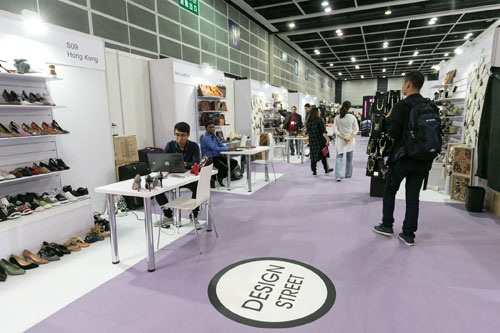 new contacts can be established. A few of these high-profile events include:
Global Footwear Executive Summit: To be held one day before Fashion Access, the Global Footwear Executive Summit (GFES) will focus on developments affecting not only footwear retail but the whole footwear supply chain. The scope will expand to cover more topics and include panel discussions in a full day program. The GFES will be jointly organised by APLF and the Footwear Distributors and Retailers of America (FDRA). With this partnership, the Summit will expand its scope to include topics on production and manufacturing.
Cashmere World: Cashmere World, held concurrently with Fashion Access, covers the whole supply chain of cashmere from raw materials to yarns to fabrics moving on the accessories. Key buying offices are regular visitors to Cashmere World as it is the only trade fair dedicated to cashmere and natural fine fibers. These buying offices include such prestigious brands such as Burberry, Hugo Boss, Armani, etc.
A dedicated area named Cashmere Trends Space will feature upcoming key cashmere and fine fiber colors for 2019-20, illustrating the upcoming trends through knitwear, cashmere and fine fiber samples
Workers toil for Australian brands at low wages
Hundreds of garment workers in Bangladesh and Vietnam toil for Australian fashion brands. These brands care more for the clothes than the people making them. Systemic exploitation of workers has been enabled by Australian companies like Kmart, Target, Big W and Cotton On whose buying practices compel factory operators to reduce cost of production.
These buying practices include fierce price negotiation, short-term contracts with factories, and reducing delivery times at one end while imposing fines for not meeting those squeezed deadlines. Buyers for instance insist on the installation of automatic fire extinguishers for rooms where finished clothing is stored, but do not require the same for the sewing floors where hot machines can also ignite.
Brands are supposed to be responsible for making credible commitments to ensure the payment of living wages to workers making their clothes. The global garment industry is infamous for its labour sweatshops in developing countries.
Workers are grossly underpaid and work under despicable conditions – producing for a global apparel market valued at around three trillion dollars. They get paid less than the living wage – the wage required by a worker to meet the basic needs of a family unit of four (two adults, two children) in order to maintain a decent quality of life.
US retail apparel prices up one per cent
Lifted by higher prices on women’s and children’s wear, retail apparel prices in the US rose a seasonally adjusted 1.1 per cent in January amid clearance sales. The January increase for apparel was the largest since February 2018. Raw material prices have shown stability.
Cotton prices may remain steady thanks to solid fundamentals. From fiber firms to apparel manufacturers, everyone has noted an easing off of raw material price inflation that cut into their bottom lines. They remain wary, however, of ongoing volatilities, such as tariffs and increases in related commodities.
Hanes Brands last year incurred input costs inflation. The company has now been able to integrate these increases into its price structure and will be able to recoup the costs and improve margins. For Unifi, the spike in polyester raw material costs in September and October 2018 and the resulting demand disruption created an even more challenging environment for its regional business and its performance missed expectations. External pressures in the regional business included elevated raw material costs and suppressed demand for certain textured and covered yarns. This created internal pressures to implement selling price increases that left Unifi less competitive with elevated inventory levels and resulted in weaker leverage of its cost structure.
Textile, clothing exports in Pakistan to increase to $15 bn
As per All Pakistan Textile Mills Association (APTMA), export enablers ensured by the government are likely to increase textile and clothing exports to $15 billion during remaining period of the current fiscal year. APTMA appreciated the government for recognising the importance of exporting industry and providing regionally competitive energy to five zero rated sectors. It urged the government to ensure supply of energy on regionally competitive price in order to ensure stability.
The association says, proposed to constitute a task force on cotton production to achieve 15 million bales and ensure implementation of vertical & horizontal growth of cotton, acquisition of high yield cotton technology, broad basing of sustainable cotton production, provision of agricultural extension services and provision of direct support to farmers to reduce their input cost. It also urged the government to liquidate all textile industry refunds of sale tax, income tax, policy & package initiatives.
Turkey hosts textile exhibition ‘The Event of a Thread’
The Event of a Thread: Global Narratives in Textiles is on in Turkey, February 21 to July 7, 2019. The exhibition features works by international artists who use textiles to create aesthetic and cultural narratives through painting, photography, archive materials, objects, installations, and video works. It focuses on the historical, social and cultural meanings of fabrics, and investigates the various uses of textiles as a tool of expression.
Prior to this, the exhibition was held in Germany and Kuwait. It builds on the original selection by creating new connections in each institution it travels to, with the assistance of curators at each institution and the addition of new works from local artists.
The Event of a Thread demonstrates the variety of opportunities provided by textiles as a multifaceted tool of expression in addition to its purpose as a surface produced via the systematic integration of yarn layers, warps and wefts. Social, cultural and historical narratives are untied from threads of fabric and rearranged for to create new connections between them.
One of the special areas in the exhibition has been dedicated to Eyüboğlu, the first artist to develop a synthesis between painting and embroidery, textiles, and yazma traditions in Turkey.
India: Texprocess and Gartex form unified platform
Texprocess India and Gartex India have formed an unified industry platform called Gartex Texprocess India. With the merger of the two strong textile trade fair brands, the organisers, Messe Frankfurt Trade Fairs India and MEX Exhibitions, aspire to work in collaboration for India’s textile industry development, facilitating global sourcing and networking in the textile value chains.
Stakeholders will be provided a strong brand of enhanced offerings through a single-source business platform – Gartex Texprocess India. While Texprocess India was launched as a pavilion to create an innovation platform for garment manufacturing and textile processing at the Techtextil India tradeshow in Mumbai, Gartex India is held annually in New Delhi and has grown wider in scope covering not just garment and the textile manufacturing value chain but has also added segments like the innerwear manufacturing zone, in addition to digital textile printing, embroidery and other verticals.
Leading in both apparel consumption and exports, India holds the second largest textile manufacturing capacity globally with the textile machinery sector witnessing a growth of eight per cent to ten per cent year on year. As the world's second largest exporter of textiles and clothing, Indian apparel manufacturers are moving towards increasing their manufacturing capacities and upgrading technology, giving rise to automation garmenting processes to enter the Indian market.
Surat stops fabric exports to Pakistan
Manufacturers from the country's largest man-made fabric (MMF) hub in Surat have stopped exports to Pakistan in the aftermath of terror attacks in Pulwama district a few days ago. Over 40 CRPF personnel were martyred in the attack by the terrorist of the Pakistan-based organization.
Before 2014, the MMF exports from Surat to Pakistan stood at Rs 2,400 crore. The export of MMF fabrics from Surat to Pakistan was predicted to touch Rs 3,000 crore by 2018. However, latest figures of Synthetic and Rayon Textile Export Promotion Council (SRTEPC) suggest that exports between Surat and Pakistan have fallen sharply in the last couple of years and that they were less than Rs1,000 crore per annum now.
SRTEPC data says exports of MMF fabrics in 2016-17 stood at Rs 887 crore and Rs 958 crore in 2017-18. Exports of MMF fabrics in 2018-19 (till December 2018) have witnessed a sharp fall at Rs 624 crore against Rs 720 crore during the same period in the previous year.
Shima Seiki knitting machines offers flexibility
Shima Seiki’s MACH2S wholegarment knitting machine offers the flexibility of producing wholegarment knitwear using every other needle as well as conventional shaped knitwear using all needles. This feature helps users invest in their technology wisely.
The SVR202 machine features an 80-inch knitting width and tandem knitting capability for added flexibility in knit manufacturing. Twin carriages can be used together for double-cam knitting or used separately for single-cam knitting of two identical pieces in tandem. Other features include the R2CARRIAGE, spring-type moveable sinker, DSCS Digital Stitch Control System, stitch presser and takedown comb.
Shima Seiki is a Japanese computerised flat knitting machine manufacturer, known for quality, reliability, productivity, user-friendliness and cost-performance. The SDS-ONE APEX3 is the latest version of Shima Seiki’s 3D design system. At the core of the company’s Total Fashion System concept, APEX3 provides comprehensive support throughout the product supply chain, integrating production into one smooth and efficient workflow from yarn development, product planning and design to production and even sales promotion.
Especially effective is the way APEX3 improves on the design evaluation process with its ultra realistic simulation capability, whereby virtual samples minimise the need for actual sample-making. Together with wholegarment knitting, APEX3 realises significant savings in time, cost and material, contributing to truly sustainable knit manufacturing.
China’s apparel brand Shandong Ruyi to venture into Singapore stock exchange
Shandong Ruyi plans to list some of its assets in Singapore. The Chinese apparel and textile maker is seeking opportunities for its assets to become publicly listed in a stock exchange in Southeast Asia, especially in Singapore, which has a good capital market. The hope is to have a funding platform in suitable major capital markets, in different parts of the world, to gain better access to global investors.
Ruyi, which hopes to be the next Louis Vuitton, has more than 20 subsidiaries in 11 countries, and more than 5,000 retail stores in 33 countries. It is building the world’s largest global, vertically integrated textile and fashion business. It has acquired stakes in cotton farms in Australia, wool trading companies in New Zealand, a textile innovator in the United States as well as mid to high-end apparel brands and distribution companies in Japan, France, Hong Kong, Britain and Switzerland.
In 2016, Shandong Ruyi bought a majority stake in SMCP, the French group that owns affordable luxury brands Sandro, Maje and Claudie Pierlot. Shandong has also acquired British trench coat maker Aquascutum as well as a minority stake in St. John by Fosun. China is transforming itself from an export-dependent economy to a consumption-driven one.