FW
Asian countries capture diverted exports
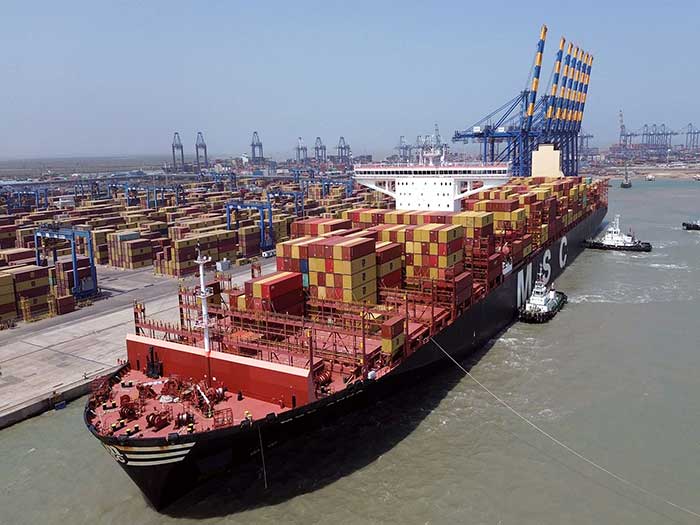
A new report from the United Nations Conference on Trade and Development (UNCTAD) shows, tariff-fueled trade war between the US and China impacted more than 50 per cent of two nations’ bilateral trade. As a result, a handful of countries, mostly Asian neighbors, have captured a bulk of the diverted exports.
As per UNCTAD, this effect could become more pronounced if the US follows through on the threat to increase tariffs to 25 percent on a range of goods on March 1 from the more narrow 10 percent duties already imposed.
UNCTAD estimates, which include the potential March hike, show that most US-China trade affected by the increased tariffs will divert to other countries and not just shift the bilateral balance of trade. The report said that of the $250 billion of Chinese exports subject to US tariffs, 82 per cent will be taken by firms in third countries, about 12 per cent will be retained by Chinese firms and just about 6 per cent will be kept by US companies.
UK fears retail price rise with Brexit
Uncertainty about the UK’s trading relationships with the European Union and the rest of the world continues. Price rises are likely in the event of a no-deal Brexit. If no deal is struck with the EU, UK companies will be forced into World Trade Organization (WTO) terms, which will put upward cost pressures on retailers, brands and suppliers. The impact of a no-deal Brexit would be significant. Tariffs alone represent about four per cent of sales for an average women’s wear retailer. Most retailers may increase pricing to mitigate this. The UK is due to leave the EU on March 29, 2019.
If tariffs increase overall costs by more than three per cent, then retailers can be expected to pay half and suppliers pay half. However, if it is a sustained increase in costs, then it will have to ripple through into retail prices. Retailers and suppliers will have to absorb the costs in the short term, but in the long term, consumers will be affected. In a no-deal scenario, the combination of increased tariffs, the burden of non-tariff barriers, and likely depreciation of the pound means retailers will face upward cost pressures.
Turkey to host Istanbul Yarn Fair next week
Istanbul Yarn Fair will be held February 28 to March 2, 2019. This event showcases products like knitted fabrics, cotton yarns, cotton blended yarns etc. in the textile, fabrics and yarns industry. Leading yarn manufacturers from Turkey and other countries will display their innovative and advanced technology products. The trade fair will see 308 companies and company representatives from 15 countries.
The Belarusian pavilion will present five leading petrochemical companies. Polotsk-Steklovolokno will present glass fiber-based products. These include electric insulation glass fabrics, basalt fiber, high-temperature silica materials, glass yarns and rovings used as electric insulation winding for wires and cables and in the fabrics and tapes production.
The largest Belarusian plant Naftan will promote acrylic fibers for the production of yarn, fur fabrics, knitted materials, carpeting, upholstery and nonwoven materials. One of the largest chemical producers in Europe Mogilevkhimvolokno will offer a wide range of polyester fibers, threads and harnesses, used in the manufacture of yarns, fillers and fur fabrics, and will provide polyester textiles for roofing materials and carpets manufacturing.
Woven and knitted fabric manufacturing suppliers, aimed at meeting the requirements of the market and competing in both domestic and foreign markets, have embarked on a quest for product range in yarn.
The costs of fast fashion
Fast fashion is taking the fashion industry by storm with cheap prices and staying up to date with the latest trends. It picks up trends and current styles that celebrities are wearing and puts them on the market at a way lower price.
Each week thousands of styles are created and implemented in stores for consumers and always ready to cycle out as the trends pass. These stores encourage the throwaway culture by creating clothes with cheaper material and have someone itching to buy the newest and latest clothes as the old items are not in season or good to last more than three times through the wash. This throwaway culture brings most individuals to feed landfills with unwanted clothing items.
Fashion is responsible for 92 million tons of solid waste dumped in landfills each year. Every second, the equivalent of an entire garbage truck of textiles is sent to landfill or burnt.
Commonly, companies do not have regulations for their employees and workers are unpaid, poorly fed and work long hours each day. Exposure to harsh chemicals is another issue. Not only are workers exposed to chemicals such as lead and toxin dyes, these go into water streams as well.
Print Make Wear to double in size at Fespa
Print Make Wear will double in size at Fespa, Germany, May 14 to 17, 2019. The fast fashion factory feature was introduced in 2018 to meet the needs of visitors interested in opportunities in printed fashion textiles and garments. Taking the form of a live production environment, Print Make Wear addresses every step in the garment production process. This begins with planning, design and prepress, progressing to printing, drying, cutting, sewing, welding and embellishment and finishing with packing and retail display.
The expanded feature will allow more space to showcase an even more comprehensive range of garment printing technology solutions and consumables, as well as incorporating a staged area for presentations and debates and a catwalk for fashion shows. The visitor experience will also be enhanced with two separate guided tours, one with a focus on direct-to-garment production and the other tailored to visitors interested in roll-to-roll production.
The technologies showcased within Print Make Wear 2019 will include direct-to garment digital and screen printing presses with both automatic and manual presses printing on water-based inks. The roll-to-roll digital technologies will include dye-sublimation as well as other textile print technologies. The garments produced and modeled within Print Make Wear will carry a striking series of exclusive designs on the theme of Elements.
Japanese to sign revised FTA with ASEAN
The Japanese government recently passed a plan to sign a revised free trade agreement (FTA) with the Association of Southeast Asian Nations (ASEAN). The revised FTA, which includes liberalisation of investment and service fields, will be a huge step towards enhancing the economic partnership between Japan and ASEAN.
The country is expected to sign the agreement on February 27 and seek approval from parliament this autumn, while ASEAN countries will start the signing procedure from March 2. The original FTA between Japan and ASEAN went into effect in 2008 and was Japan’s first multilateral free trade deal, which focused on the trade of goods.
To further optimise benefits from this pact, the two sides started negotiations on investment and services in 2010 and concluded at the ministerial level in 2017.
Garment exports give Turkey a trade surplus
The ready-to-wear and textile industries together gave Turkey a trade surplus of 15.6 billion dollars in 2018.
Ready-to-wear exports which were four million dollars in 1970 reached 17.6 billion dollars at the end of 2018.The aim for 2030 is 30 billion dollars of exports. With the severe contraction in the domestic market in Turkey, companies need to direct themselves to exports in order to survive the recession with minimal damage. Turkey’s average export price of 1.5 dollars per kilogram has reached 18 dollars in the apparel industry.
Turkey’s readymade clothing and apparel sector, which has assumed the role of a pioneer, does value added exports and contributes to employment and exports. The apparel sector contributes 10.7 per cent to Turkey’s overall exports and 13.1 per cent to industrial exports. The EU is the biggest market for Turkey’s ready-to-wear and apparel sector. This is followed by Germany, Spain, Britain, the Netherlands, France, Iraq, the US, Italy, Denmark and Israel. As for the other markets, there was a 48 per cent increase in exports to Russia, one of Turkey’s largest trading partners, followed by a 30 per cent increase in exports to China, the world’s largest ready-to-wear supplier. Other exports are to Qatar, Libya, Slovakia, Serbia, Egypt, Romania, Albania and Kazakhstan.
H1 loss of Esprit Holdings widens due to brand weakness
Fashion group Esprit Holdings recently posted a bigger loss for the first half amid changes in consumer behavior, price competition and reduced customer traffic across its distribution channels due to weakness of its brand.
The Europe-focused clothing retailer reported a net loss of HK$1.77 billion ($2.25 million) for the six months ended December, including a HK$924 million ($118 million) loss on provision for store closures and leases. That compared with a net loss of HK$954 million ($122 million) in the year-ago period. Revenue slid to HK$6.77 billion from HK$8.04 billion.
Esprit plans to cut about 40 per cent of its non-store jobs and reduce the number of products it sells in stores as it restructures in the wake of tough competition from online and fast-fashion retailers. The apparel group would also shut loss-making stores, restructure cost base and improve products offering, while time would be needed to draw customers back into its stores. The group expects its revenue to further decline in the next two financial years due to closure of loss-making stores.
Eri project launched in Arunachal
An integrated large scale eri farming project has been launched in Arunachal Pradesh under the North East Region Textile Promotion Scheme. Financial assistance will be provided to 4000 beneficiaries under the scheme in the state. Skill training will be imparted to sericulture farmers and weavers under the Samarth Scheme for capacity building in the textile sector.
There are 27,000 looms and 33,000 handloom weavers in Arunachal Pradesh. Initially the project would cover five districts—Papumpare, East Kameng, Siang, East Siang and West Siang. Ninety per cent financial assistance will be provided to registered weavers wanting to upgrade their old looms.
Silk production is being encouraged in the Northeast. Projects worth Rs 690 crores are being implemented in the north east states. Out of these six are in Assam, one in Sikkim, two each in Meghalaya and Manipur and the rest in other states. The scheme is aimed at a holistic development of sericulture in all its spheres from plantation development to production of fabrics with value addition at every stage of the production chain.
All four commercially exploited varieties of silk — mulberry, muga, eri and tasar — are produced in the north east and this region contributes about 21 per cent of the total silk production in the country.
Yarn Expo to open on March 12
Yarn expo will be held in China from March 12 to 14, 2019. The fair consistently offers new options at each edition, with a wide array of yarn and fiber products, from fancy yarn to high-quality wool yarn, cotton, chemical fibers and many more. Over 460 exhibitors from China, France, Hong Kong, India, Indonesia, Korea, Pakistan, Singapore, Uzbekistan, Vietnam, and newcomer Egypt will be present. The fancy yarn zone will see 125 exhibitors displaying their latest fancy yarn collections.
For brands in the textile industry, Yarn Expo is a prime platform to find innovation, whether that’s in sustainable fibers, high-quality yarns or unique functional products. As such, the event has seen fashion brands like Adidas, Ralph Lauren and Zara source upstream in recent editions, partnering with yarn and fiber suppliers in order to meet consumer demand. The fair will be held concurrent with four renowned fairs to attract the entire textile supply chain.
Today’s consumers are more conscious of the materials that go into their clothes. Following a year of fluctuating demands and trends in the textile industry, especially in China and the Asia-Pacific region, it’s more important than ever for suppliers to continuously innovate and produce strong products in order to survive in the uncertainty of the recent economic climate.