FW
Yarn Expo opens, to feature over 450 exhibitors
Yarn Expo will be held in China, March 12 to 14, 2019. The event will feature 468 exhibitors from 12 countries and regions, including new exhibitors from Egypt and France. Together with leading suppliers from Hong Kong, India, Indonesia, Korea, Pakistan, Singapore, the US, Uzbekistan and Vietnam, they will showcase products from around the world.
The broad range of products on offer includes natural cotton, linen and wool, as well as extensive options for fancy yarn, functional fibers and other specialty yarns – meaning, buyers from all backgrounds can meet their sourcing needs at Yarn Expo. The fair has developed a strong reputation for gathering high-quality suppliers. It’s this access to reputable upstream suppliers that attracts visitors who want to place orders for stand-out products.
The show will also offer a springboard for exhibitors to capture the potential of the China market. Cotton Council International will showcase its global network of Cotton USA yarn licensees at the fair, creating opportunities for domestic visitors to source US cotton. CCI can link Chinese manufacturers with spinners anywhere in the world. CCI offers access to its sustainable Cotton USA licensed spinners.
The fair will be held along with four concurrent events, including Intertextile Shanghai Apparel Fabrics.
Levi Strauss makes denim from hemp
Levis Strauss has produced hemp denim. The spring/summer collection includes a new denim blend which is made with hemp that has been altered to feel just like cotton. Hemp requires far less water and land in the growing phase and has roughly half the carbon footprint of conventionally grown cotton. The coarse feel of hemp prevented it from being widely adopted in the apparel industry. But now the US jean giant has been employing a process specially developed by fiber technology specialists that softens the hemp, giving it a look and feel that is almost indistinguishable from cotton.
The garments in the collection comprise jeans and a trucker jacket made with a 70/30 cotton to cottonise the hemp blend. The hemp was sourced from a rain-fed hemp crop thus reducing the water used in fiber cultivation by roughly 30 per cent. In addition to this, the collection features single-fiber board shorts that are made with fully recyclable nylon with materials such as fabric, eyelets, core and stitching also made from nylon which can be further recycled and re-made into other nylon garments.
Also Levi’s Wellthread X Outerknown collection also includes a T-shirt made from recycled jeans and a western shirt made with a cotton/hemp blend.
Nigeria imposes forex ban on textile importers
Nigeria has banned forex for textile importers. The aim is to help bolster the local textile industry. The ban may lead to a reduction in burden on foreign reserves and a reduction in forex demand. That is the major benefit to the country as consumers will pay higher prices for products they had hitherto paid less for.
The Nigerian textile industry is a potential major revenue earner and a major employer of labor considering the local availability of the major raw material, cotton, and the chemicals needed for production, mainly by-products of petroleum.
However, there are challenges in the form of poor infrastructure, mainly power. Also, imports from Asian countries have taken over the market. The feeling is forex restriction for textile imports will not have much effect as importers will continue to import textiles by sourcing for forex through secondary forex markets and through privately arranged international money transfers. The restriction may rather increase the price of imported textile materials and the price burden has to be borne by ultimate consumers. Further forex restriction is not seen as a ban on textile materials but a not-valid-for-export regime, which is not likely to protect local textile manufacturers.
Demand for organic apparels on the rise in India
Apparel manufacturers in India are switching a percentage of their production to organic following gradual rise in consumer demand. The United States and Europe are major markets for organic apparels for Indian textile manufacturers. Textile units are gradually increasing their production of organic and sustainable products with eyes set on both overseas and local niche market. Every year they are increasing the procurement of organic cotton from farmers to meet increasing demand.
According to apparel manufacturers, India is a niche market for organic clothes but countries like Europe and US are rapidly switching to organic, especially in women and kidswear. However, despite increasing demand in overseas market, resistance by brands in increasing prices for organic products is hitting margins of manufacturers.
Industry experts says, cost of manufacturing organic apparels is about 5 per cent higher than normal due to higher cost of procurement, certification and other charges. They said high competition from other manufacturing countries and negligible scope to hike prices in international market is hitting profitability of textile mills.
India to impose retaliatory tariffs on 30 US products
India plans to impose retaliatory tariffs on nearly 30 products imported from the US. These products include walnuts, chickpeas and chemical goods. The move will impose an additional tariff burden of $290 million on US imports. These tariffs were initially planned to be enforced last year after the US increased duties on steel and aluminium imports .
While the removal of trade benefits under the GSP programme was predicted to hurt nearly $5.6 billion worth of Indian exports, India‘s commerce secretary Anup Wadhawan has stated that the damage would be minimal, impacting only few of the trade benefits. India’s tariffs on the US could go into effect from April 1, 2019.
India may reach cotton export target
India may be able to export 50 lakh cotton bales. As of today Indian cotton quality wise rate is ruling from Rs 40,000 to Rs 42,000 per candy for 27 mm to 29 mm cotton. At this rate Indian cotton is the cheapest cotton available in the world due to which there is a good demand for Indian cotton from across the world. Since the past many years India has been a net cotton exporting country.
This year, cotton sowing in India was done in around 123 lakh hectares. But rainfall has not been satisfactory. States like Gujarat, Karnataka, Telangana and Maharashtra have had a rain deficit. Hence, this year there will be no third and fourth pickings in most of these cotton growing states. Maharashtra and Telangana advised farmers to remove cotton plants by December 31 to avoid pink ball worm problems. Because there will be no third, fourth or fifth pickings in India, there will be a big drop in Indian cotton crop figures this year.
Against this year’s crop size of 328 lakh bales up to February 28, 2019, 213.42 lakh bales of cotton have arrived in the market, which is 65 per cent of the total crop size.
IIGF to co-organise Source Zone 2019 with its 63rd edition
International Garment Fair Association will organise Source Zone 2019 coinciding with 63rd IIGF from July 01 to 16, 2019 at India Expo Mart, Greater Noida. The event will consolidate garment exporters to source inputs like fabric, trimming amd embellishments, which are important components for enhancing the value addition in garments, directly from the manufacturers. The event aims to bring together garment manufacturers and suppliers of apparel fabrics, trimming, and embellishment all under one roof.
International Garment Fair Association along with AEPC and three major garment exporters' associations; The Clothing Manufacturers Association of India (CMAI), Garment Exporters and Manufacturers Association (GEMA), and Garment Exporters Association of Rajasthan (GEAR) has been organising India International Garment Fair (IIGF) since 1988. It is a specialised bi-annual fair – one organised during January for Autumn/Winter & second one in the month of July for Spring/Summer season every year. IIGF is globally recognised as one of the leading fairs for the Indian garment export industry.
India’s textile machinery exports grows over 11 per cent in Q2 FY18-19
"Exports of textile machinery in the second quarter of FY 18-19 totaled $227.31 million, registering 11.10 per cent growth over previous quarter. Spinning, twisting and yarn preparation machinery accounted for 41 per cent of total exports during the quarter. Vietnam emerged as the top export market for India’s textile machinery with exports worth $17.41 million. Exports of printing machinery, including digital printing machines grew 8.47 per cent to $31.26 million. Under this commodity, offset printing machinery reel feed was the topmost exported commodity with value of $4.38 million."
 Exports of textile machinery in the second quarter of FY 18-19 totaled $227.31 million, registering 11.10 per cent growth over previous quarter. Spinning, twisting and yarn preparation machinery accounted for 41 per cent of total exports during the quarter. Vietnam emerged as the top export market for India’s textile machinery with exports worth $17.41 million.
Printing machine exports top with 8.47 per cent increase
Exports of printing machinery, including digital printing machines grew 8.47 per cent to $31.26 million. Under this commodity, offset printing machinery reel feed was the topmost exported commodity with value of $4.38 million.
Auxiliary machinery used with other machines was the second highest exported commodity with exports totaling $46.50 million growing 9.45 per cent over previous quarter. Export of parts and accessories for manmade textile material was worth $10.50 million registering a growth of 14.63 per cent over previous quarter.
Weaving loom exports fell
Weaving machine looms witnessed a negative growth of 2.19 per cent to $8.95 over previous fiscal. Knitting machine exports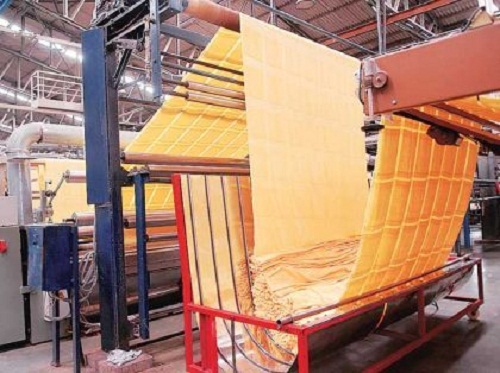 was worth $0.41 million with negative growth of 30.51 per cent. Machinery used for nonwoven sector witnessed a slight rise in exports by 50 per cent to $0.09 million.
Sewing machine exports increased to $14.89 million, a growth of 6.05 per cent over the previous quarter. Exports of hand operated sewing machines and other sewing machines grew 30.86 per cent and 40.11 per cent respectively.
Vietnam a booming market for Indian exports
Vietnam emerged as the topmost export market in Q2. Exports to Vietnam were worth $17.41 million in Q2 a growth of 43.29 cent over previous quarter. Spinning, twisting and yarn preparation machines were the most exported commodity with an export value of $13.85 million, a growth of 32 per cent. Exports of printing machinery, including digital printing machines totaled to $0.28 million. Weaving machines (looms) witnessed a good increase in its export value with growth of 1,322 per cent with export value of $1.28 million.
Germany remained the second largest market in Q2 with a growth of 1.43 per cent. The country has 7 per cent share in total exports from India’s textile machinery. Export of auxiliary machinery used with other machine was worth $ 6.07 million a growth of 59.74 per cent in Q2. Parts of laundry machine and machine for rolling, folding and cutting was second top commodity with their exports totaling to US$ 4.14 million in Q2. Growth of machines declined 14.11 per cent over the previous quarter.
Turkey moves one spot higher
Turkey was the third largest export market of textile machinery from India with exports worth $13.97 million, a progressive growth of 4.64 per cent over previous quarter. Spinning, twisting and yarn preparation machines were the most exported commodity. The country imported machinery worth $5.86 million from India in Q2 with growth of 67.06 per cent over previous quarter and 402.05 per cent over. Printing machines including digital printing and auxiliary machine exports declined 89.19 per cent and 27.73 per cent.
The war heats up with Amazon ready to take on Zara
"A new battle is set to begin between two of the biggest fashion companies of the world. Zara, which became the biggest clothing retailer in the world by perfecting, cheap ’n’ chic fast fashion, is being challenged by Amazon which plans to offer aspirational clothes, shoe brands, watches and jewelry at the lowest rates on his newly redesigned Amazon Fashion site. And its going to be quite a fight."
 A new battle is set to begin between two of the biggest fashion companies of the world. Zara, which became the biggest clothing retailer in the world by perfecting, cheap ’n’ chic fast fashion, is being challenged by Amazon which plans to offer aspirational clothes, shoe brands, watches and jewelry at the lowest rates on his newly redesigned Amazon Fashion site. And its going to be quite a fight.
Amazon raring to go
Amazon began these hostilities in an unconventional way, by building bricks-and-mortar stores. A pop-up on London’s Baker Street last year sold a mixture of traditional high street brands including Calvin Klein, Tommy Hilfiger, Puma and Levi’s, as well as Amazon’s recently created own-label collections: Truth & Fable (occasion wear), Find (street style fast fashion), Iris & Lilly (lingerie and swimwear), Meraki (high-end basics) and Aurique (athleisure).
Shoppers could buy goods in the store and take them away or scan the codes on product tags for home delivery. The e-com also plans to set up more shops, pop-up and permanent stores. It has also opened its own studio in Hoxton where it shoots 500,000 images a year to display on its Fashion websites here and in France, Italy, Germany and Spain.
Online, the e-tailer has signed deals with brands such as Calvin Klein, Hugo Boss, Theory, Kate Spade, French Connection, 7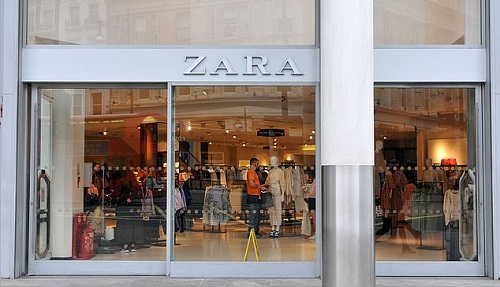 For All Mankind, Diane von Furstenberg, Levi’s, Ted Baker, LK Bennett and Nike. Many of these labels had previously avoided Amazon, fearing that its platform was not premium enough. They have signed up now as many third party retailers were already selling their clothes on Amazon.
Luring consumers with attractive offers
Amazon also spends more on research and development than any other e-tailer in the world — $23bn last year, more than four times the entire BBC budget — which enables it to pioneer new services, both digital and analogue. The company is developing an app that will enable Amazon Fashion to scour ‘selfies’ and online calendars and predict the clothes for a particular event such as a business meeting or wedding. This app will use selfies to create augmented reality images of what the consumers would look like in the clothes. The company’s Prime Wardrobe allows consumers to order a box of clothes, shoes and accessories, try them on at home, send back what they don’t like within seven days. Only then they are billed. Way to go!
CEO Conclave: Discusses the strategies for reviving confidence in textiles
"Organised by DFU Publications with Textiles Association (India) as the knowledge partner, The CEO Conclave-Investment and Partnership Summit concluded on an optimistic note. The two day event held on February 19 and 20 at HICC, Hyderabad was attended by over 150 leaders of the textile supply chain including mill owners, managing directors, directors, CEOs, investors, entrepreneurs and stakeholders among others. The theme of the conference was: ‘Rethink traditional business methods, Rejuvenate with new business models’ and ‘Revive confidence in the textiles industry.’ The conclave encompassed like: Textiles Industry"
 Organised by DFU Publications with Textiles Association (India) as the knowledge partner, The CEO Conclave-Investment and Partnership Summit concluded on an optimistic note. The two day event held on February 19 and 20 at HICC, Hyderabad was attended by over 150 leaders of the textile supply chain including mill owners, managing directors, directors, CEOs, investors, entrepreneurs and stakeholders among others.
The theme of the conference was: ‘Rethink traditional business methods, Rejuvenate with new business models’ and ‘Revive confidence in the textiles industry.’ The conclave encompassed like: Textiles Industry: The big picture, global, Asia and India perspective; Strategies to revive confidence in textiles; Emerging opportunities in global and domestic markets; and Manufacturing Excellence as four sessions to discuss strategies to revive the confidence.
An ode to the state’s development
Day one began with the welcome address and presentation by Mihir Parekh, Director, TSIIC followed by an address by B K Goenka, Chairman, Welspun. Goenka in his address credited Jayesh Ranjan, Principal Secretary, Industry and Commerce, Telangana government who was also the guest of honour and K T Rao, for restoring the confidence of textile industry stakeholders and promoting Telangana as a textile hub. He said “Despite being just five years old, the state ranked among top 10 in 2017 in ease of doing businesses. In 2018, it grabbed the second spot.” Talking about Welspun, Goenka said, “We have committed Rs 5,000 crore investment in various projects in the state. Our first project of flooring solutions with an investment of Rs 1,200 crore will be commissioned soon.”
Delineating the development in his state Jayesh Ranjan observed “We adopted a completely different approach for project executions and took stock of last four and a half years. We received about $21 billion investment, of which 65 per cent materialised on ground while the remaining is in advanced stage of implementation. About 66 per cent of this investment has been done by the people of the state. It shows the confidence level of industry in the state of Telangana.”
Honoring industry excellence
The award ceremony, recognised industry stalwarts including Suresh Kotak, Chairman, Kotak & Co Ltd, Rahul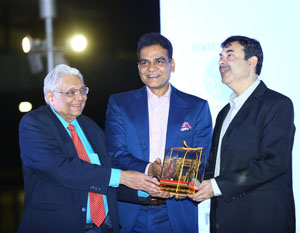 Mehta, President, CMAI, Sanjay Jain, Chairman, CITI, Manish Mandhana, MD, Being Human, T K Sengupta, President, TAI for their contribution to India’s apparel and textile sector.
Appreciating the efforts of Telangana state and organisers DFU Publications, Felix A Fernando, former Chairman, Sri Lanka Apparels Exporter Association said, “Telangana government is doing a fantastic job by promoting events like this.”
Strategies for revival
The second day started with a welcome speech by Salil Chawla, Director, DFU Publications, who introduced the themes for the sessions. Thanking everyone for being present at the conclave T K Sengupta, President, TAI said “The conference will focus on topics such as investments, textile policies, textile parks and clusters”. He concluded by appreciating the joint efforts made by DFU Publications and the Telangana government in organising such a glorious event
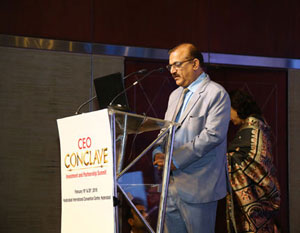 Sanjay Chawla, Founder, Editor in Chief, DFU Publications and the organizer of CEO Conclave, emphasised on the need to deliberate on strategies to rejuvenate the textile sector and revive the confidence among industry stakeholders. “The textile industry has a long and complex supply and production chain,” he said. “The technological revolution with Industrie 4.0 wherein big changes are happening in terms of recycling management, automation and artificial intelligence etc, are the new game changers,” he emphasised.
Seeking practical solutions for industry issues
The first session of the conference – ‘Strategic Outlook: Challenges faced by Indian textile and possible solutions,’ chaired by Sanjay Jain, Chairman, CITI, sought practical solutions for the challenges faced by the textile industry today. He urged the leaders to bring about a change on a micro level. “Today change is not just a constant, but also a compulsion,” said Jain. “It has to be in the organisation’s DNA,” he added.
 The session also deliberated on which of the two; cotton or manmade fibers are likely to rule the industry in future. Rakesh Mehra, Company Director, Banswara Syntex noted that “fibres liked by consumers will dominate the industry. He emphasised the importance of value additions to the ministry target growth of $350 billion this year.
Another hot topic of discussion at the session was of skill development. Dr JV Rao, CEO, Textile Sector Skill Council, said, “The aspect of skilling has not been really worked out well. Today we have accepted the training cost also as a part of the production cost. The focus is the attrition rate and how to address it.”
Mapping the growth of technical textiles
The second session of the conference dwelt on the growth of technical textiles in India. Noting that the government has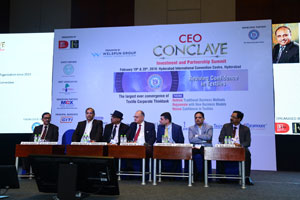 recently identified 207 products as technical textiles, Dr Anup Rakshit, ED-India, Technical Textile Association, said “Technical textile exports merely account for a 10 per cent of the total exports in India. We exported products worth around Rs 11, 402 crore last year; out of this packaging textiles contributed 40 per cent while industrial textile contributed Rs 1,200 to entire revenue.
He reminded everyone about the huge scope in the industry if IITs and research institutes would help in developing the product and launch maximum innovations. Good FTAs and RTAs on aplay fielding basis are also needed,” he said.
Domestic industry, innovation and sustainability in focus
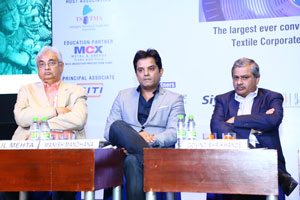 Emphasising on the need for a focus on domestic textile and retail markets, the third session of the CEO conclave was titled ‘Looking inwards: Growing domestic market in India: The brightspot . Prashat Agarwal, Managing Director & CEO of Bombay Rayon Fashions stated, “The world admires us not only for our manufacturing competitiveness but also due to the vastness and rapid growth of our market. We need to look at it seriously and understand its growth imperatives.”
The session also focused on the need for innovation. “We need to learn from the west is the technique to build big brands. Besides export, there is a lot of scope to grow within the country. We need to create good looking, well organised set ups,” said Manish Mandana, Managing Director, Being Human.
Amit Jain, Amtex Ventures, Home Fashion Consulting highlighted sustainability as the future of the textile industry with the packaging getting done with biodegradable material. “There will be green stories. Products will be made of reused and recycled material. Across the value the chain, the major changes will happen right from crop to processing,” he said.
Seeking excellence in manufacturing
The fourth session of the CEO Conclave focused on the theme of Manufacturing Excellence: the success mantra in these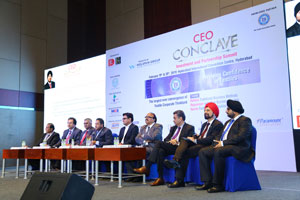 competitive times. The session was chaired by Darlie O Koshy, Director General and CEO, ATDC. It focused on bringing efficiencies in manufacturing and production process and competing successfully in the highly competitive markets.
The conference concluded with the remarks by Rahul Mehta, President, CMAI, who proposed a twelve-point programme for growth in the industry.
Visit to Kakatiya Integrated Mega Textile Park
As a part of its CEO Conclave, more than 22 industry leaders and stakeholders visited the Kakatiya Integrated Mega Textile Park in Warangal. The Textile Park being developed over 1,200 acre at Shayampet village of Geesukonda mandal and Chintalapalli village of Sangem mandal in Warangal district is based on development strategy of “Farm to Fiber, Fiber to Fashion and Fashion to Foreign”
The mega textile park is built-to suit building for easy starting of units. It comprises 20 MLD Common Effluent Treatment Plant (CETP) with Zero Liquid Discharge (ZLD) , world class infrastructure including water, power, sewerage system etc, common facilities like workers' dormitories, warehouses, testing and QC labs, expo centre, etc, a dedicated training centre, testing facilities, etc and land at a concessional price to the first set of anchor units.
Industry applauds
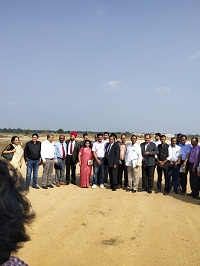 A resounding success, the CEO conclave was applauded by industry experts and stalwarts alike. Arvind Mathur, CEO, Raymond UCO Denim appreciated the quality of speakers and panelists. “They provided numerous thought provoking insights and analysis,” he said. Charan Singh, Vice President & Regional Director, Softlines believed that the conference lived upto its theme. “It not only provided valuable ideas to the audience but also created the need for disruptive thinking which is essential for the survival and growth of the industry,” he said. Mihir Parekh, Director, TSIIC appreciated the discussions, “They proved to be a great platform to showcase Telangana’s initiatives in the textile sector,” he said.