


FW
Dubai gets taste of Dior
Dior showcased its latest haute couture collection in Dubai recently to a crowd of Mideast-based fashionistas, social media figures, celebrities, buyers, designers and editors. It was the first show in Dubai for the French fashion house under a large circus-style tent. The well-heeled Dubai crowd was wowed as models in sequined helmets presented the pieces inspired by the circus. Dior has a history with the big top, with the circus theme first appearing in a 1955 styled photo and reappearing under John Galliano’s creative direction.
The haute couture collection included details like a tattooed body suit that conjured up images of Victorian-era circus performers and a tulle jumpsuit of multi-colored streaks in satin bands and dramatically square shoulders. The presentation in Dubai, however, also included 15 entirely new creations unveiled especially for the show’s design conscious Arab Gulf-based audience. Dubai’s exuberant displays of luxury and the city’s surreal, futuristic-looking skyline were the ideal backdrop to the show.
Exclusive pieces at the invitation-only show, reflected in many ways Dubai’s own ambitions to become a global fashion and design hub. The emirate of Dubai in the United Arab Emirates has a reputation for glamour and over-the-top projects like manmade palm shaped islands, the world’s tallest tower and a seemingly endless pipeline of new five-star hotels and spas.
China Interdye, China Textile Printing exhibitions in April
China Interdye and China Textile Printing will take place from April 10 to 12, 2019. With a total area of 40,000 sq mts, the two exhibitions have so far attracted more than 650 enterprises from 17 countries. The exhibits cover all kinds of advanced environment-friendly dyestuff, organic pigments, catalysts, intermediates, as well as environmental impact assessment equipment and digital textile printers in addition to printing and dyeing automation technologies and materials.
Exhibitors will mainly promote new environmentally friendly printing and dyeing products and application technologies. In addition, delegations of exhibitors from India, South Korea and Taiwan will join hands in a move to increase participation.
China Interdye is a gathering of the global dyeing and chemical industry. China Textile Printing aims at creating a one-stop shop for the procurement of textile, printing and dyeing products while, at the same time, serving as a wider platform for the development of the industry.
From January to November 2018, production of printed and dyed cloth in China was up 2.26 per cent year on year. Income of printing and dyeing enterprises was up 4.55 per cent year on year. Their total profit was up 13.06 per cent year on year.
Britain in no hurry for FTA with India
Post Brexit, India will have to wait a while to sign free trade agreement with Britain. Britain has flagged some high-value trade disputes involving British companies in India as a warning sign on the road ahead. British companies have not found it entirely easy to operate in India. Difficulties remain despite the India getting 53 position in the ease of doing business rankings. Instead Britain is looking forward to concluding agreements that will probably be easier and smoother to manage, such as that with Australia or New Zealand. This is despite the fact that some of the largest number of skilled professionals working and living in Britain comes from India.
The lengthy FTA negotiations between India and the European Union are seen as a learning curve for future India-UK trade ties. With India, the Department of International Trade is looking first at how to address other barriers to bilateral trade that would help build toward a future trade relationship rather than going straight for an FTA. Negotiations between the EU and India on an FTA have not yet concluded.
The UK is due to leave the EU on March 29. It voted to leave the EU nearly three years ago.
Bangladesh offers cumulative export incentives to apparel exporters
Apparel exporters in Bangladesh will get cumulative cash incentives up to 12 per cent. An exporter gets up to three types of cash incentives, out of four, against apparel exports. Apparel exporters get four per cent cash incentive as an alternative to duty bonds and duty drawbacks, four per cent for apparel product exports for small and medium industries, four per cent for exports of new textile and garment products and expanding export of textile items to new markets, markets other than the United States, Canada and the European Union, and two per cent cash incentives for exports of apparel products to the EU market in addition to the four per cent cash incentive. Earlier, there was a limit of 10 per cent incentives, even if the cumulative incentive was 12 per cent.
In September 2018, Bangladesh announced cash incentives in favor of exporters of 35 products, including apparel, for the current fiscal year of 2018-19. Cash incentives were introduced to the non-traditional market back in 2010, which were five per cent at that time. Owing to duty-free access and cash incentives, garment owners have now started exploring new destinations and markets. China, the world’s largest apparel supplier, now allows duty-free access to over 5000 Bangladesh products, which eventually has enhanced the export growth of the apparel sector.
Bangladesh jute cloth to face duty in India
India may impose a duty on jute sacking cloth from Bangladesh. The thinking is, the product is being dumped to avoid duty on jute sacking bags. Bangladesh jute mills and traders fear they would be hit hard if India imposes the duty. Usually, the anti-dumping duty on a product is the same amount by which it undercuts the domestically manufactured product.
In January 2017, India imposed anti-dumping duty on imported jute products from Bangladesh including jute yarn, twine, hessian fabric and jute sacking bags for a period of five years. So far jute sacking cloth is outside the purview of the duty. India accounts for 20 per cent of Bangladesh's jute goods exports. Some years ago, Indian jute mills had accused Bangladeshi exporters -- for the first time in 40 years -- of selling jute products at prices lower than those in India's domestic market.
Bangladesh’s jute sector, which involves about 40 lakh farmers and about two lakh workers, processes more than nine lakh tons of raw jute. The country currently has 26 jute mills. Jute is one of the most affordable natural fibers and considered second only to cotton in the amount produced and the variety of uses of vegetable fibers.
Asian shoppers throng European retailers
Chinese and many Asia-Pacific consumers proved key to higher-end spending in Europe’s major retail destinations in the fourth quarter of 2018.
While Chinese consumers are spending more within China, they remain key for international sales and are helping to fuel strong sales for luxury fashion brands in cities such as London, Paris and Milan. Consumers got more for their money due to the continuous strengthening of currencies across the APAC region. Vietnam rose to second highest on the list of international retail spenders per transaction, after Hong Kong in first place. Vietnam’s upper-middle class is spending 87 per cent more on international travel annually compared with the regular middle class.
The international appeal of Europe’s market has started to make a slow but positive recovery in the last quarter as underlying currency strength across emerging Asia-Pacific markets has boosted sales. The bounce-back of APAC currencies compared with the previous quarter, combined with the ever-growing population share and income of the region’s middle class, has resulted in increased travel and retail activity among its consumers. International shoppers are increasingly becoming a key source of value to the European retail market, with these consumers spending an average of 3.7 times that of domestic shoppers.
Novelty, sustainability, decluttering drives women’s wear market
"The biggest challenge is over stocked market. There are too many new products being introduced and it’s difficult to predict what shoppers will want next month. According to Enrico Ziglio, Founder and Chief Executive of London-based women’s wear labels Sister Jane and Ghospell, womenswear shoppers constantly seek novelty"
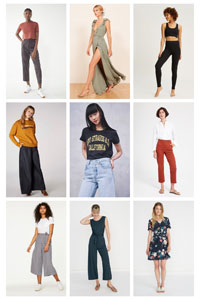 The fast-moving women’s wear market is attracting prominent brands/retailers who are employing all tricks in the trade to maintain their exclusivity in this crowded and fast-moving market. One sentiment that dominates the market of late is challenging as difficulties including price-sensitive shoppers and Brexit anxieties are particularly felt in this cramped and competitive world.
Novelty leads to overstocking
The biggest challenge is over stocked market. There are too many new products being introduced and it’s difficult to predict what shoppers will want next month. According to Enrico Ziglio, Founder and Chief Executive of London-based women’s wear labels Sister Jane and Ghospell, womenswear shoppers constantly seek novelty. Consumers in this segment make their purchases only after feeling strongly connected to these brands. They seek new, exciting brands that cater to their unique styles and values, and offer them something that no one else has.”
Flexible approach leads to growth
Market research agency Mintel suggests, the UK women’s wear market is likely to grow 14 per cent between 2018 and 2022 to £33.5bn. The secret to success in this market is a flexible approach by the retailers. As Olivia Cantillon, founder of women’s wear etailer Own the Look, notes, retailers should offer its customers as many opportunities to make a purchase as possible. Shoppers want every touch point they have with a brand or retailer to be worth shopping. They aim to purchase through the social channels.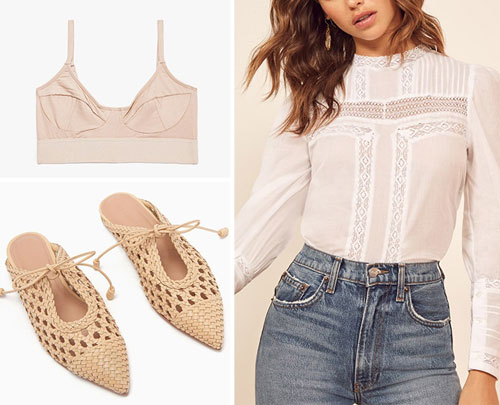
Two opposing trends are influencing consumer behavior. Affordably priced, trend-driven products are being sought as can be noted from the ongoing success of the Boohoo Group, whose revenue increased by 15 per cent, 74 per cent and 95 per cent at Boohoo, Nasty Gal and PrettyLittleThing respectively in the four months to 31 December. But customers are opting for higher-quality items even if they are expensively priced.
Buyers becoming increasingly aware
Emerging trends like sustainability and decluttering denote the increasing awareness of the shoppers about their purchases. Buyers are opting for authentic designs such as the slip dresses that can worth without anything underneath in the summer and paired with chunky knits or roll necks in the colder months. Customers are buying these even at a premium price. Animal prints across leopard, snake and zebra, continues to be popular. The craze for leopard print has expanded to include a whole safari of animals, including snake and zebra.
Renewed interest in accessories
For spring, the color yellow and the 1970s key trends rule. Neon and synthetic yellow tones have also made a comeback this season with a psychedelic print direction, as the 70s continue to be a source of inspiration. Shoppers are also opting for a sportier look for autumn 19 season.
There is a revived interest in accessories as these help womenswear brands and retailers to drive average transaction values. The trend for embellished hair clips, velvet head bands and hair scarves is likely to last throughout this year. Brands that intend to make a mark in the women’s wear need to give customers a reason to shop with them above all others. They should seek to make fashion more of a part of customer’s lifestyles and really reflect who they are as a person.
Intertextile Shanghai Home Textiles – Autumn edition to focus on contract business, finished products
"Intertextile Shanghai Home Textiles attracts leading local and international brands. The last edition held in August 2018 featured leading fabric brands such as Enzo Degli Angiuoni Spa from Italy, Jab Anstoetz from Germany and Prestigious Textiles from the UK, domestic big names such as Beijing Yada and Beijing Euroart together with whole-home exhibitors like Coomo Living, Mirtos, Murray, Casaido and Lezai. This year’s show will showcase a wide range of home textile items that match consumers’ high expectations."
 The Chinese textile industry is being driven by ‘consumption upgrade’ and diversified market demand. With over 1,000 exhibitors and around 40,000 visitors under the same roof, Intertextile Shanghai Home Textiles capitalises on the unprecedented growth of the Chinese middle and upper classes. The show, to be held from August 28 to 31, 2019, presents more quality suppliers, contract business exhibitors and finished products for visitors. Intertextile Shanghai Home Textiles – Autumn edition will be organised by Messe Frankfurt (HK) ; the Sub-Council of Textile Industry, CCPIT; and the China Home Textile Association (CHTA).
Wide range to meet consumer expectations
Intertextile Shanghai Home Textiles attracts leading local and international brands. The last edition held in August 2018 featured leading fabric brands such as Enzo Degli Angiuoni Spa from Italy, Jab Anstoetz from Germany and Prestigious Textiles from the UK, domestic big names such as Beijing Yada and Beijing Euroart together with whole-home exhibitors like Coomo Living, Mirtos, Murray, Casaido and Lezai. This year’s show will showcase a wide range of home textile items that match consumers’ high expectations.
Increased emphasis on contract business
The 2018 edition of Intertextile Shanghai focused on contract business with around 16 per cent of visitors reporting interest in the contract business products. This year too these exhibitors will be highlighted to facilitate buyers’ sourcing process. There will also be a diverse range of events including a forum and display area that will help fairgoers to understand different contract textile products and the derived business opportunities.
More finished products to cater to demand
Asia’s leading trade platform, Intertextile Shanghai Home Textiles offers a comprehensive range of home textiles and accessories. Recent editions have focused on abundant decoration fabrics and finished products. As per the fair’s visitor statistics, interest towards finished home textile products has increased by around 10 per cent in the past four years. With growing demand, more suppliers such as Naturtex, Jaspa Herington, Silkland and Weihai HengTai Woolen Blanket have decided to showcase their finished products. Visitors can thus expect to source more finished products ranging from bedding products and carpets & rugs to finished curtains, etc.
Used clothing a booming business in the US
The resale apparel business in the US is booming. Secondhand is starting to capture the attention of mainstream shoppers. Once people start buying secondhand, they buy more of it over time. When the consumer has the experience of buying a brand dress for 20 dollars versus 300 dollars, they can’t imagine going back there and paying full prices.
Resale in the US has grown 21 times faster than the retail apparel market over the past three years. In an environment where traditional retailers continue to struggle to adapt to changing consumer tastes, companies like Rent The Runway, The RealReal and Poshmark are capitalizing on the idea that consumers are constantly looking for affordability and variety.
According to ThredUP, an online resale shopping platform, 56 million women purchased secondhand products in 2018, up from 44 million women in 2017. Resale platforms, also called consignment sellers, are seeing a high level of consumer engagement. In addition brands have started to realize that consignment players are helping extend the discovery, reach, and appeal of their brands. An item with a strong resale value is seen as strengthening the brand as a whole. The apparel industry is the second largest industrial polluter. The resale market is an excellent way to create a circular economy and reduce the environmental impact.
Textile and apparel sectors disagree on USMCA provisions
While US textile manufacturers and the apparel and retail industries have expressed overall support for the newly reached US-Mexico-Canada Free Trade Agreement (USMCA or NAFTA 2.0), textile producers and the apparel sector hold divergent views on certain provisions.
The USMCA will continue to adopt the “yarn-forward” rules of origin. The USMCA will also newly require sewing thread, coated fabric, narrow elastic strips, and pocketing fabric used in apparel and other finished products to be made in a USMCA country to qualify for duty-free access to the United States.
The US apparel industry, on the other hand, opposes these rules and argues that apparel should be considered of North American origin under a more flexible regional “cut and sew” standard, which would provide maximum flexibility for sourcing, including the use of foreign-made yarns and fabrics.
USMCA would continue a program that allows duty-free access for limited quantities of wool, cotton, and man-made fiber apparel made with yarn or fabric produced or obtained from outside the NAFTA region, including yarns and fabrics from China and other Asian suppliers.











