


FW
Dynamics changing, as new markets beckon US apparel importers
"Recovering from the 2018 turmoil, US apparel imports in January 2019 increased 25 per cent to $7.57 billion. The country again sourced from its traditional markets – China, Vietnam, Bangladesh, India, etc in 2019. It had, in the second half of 2018, shifted its sourcing to nearby destinations of Central and South America. From July 2018, US apparel retailers and buying houses began exploring newer markets to source from. It also sourced a lot of high end apparels from Europe. And Ethiopia’s exports to US are witnessing a robust increase."
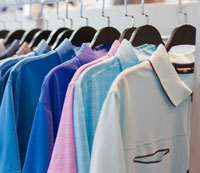 Recovering from the 2018 turmoil, US apparel imports in January 2019 increased 25 per cent to $7.57 billion. The country again sourced from its traditional markets – China, Vietnam, Bangladesh, India, etc in 2019. It had, in the second half of 2018, shifted its sourcing to nearby destinations of Central and South America. From July 2018, US apparel retailers and buying houses began exploring newer markets to source from. It also sourced a lot of high end apparels from Europe. And Ethiopia’s exports to US are witnessing a robust increase. There are once again clear signs of shifting supply chains in the apparel market.
US apparel imports decline in June 2018
US apparel imports declined 6.2 per cent in value terms in June 2018. Imports from Canada and Mexico during this period increased 30 per cent and 11.71 per cent respectively. US buyers also sourced more from Guatemala, El Salvador, Honduras, Costa Rica, Haiti, Dominican Republic, Bolivia, Chile, Argentina. US apparel imports from almost all traditional Asian suppliers-China, Bangladesh, India, Vietnam, Cambodia, Thailand, Pakistan, Indonesia, Philippines, among others-declined in the first half of 2018.
Imports from China declined 5.53 per cent, while imports from Bangladesh fell around 3 per cent. From the African region, imports increased from Ethiopia and Lesotho, and declined from Kenya, despite the AGOA.
Sourcing choices shift in second half of 2018
In the second half of 2018, imports from Canada and Mexico declined by 27.3 per cent and 17.88 per cent respectively, as NAFTA was replaced. Imports from South and Central America continued to rise, with a decline witnessed only from Dominican Republic and Peru. UVRs were significantly higher for Chile, Bolivia, Peru, Ecuador, Panama, Nicaragua.
Imports from China declined by 33.84 per cent from July 2018. Also, US imports from Hong Kong declined by 51 per cent in value and 69.45 per cent in volume. Imports from India, Pakistan, Nepal, Bangladesh, Vietnam, Cambodia, Malaysia, Indonesia, Philippines and South Korea also declined. US imported a little more apparel from Sri Lanka, Thailand, Laos and Japan.
Within the African region, imports from Ethiopia and Lesotho continued to rise, while Kenya suffered an export setback despite the large number of Chinese investments happening in Kenya’s textile industry.
US explores new markets in 2019
US apparel imports in January 2019 increased by 25.34 per cent higher compared to a month before. In January, imports from Canada and Mexico increased by 9.86 per cent and 3.87 per cent respectively.
Imports from Eastern Europe show a mixed trend, with imports rising from Czech Republic, Lithuania and Poland. Imports from Russia declined by 92.62 per cent in January, while those from Belarus increased by 174.51 per cent. Imports from Greece and Turkey also improved.
According to the Commerce Department, consumer spending dropped by 0.5 per cent last month, its first decline since September 2016. The report also indicated a 0.1 per cent drop in the personal income in January 2019, for the first time in nearly three years. Thus, in 2018, US buyers explored diverse markets across the globe. If it aims to remain in the competition, Indian exporters will have to find new ways to service demand from this market.
Stitch & Tex Expo - Afro Edition to organise two consecutive trade fairs
Stitch &Tex Expo - Afro Edition will feature the new concept of organising two consecutive trade fairs. The first trade fair is dedicated to garment processing technologies including sewing, embroidery, fabrics and their accessories; while the second is dedicated to textile processing technologies including weaving, spinning, knitting, and dyeing machinery, technologies and spare parts. The two events are held under the giant brand Stitch & Tex Expo - Afro Edition.
Set to establish a tangible uprising in motivating employment, inspiring skill development, stirring entrepreneurship in the textiles business segment, achieving economic development and thus conveying new ambitions for younger generations of the African continent, the two editions of Stitch &Tex – Afro Edition 2020, will be held in the Cairo International Conventions and Exhibitions Center- Egypt from February 27 - March 01, 2020 and from March 05-08, 2020 consecutively.
Stitch &Tex Expo - Afro Edition is a premier event paving the way for textile and machinery manufacturers, suppliers, and buyers to capitalise on growing opportunities in one of the world’s most appealing business environments.
Scientists develop threads that sense gas
US scientists have created threads that change color when they detect a variety of gases, an advance that could help develop smart fabrics that can sniff out toxic chemicals. The threads can be read visually, or even more precisely by use of a smart phone camera, to detect changes of color due to analytes as low as 50 parts per million. Woven into clothing, smart, gas-detecting threads can provide a reusable, washable, and affordable safety asset in medical, workplace, military and rescue environments.
While not replacing the precision of electronic devices commonly used to detect volatile gases, incorporation of gas detection into textiles enables an equipment-free readout, without the need for specialised training. Such an approach could make the technology accessible to a general workforce, or to low resource communities that can benefit from the information the textiles provide.
The team used simple dyes that detect gases with acid or base properties. The method that effectively traps the dye to the thread, rather than relying so much on binding chemistry, offers more flexibility to use dyes with a wide range of functional chemistries to detect different types of gases. The tested dyes changed color in a way that is dependent and proportional to the concentration of the gas as measured using spectroscopic methods.
Bangladesh: Rubana Haq to be the first woman president of BGMEA
Rubana Huq, Managing Director of Mohammadi Group, is set to be the first woman president of the BGMEA after her panel managed a clean sweep at the biennial election. Around 1,492 out of the total 1,956 voters cast their votes in the election to choose the leaders of the BGMEA for the next two years. Sammilita Forum, won all 35 available posts for directors. Huq is scheduled to take helm of the BGMEA on April 20, 2019
A separate cell will be set up in the BGMEA to help the factory owners with price negotiations with buyers.
Mauritius expands trade with Bangladesh
Mauritius is looking to expand its apparel and textile trade with Bangladesh. Bilateral business relations are growing stronger with increased trade between the two countries. Bangladesh is the world’s second largest apparel sourcing destination. Bangladesh is working full steam to achieve its target of $50 billion in exports from the apparel and textiles sector by 2021.
Mauritius is a country which can boast of having one of the best infrastructures in Africa. It has a population of 1.2 million with the main languages being English, French and Creole. The textile and clothing industry of Mauritius is into knitwear, kids’ wear, trousers etc. But knitwear is where it excels in and enjoys international prowess. Mauritius has quite a few vertically integrated units. The country is developing the capability and capacity to cater to the needs of global buyers. The USP of Mauritius is the reliability and credibility it has built in its buyers’ community which is the holy grail of its continued relevance to the ever changing sourcing landscape.
Bangladesh earned $1.7 million from apparel exports to Mauritius in fiscal 2017-18. Bangladesh’s apparel exports to Mauritius are monopolised by knitwear products. During 2017-18, knitwear items fetched $1.7 million while woven items earned about $1,41,000.
LeafWorks offers hemp testing kit
LeafWorks is one of the first herbal genetics company to offer a comprehensive DNA validation system in the hemp and cannabis marketplaces. The US-based plant genetics company, specialising in the botanical identification of hemp, has launched a proprietary test which is expected to save growers a great deal of time and money. The firm’s 99.9 per cent accurate Gender ID Test is designed to solve the time-intensive problem of identifying male plants in the commercial cultivation of hemp and cannabis. LeafWorks aims at providing accessible next-generation science to cannabis and botanical producers so they can grow their businesses, reduce potential for costly fraud, and provide consumers with the information they need to make confident choices.
The practice of screening and removing of male plants is critical as they can ruin harvests with accidental pollination of neighboring females. The standard wait time at present to learn a cannabis plant’s gender can currently be more than five weeks after germination. This period, courtesy of the new LeafWorks’ DNA-based test, can be cut to 14 days. The company offers a test kit which is easy to use, taking five minutes to prepare a DNA sample that is then posted to the firm’s testing facility.
The practice of screening and removing of male plants is critical as they can ruin harvests with accidental pollination of neighboring females.
Kingpins to inspect exhibitors’ credentials
Kingpins will mandate corporate social responsibility standards for its exhibitors. The denim industry event series will ensure all its exhibitors comply with a set of mandatory environmental and social standards by 2020. These denim mills will also be expected to meet stringent chemical management standards aligned to ZDHC (zero discharge of hazardous chemicals) criteria.
The show’s goal is to become even more engaged in promoting environmental responsibility within the industry. Advise and support will be offered to exhibitors in order to help them transform their approach. Kingpins does not wish to introduce new certifications, but the organisers are keen to promote the strictest existing ones. Once they have drawn up a set of social responsibility specifications for exhibitors, they plan to share them with other textile shows, in order to promote collective change across the supply chain. For the time being, the new exhibitor admission criteria are limited to the show’s Amsterdam edition, but the goal is to eventually apply them to the New York, Hong Kong and China shows too.
Both the denim supply chain and jeans manufacturers have been frequently singled out for their less than satisfactory environmental and human rights records. The accusations have mostly been leveled at workshops and factories outside the European Union.
Shenzhen to host Intertextile Pavilion in July
Intertextile Pavilion will be held in Shenzhen, China from July 4 to 6, 2019. Around 1000 leading exhibitors will display a wide range of innovative fabric product categories including manmade, knitted, silk, linen, wool, denim, sportswear/functional, lace and embroidery and swimwear, as well as yarn and fiber and accessories. New product groups will be featured, including OEM, sewing equipment and textile additives.
Returning international pavilions include: Taiwan Pavilion, Korea Pavilion and Fine Japan Zone. Taiwan Pavilion will feature knitted, jacquard, lace and embroideries, woven fabrics, functional and denim fabrics. Korea Pavilion will display a wide range of women’s wear fabrics, such as manmade fashionable fabrics, knits, embroidery jacquard, tri-acetate woven and printed fabrics. Some members will also showcase functional fabrics and faux fur. Fine Japan Zone will cover a range of high-quality cotton and manmade fabrics for women’s wear as well as casual wear, with the ability to handle small order quantities, product-in-stock orders and quick delivery service.
Shenzhen is China’s fashion capital. Shenzhen and has a 70 per cent share of China’s high-end women’s wear market with around 30,000 fashion designers and over 2,000 fashion retailers. It has a solid industry, from design to manufacturing.
Sri Lanka looking for trade preferences from the UK
Sri Lanka is aiming for a special bilateral preferential trade agreement with the United Kingdom. The UK has already assured Sri Lanka that GSP Plus concessions will continue in the Brexit transitional period, which is expected to last for approximately 21 months following Brexit.
Sri Lanka can potentially explore a free trade arrangement with the UK without any strings attached and gain the same or more benefits of the GSP Plus scheme as opposed to the EU’s Plus scheme where Sri Lanka has to fulfil several conditions. Such an agreement can also enable Sri Lankan export commodities to be more competitive in the UK, as the EU has granted the Most-Favored Nation status to countries such as China and Maldives, which are competing with Sri Lanka in the EU market.
However, Sri Lanka’s utilisation of the GSP Plus scheme remains weak compared to other countries. Sri Lanka has utilised 55 per cent tariff lines in the GSP Plus scheme while Pakistan and Philippines have utilised 96 per cent and 73 per cent of the tariff lines. So Sri Lanka needs to diversify its export basket in order to gain the full benefits of the scheme. The UK plans to focus more on Commonwealth countries including Sri Lanka, an area which has somewhat been neglected for several decades.
Indonesia: BPIP collaborates with Petra Christian University for IFCC 2019
Indonesian Footwear Industry Development Center (BPIP) will collaborate with the Petra Christian University for the Indonesia Footwear Creative Competition (IFCC) 2019. The cooperation will allow Petra students to participate in training after completing selection. At least 40 students are allowed to participate in the workshops.
The event is initiated by BPI under the Directorate General of Small, Medium and Various Industries at the Industry Ministry. The center is located in Sidoarjo, East Java province and trains the business players to develop the national footwear industry. It also introduces footwear to the younger generation.
In 2018, IFCC showcased 689 works for design, photography and video-graphy categories. About 70 percent of the participants were school and university students, and the rest were general public.











