FW
Sustainable fashion gains momentum
Sustainable fashion is not just disrupting conventional notions about fashion but also drastically changing the way we live. Sustainable fashion started off with a few entrepreneurs globally looking at ways to reduce waste while designing apparel and then slowly took the form of an approach that designers or consumers, for that matter, decided to abide by. It is about being conscious of the environment and the resources at hand, and making clothes in an eco-friendly manner.
Recycling/upcycling of garments as opposed to purchasing newly produced clothes also forms part of making sustainable fashion choices. Environmentally-unfriendly behavior costs the global economy 160 billion dollars each year, which makes it all the more imperative for garment manufacturers and consumers to make conscious choices while styling.
Among the latest trends in sustainable fashion are cutting waste and saving animals to creating sustainable fashion fibers and vegan biodegradable leather. Peru-based Le Qara has come up with Lab Leather, which is formed using microorganisms derived from flowers and fruits grown in a biotech lab. The process makes it possible to ape any desired leather texture and is 100 per cent biodegradable. Another technology offers an ID which can be attached to the garments so that consumers know what they are buying and how they can best recycle the item once they no longer want to wear it.
Global sewing thread market growing at three per cent
The global sewing thread market is expected to grow at a CAGR of 3.6 per cent between 2019 and 2025. Apparel and footwear industries are driving the thread market. More and more consumers are buying garments at lower prices in both developed and developing economies, which is also propelling the global sewing thread industry. The significantly high production of affordable apparel globally is anticipated to further fuel the sewing thread market in future.
The global sewing thread market is segmented into natural and synthetic. The natural segment is sub-segmented into cotton, silk, wool etc. The synthetic segment includes rayon, polyester, nylon etc. In terms of revenue, the synthetic segment dominated the market in 2018 due to its advantages such as superior resistance to chemicals, tenacity, and higher abrasion resistance. In terms of application, the market is segmented into apparel, footwear, bedding and mattress, luggage and bags, and others. The apparel segment dominated the sewing thread market in 2018 in terms of revenue, due to the growing apparel and garment industry globally.
The European apparel industry is anticipated to show significant growth in future owing to constantly changing fashion trends and the popularity of sports and athletic footwear across the region.
Salvatore Ferragamo opens flagship in China
Salvatore Ferragamo has opened a new flagship in China. Fully renovated with fresh, contemporary design elements, the flagship, roughly 780 sq. mt. carries the complete range of Salvatore Ferragamo men ’s and women’s collections: ready-to-wear, bags, shoes, small leather goods, silk accessories, jewelry, eyewear, perfumes, and timepieces.
The two-storey boutique features a bronze panel façade illuminated by vertical LED strips. The ground floor offers a selection of the women’s collections with the store entrance opening to a large, two-storey hall where the house’s handbag collections are displayed. In subsequent rooms, accessories and ready-to-wear are displayed with ample space dedicated to shoes including a key highlight focal wall devoted to the product category. The soft, rounded shapes of the walnut furnishings are polished to a high gloss, with brass and steel hardware details. Gold and pink silk velvet settees accentuate the soft, feminine environment and warmth of the women’s area.
An elevator leads to the men’s collections on the first floor, marked by signature masculine décor, wood and marble floors, walnut furnishings complemented by leather and light blue velvet sofas and yellow armchairs.
Salvatore Ferragamo, based in Italy, does shoes, leather goods, apparel, silk products and other accessories, along with women’s and men’s fragrances, eyewear and watches.
RCEP may be finalized this year
The Regional Comprehensive Economic Partnership (RCEP) may be finalized within this year. The RCEP which includes Brunei, Cambodia, Indonesia, Laos, Malaysia, Myanmar, the Philippines, Singapore, Thailand and Vietnam is being negotiated since 2013. The negotiations on RCEP were last year extended into 2019 as the parties – the ten Asean states and their six partners, India, China, Japan, South Korea, Australia and New Zealand – were unable to reach an agreement on key issues. India has reservations on joining RCEP, mainly because it will bring the country into a free trade relationship with China and worsen a trade deficit of more than $60 billion.
Despite India’s concerns about its trade deficits with Asean countries and China, it would be missing out on a key economic opportunity to establish a presence in the fast-growing Asean region if it did not join the RCEP. The Asean region, and the Cambodia, Laos, Myanmar, Vietnam and Thailand sub region, in particular, is the geopolitical centre of Asia. The region connects east Asia with south Asia, a link between the two economic powers of China and India.
If negotiations succeed, RCEP will be the largest multilateral trade pact in history. It is important for India to not lose out on this opportunity to further integrate with the Asean region.
FDI to pour into Vietnam’s apparel, textile industry
Garment and textile exports of Vietnam to the US and EU have grown robustly. This will make Vietnam an attractive destination for foreign garment and textile companies. Chinese garment and textile companies will be induced to shift investments to Vietnam in order to take advantage of the benefits that free trade agreements have brought to Vietnam. It is estimated that Vietnam will receive an investment wave of up to seven billion dollars from garment and textile companies in China, 2.1 billion dollars from South Korea, 1.6 billion dollars from Taiwan and 0.75 billion dollars from Japan.
Globally, the country has been showing a great impact on the garment and textile supply chain for being the world’s second largest textile and apparel exporter. The country’s garment and textile industry grew from 12 per cent in 2010 to 16 per cent in 2018. The garment and textile industry of Vietnam will advance further in the global market thanks to several existing advantages such as skilled laborers with sophisticated technique. Especially, with the recently-signed free trade agreements, import tariffs will be gradually removed for Vietnamese garment and textile products. There are 7000 enterprises in the industry, providing jobs for three million workers across the country.
Dutch brands adhere to AGT agenda
Brands participating in the Dutch Agreement on Sustainable Garments and Textiles (AGT) took specific action in 2018 to change their operational management in a way that makes them better able to tackle abuses in their supply chain. They did this by gaining a clearer picture of conditions at a large number of production sites and of the materials being used by companies, and analysing their own supply chain.
In fcat, in 2018, the agreement also increased its impact: by the end of 2018, 92 garment and textile brands had signed up, representing around 48 per cent of the Dutch market’s turnover. International cooperation with other initiatives also grew. Companies and other parties were together able to tackle problems concerning trade union freedom, child labor and working conditions. Starting this summer, companies will themselves communicate regarding any abuses in their chains and how they plan to deal with them.
AGT was signed in July 2016 and will run for five years. It helps companies fulfill their obligations under the agreement, which involves working on a transparent supply chain and risk management in order to tackle the problems that exist in the chain. In this way, companies and other parties take joint responsibility under this agreement for a sustainable supply chain in the garment and textile sector.
Indian exports to China up 30 per cent
India’s exports to China rose 30.4 per cent in 2018. India’s imports of spare parts for making mobile phones—its highest imports from China in value terms—contracted 34.1 per cent. Similarly, imports of LAN adaptor cards from China shrank 32 per cent. Imports of digital monolithic integrated circuits from China grew 358 per cent.
With instances of protests against China, including burning of Chinese products in India, China is shifting exports to India via Hong Kong to show a lower bilateral trade surplus with India. China is doing it by targeting only those products that attract zero duty, such as electronic items, because such products do not attract any scrutiny.
The disproportionate rise in the trade deficit with China, mainly due to rising imports of electronic items, has been threatening India’s trade balance and has remained a key trade policy challenge. China is under increasing pressure to reduce its surplus with trading partners. While calculating trade figures, China and Hong Kong should be considered as one country.
Hong Kong is a founding member of the World Trade Organization. In recent years, Hong Kong has been at loggerheads with mainland China to protect its democratic nature as China is seeking a greater say in its administrative processes.
Fashion without designers helps companies reduce waste
"Recent proliferation of data in the fashion industry is helping retailers and brands to analyse signals from the millions of customers and better predict what customers want. Companies are using algorithms and technology to use this data efficiently."
 Recent proliferation of data in the fashion industry is helping retailers and brands to analyse signals from the millions of customers and better predict what customers want. Companies are using algorithms and technology to use this data efficiently.
Machine-generated designs create shorter supply chains
Mechanical advancements and a more organised fashion industry help brands to effectively curate their collections. However, it does not cut down on waste in the system. Companies need to therefore, adopt entirely machine-generated designs to augment their collections.
Various machine-learning frameworks are now creating a whole set of machine-generated designs. Once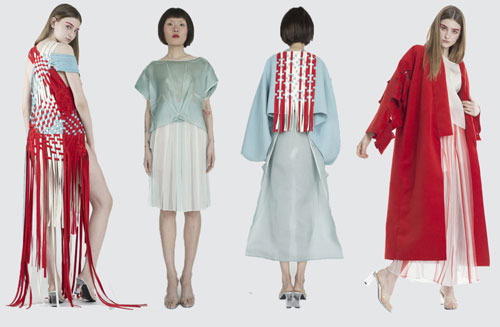 companies are able to predict the most preferred of these designs, they can leverage their manufacturing capabilities to create a shorter supply chain. This will enable them to launch these products in approximately four weeks. This period can be further reduced through the use of automotive manufacturing techniques.
Improving their bottom lines
Not only are machine-generated designs better, they also increase sales by twice or thrice as much. If combined with a faster supply chain, these designs can help brands to almost double their bottom line. The machine, on its part, continues to learn and get better with every new article type as it was a complete feedback loop.
A small beginning, this use of data, algorithms and machine-vision technology will not replace the genuine creativity or designers worldwide. It will instead help them to reduce waste and deliver much better value and experiences to their customers.
Zhejiang Tex in Yiwu this May
Zhejiang Tex will be held in China from May 16 to 18, 2019. This is a textile and garment trade fair. More than 300 exhibitors will showcase a range of digital textile machines, helping enterprises to grow their businesses. Three thematic zones will be featured at Zhejiang Tex, knitting and hosiery machinery, sewing and automatic garment machinery and digital printing technology and application.
The fair will be held in Yiwu, the world capital of small commodities. It attracts many textile clusters along the Belt and Road to source machines and equipment from there, making it a major city for digital printing, textile and apparel manufacturing. By utilizing Yiwu’s geographical advantage, Zhejiang Tex will gather textile and fashion manufacturers from all around the world in order to lead global enterprises to achieve a successful digital transformation of manufacturing at a low cost.
The digital textile printing market is expected to expand at a CAGR of 16.3 per cent during 2018-2027, bringing tremendous business opportunities to the entire textile industry. In view of this, more innovative and intelligent machinery and equipment, raw materials and textile chemicals are required for textile enterprises to enhance their competitiveness. New high speed and high performance digital textile systems and consumables are presenting opportunities.
Next edition of Texprocess in Germany to generate specialist impulses
Texprocess will be held in Germany form May 14 to 17, 2019. Digitalisation and sustainability will be the dominant subjects. With a broad spectrum of themes, Texprocess is set to generate specialist impulses for textile processers, users and retailers. An innovative conference format adds pioneering, sustainable textile innovations to the dialogue and uses synergistic effects in the sector to revolutionise processes and production flows. A keynote lecture will address the economic need for sustainable business models and give action impulses. A roadshow will illustrate sustainable shoe manufacturing and show how a sustainability revolution in the fashion and textile industry can become reality today.
Digital solutions for the fashion trade, e.g., digital showrooms and sales tools, will be a focal point. There will be discussions on fashion on demand, omni-channel solutions and avatars in the digital development of apparel. Additional contributions about sustainability at Texprocess Forum will be given, inter alia, on the recycling economy and its integration in the product-development process, on vegan textiles and on sustainable CSR management and audit solutions for complete transparency. Trade visitors can also look forward to contributions on product lifecycle management, e-commerce, automatic flat-goods stores, care labeling and qualitative color measurement with multi-colored textiles.