FW
Planet Textiles Summit to provide a blueprint for change in denim production
 Global denim leaders, brands, retailers and alike will gather at the Planet Textiles Summit on Sustainability that will be held on June 22, 2019 at ITMA 2019 in Barcelona, Spain.
The key point of discussions will include how the denim manufacturing industry should make jeans by 2025? And what breakthroughs in technology and thinking are needed to make this happen?
Moderated by Andrew Olah, the summit will include panelists like Sanjeev Bahl, CEO and founder, of the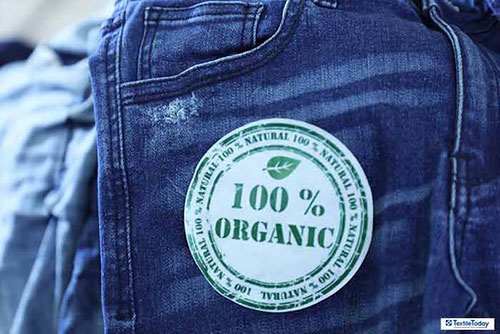 Vietnamese denim mill Saitex, Alberto Candiani, CEO of Italian jeans maker Candiani Denim Mills, Miguel Sanchez, owner of Gavilan, along with Mike Kininmonth, denim specialist at cellulosic fiber producer Lenzing, which is supporting this session.
The delegates at Planet Textiles will discuss key changes in the denim production alongwith some of other predicted changes in the segment. A proposal to develop a ‘blueprint’ for real change that buyers’ retailers and brands can use as a sourcing guide will also be outlined.
Candiani SpA wins ITMA 2019 sustainable innovation award
"The ITMA Sustainable Innovation Award is one of the components of ITMA Innovation Lab which brands a series of activities promoting research and innovation"
 One of Europe’s largest denim producer, Candiani SpA has bagged the ITMA Sustainable Innovation Award for its innovative product, Candiani Re-Gen. This is a ‘circular denim’ fabric created from regenerated and recycled raw materials.
Fifty per cent of the Re-Gen fabric comprises Tencel x Refibra Lyocell made of pulp from cotton scraps and wood pulp using Lenzing’s efficient closed-loop process; the other 50 per cent consists of post-industrial recycled Candiani fibres. Candiani’s fabrics are also dyed using green technologies, resulting in substantial reduction in the use of water and chemicals in the fabric production and jean washing process.
The two other finalists of the ITMA Industry Excellence Award - Levi Strauss & Co, and Lee – were also praised for their efforts to introduce green innovations into their products and processes.
The ITMA Sustainable Innovation Award is one of the components of ITMA Innovation Lab which brands a series of activities promoting research and innovation. Other components are the Research and Innovation Pavilion, Speakers Platform and the Innovation Video Showcase.

ITMA 2019 sets new record with 1,717 exhibitors from 45 countries
ITMA 2019, currently being held in Barcelona, has set a new record with its number of exhibitors totaling 1,717 from 45 countries.
The exhibits are being showcased over 114,500 square meters of net exhibit space, a 9 per cent increase over the previous edition in 2015. The exhibition occupies all nine halls of the Gran Via venue, including the space under the link way. To allow more companies to participate, many exhibitors were allocated lesser stand space than what they had originally applied for.
Of the total number of exhibitors, over half are from CEMATEX countries; the balance comprising companies from other parts of Europe, Asia, the Middle East and the Americas.
Reflecting the international composition of the participants, the largest number of exhibitors are from Italy (364 exhibitors), China (276 exhibitors), Germany (222 exhibitors), India (169 exhibitors) and Turkey (164 exhibitors).
CEMATEX countries continue to occupy the largest exhibit space, taking up 65 per cent of the total net exhibit space. Italy booked 26 per cent of the space, followed by Germany which booked 18 per cent. The top non-CEMATEX countries are: Turkey with 9 per cent, China with 8 per cent, and India with 5 per cent of the space booked.
The theme of ITMA 2019 is ‘Innovating the World of Textiles’. To support the innovation drive, CEMATEX has introduced the ITMA Innovation Lab. A new umbrella branding of a series of activities, the Lab includes the Research and Innovation Pavilion, ITMA Speakers Platform, ITMA Sustainable Innovation Award and Innovation Video Showcase. Speakers from the industry have been invited to share their perspectives and experiences at the Speakers Platform which will be held from June, 21-25, 2019. A finance forum will also be held on June 21, 2019.
C&A reduces global carbon footprint by 12%
According to C&A’s annual Global Sustainability Report, owing to its use of sustainable raw materials, C&A was able to reduce its global carbon footprint by 12 per cent in 2018. The organisation’s global sustainable materials strategy — driven by more sustainable sources of cotton and cellulosic fibres — avoided 116,000 tonne of CO2 emissions (mtCO2e), equivalent to the yearly CO2emissions of over 70,000 passenger cars.
C&A also saved 1 billion cu m of water – the equivalent of 400,000 Olympic-sized swimming pools. In Europe, C&A sold 95,000 pieces containing recycled cotton and more than 300,000 items containing recycled polyester.
In 2018, C&A also continued its active involvement with ACT (Action, Collaboration, Transformation), a ground-breaking, multi-stakeholder agreement to improve wages for garment workers, with the Ellen MacArthur Foundation and Fashion for Good to drive circular economy approaches in the apparel industry, and with C&A Foundation to support systemic and industry-wide change in social and environmental practices.
Epson opens 'TSC Asia' to accelerate global digital textile printing biz
Seiko Epson Corporation (Epson), the global technology leader, has opened a new textile solutions center called ‘TSC Asia’ at its Fujimi Plant in Nagano prefecture, Japan. Designed to accelerate global expansion of digital textile printing business, TSC Asia can handle every step in the textile printing process including textile pre- and post-treatment.
Like the Epson Group’s textile solutions center operating in Como, Italy, since 2014, TSC Asia will support digital textile printing by conducting research and development and by using actual textile printers to produce samples for customers in Japan and throughout Asia.
Epson is currently strengthening its production and sales organisations to position it to provide products and services globally from both Japan and Italy. Epson started producing some models in the Monna Lisa series in 2018 at its Hirooka Plant in Nagano prefecture.
The company will be expanding its prototyping and volume production operations for large industrial printers, including the Monna Lisa series, with the completion of a new facility in Hirooka, Innovation Center Building B, at the end of March 2020. In 2019, Epson will begin selling these products through its global sales network, which will also offer enhanced customer proposals and broader support.
Clean Clothes Campaign report grants negative grade to Under Armour
A recent report by Clean Clothes Campaign named Under Armour Inc. among 19 clothing brands that received a failing grade for being unable pay a living wage to its workers in countries outside of the U.S.
The Clean Clothes Campaign, an alliance of labor unions and non-governmental organisations advocating for human rights, surveyed 20 companies about the wages they are paying. Other brands besides Baltimore-based Under Armour to get a failing grade include competitors Adidas, Nike Inc. and Puma. The only company surveyed that did not get a failing grade was Italian luxury brand Gucci, which got a "C."
Companies have steadily been coming under greater scrutiny from organisations and lawmakers across the globe about the working conditions and wages for contract manufacturing workers in Asia, Africa, Central America and Eastern Europe. The Clean Clothes Campaign's report follows up on a prior survey completed five years ago.
According to the report, though a majority of the brands expressed a commitment to ensure that they are providing a living wage, none were able to show any progress compared to five years ago
The report also looked at whether companies are tracking wage data. Under Armour said it is using a wage collection data tool from the Fair Labor Association. The company plans to compare data from its suppliers against wage ladders from the FLA.
India to import 22 lakh bales of cotton during the 2018-2019 season
According to the Cotton Advisory Board, the Indian import of cotton in the 2018-2019 cotton season is expected to be 22 lakh bales, almost seven lakh bales higher compared with the previous season. The board estimated the (provisional) cotton production this season, from October 2018 to September 2019, is expected to be 337 lakh bales of 170 kg each.
Cotton consumption during the current season is expected to be lower at 361.5 lakh bales as against 386.65 lakh bales last season. Exports are expected to be just 50 lakh bales though the board earlier estimated it to be 65 lakh bales. Consumption of cotton by the domestic textile mills has dropped as yarn production has reduced.
Prices of cotton in the domestic market have remained largely stable though it is higher than international prices, and the season is likely to end with adequate closing stock (neraly 40 lakh bales). If all the cotton- growing areas are covered by the monsoon rains by the first week of July, production next year will be good.
Karl Mayer launches new dyeing technology at ITMA 2019
Karl Mayer launched Greendye, an innovative technology for producing denim fabrics with minimised ecological footprint at ITMA 2019
This nitrogen-based technology ensures less environmental impact and more efficiency during indigo dyeing. With its high concentration in the dye bath and under nitrogen atmosphere, the dye diffuses and migrates more intensely into the fibre than in case of conventional comparable procedures. The yarn can absorb three times more dye in a dye vat. In this way, it is possible to reduce the number and length of vats, with positive effects for the environment. The chemical consumption can be reduced considerably, a minus of 50 per cent is possible when using hydrosulphite and caustic soda, and there is also less yarn waste. Moreover, due to the good fixation of the dyestuff on the fibre, considerably less water is required during the washing process.
Karl Mayer took over the patents for the innovative indigo dyeing technology from Master in 2018. The company then carried out extensive work for the further development and fine tuning of this technology. One of the milestones in this development was the operation of a pilot machine at the Denim Competence Center in Mezzolombardo, Italy, at the beginning of this year. The dyeing system maps the industrial production process at a scale of 1:10 and it has already supplied the first warp beams.
Vietnam cotton imports in May 2019 increase by 2 per cent
Vietnam’s cotton imports in May 2019 increased by 2.8 per cent month on month.
The country’s cotton imports, from January to May 2019, had declined by 2 per cent year on year.
The major cotton supplier for Vietnam was the US. Cotton imports from the US hit a new high in the recent four years. In January to May, Vietnam’s imports of US cotton increased by 18.01 per cent from the same period of last year. Its imports of Indian cotton declined by 43.12 per cent. Cotton imports from Brazil also declined by 23.97 per cent while those from Australia increased by 54.75 per cent. Vietnam’s cotton imports from the US may remain large in July.
Vietnam’s domestic production of cotton crop meets only one per cent of domestic demand. The country needs over 5,00,000 tons of cotton to satisfy the needs of its garment and textile manufacturers. Vietnam’s apparel industry is growing rapidly. With an export grow rate of 20 per cent each year, Vietnam is expected to generate a turnover of 40 billion dollars in 2020.
Seraphine sales and profits soar as international sales prove key
UK-based maternity-wear specialist Seraphine has reported soaring sales and profits for the 12 months up to March 2019 despite huge challenges in UK fashion retail at present. The 17-year-old company’s Ebitda profits rose by 35 per cent to £3.2 million in the period, which easily outstripped the still-impressive 25 per cent surge in turnover up to £22 million for the financial year.
Seraphine’s online sales now make up for 65 per cent of the company's total turnover with much of its e-commerce revenue coming from abroad. It's clothing isn't expensive with middle-market pricing. The brand’s dresses retail for around £49 up to £149 while its jeans are priced between £50 and £60.
The brand’s on-trend and practical designs have made it popular amongst major-league celebrity clients. These include the Duchess of Cambridge, Anne Hathaway, Mila Kunis, Karolina Kurkova, Sophie Ellis Bextor, Gwen Stephani, Kate Hudson and Marion Cotillard, etc.
The brand exports 70 per cent of its produced clothes, with 40 per cent going to mainland Europe.
The brand also plans to open new stores both at home and abroad. It currently has four stores in London, one in Leeds, two in Paris (the latest one opening only last October) and one each in NY, Dubai, and Hong Kong. It recently launched its first Indian store in Delhi.