FW
Brother offers bolder designs with GTX
Brother’s GTX direct-to-garment printer can print bigger and bolder designsthan previous models on a multitude of fabric types.
It has unmatched vibrant print quality and impressively fast printing speed that guarantees more output which leads to better business. It’s low maintenance, thanks to its automatic wet capping station and white ink circulation system that minimizes clogged nozzles. It’s also environment-friendly as its new formulated inks are water-based, Okeo-Tex Eco-Passport certified, and CPSIA compliant, which make it safe to print on children’s clothing. The GTX’s innovative replaceable ink pouches make use of less plastic, allowing users to reduce their carbon footprint and environmental impact.
Brother’s Luminaire Innov-ís XP1 is the company's flagship sewing, embroidery and quilting machine with exclusive features. Features include Stitch Vision Technology for virtually perfect stitch positioning and more precise previews via an intelligent projection of light – preview, audition and edit designs and stitches directly on the fabric. It also has 65 square inches of workspace, a large embroidery frame with a new spring lever release, powerful surround LED lighting, large touch screen display with capacitive technology, camera detecting buttonhole feature and Enhanced My Design Centre, including a new echo quilting feature. The PE-DESIGN 11 is the latest personal embroidery and sewing digitising software from Brother.
Marzoli offers intelligent spinning systems at ITMA 2019
"Marzoli, a Camozzi Group company is offering intelligent spinning systems at ITMA.2019. The company has developed MRM (Marzoli Remote Maintenance In collaboration with Camozzi Digital. This is the first patented software platform in the world that analyses the big data of machinery processes detected as mission critical, to continuously monitor operations. It reduces machine downtime, increase the lifespan of parts and enables effective and prompter maintenance."
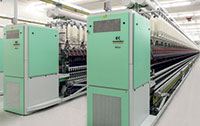 Marzoli, a Camozzi Group company is offering intelligent spinning systems at ITMA.2019. The company has developed MRM (Marzoli Remote Maintenance In collaboration with Camozzi Digital. This is the first patented software platform in the world that analyses the big data of machinery processes detected as mission critical, to continuously monitor operations. It reduces machine downtime, increase the lifespan of parts and enables effective and prompter maintenance. Remote control, on the other hand, is made possible by YarNet: a highly innovative software, thanks to which users can easily manage the entire Marzoli spinning process directly from their PC, quickly querying each single machine with ease, a real value-added technology for customers aiming to maximise productivity and profitability.
Other innovative products on show include Brain Box: the new patented Marzoli software with an integrated 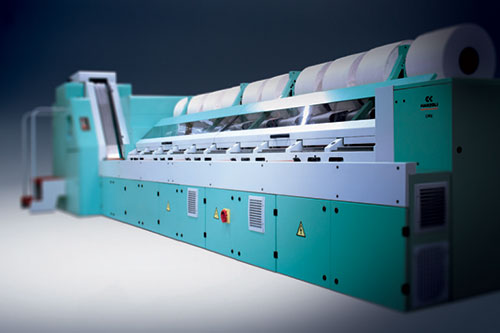 APP, developed entirely in-house, which significantly improves plant performance. In fact, the data emerging from the tests conducted shows a 5.5 per cent increase in productivity, an 8 per cent increase in efficiency, and 1.5 per cent energy savings. Installation is fast and simple, with just four steps: apply the sensors to the individual machines, connect the sensors to Brain Box, download the APP, and activate the monitoring function for the detection of any issues.
Another main attraction at ITMA is the innovative 24,000 spinning module by Marzoli, whichenables customers to achieve a significant reduction in TCO (Total Cost of Ownership) thanks to a 4 per cent cost savings for conditioning, a 10 per cent reduction in investments in the square footage of production sites and a 9 per cent cost savings for internal logistics.
ITA graduate bags ITMA Research & Innovation Excellence Award
Mathias Zidda, a master graduate of Institutfür Textiltechnik of RWTH Aachen University (ITA), won the ITMA Research & Innovation Excellence Award for his 3D braiding machine, which was rebuilt according to the Industry 4.0 standard. During his master thesis Development of a gear-driven 3D rotational braiding machine and its control concept, Mathias Zidda was supervised by ITA doctorate candidate Martin Kolloch.
Fritz P. Mayer, President of CEMATEX and the German Engineering Federation (VDMA), handed over the prize money of EUR 10,000 with certificate to the lucky winner at ITMA 2019 in Barcelona, Spain.
The 3D braiding machine consists of an existing conventional mechanical system. It has now been digitised and rebuilt according to Industry 4.0 standard. With the help of the digital control, for xample, 3D reinforced ceramic turbine components can be manufactured as prototypes and subsequently produced in series. Together with the company ark industrie, from Aachen, and 2C-Composites, from Heinsberg, the control system was completely redesigned so that the machine can be monitored and operated from anywhere.
The ITMA Sustainable Innovation Award was created by CEMATEX to recognise the joint efforts of the global textiles industry to promote corporate sustainability through innovative solutions and outstanding industry-specific research. The award comprises two categories: Industry Excellence Award for textile and apparel manufacturers, and Research & Innovation Excellence Award open to Master’s students.
Over 30 Québec companies participate in ITMA 2019
More than 30 companies and organisations from Québec’s textile and apparel sectors are participating ITMA 2019, the most important international exhibition for technological innovations in manufacturing that is being held in Barcelona, Spain, from June 20 to 26, 2019. This initiative, led by TechniTextile Québec, the CTT Group, the Fashion Cluster mmode and the Workforce Sector Committee in Textile (CSMO Textile), will enable these companies to learn about the latest technological advances.
Dany Charest, General Manager of TechniTextile Québecsays “Many Québec company leaders are preparing to invest heavily in implementing advanced technologies that integrate digitalisation to increase their productivity and meet the growing demand for new technical products. The purchase of high-performance equipment will allow companies to maintain their value-added manufacturing activities here in Québec, and to continue their growth.”
This initiative – being implemented in partnership with the ACCORD initiative of the Ministry of Economy and Innovation (MEI) – represents a first concerted action for the industry and its members. “A team of experts from the CTT Group, a technology transfer leader specialised in research, development and analyses of technical textiles and advanced materials, will guide companies to choose equipment and textile materials that enable them to stand out here and internationally,” saysValerio Izquierdo, Vice-President, Textile Laboratories and Expertise, CTT Group.
Marie Eve Proulx, Junior Minister for Regional Economic Development and Minister responsible for the Chaudière-Appalaches, Bas-Saint-Laurent and Gaspésie–Îles-de-la-Madeleine regions says, “the participating Québec organisations will benefit from this exceptional event in order to strengthen their international competitiveness and establish future partnerships for Québec, firmly focused on Industry 4.0 and new technology trends.”
The industry will benefit from an exclusive and attractiveexhibition stand strategically positioned at the heart of Fira de Barcelona, Gran Via(CTT Groupbooth#UL-D108). This space offers an exceptional platform for holding meetings and collaborations as well as for highlighting the know-how and expertise of Québec companies.
CSMO Textile, the organisation responsible for the development of labour skills, is also accompanying the delegation to gather intelligence about the technologies thatwill enable it to identify the skills of the future and adjust its tailor-made training curriculum.
The Québec textile industry, comprising 420 companies, specialises in the manufacture of textile, textile-based apparel and knitwear products. The industry, which produces more than 50 per cent of Canada’s textile, stands out because of the wide range of its capabilities. It has been one of the key sectors of Québec’s economy for more than 150 years and continues to excel through the remarkable advances it has achieved in the development of value-added technical materials. The textile industry employs more than 12,000 people.
Italy dominates at ITMA 2019 with 360 exhibitors
ITMA 2019, which opened its gates on June 20, 2019 in Barcelona, willprovide a first-hand look at the technology proposals of roughly 360 Italian machinery manufacturers. Italian exhibitors will occupynearly 30,000 sq. metersof the total space at the exhibition.
Alessandro Zucchi, President of ACIMIT, stated, “Italy’s textile machinery industry will play a leading role, with a large number of participants at the largest international showcase for textile machinery products. This confirms the vitality of our industry, especially with regards to the qualitative and technological levels that Italy knows how to express.”
Italian textile machinery and digitalisation
The digitalisation of textile production processes is an indispensable response to new trends in the requiring faster time-to-market and just-in-time production.
Zucchi states, “Our manufacturers aim to provide a suitable response to clients who are facing difficult challenges in developing new production processes and business models within the textile industry. Our products ranges are increasingly compliant with 4.0 technologies.”
There are numerous examples of such types of technologies in Italian machinery at ITMA. Among these include the intelligent management platforms, on-board machine sensors for data acquisition allowing the monitoring of both the machine and products, predictive maintenance, for a reduction in costs obtained through less downtime, and augmented reality applications supporting the operator in the various production phases.
Government support
The Italian textile machinery sector is supported by the Italian Government, through the Ministry of Economic Development and Italian Trade Agency for the promotion abroad and internationalisation of Italian companies.
Roberto Luongo, General Director of Italian Trade Agency states, “This year’s ITMA trade fair exhibit in Barcelona is once again an essential international showcase for Italy’s textile machinery industry. Textile machinery represents the excellence of Made in Italy industrial technology, with an acute propensity for internationalisation in its entrepreneurial fabric, requiring innovative, global and high level outlets to consolidate its business. For this reason, we have lent our support to the entire textile machinery chain with a significant investment in the promotional program and, in collaboration with ACIMIT, supporting all companies exhibiting at the trade fair with a structured activity plan, aimed at enhancing the keywords of the 2019 edition: sustainability, digitalisation and technology.”
Among the various initiatives supporting the participation of Italian textile machinery manufacturers at ITMA is a communication campaign in industry specific magazines and portals, as well as the organisation of a press conference during the fair.
Two ACIMIT manufacturers awarded Green Label Award at ITMA 2019
Two ACIMIT associated textile machinery manufacturers, Loptex and Tonello, were awarded the Italian Green Label Award at the press conference held by ACIMIT and the Italian Trade Agency at ITMA Barcelona,
The commitment of textile machinery manufacturers in researching and developing technology solutions capable of improving the energy consumption and/or environmental performance of their machinery is implemented through the Sustainable Technologies project. Promoted by ACIMIT since 2011, the project focuses on the Green Label, through which machinery manufacturers can communicate their engagement. The quantity of carbon dioxide equivalent emissions produced during the operation of the machinery (CFP) is the parameter chosen to give value to the environmental efficiency of the machinery subject to the special labelling.
Eight years after launching the Sustainable Technologies project in Barcelona at the 2011 edition of ITMA, ACIMIT has now instituted the Italian Green Label Award. The award rewards companies that have shown the most commitment in pursuing the project’s aims. LoptexS.r.l., a company based in Montano Lucino (CO),specialiing in quality control systems in textile fiber, both in the spinning and non-woven sectors,was awarded a prize as the company that achieved the best results, expressed in terms of percentage reduction in the value of CFP for its machinery. TonelloS.r.l., of Sarcedo (VI), which manufactures technologies for finishing garments, for its part received the award as the company that showed the most engagement in exploiting all the functionalities of the tool dedicated to generating the Green Label, producing numerous labels for a variety of different machinery and updating them over time, in an effort to communicate continuously up-to-date information on the path to sustainability undertaken.
“With the Italian Green Label, ACIMIT intends not just to reward those companies that have been most intensely engaged in our project, but also bears witness to what we have achieved as a sector on the issue of sustainability,” stated Alessandro Zucchi, President, ACIMIT.
Renato Gerletti, Owner, Loptex, said, “the Italian Green Label Award recognises just how much we have achieved so far on the issue of sustainability. It will to motivate us to do even more, dedicating additional resources to researching and developing sustainable solutions for our customers.”
Flavio Tonello, CEO ,Tonello: “Tonello has always focused on sustainability in building our machinery, and our Research and Development team have always endeavoured to provide innovative, sustainable solutions.”
Saurer increases product offerings at ITMA 2019
"Saurer has increased its product offerings at ITMA 2019. The company is offering all its staple fibre spinning solutions at the exhibition. Its mill monitoring system can be linked within a given system which saves on labour and makes the production processes more efficient and less wasteful, with a major impact on profitability."
 Saurer has increased its product offerings at ITMA 2019. The company is offering all its staple fibre spinning solutions at the exhibition. Its mill monitoring system can be linked within a given system which saves on labour and makes the production processes more efficient and less wasteful, with a major impact on profitability.
The system enables customers to analyse production, quality and machine data. This system is also compatible with third-party machines. Users can tap new optimisation potential by controlling the production process and making it more transparent.
Saurers’ customers will also have the option of linking their machines and the new laboratory equipment from our Autolab series, which premieres at the exhibition, to the software platform. The powerful combination of analytical capacity gives the user a clear picture of all the processes making up their operation in real time. As vital yarn characteristics are already determined during the preparation of the raw material, customers control and manage the entire process, ensuring best sliver quality for the five end-spinning processes. With the addition of the new innovative Autocard and the draw frame Autodraw, we have further extended our spinning product portfolio.
Saurer also offers integrated automation technology in their embroidery machine. The new Automatic Rear Carriage adjustment helps in reducing the machine setting time while the intelligent thread watcher SmartMon drives the precise and fast detection of yarn breaks, on both shuttle and needle side, which drastically lowers mending costs.
Sensors are the fundamental to any data collection effort. Saurer's twisting machines will also feature an integrated device that measures tension and monitors yarn twist in industrial and carpet yarn as well as tire cord and staple fibre.
Virgil Abloh gets inventive for Louis Vuitton
For his third runway show for the house of Louis Vuitton, Virgil Abloh produced an inventive, clever, experimental and even elegiac collection staged with aplomb in the charming Place Dauphine on the Île de la Cité on the Seine.
A cast of frequently fresh faces marched down the cobblestone streets of the triangular square, many with huge bunches of flowers sprouting from several smart new bags, notably a triangular weekender in a bright green Daumier design. Instead of the square’s usual gang of elderly, pastis-drinking boule players, hundreds of fans in standing room. Outside, thousands more frenzied youths failed to hustle past the vigilant security. Abloh is fashion’s hottest ticket these days. Virgil showed massive billowing pants with oversized jackets in Provençal shades of lilac and rose; lavender trenches in uber plissé wool; and composed marvelous broad-shouldered double-breasted jackets in the same colors as the coble-stones of the square. Several cast members wore garlands of real and fabric flowers. Many had farmers straw hats, finished with mountaineer’s rope. The mood was bucolic yet posh.
Last season, however, Virgil Abloh got lambasted on social media for allegedly borrowing ideas from certain indie designers for his menswear show for Louis Vuitton.
Uganda imports of used clothing increases fivefold
Uganda’s import bill of secondhand clothes increased fivefold from 2001 to 2016. Worn textile products and clothing are a major component of Uganda’s imports of textile products. The textile imports are due to high population growth and limited domestic capacity for apparel production.
While Uganda’s import bill of used clothes has tripled in the last 15 years, earnings from cotton exports have minimally grown in over 15 years. Nearly 95 per cent of Uganda’s cotton is exported as lint, which undermines opportunities for increased earnings from upgrading in the value chain. So the domestic textile and apparel market is being given attention. The country is investing in and supporting the cotton industry to produce competitive products, which will reduce the import of secondhand clothes. The capacity of ginneries has been increased.
East African countries, including Kenya, Uganda, Tanzania, Rwanda, and Burundi, came up in 2016 with a three year plan to ban imports of secondhand clothes as part of a vision to boost industrialisation. The ban was to be enforced by introducing and increasing taxes on used clothes. However, the US threatened to review trade benefits enjoyed by East African Community member states under the African Growth and Opportunity Act.
PiaveMaitex launches new range of technically advanced fabrics
PiaveMaitexhas launched Again-a range of smart and technically advanced fabrics that balance performances/functionality and sustainable features, formed of highly performing jerseys. The fabrics are produced using two premium Global Recycled Standard (GRS) certified sustainable ingredients. These include thepremium stretch fiber ROICA™ EF, which is a part of ROICA EcoSmart™ Family – constructed out with more than 50 per cent pre-consumer recycled content and perpetual high quality sustainable polyester born from a cost-effective process that reverses engineer consumer waste PET bottles.
Starting from two key high-tech, responsible raw materials as demonstrated by the GRS certification, the Italian manufacturer managed to create and deliver three unique functional fabrics, dyeable and transfer printable, that perfectly combine creativity, innovation, real performance and sustainability all at once offering unparalleled comfort, performance, and uniqueness.
This innovative approach of PiaveMaitex allowed not only to become world-renowned as best-performing company but also to obtain many important recognitions infact it was among the first textile manufacturers in Europe to get the certification of the quality system for the production and design of elastic fabrics according to the UNI EN ISO 9001 standard in 1996.
PiaveMaitex also obtained the "Trust in the textile" the Oeko-Tex® label - global synonym for responsible textiles manufacture, a concrete guidance for an increasing number of consumers who are becoming more and more sensitive to health and the environment and interested in get assurance over the quality of the products they are buying.