


FW
Prada launches new project Prada Re-Nylon
Prada has launched a new project, Prada Re-Nylon which introduces a sustainable line of iconic Prada bag silhouettes executed in a unique new regenerated nylon, ECONYL®. The Econyl® nylon is obtained through the recycling and purification process of plastic waste collected from oceans, fishing nets, and textile fiber waste. Econyl® yarn, through a process of depolymerisation and re-polymerisation, can be recycled indefinitely, with no loss of quality.
Re-Nylon aims to convert all Prada virgin nylon into regenerated nylon Econyl® by the end of 2021. It reflects the focus of the Prada Group on promoting a corporate culture that aspires to increasingly sustainable balances, incorporating into its daily work the idea of a return of value to society.
This project is an evolution of a fundamental code of Prada, a reinvention of heritage. The Prada Re-Nylon collection launches with six classic styles, both for men and women: the belt bag, the shoulder bag, a tote bag, a duffle and two Prada backpacks. The entire range is produced from environmentally-friendly materials, bearing a unique interpretation of the Prada triangular logo that emphasizes a bucking of the traditional, age-old linear supply chain into a cyclical one, focused on renewal.
Underscoring the importance of awareness and responsibility, a percentage of proceeds from the sale of the Prada Re-Nylon capsule will be donated to a project related to environmental sustainability. Prada in partnership with UNESCO is developing educational activities that involve students from several countries to implement dedicated lesson plans using plastic and circular economy topics to inspire learners. The approach of the educational program is built around two axes – learning and take action – and one of the outcomes will be an awareness raising campaign designed by the students.
Mouvent launches TX802 textile printer at ITMA 2019
Bobst subsidiary Mouvent launched the TX802 textile printer at ITMA 2019. The heart of these printers is the modular printhead cluster, built around Fujifilm Dimatix Samba heads. Mouvent buys the heads alone without any of the electronics or plumbing normally supplied with a printhead to have it jet the ink when needed. Instead, Mouvent 3D-prints its own housing, which holds four Samba heads in a line complete with all the necessary ink lines and electronics.
The printers are capable of producing up to 1200 x 1200 dpi resolution with three drop sizes. They will take up to eight colours. The heads can lay down up to 16 grams per square metre. The company can produce most of the drops in one pass.
This means the machine has to be very precise to hide the lines that we would otherwise hide with the next few passes. It gives us very good detail in the image so we can print very fine lines.
The original TX801 was fitted with two clusters, meaning eight heads in total. The main difference with the new TX802 is that it has four clusters, or 16 heads, doubling the speed of the printer to 100 linear mpm. However, it’s not possible to upgrade the TX801 to the newer spec as there is additional hardware around the drying in the newer machine. Both of the Mouvent printers print a 1.8m wide image on substrates up to 1.82m wide, and can handle woven, non-woven and knitted materials including cotton, silk and lycra. Currently there are reactive and acid inks available.
Mouvent also introduced a new Digital Front End, Mouvent DFE, which covers preparation of print data and drives the printers.
C.L.A.S.S. to display Italian Material Hub at Première Vision New York
C.L.A.S.S., the Milan based hub specialised in the integration of a new generation of eco values in the fashion and textile industry, will focus on the most innovative yarns, fibers and fabrics in its carefully created booth at Première Vision New York.
Showcasing a selection of the special styles of smart ingredients and materials within the unique ‘Material Hub’ area and presenting how to meet modern consumer’s needs, C.L.A.S.S. booth represents a unique small exhibition.
Pure Man reveals S/S ’20 menswear trends
"As definitions of gender and masculinity change and designer’s become more creative, new and unexpected shapes, patterns, colours and fabrics are making their way into mainstream men’s fashion. Pure Man, Pure UK's leading trade fashion buying event, representing women’s wear, menswear, footwear, accessories and young fashion, revealed these key menswear trends for S/S ’20 along with a line-up of brands, including Bench, Stetson, El Ganso, Dario Beltran and LA newcomers Oren Kash at a show held from July 21-23, 2019 at Olympia London."
 As definitions of gender and masculinity change and designer’s become more creative, new and unexpected shapes, patterns, colours and fabrics are making their way into mainstream men’s fashion. Pure Man, Pure UK's leading trade fashion buying event, representing women’s wear, menswear, footwear, accessories and young fashion, revealed these key menswear trends for S/S ’20 along with a line-up of brands, including Bench, Stetson, El Ganso, Dario Beltran and LA newcomers Oren Kash at a show held from July 21-23, 2019 at Olympia London.
Colors: S/S ’20 is the season of pastels. Shades like millennial pink, neo mint and whitened yellows are in trend. To juxtapose these summer bright, the show will incorporate navy, burgundy and dark green colors in its collections. Meanwhile, menswear core neutrals are set to becom warmer, with yellow and orange undertones allowing vibrant ensembles around these shades.
Prints: From Hawaiian floral, to geometric digital designs, menswear prints have become bolder with S/S ’20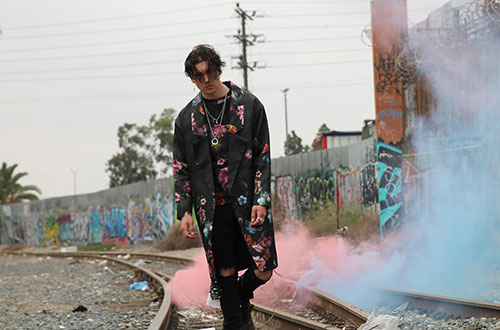 collections. With fashion acting as a conduit for culture, the show will also include tribal motifs, mixed with modern streetwear patterns that combine for new and fresh styles.
Fabrics: Much like their colour, materials will cross gender boundaries. The show will display sheer fabrics, lace and organza, much like Harry Styles’ Met Gala 2019 look.
Shapes: With athleisure and streetwear still much in style, menswear shapes will be slouchy for S/S ’20. Alongside urban looks, which will remain popular within the fast fashion world, tailoring is likely to become less defined and looser, with layering becoming key.
Pure Man also showcased industry’s finest menswear and unisex brands. These include:
Oren Kash: Known for pushing the norm of men’s traditional fashion, L.A. native Oren Kash launched his ostentatious ready-to-wear label in 2017. The brand does not shy from bold colors and prints which gives it a unique style. Its collection showcases casual pieces with high quality fabrications to its well- known detailed outerwear.
El Ganso: El Ganso, a Spanish brand which operates 160 stores around the world, creates practical and comfortable products that never go unnoticed. The brand’s collections offer a cosmopolitan look tinted with colors ranging from the American preppy to the Berlin style with a touch of British elegance.
Stetson: Founded in 1865, Stetson is known for creating the iconic cowboy hat which has become the cornerstone of the brand. Since then, Stetson has expanded its headwear offering and now offers everything from the classic western hat to trilbies, baseball caps and modern streetwear essentials.
You Don’t Want This Life: This urban streetwear brand is all about community. The You Don’t Want This Life family share a culture and mentality, valuing the hard work and creativity that make each of us individuals.
Oregion: Another new brand to be added to the Pure Man S/S ’20 line-up, Oregion aims to represent Hong Kong in the global fashion industry. This innovative and creative brand offers high-quality men’s and women’s bags and accessories to complement modern city life. Offering a range of colours, styles and design options, the brand offers something for each of its customer.
Brave Soul: Brave Soul is the core brand of UK-based Whispering Smith, a leading manufacturer of innovative fashion clothing for all major high street stores and e-tailers across the globe. Available at over 1500 stores across Europe, Brave Soul offers a huge range of fashionable clothing styles that also include street styles and cultures from cities across the world including a heritage line of British clothing.
Rupert & Buckley: Driven from the need to find socks in his university rowing team’s colors, James Buckley Thorp, creator of Rupert & Buckley bought a sock knitting machine to create what he needed which led to the formation of his socks business. Today, Rupert & Buckley has expanded into creating traditional British clothing for men and women. The brand also sponsors the Oxford and Cambridge boat race each year.
China’s textile industry in doldrums as demand products decline
"The Sino-US trade war has dealt a heavy blow to the Chinese economy which is on a continuous decline. The textile and garment industry is also facing rough weathers due to the closure of several production units across the country. As official statistics by China Customs reveal, China’s total import and export value in the first five months declined by 1.6 per cent from the previous year. Its exports to the United States declined by 8.4 per cent year-on-year, while imports fell by 29.6 per cent year-on-year."
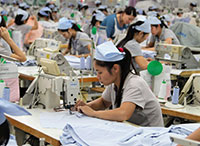 The Sino-US trade war has dealt a heavy blow to the Chinese economy which is on a continuous decline. The textile and garment industry is also facing rough weathers due to the closure of several production units across the country. As official statistics by China Customs reveal, China’s total import and export value in the first five months declined by 1.6 per cent from the previous year. Its exports to the United States declined by 8.4 per cent year-on-year, while imports fell by 29.6 per cent year-on-year. In May 2019, China’s total import and export value declined by 3.4 per cent. Of this, its imports declined by 8.5 per cent. The country’s exports however increased by 1.1 per cent compared with the same period last year.
China’s year-on-year increase in May exports was due to the rush to export before new US deadlines for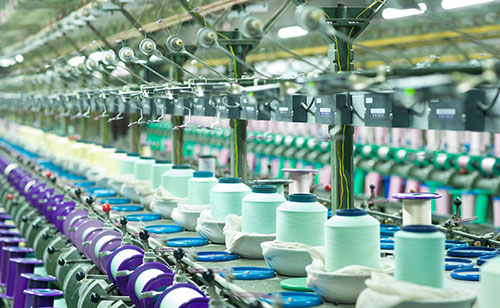 imposing new tariffs on $200 billion of Chinese goods. However, Xie Tian, a professor at the University of South Carolina’s Aiken School of Business states it would be difficult to maintain long-term growth of these exports as no country has the market and purchasing power of the United States, and no country can tolerate China’s surplus other than the United States.
High material prices and low demand impact textile growth
July and August is generally the textile industry’s offseason in China as most companies go on a vacation. However, this year this vacation has already begun for many garment factories. Large garment exporters along the coast have gone bankrupt as US buyers no longer purchase from China. Zhejiang Shaoxing Keqiao Textile City, China’s largest textile trading market, has closed around one-third of its enterprises. Textile companies are under pressure from two ends as the raw materials prices have increased while at the same time sales have been blocked. This uncertain outlook on trade has made manufacturers wary of taking new orders.
The impact of the Sino-US trade war on the cotton spinning industry chain has far surpassed industry estimates. In the first quarter of this year, China’s share of US apparel imports declined slightly with the proportion of many categories of Chinese clothing declining by double digits. These declines are further likely to accelerate after the increase in tariffs.
Low demand leads to increased inventory
A report by Capital Futures, a China-based research firm indicates demand for Chinese textile products continues to weaken with inventory of most enterprises increasing by over 50 per cent compared to the same period last year. The inventory of individual enterprises increased by 10-15 days’ sales compared with the same period last year, with some even exceeding 40 days.
The increase in cotton and yarn storage has made it impossible for some textile mills to save money to buy lint cotton. While a few small factories have stopped production, many are producing in shifts. In all, a pessimistic wave pervades the entire textile industry which is eagerly waiting for the sun to shine again.
Puma cuts down on emissions
German sportswear brand Puma is committed to reducing emissions from owned and operated facilities. The company will also aim at reducing its emissions coming from purchased goods and services.
Global warming is happening at a faster pace than previously anticipated. The fashion industry has a significant impact on the environment but rapid growth in global apparel and footwear production shows no signs of slowing. Companies like Puma are pursuing comprehensive strategies to decarbonise and do their part to prevent catastrophic climate change.
Globally there has been a huge momentum for the brand, which is making strong progress in the sports performance and sport style categories. Puma’s success comes against the backdrop of the athleisure trend that has gripped the sportswear market. While other companies flaunt performance and technology, Puma focuses on style that makes its products attractive to the casual dresser. Puma is looking at India as a key market of focus for growth and will be making big investments in the country to maintain its leadership position in the Indian sportswear market. Last year, Puma opened 30 more stores and the expansion would continue this year too. Puma currently has 365 stores in 125 cities across India.
Indian garment exports up 14 per cent
India’s garment exports rose 14.05 per cent in May 2019 compared to the same month last year. This follows a downturn in exports experienced in the last two or three years because of increased competition and high cost of exports from the country. After GST, demonetisation and other reforms, which made Indian products costlier, exports started declining. In 2018-19, exports dropped 3.43 per cent from 2017-18. But from October 2018, exports increased by 12 per cent. Exports grew by 4.45 per cent in April 2019 compared to the corresponding month of the previous year.
Factors which are in favor of India include China’s decision to exit the textile sector, Bangladesh’s labor becoming costly and Vietnam’s reaching a kind of plateau. These have made India an important destination once again. Despite Indian products being expensive by 10 to 15 per cent, buyers are still interested in sourcing from India. Exporters are optimistic that with support the industry can grow by eight per cent to ten per cent. In view of issues such as lower incentives and cost pressures in the industry, measures like increased rebate of state and central taxes and levies by 3.2 per cent for some items and 4.5 per cent for the other items were introduced.
India invites companies
India is looking at offering incentives to attract companies moving out of China amid the ongoing trade war with the US. Investments by Chinese companies can flow into smart phones and components manufacturing, consumer appliances, electric vehicles and parts, and daily use items like bed linen and kitchenware, 95 per cent of which are currently imported from China.
Financial incentives such as preferential tax rates and the tax holiday provided by Vietnam to lure companies are among measures being considered. Industries identified for incentives include electronics, consumer appliances, electric vehicles, footwear and toys. Other measures include setting up affordable industrial zones across India’s coastline and giving preference to local manufacturers in government procurement as an incentive to win over companies looking for an alternative production base.
The plan will help grow India’s manufacturing base and aid the Make in India initiative, which aims to boost manufacturing to 25 per cent of the economy by 2020. Doing that will help India narrow its huge trade deficit with China, its largest commercial partner. Economies, including Vietnam and Malaysia, have benefited from businesses trying to sidestep tariffs, while India has largely missed out on any investment gains. India’s effort is part of a larger plan to cut reliance on imports, while boosting exports.
Handmade clothing is trending in the West
Techniques from embroidery to cross-stitching are infiltrating legitimate fashion. Domesticity, whether it’s in a packaged meal kit or a pre-made hand-knit, is all the rage. People are appreciative of something that is handmade. The decade of the 70s was smitten with crafts but interest in them dwindled in the ’80s and ’90s.
At European fashion houses like Christian Dior and Loewe and American brands like Altuzarra and Ulla Johnson, techniques like crochet, macramé and knitting are dominant themes. Designers are identifying strongly with handwork, the social, collaborative, problem-solving aspect of it—of being literally hands-on. Fast fashion has pushed them to look to ways to make clothes that are not copyable by a machine, that are unique in their imperfections, as well. Fashion has fetishized the handmade ever since the sewing machine enabled mass production and conferred special status on anything handcrafted; that’s why the mystique of haute couture—which can employ hand-sewing, embroidery and appliqué—endures.
Handicrafts are seen as a way to combat anxieties about technology. Like yoga or meditation, needlework’s repetitive action has been shown to induce a relaxed state, and can lower heart rate and blood pressure. Designers have an added incentive to produce handmade items. Mass brands can’t easily imitate them.
Dolce & Gabbana become the first luxe brand to extend size range
Italian luxury fashion house, Dolce & Gabbana are the first designer brand to include sizes up to UK 22. All designer brands cater to women who wear up to size UK 16, so the brand, helmed by designers Domenico Dolce and Stefano Gabbana, is pushing boundaries and moving towards inclusivity.
D&G has always celebrated women and femininity. Not only is it extending its size range, but the fashion house will also feature plus-size models in their future campaigns. The Italian brand has been known to cast women of all sizes over the past few years. Several notable cury women walked for the brand, including actor Monica Bellucci and models Ashely Graham and Tess McMillan. Along with this news, Dolce & Gabbana vowed to continue working with plus-sized models and cast them in future advertising campaigns and shows.











