


FW
Indian women’s wear has great export potential: CII
CII’s recent study ‘Indian Exports: The Next Trajectory - Mapping Products and Destinations; has listed women’s wear as a product category to focus on to help increase Indian exports. Other products highlighted for their export potential in the study include furniture and drugs. The CII report suggests developing export strategies at a state level to tailor the strategy to the specific region. The study also suggested that domestic production must be increased whilst targeted promotions are simultaneously rolled out overseas. This sentiment is echoed by the government’s “Make in India” drive which calls for an increase in domestic production, notably for textiles and garments, in order to reduce imports and increase exports.
This export strategy assumes greater significance given a rapidly changing global trade landscape, shifting of global value chains and new free trade agreements, including mega trade agreements.
Meridian opens yarn dyeing plant in the US
Meridian Specialty Yarn has opened a yarn and fiber dyeing plant in the US. This is the first such plant to be built in the United States in over two decades and the only textile manufacturing plant of this type in North America. The plant offers a broad number of traditional capabilities, from chemical treatments to dyeing to a combination of the two. It also offers new capabilities that have the potential to revolutionize some aspects of the US textile industry. It utilizes next-generation technology, machines, controls and robotics. The facility now also provides the only tow-dyeing capacity in the United States. Until this summer, all producer-dyed acrylic tow was imported from outside US borders. In this and other ways, Meridian is opening the door to a new world of possibilities for other companies within the US textile supply chain.
The technology gives Meridian the capability to process every dyeable fiber in various forms, including yarn, tow and top. This is very unusual in the dyed yarn world. It enables chemically treating or dyeing all fiber substrates, ranging from cellulosic and animal fibers, to polyester, nylon and dyable aramids. The company is now in a position to source from all over the world, from every type of textile fiber, supporting a wide array of end uses.
Australian wool faces lower demand
The Australian wool market is starting the season with nervousness. Chinese textile mills have been scaling down buying orders and processing activities since April. Domestic shoppers in China, who consume half that country’s processed wool, are spending less, and European and North American demand has also slowed this year leaving mounting stocks of unsold product in wool’s pipeline.
At the very least, wool growers should expect a volatile year ahead. Woolen mills have adopted hand-to-mouth buying strategies to avoid being caught with too much raw stock or processed textile lines, while tightening supplies from Australia’s shrinking flock would exacerbate the trade’s price volatility and supply pinch points.
Today’s Australian wool clip is just one third its size in 1990 while the national sheep flock is the smallest since the mid 1920s. Wool’s longest running price surge since the 1980s has finally encountered consumer resistance and slower buying orders in May and June. Consumer resistance has coincided with economic uncertainty in Europe caused by Brexit and a slowing German economy, and processors had grown increasingly wary of the China-US trade war’s consequences. Facing a drought, the wool industry’s biggest problems in the years ahead would revolve around longer term wool supply. Average yield is at its lowest point in eight years because of the drought’s impact on fleece quality.
Connect Fashion Global initiative makes circularity smoother
The Connect Fashion Global initiative aims at solving circularity’s transparency challenge by creating digital infrastructure to enable data sharing across the apparel industry’s value chain. The vision is for brands to attach a physical identifier to each garment, which will link to its digital identity or twin on the web, when scanned. This will include detailed information on an item’s bill of materials, authenticity, product details, dye process, manufacturing location, recycling instructions and anything else a brand might want to communicate down the value chain. A garment will be scanned during its life, creating a digital passport or record of its movement along its lifecycle.
The project’s founding partners include: Target, H&M, Microsoft, Waste Management and PVH Corp. Access to an item’s digital twin would reduce the time it takes to renew a product and get it available for sale. In other words, resale will be cheaper and easier than it is now with the help of an end to end connected system.
From growing re-commerce market to innovative new approaches to prototyping, textile dyeing, material selection and recycling, the circular opportunity for apparel is beginning to take shape. However, despite improvements across the apparel value chain, a truly circular system will require alignment and connection between these disparate projects.
Maredamare, the Italian beachwear event sees over 250 brands
Italy hosted beachwear event Maredamare from July 20 to 22, 2019. This is a beachwear, accessories and underwear trade fair. It involved the participation of the best brands of beachwear, swimwear, kaftans, accessories, home wear and underwear. Each edition the trade fair exhibits brands from the mid-high and high-end segment. It is the only Italian salon in the beachwear and underwear sector. Different types of pre-set booths were available to satisfy every need, from the pre-equipped basic stands to the special stands for small businesses, young designers and accessories. This edition had over 250 brands, of which 60 were new entries. There were bar areas, shows and hidden courtyards for people who together represent the beach world.
Maredamare’s mission is the development of beachwear and underwear sector in the Italian market. Maredamare has always been sensitive to environmental protection. This year it decided to contribute to the preservation of Mediterranean species. The show included training workshops held by professionals of the sector, and a first-class fashion show schedule: collective fashion shows and personal fashion shows. In this edition, the collaboration between Maredamare and Nilit Fibers was renewed with a dedicated fashion show that marked the launch of the experimental Sweet Sour collection, designed by Isabella Storani and realised with fabrics made with Sensil.
IFAI expo in October
Industrial Fabrics Association International (IFAI) expo will be held in the US, from October 1 to 4, 2019. This will exhibit industrial and specialty textiles. IFAI expo serves all aspects of the industry, and highlights segments targeted to specific markets including specialty fabrics, advanced textiles, smart fabrics, shade and weather protection, military, marine, geosynthetics, and fabrics structures, among other markets. Numerous education and networking opportunities await attendees on and off the show floor including focused, deep-dive classroom sessions; campfire sessions; and interactive networking designed to help attendees connect and thrive.
The show floor will feature a diverse array of exhibitors as well as equipment workshops and education demonstrations. The Advanced Textiles Conference will focus on aerospace, medical, safety and protective, smart fabrics and fabric advancements. IFAI will again recognize new and innovative products and services. The annual International Achievement Awards - judged by industry experts, editors, architects, educators and design professionals — will honor innovation, technical skill and design excellence. In addition, the four Student Design Competitions sponsored by four IFAI divisions will recognize student talent in advanced textiles, awning and canopy, fabric graphics, and fabric structures. Among other attractions are the creative costuming workshop, one of the world’s largest laundry facilities, and central shops, the engineering services location where skilled craftspeople build set pieces and attraction vehicles.
Dip in Lakshmi Maxhine Works quarterly income
Lakshmi Machine Works’ total income was Rs 480.55 crores in the period ended June 30, 2019, as compared to Rs 618.54 crores in the period ended March 31, 2019. Net profit was Rs 10.47 crores for the period ended June 30, 2019, as against Rs 35.68 crores for the period ended March 31, 2019. EPS was Rs 9.80 for the period ended June 30, 2019, as compared to Rs 33.40 for the period ended March 31, 2019.
Total income was Rs 480.55 crores during the period ended June 30, 2019, as compared to Rs 668.71 crores during the period ended June 30, 2018. Net profit was Rs 10.47 crores for the period ended June 30, 2019, as against Rs 49.67 crores for the period ended June 30, 2018. EPS was Rs 9.80 for the period ended June 30, 2019, as compared to Rs 45.35 for the period ended June 30, 2018.
This machinery manufacturer has launched a slew of new products, including the new draw frame, higher capacity carding machines, longer ring frames, and new compact systems. The new Drawframe LDF3, Card LC636, Ringframe LR9/SX and the new Compact System SPINPACT have been well accepted in global markets.
Asia is a big market for Bangladesh apparels
India, China and Japan are major apparel export destinations for Bangladesh.The country’s garment exports to Japan are up 28.90 per cent year on year. The reasons for the continuous rise in garment exports to Japan are its China Plus One strategy adopted in 2008 and its zero-duty benefit to Bangladesh as a least developed country. Japan is keen to reduce its dependence on China. The China plus one policy promotes shifting of production from China to other nations such as Bangladesh. Currently, nearly 80 per cent of the demand for apparel by the Japanese is met by Chinese manufacturers. Similarly, garment exports to India are up 79.09 per cent year on year. Since 2011 Bangladesh has been enjoying duty-free benefits in India, which has prompted international retailers that have a presence in India to source directly from Bangladesh for their stores.
Garment exports from Bangladesh to China are up 29.33 per cent year on year. China, the largest garment supplier worldwide, has been turning into a major export destination for Bangladesh as it looks to shift to production of more sophisticated and heavy items. Furthermore, Bangladesh exporters enjoy duty-free access for 4,721 products including garments.
Asian markets are closer to Bangladesh geographically, which ensures shorter lead time – crucial in the era of fast fashion.
Shipments of spinning machinery rise while knitting machinery decline ’18
"The latest results of the 41st annual International Textile Machinery Shipment Statistics (ITMSS) shows, there was an increase 1.5 per cent and 13 per cent in global shipment of new short-staple spindles and open-end rotors to the world spinning industry in 2018. Similarly, shipment of draw-texturing spindles increased 50 per cent while deliveries of shuttle-less looms improved 39 per cent."
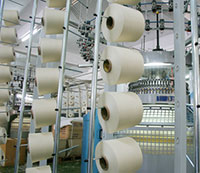 The latest results of the 41st annual International Textile Machinery Shipment Statistics (ITMSS) shows, there was an increase 1.5 per cent and 13 per cent in global shipment of new short-staple spindles and open-end rotors to the world spinning industry in 2018. Similarly, shipment of draw-texturing spindles increased 50 per cent while deliveries of shuttle-less looms improved 39 per cent. However, shipments of long-staple spindles, circular knitting machines, and electronic flat knitting machines decreased by 27 per cent, 4 per cent and 20 per cent, respectively.
The ITMSS report was released in June by the International Textile Manufacturers Federation (ITMF). The report covers six segments of textile machinery, namely spinning, draw-texturing, weaving, large diameter circular knitting, flat knitting and finishing. The 2018 survey has been compiled in cooperation with more than 200 textile machinery manufacturers representing a comprehensive measure of world production.
Circular Knitting Machinery: Shipment of large diameter circular knitting machines declined by 4 per cent to 26,300 units in 2018. Asia and Oceania emerged as the world’s leading investors in this category with 85 per cent. Amongst Asia, China emerged as the largest investor with 48 per cent of the worldwide deliveries to this region.
Flat Knitting Machinery: The shipment of electronic flat knitting machines decreased by 20 per cent to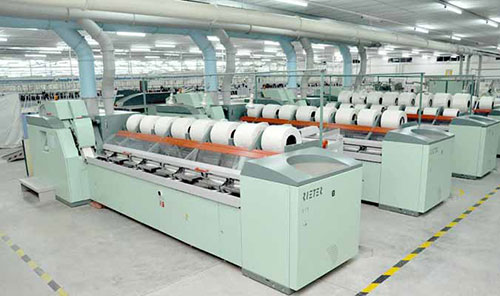 around 160,000 machines in 2018. Asia & Oceania emerged as the major exporters of this category with a share of 95 per cent of world shipments. Here too, China remained the world’s largest investor with a global share of 86 per cent of worldwide shipments despite a decrease in investments from 154,850 units to 122,550 units.
Spinning Machinery: Spinning machinery shipment increased for the second consecutive year, with the total number of shipped short-staple spindles increasing to 126,000 units, leveling off at 8.66 million. Around 92 per cent of these new short-staple spindles were shipped to Asia & Oceania with shipments to Korea, Turkey, Vietnam and Egypt increasing by of 834 per cent, 306 per cent, 290 per cent and 285 per cent respectively.
Texturing Machinery: Similarly, shipment of single heater draw-texturing spindles increased 48 per cent to 22,800 in 2018. China and Japan were the main investors in this segment with a share of 68% and 11% of global deliveries, respectively. The global shipments of double heater draw-texturing spindles by +50 per cent to about 490’000 spindles. Of this, Asia’s share increased to 93 per cent with China accounting for 68 per cent of global shipments.
Weaving Machinery: Shipment of shuttle-less looms increased 39 per cent to 133,500 units. Thereby, shipments of air-jet and water-jet looms increased by 21 per cent to 32,750 and +91 per cent to 69,240, respectively. Deliveries of rapier/projectile looms declined by 5 per cent to 31,560.
The main destination for shuttle-less looms in 2018 was Asia & Oceania with 93 per cent of all worldwide deliveries. The main investors included China and India in all three categories.
Finishing Machinery: In the fabrics continuous segment, shipments of Washing (stand-alone), Singeing Line, Relax Dryers/Tumblers, Stenters, and Sanforizers/Compacters increased by 58 per cent, 20 per cent, 9 per cent, 3 per cent, and 1 per cent, respectively. In the category ‘fabrics discontinuous’, shipments of Air-jet dyeing machines increased by 16% and deliveries of Overflow dyeing and Jigger dyeing/Beam dyeing machines fell by 7 per cent and 19 per cent respectively.
Philippines apparel exports down 16 per cent
Philippines’ apparel exports decreased 16 per cent last year. The entire garment industry, including shoes and travel goods, is estimated to employ 2,50,000 people. The industry is labor-intensive. Right now it’s agitated over a bill which seeks to overhaul the country’s incentive regime to investors. Small firms fear they would be the first to succumb under the bill. For a company with 1,500 workers and below, the impact is expected to be an immediate shutdown, within six months to a year, since their margins are small. For those producing mid-sized products, like jeans, the displacement of workers is expected to be 50 per cent in 12 months to18 months. These are medium-sized firms employing 3,000 to 5,000 per factory. For firms producing higher end products, like suits, the displacement threshold is expected to be 30 per cent to 32 per cent in 12 months to 18 months.
The US accounts for 60 per cent of the Philippines’ garment exports. The rest are sold to the EU and Asian countries. The country lost 70 per cent of its market over 15 years due to a number of reasons, primarily the removal of the quota system that led buyers to source from other countries offering the same products at half the price.











