


FW
Global luxury apparel market growing at six per cent
The global luxury apparel market is growing at 6.75 per cent. Fashion designers are experimenting with women’s fashion in material, design, and pallet. Thus the female segment dominates not only the global fashion market but also the luxury apparel market. Women in entertainment, modeling, and sports prefer premium fabric clothing made of satin, lace, fur, and polyester that provides them comfort.
Cotton fabric is one of the main drivers of the global luxury apparel market, especially pure cotton, due to the kind of weave, namely twill and plain weave, utilized. Users all over the world demand cotton dresses, shirts, and tops due to low maintenance, durability, and cooling capability. Leather is the second highest growing material in the luxury apparels market.
North America has a significant market share in luxury apparel, followed by Europe. The growing attraction of a luxury lifestyle, high purchasing power, and the influence of celebrity endorsement are driving the market in North America. The Asia-Pacific region is also estimated to witness significant growth. However, value-added taxes imposed on luxury apparel and the high dominance of key players are restraining the market growth in developing economies. The high cost of raw materials is also hampering the luxury apparel market growth.
Gap net sales down two per cent
For the first quarter Gap net sales were down two per cent compared to the first quarter of the previous year. Comparable sales at Gap were down 10 per cent for the quarter versus down four per cent the same time last year.
Following its disappointing 2019 first quarter earnings, Gap is launching a children’s apparel-focused plan to turn the business around. Gap’s push into more children’s-focused marketing is a strategic one for the brand, considering the growth of the children’s clothing market. Gap is reinvesting in marketing, and its children’s and baby business, with a strong back-to-school push later this year.
Gap has been struggling to find its identity over the past few years. It needs to do the hard work of defining its own core message. While the brand has been known as an iconic brand and advertiser over the last 25 years, it has to work harder today to connect with children and their parents in its marketing. There has been a lack of innovation from the brand in terms of product, especially a time when new direct-to-consumer brands are taking over and fast fashion companies churn out new trends weekly. In a world where fashion and trends are rapidly evolving, the clothing in Gap stores today is much the same as what it was ten or 20 years ago.
Menswear becomes smart with new design and color trends
"Marian Park, Fashion Editor, WGSN sets out key trends for menswear for the season. As per Park trends are full of contradictions. While tailoring is slouchy, streetwear is refined. The continuous adoption of new trends is creating a smart and casual menswear that is not only versatile but also of utmost value to consumers."
 Marian Park, Fashion Editor, WGSN sets out key trends for menswear for the season. As per Park trends are full of contradictions. While tailoring is slouchy, streetwear is refined. The continuous adoption of new trends is creating a smart and casual menswear that is not only versatile but also of utmost value to consumers.
The key menswear prints, colors and products for S/S 2020 include: Focus on emotional colors: Colors for S/S 2020 collection of menswear are shifting from the millennial pink and fluorescent green towards a botanical garden green for garments with a raw or unfinished appearance or organic textures. Along with this, a richer “heated pink” shade is gaining prominence as it blends well for cut-and-sew tops as an “easygoing addition for laid back denim looks.”
The overall color palette is light and bright. As bright yellow shade brightens an usually pale summer utility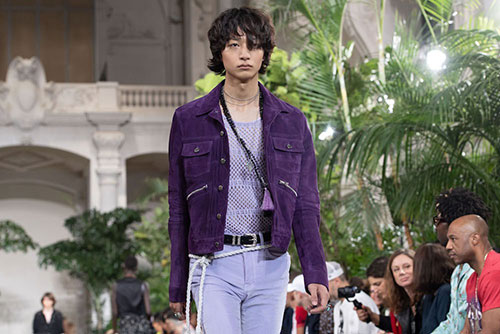 jacket, lilac is emerging as a complementary color to denim blues, yellow and tobacco.
Tie-dye prints emerge most preferred
Tie-dye print is emerging as the most preferred print for all events ranging from catwalks to street style. The print will continue to evolve as it offers brands an opportunity to explore sustainable dye ingredients that add a strong selling point. For those retailers who have exploited the tie-dye prints to their full extends painterly prints prove to be a viable alternative. However, for S/S 2020 Park says the importance of the print is amplified by the growing prep trend, particularly colorful table cloth checks.
Styles in vogue
Cargo pants, which increased by 25 per cent during the S/S 2019, is picking up traction for next spring, mainly as it aligns with several overarching themes influencing men’s fashion. These pants can be fashioned with premium structured materials or with bold pockets and volume.
Demand for light and practical outerwear is on the upswing. The boxy jacket is being considered to be a viable alternative to streetwear’s bomber jacket. It’s simple and practical shape is easy to style for casual looks. The anorak also continues to have commercial success, as consumers understand it as a practical and stylish investment. The piece can look formal with traditional checks, or festival-ready in semi-sheer fabrication. Here, Park noted, brands have an opportunity to tell a sustainable story through the use of recycled polyester.
The resort shirt is gaining popularity due to its relaxed silhouette. The shirt is well-patterned with contrast colors. The volume T-Shirt with boxy sleeves also lives on, thanks in part to its ability to work alongside other “generously cut” items like relaxed jeans. Polos and rugby shirts are also important, Park said, serving as a baseline for the emerging prep trend.
As tailored clothes are making a comeback against readymade clothes, young consumers are warming up to the idea of summer occasion wear, especially styles designed for a casual end use. This is resulting in a relaxed approach to structure with slouchier leg and blazer options.
Cotton yarn exports from India decline during Apr-June 2019
The total export of cotton yarn from April 2019-June 2019 declined by 34.6 per cent to US$696 million from US$ 1063 million recorded during the corresponding period last year. Of this, the export in June 2019 declined by 50.1 per cent to US$188 million from US$ 378 million in June 2018.
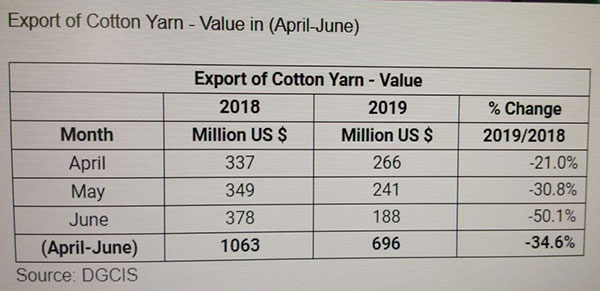
Similarly export in May 2019 declined by 30.8 per cent to US$ 241 million from US$ 349 million recorded in May 2018. The exports in April 2019 declined by 21.0 per cent to US$ 266 million from US$ 337 million recorded in April 2018.
Gucci sales report slower than expected growth
Gucci is planning to undertake more marketing campaigns, including in the United States, in the second half of the year. Sales rose more slowly than expected in the second quarter, taking the shine off a jump in profit margins at the Italian fashion label which contributes the bulk of revenue and profit at luxury group Kering.
The brand is at a disadvantage due to a high comparison base but the slowdown, while expected, comes just as sales growth at rivals including LVMH's Louis Vuitton and Christian Dior brands leapt ahead of forecasts in the period. Gucci's comparable sales expanded 12.7 per cent from April to June, missing expectations for 14 to 15 per cent growth. A weak performance in the United States, linked partly to a drop in Chinese visitors there, dragged on Gucci's sales and that of other Kering labels, which include Saint Laurent, the group's Financial Director Jean-Marc Duplaix said.
The label is still converting stores to its rococco new look, which has helped boost sales by the square metre in the shops it has already redesigned, and shaken up its product and price mix in recent years. This has helped drive up margins and operating profits at Gucci proved a bright spot in the second quarter, reaching 40.6 per cent at the end of June and already exceeding medium-term goals set out a year ago.
Textile waste almost a mountain over the years
Textile waste has increased by a massive 811 per cent from 1960 to 2015, says Retail Dive. The majority of this waste, approximately 66 per cent, is being dumped in landfills. Plastics show the largest increase in waste since 1960, a colossal 8,746 per cent. Rubber and leather, common materials used in footwear and clothing, have also shown a significant increase at 361 per cent.
The mounting problem of textile waste is beginning to be quantified in scientific research. Across the globe consumers now purchase more than 80 billion pieces of new clothing each year, with an increasing amount ending up in landfills.
Last year, Burberry came under fire after it was unveiled that the company had burnt millions of dollars worth of unsold stock. It has since announced that it will put an end to this process, in addition to no longer using real fur and committing to becoming carbon neutral by 2022. Nike has launched its circular design guide in order to promote sustainability in the industry and address the growing impact of climate change. Uniqlo parent Fast Retailing has decided to cut down on single use plastic by 85 per cent by 2020. Zara plans to use 100 per cent sustainable fabrics by 2025.
Textile industry uses toxic chemicals
Apparel brands often fail to disclose the chemicals they use in their manufacturing. They have no publicly-available policies about their use of toxic chemicals.
Toxic chemicals in textile manufacturing are bad for the planet and workers. And sometimes they remain in the fabric when sold, so they could be harming the end consumer as well. If not properly managed, these chemicals can end up in rivers and the oceans, harming marine ecosystems and migrating to drinking water. About 20 per cent of overall industrial water pollution can be attributed to textile manufacturing. Synthetic indigo is often used to dye denim jeans blue, but the chemical cocktail used often includes formaldehyde, which is toxic to the environment and people. In China an estimated 70 per cent of rivers and lakes are contaminated by billions of gallons of wastewater from the textile and dye industry.
Apparel manufacturing is a dirty business. More than 8,000 chemicals are used throughout the textile-making process, from pesticides in growing cotton and other fibers, to bleaching and dying yarns, to washing fabrics, to printing patterns. This amounts to an estimated 43 million tons of chemicals every year. Heavy metals used in dyeing can be carcinogenic and damaging to the nervous system. Azo dyes, the most frequently used dyes, can release carcinogenic chemicals into the air during the dyeing process.
Milliken joins Professional Clothing Industry Association Worldwide
Milliken has joined the Professional Clothing Industry Association Worldwide (PCIAW®), an association created to strengthen the influence of clothing industry through collaborative leadership and strategic advocacy. Milliken boasts of a diverse textiles portfolio, including a range of apparel fabrics that serve various industries like workwear, protective, military and outdoor markets.
The 2020 PCIAW Summit and Awards, to be held in London, will be in partnership with Milliken & Company. The event brings together industry professionals from around the world in corporate wear, workwear and personal protective equipment (PPE) to address emerging industry topics and current affairs. With the U.S. serving as the host country, Milliken will help to preside over one of the largest gatherings of global apparel executives and influencers, and further industry collaboration.
Driven by award-winning research and design capabilities, Milliken’s global textile portfolio includes leading brands like the respected Westex by Milliken flame resistant fabrics and the recently acquired Polartec business, among other superior fabrics for protective, workwear, fire service, military, retail and outdoor apparel.
Milliken’s R&D capabilities uniquely positions them to collaborate with customers to solve their complex textile needs, and more than 154 years of textile knowledge underpins its reputation as one of the most cutting-edge fabric manufacturers. In addition, Milliken textiles incorporate intentional sustainability measures, including responsible resource management and landfill diversion, to create responsible textiles that help create a positive impact on the world.
Milan Fashion Week adds five new runway shows
Milan Fashion Week has added five new houses to its official calendar. The next season, scheduled from September 17 to 23, 2019 will include Milan runway debuts for German powerhouse Boss; UK label Peter Pilotto; Simona Marziali's MRZ, the 2018 winner of Who Is On Next; DROMe by Marianna Rosati; and Shuting Qiu, a Chinese-born designer and graduate of Antwerp Royal Academy.
In all, there will be 58 major catwalks shows or proper presentations in Milan this season, debuting with the opening of the Milano Moda Donna Fashion Hub. The calendar, which was released by the Camera della Moda, Italian fashion’s governing body, also underlines the continually growing importance of co-ed shows. There are seven on this autumn’s schedule including Atsushi Nakashima, Boss, Bottega Veneta, Fila, GCDS, Gucci and Missoni.
Indian exporters look to hike apparel exports to Iran
Indian apparel exporters are exploring opportunities in Iran. They see Iran as a good market for knitwear exports, especially polyester garments. India is one of four countries allowed to trade with Iran.
Meanwhile Indian exporters have expressed their concern over the plan to withdraw the Merchandise Exports from India Scheme. This is an incentive scheme to promote exports, and provides duty credit scrip to compensate the duty paid by the exporters, but has been challenged by countries like the US at the World Trade Organization. Exporters hope an alternative scheme is devised. The country faces competition from Bangladesh and Sri Lanka which have competitive manufacturing costs and enjoy duty free access to major markets like the EU. So some garment units have set up units in Ethiopia due to zero duty access for Ethiopian exports in the US and the EU and due to incentives being offered for investments there.
India’s apparel exports fell by 1.2 per cent in fiscal year ’19 from fiscal ’18, which in turn was four per cent lower than the previous year. The share of apparel exports in the country’s total textile exports fell from 51 per cent in fiscal ’17 to 45 per cent in fiscal ’19.











