


FW
Fiber counterfeiting harms brand image
Companies face significant risk to brand reputation and unexpected product recall costs due to fiber counterfeiting. Many top apparel brands have set 100 per cent sustainable fiber goals to be achieved within the next three to five years, says TextileGenesis. However, for the majority of apparel brands, supply chain transparency is limited to Tier I or II suppliers. Only 10 of the top 250 apparel brands can identify Tier IV and Tier V fiber suppliers for their apparel collections.
The question is whether sustainable fibers targets can be reached in the absence of transparency up to the origin of the fiber itself. No credible sustainability journey or goal is possible without underpinning it with transparency. Transparency also reduces the business and compliance risks related to counterfeiting of sustainable fibers. Up to 30 per cent of sustainable fibers in the apparel supply chain can be counterfeited (at fiber, yarn or fabric stage).
Although the transparency debate has primarily focused on compliance, risk elimination and supporting sustainability initiatives, it can also positively contribute to business in terms of price premium and consumer loyalty. Consumers are willing to reward brands with a higher premium when they demonstrate fair and sustainable supply chains.
Ethiopia to host ITME Africa in February 2020
ITME Africa 2020 will be held in Ethiopia from February 14 to 16, 2020. The exhibition is expected to focus on business opportunities in the textile sector across the whole of Africa, thereby creating new market opportunities for the textile and textile engineering industries. It is expected to attract 220 exhibitors with country pavilions from India, China, Italy, Switzerland, Turkey and participation from additional countries including South Africa, United Kingdom, Austria, Belgium, Egypt, Ethiopia and Ghana. Other activities planned concurrently during the exhibition are business to business meetings, technical and investment seminars and a business financial solution seminar.
ITME Africa 2020 is deemed to be more than a routine exhibition. It proposes to bring to the table complete solutions to textile industry development on the continent through affordable technology, international exposure and skill development through seminars and conferences, confluence of business houses, investment opportunities, joint ventures, access to finance and networking platforms with technocrats and educational institutes. Overall, it is expected to pave the way for a wave of knowledge, progress, growth and prosperity.
Meanwhile Ghana has invited Indian firms to collaborate with its textile companies and take advantage of the numerous program introduced by Ghana to industrialise the country.
China’s Dalian garment fair gets positive response from industry
The Dalian garment and textile fair was held in China from September 7 to 9, 2019. It attracted over 800 enterprises from countries like the US, Denmark, Canada and Japan. This high-level fair saw both purchase agents and buyers interact especially at the matchmaking conference between domestic and overseas purchasing agents and exhibitors.
This fair in the Dalian region of China has strengthened exchanges and cooperation with other countries in the field of textiles and apparel over the past 30 years, promoting the upgrading and development of China's textile and apparel industry and building a platform for foreign economic and trade cooperation. In recent years, Dalian’s textile and apparel enterprises have made outstanding achievements in high-end customization, intelligent manufacturing, e-commerce, overseas cooperation and responsible development. It has become an important channel for domestic enterprises and brands to enter the world as well as an important window for international brands to connect with the northeast Asian market.
China is the world’s largest garment and textile production country as well as the largest garment and textile trade country. In 2018, China’s textile and garment exports were up 3.7 per cent year-on-year and imports were up 6.4 per cent year-on-year.
British Fashion Council launches Institute of Positive Fashion
The British Fashion Council (BFC) plans to launch the Institute of Positive Fashion (IPF) to create an industry blueprint by bringing together expertise from different areas to help brands in the industry navigate an often confusing to understand topic and kick-start a much-need comprehensive step-change. Informed by research, expert opinion, industry insights and the significant industry experience of individual businesses and organisations, the power of collective effort will amplify independent activity.
The IPF will galvanise opinion and industry best practice across the fashion industry. It will accelerate progress made in all areas of sustainability that will be impactful and lasting, by creating educational programmes and campaigns aimed at both industry and the public. The aim being to catalyse and expedite change. The IPF ambition has been pushed forward by the Positive Fashion Committee since early 2019. The next quarter will see further development of the programme, that will build on the existing resources of the Positive Fashion Committee.
The BFC takes its role in shaping a truly sustainable industry for future generations seriously. As we build momentum we encourage and welcome participation and invite all parties to register their interest with us – This email address is being protected from spambots. You need JavaScript enabled to view it.
To coincide with London Fashion Week, DHL, in association with the BFC, have commissioned a White Paper highlighting the importance of sustainability in the fashion industry. The paper provides businesses with easy to follow recommendations ensuring positive fashion remains at the heart of the industry. The White Paper will be launched on the British Fashion Council’s website on Friday 13th September.
London Fashion Week to include events curated by BFC
For the first time, London Fashion Week will include activities and events curated by the BFC in partnership with key retailers, brands, partners and cultural institutions to engage communities throughout the capital to get involved and capitalise on the success of this global event to reach new audiences.
The BFC has curated a schedule of over 66 brands, 74 stores and 170 events all taking place between Friday 13th and Tuesday 17th September. This schedule is an extension of London Fashion Week, which for the very first time will open its doors to the public at the main hub, The Store X, 180 Strand.
It aims to inspire the public and makes #LFW a cultural city-wide celebration that will introduce fashion to a wider pool of people who may not have previously engaged with it, driving footfall into the capital, increase revenue opportunities for all businesses and celebrating the creativity, diversity and openness that makes the capital so unique.
33rd edition of Collection Premiere Moscow ends on a successful note
The 33rd edition of CPM – Collection Premiere Moscow ended on a successful note on September 06, 2019. Around 1,300 brands from 30 countries exhibited their collections for the spring/summer 2020 season in 16 halls of the Expocentre exhibition grounds. The exhibition attracted around 21,300 professional visitors from 50 countries with a focus on Europe and South Asia.
International exhibitors and professional buyers experienced an impressive meet and greet with Russian VIPs at the opening ceremony on 3 September 2019: welcoming the tradeshow visitors, Russian theatre and film star Maksim Averin heralded in the new season of ordering, catwalk shows and business forums. He emphasised the impressive size of the tradeshow and modelled in the catwalk show finale at the end of the opening event. Also making an appearance on the catwalk were the five winners of the World Fashion Channel – New Model Show project in cooperation with CPM.
An important premiere in the accompanying line-up was ‘Shop & Retail Solutions’ with a focus on shopfitting, retail fittings, retail marketing and technologies to support the development of the fashion retail trade. On 3 September lectures and workshops on this topic were organised by the online platform ‘retail.ru’. Speakers included Anna Lebedewa (Popai Russia), Marina Kazakova (Woodi Bureau), Michail Gusmanov (NLT), Konstantin Nosov (OZON) and other experts.
The Russian Fashion Retail Forum presented best innovations and technologies for the fashion retail sector. There was a particular focus on the challenges of the digital transformation of Russia’s fashion retail sector. From the current market situation to the most important development phases that require the introduction of digital technologies, all relevant topics were covered. Leading top managers and experts from RFRF co-organisers like ITMM GmbH, Fashion Consulting Group and PROfashion Consulting also presented their current analyses and forecasts for the coming season, as well as detailed presentations on the digitalisation of the fashion retail sector and how to prepare for Industry 4.0.
Countries vie to be the next apparel manufacturing destination after China
"With both Bangladesh and Vietnam registering steady export growth, competition between the two countries to become the next manufacturing destination alongside China is becoming intense. Statistics reveal, Bangladesh is the second largest and Vietnam the third largest apparel exporter in the world. While Bangladesh is known for its ability to manufacture low-end items at the cheapest rate with acceptable quality, Vietnam is more value-oriented with strong backward linkage and more educated workforce."
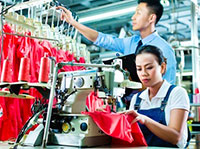 With both Bangladesh and Vietnam registering steady export growth, competition between the two countries to become the next manufacturing destination alongside China is becoming intense. Statistics reveal, Bangladesh is the second largest and Vietnam the third largest apparel exporter in the world. While Bangladesh is known for its ability to manufacture low-end items at the cheapest rate with acceptable quality, Vietnam is more value-oriented with strong backward linkage and more educated workforce.
Investments in the energy sectors trigger price war One of the major factors driving growth of industries in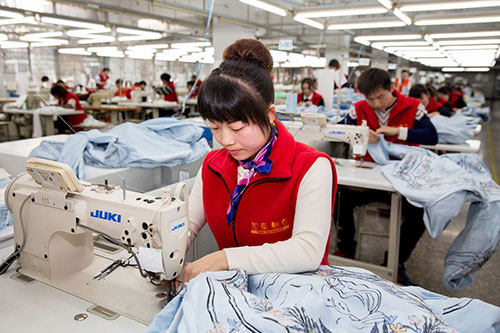 Bangladesh is the availability and price of its electricity. Most industries in Bangladesh produce their own energy through captive power plants. Though the sector is currently suffering due to a shortage of gas supply, it is soon set to revive as huge projects including 2.4-gigawatt (GW) Rooppur Nuclear Power Plant are being developed by the government. These power plants will increase the generation capacity of the country significantly which is at approximate 16,000 MW now.
Just like Bangladesh, Vietnam government is also investing billions in its energy sector has set out $148 billion worth of investments to increase power generation and develop electricity network, with $40 billion to be spent in the period 2016-2020, of which 75 percent is to be directed to power sources and 25 percent to grid development.
These initiatives have also triggered a price war between them. While Vietnam offers the lowest gas price compared to other garments manufacturing countries, Bangladesh has regulated its gas price three times in the last decade as a result the utility cost of the industries rose higher than Vietnam by some margin.
Bangladesh offers low cost; Vietnam shorter lead times
Statistics from McKinsey apparel CPO survey 2017, reveal, Bangladesh is likely to be the top country over the next five years in garments export. The market is expected to grow annually at 7.0 per cent (CAGR 2019-2023). Vietnam market is expected to grow annually by 8.8 per cent (CAGR 2019-2023). CPOs mainly preferred Bangladesh due to its ability to produce bulk amounts at a cheap rate. However, as the wages increased in the last five years now.
One of the key factors that buyers are concerned about is the shipping time. Although the shipping time of these two countries are almost similar, Vietnam is quicker than Bangladesh which still has to depend on imported cotton, yarn and fabrics (specially woven) which adds to its lead time. The average lead time from Bangladesh to EU and USA ranges from 90 to 120 days whereas from Vietnam it is 50 to 60 days which clearly puts Vietnam ahead.
Sustainability Issues
As stakeholders are increasingly emphasising on sustainable practices, sustainability is becoming a major concern as an exporting industry. Though there have been some major accidents in Bangladesh like the Rana Plaza fire disaster, the country has improved significantly in the last five years and now leads green factory industry in the world. On the contrary, Vietnam doesn’t have many green factories. Its carbon dioxide emission ton per capita was 2.29 compared to Bangladesh 0.59 in 2017.
Hence, while Bangladesh scores on some parameters, Vietnam scores on others. Therefore, it is difficult to decide the next manufacturing partner of China. Not only are both developing at a rapid pace but also they have taken consolidated steps to incorporate sustainability in operations. Now, the only challenge that they need to deal with is increasing costs of business practices and other sustainability issues.
Bemberg showcases unique range of materials at Premiere Vision Paris
Bemberg™ by Asahi Kasei showcased a unique range of materials by its premium partners within the Smart Creation area @Premiere Vision Paris
Bemberg™ by Asahi Kasei showcased a unique range of materials developed by its premium partners within the Smart Creation area @Premiere Vision Paris. This entire range of fabrics has been developed by manufacturers from across the world including Ekoten, Euromaglia, Fiveol Textil, Infinity, Ipeker, Jackytex, Lanificio Europa, Le tinto by Stylem, Matias-Araujo, SMI Tessuti, Sidonios Knitwear, T.B.M Group, Tessitura Uboldi Luigi, TINTEX Textiles as well as the luxury linings from Brunello, Gi Tessil Foderami, Gianni Crespi Foderami, Manifattura Pezzetti and Tessitura Marco Pastorelli.
For more than 80 years, brand Bemberg™ has shaped a new future for smart innovation through heritage, research, knowledge and expertise to deliver the new face of Bemberg™: an original material for modern living. Founded by Asahi Kasei, Bemberg is the sole maker of this one-of-a-kind, matchless, high-tech natural material, with a unique and precious touch and feel.
Nicosia to return to ICA stage at Liverpool 2019
Joe Nicosia, Global Platform Head-Cotton, Louis Dreyfus Company, will return to the International Cotton Association’s (ICA) stage at its upcoming Liverpool 2019 Trade Event that will be held in October 2019.
Nicosia says: This year's ICA meeting comes at a crucial time for the world’s cotton industry. The year ahead is full of uncertainty and challenges. There has rarely been a time when clear thinking and analysis is more important for the global cotton trade than it is now.
Liverpool 2019 will be held from October 09-10, 2019 at the Crowne Plaza and St George’s Hall in Liverpool, UK. The event has already attracted sponsorship from 17 companies and 500+ delegates from all sectors of the cotton world are expected to attend.
Trade dispute to boost Vietnam’s GDP, predicted to grow 6.8 per cent this year
Hanoi-based SSI Research has revealed that Vietnam, a steady economic out performer in Asia, expects its GDP to grow by around 6.8 per cent this year. This growth could be attributed to spillover from the Sino-U.S. trade dispute and a discovery that its economy was previously larger than once thought.
Daunted by US tariffs on goods shipped from China, several manufacturers are moving to Vietnam. They can produce and ship the same goods from just across the border without paying US tariffs on a total $550 billion in goods made now in China. Low labor costs, pro-investment policies and lack of trade friction with the United States had already made Vietnam attractive to foreign factory investors.
Adding to its appeal, Vietnam is on track to enter a trade pact with the European Union after joining an11-country Trans Pacific Partnership free trade deal this year. Also, Vietnam is encouraging investment by software and high-tech hardware.











