


FW
Post Convid 19, denim industry to revaluate operations, focus on quality
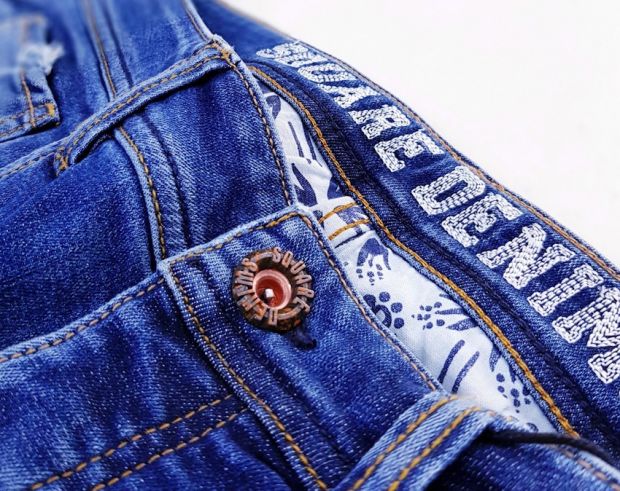 The global spread of Coronavirus (COVID-19) is continuously impacting the fashion industry. Besides other consequences the pandemic is having on the market, one major impact is on the development of new fabrics, styles and sales models. For instance, China-based jeans wear maker, Advance Denim recently introduced bio-antibacterial and environmentally safe denim fabrics.
Increase in online sales
“As traditional offline sales or the sales without features are likely to be bleak in the first half of 2020, brands are implementing a variety of online sales methods,” said Amy Wong, General Manager, of Advance Denim in an interview to Sportswear International. Brands are using technology-based solutions such as video and teleconferencing to mitigate the effects of this pandemic. “We have stopped our domestic and international travels and are conducting all our meetings through digital platforms,” added Tolga Ozkurt, Deputy General Manager-Sales & Marketing of the Turkey-based brand Calik.
In an exclusive interview to MFfashion, Renzo Rosso, Founder of Diesel says, "All this will pass but will leave many problems behind and we must all have the energy and the will to come back and do something incredible.”
Changing delivery schedules
Delivery timings are changing according to the single factory situation. “Wuhan is the most affected as restrictions on logistic have affected deliveries in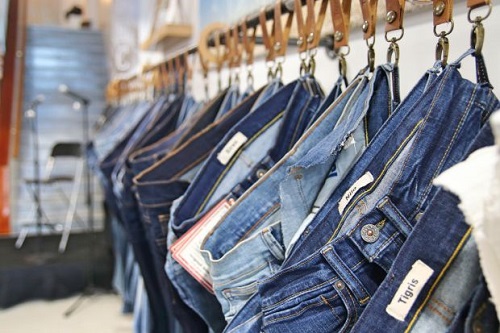 the city. However, the impact on fashion, clothing and denim clothing is lesser in Guangdong and Zhejiang,” explained Wong.
Even though none of its workers or family members has been affected by the virus, Italian denim maker Candiani Denim is faced with increasing worker absences. “This is obviously affecting our production and partially impacting deliveries,” quoted Alberto Candiani in Sportswear International from the brand which is trying to be transparent about its current situation as “we need our customers to know what is happening and how we can deal with this together.”
To safeguard the health of workers, Italian denim brand Canclini 1925 has made some immediate changes in its organisation. “We have organised and implemented all procedures necessary to safeguard the health of our workers and, at the same time, guarantee the respect of planned deliveries we shared with all our clients these new guidelines and reassured them that we will be able to meet their industrial and production plans, and deliveries,” Simone Canclini, CEO of the brand was quoted as saying.
Shifting production out of China
The outbreak is compelling brands to move their production from China to Africa and Eastern Europe. Many global retailers are also shifting their orders from China to Bangladesh. “Retailers who depend heavily on China for sourcing their garments and other fashion products are desperately looking for alternative sources, which include Bangladesh,” notes Aryan Mahbub, Designer of the Bangladeshi brand Square Denims which is already receiving requests from Western buyers to create some space for additional orders. Manufacturers who earlier depended too much on China for raw materials such as fabrics, yarn, etc are placing orders with other countries to cut their dependence on China. Disruption in global supply chains This global issue is impacting everyone. The fashion world is likely to lose its entire season’s sales as shops are closed and showrooms aren’t offering new collections; closed textile companies are not producing; people don’t go out and don’t shop clothing.
“This outbreak is disrupting the global supply chain, taking a toll in particular on China's economy, which produces one-third of the world's apparel. It has also started to disrupt supply chains for more mid-market apparel, with retailers and fashion brands expressing concern about whether Chinese factories will be able to deliver f/w collections as planned,” explains Aydan Tüzün, Executive Director, global sales and marketing, Naveena Group, Pakistan.
Need to reflect on priorities, needs
Rosso says in China, "where in the last week we have returned to full capacity, but in fact, we have never stopped in the three months of the crisis thanks to smart working," he explains anticipating that investment is increasing in that market, while Japan and Korea are giving oxygen.
In fact, brands hope things to return to normalcy soon. However, once all this is over, everyone will need to reflect on their priorities and needs. They will need to produce with care and responsibility and not only aimed at quantity and price.
“We will have to re-evaluate small local shops and emphasise on the quality control of our products without depending on just neither number/volumes nor prices,” Paolo Gnutti the R&D head of Italian denim brand PG Denim opines.
And as Rosso sums up, “We must take advantage of this moment when most of us are at home to recharge and have the energy to start again and change everything.”
Global cotton trade on decline amidst COVID-19
 Uncertainty over the control of COVID-19 has led to a decline in trading in various industries as buyers are refraining from making new purchases. Especially cotton is nearing its lows of early December 2019, after a rally in January. Though in the last few weeks, sale and shipments of cotton have seen strong business in the US, however, the pace is likely to be impacted because of the epidemic. As per USDA’s early projection, the US cotton planted acreage in 2020 is likely to decline by 9 per cent to 12.5 million acre.
Besides Coronavirus, other factors that are likely to contribute to the uncertainty regarding acreage decisions for 2020 include: production issues and results during 2019, the effects of the Phase One trade agreement with China and the impact of the coronavirus on cotton demand. The final look at projected acreage for 2020 comes with USDA’s Prospective Plantings report on March 31, based on a survey of producer planting intentions to be conducted in early March.
US cotton sales decline by 33 per cent
The net sales of cotton variety 235,300 RB declined for 2019/2020 declined by 33 per cent from the previous week and 30 per cent from the prior 4-week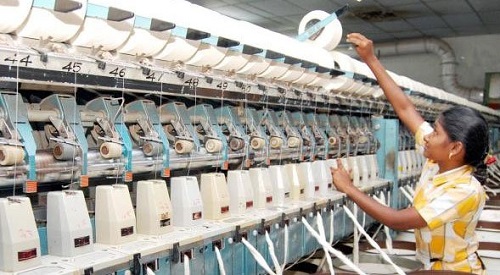 average. Similarly though exports of 375,700 RB declined by 6 per cent from the previous week, but increased by 5 per cent from the prior 4-week average. These exports were primarily directed to countries like Pakistan (97,100 RB), Vietnam (85,200 RB), China (46,400 RB), Turkey (31,400 RB), and Indonesia (21,100 RB). Exports of 57,300 RB, including 700 RB switched from Japan to Vietnam and 400 RB switched from Taiwan. Exports of 57,200 RB to Pakistan decreased while the export of 46,600 RB and 7,300 RB switched from Vietnam to Turkey.
International recognition to cotton through HIRA
In India, the Cotton Corporation of India (CCI) launched ‘HIRA or High in Reliable Attributes’ a brand of Indian cotton with specific quality parameters. Having less than 1.7 per cent of trash, low moisture, better grade, etc, this initiative will help Indian cotton get international recognition. CCI also supports Indian cotton farmers by purchasing best possible quantity and quality at MSP price. Both CCI and Maharashtra Cotton Federation jointly can buy more than 10 million cotton bales for the season 2019-20, which would be nearly 25-30 per cent volume of estimated crop for the season 2019-20. This would support the Indian spinning industry as well if CCI sells its cotton when the industry needs it, at real prices, and an actual premium for quality cotton. Indian physical cotton market has not yet achieved the ratio of 1:1 with international cotton prices as seed cotton prices are higher due to MSP support and they trade at its lower level with lower cotton lint prices. Most ginning factories have reduced production to reduce losses, thus resulting in low availability of quality cotton (bales) in the market.
Till February 2020 -end, around 26-26.50 million bales of cotton bales are likely to grow in India. Farmers still have good amount of quality cotton in view of better prices in near future.
In the current month, MCX cotton is trading at lower prices than the physical cotton prices in open market. As of now Indian currency is one of the most stable currencies, trading within narrow range limiting currency risk to market. It would be interesting to see how CCI will move ahead to sell its cotton in this international bearish sentiment due to COVID-19.
Mongolia’s Ar Arvijin Delgerekh Cooperative to expand capacity
Ar Arvijin Delgerekh Cooperative, which specialises in producing and weaving yak wool plans to add more looms and larger factory space this year. The association will continue to work with herders and help them boost income, while creating internationally marketable products.
All 225 members of the cooperative have received training on how to tease and prepare yak wool fibers.Today, herders throughout the province benefit from understanding the value of their yak’s fur. Dagiitserev Lkhagvasuren, a local herder who joined the cooperative in 2018 was able to tease about 560,000 Mongolian tugriks’ ($202.50) worth of fiber from his 27 yaks.
Herders who have been with the cooperative since it opened have seen tremendous increase in the demand for and value of their yaks’ wool. Choisuren Namsraikhorol, a local herder, earns about 20,000 tugriks ($7.23) for one kilogram of wool. The collective exports the pure fibers and makes yarn for local use, while also weaving yak wool products like shawls and clothing. Annually, they sell about 1,500 textile products at the collective’s retail outlet, Baby Yak, which opened in 2018.
Lack of cash leads to collapse of half of Chinese retailers
Data compiled by Bloomberg and Company covering 50 listed firms, almost half of China’s listed consumer companies don’t have enough cash to survive another six months, underscoring the urgent task Beijing has to re-start its economy and get shoppers spending again.
Restaurants are in the worst shape as COVID-19 outbreak has kept consumers at home, with about 60 per cent unable to cover labor and rental costs.. Among jewelry and apparel companies, almost half don’t have the cash to last the six months unless demand rebounds sharply, the data show.
While the number of Coronavirus infections in China has tapered off and retailers including Starbucks and Haidilao International Holding have reopened more of their stores in low-risk areas, demand looks unlikely to rebound quickly as consumers remain hesitant to leave their houses after weeks of government warnings about the dangers of mingling with others.
China is also now on guard for a second wave of infections, in part from people traveling back to the country from other affected areas. Although Chinese factories have resumed production, hopes of a V-shaped recovery in retail and services have waned as the pandemic widens globally, sickening over 210,000 people and killing over 8,700. Economists now expect $2.7 trillion to be wiped from the global economy.
Many of China’s small and medium businesses are already collapsing as they run out of cash, but the vulnerability of the publicly listed consumer companies points to greater economic danger, as some of these employ thousands of workers across the country.
Cambodia’s CDC approves three garment projects
The Council for the Development of Cambodia (CDC) has approved three garments projects worth a combined $7 million. They are expected to create some 1,820 jobs. All three projects highlight continued attractiveness for investors into the Kingdom.
Among the green-lighted ventures approved by the CDC includes a project by MIL United Manufacturing with a capital investment of $2.3 million in Kandal’s province Kandal Stung district. The rest are Jin Ming Li Jian One with capital investment $2.3 million in Kampong Spue’s province Kong Pisey district and the Suzen (Cambodia) Industrial with $2.4 million. It will build a factory in Tbong Khum province’s Suong Town municipality. There are now a total of 1,730 factories operating in the Kingdom.
During the first eight months of last year, the CDC approved 222 projects worth more than $6 billion, an increase of 81 projects worth $1.88 billion in the same period in 2018.
CDC continues to receive applications for new projects despite recent challenges to the local economy, such as the EU’s partial cancellation of Cambodia’s Everything But Arms (EBA) scheme and the global outbreak of the novel coronavirus.
Fitch reduces India’s growth forecast for 2020-21 to 5.1 per cent
Fitch Ratings has cut India's growth forecast to 5.1 per cent for fiscal 2020-21, with COVID-19 pandemic likely to hit business investment and exports. It had projected India's growth at 5.6 per cent for 2020-21 last December. In its Global Economic Outlook, Fitch said the number of infected will rise but the outbreak will remain contained.
The agency states, supply-chain disruptions are expected to hit business investment and exports. GDP growth is likely to remain broadly steady at 5.1 per cent in the fiscal year 2020-2021 following growth of 5.0 per cent in 2019-2020. While India’s linkages with China are modest, manufacturers in India are heavily reliant on key Chinese intermediate inputs, especially of electronics and machinery and equipment.
The difficulties facing Indian economy have been exacerbated by Yes Bank failure. Fragilities in the financial system will further undermine sentiment and domestic spending. The overall financial system remains burdened with weak balance sheets, which will limit any upside to credit and growth despite policymakers'' efforts in recent months to ease stresses.
Market for direct-spun PSF plants registers slow decline in China
Affected by COVID-19, the market for direct-spun PSF decreased more slowly, so its cash flow was considerable. Upon high cash flow of direct-spun PSF, downstream buying interest was thin though the price has declined below 6,000yuan/mt. Downstream expected prices to move down to about 5500yuan/mt. However, direct-spun PSF plants did not show strong willingness to undersell with low inventory. In addition, as crude oil and polyester feedstock rebounded and tended stable, downstream plants more intended to go bottom fishing, but with adequate stocks of raw materials and high spot price, operation by futures mode appeared.
Currently, only a few plants operated by futures, and they were centered on May-Jul contracts. Take May contracts as an example. May direct-spun PSF futures price = May polyester feedstock futures price + (1200~1300)yuan/mt.
For direct-spun PSF plants, they gained mixed profits due to different processing costs. The processing cost of some old plants including water, power, labor and so on was at about 800-900yuan/mt without depreciation, while that of those which were put into operation within 10 years was mostly at 1,000-1,200yuan/mt.
From the perspective of downstream spinners, the futures price was about 5500yuan/mt or lower, indicating more opportunities than risks. In particular, as the recycling of re-PET was difficult, re-PSF price moved up close to direct-spun PSF price, thus downstream spinners shifted to use direct-spun PSF in production increasingly, which was a good opportunity for direct-spun PSF to squeeze re-PSF despite the tough year. Therefore, the demand for direct-spun PSF was relatively optimistic.
On the other hand, some plants did not want to adopt this operation as customers were mostly sensitive to price and they may not have high loyalty. Therefore, they did not want to adopt this operation.
CRISIL reduces India’s base GDP growth by 50bps
Crisil has cut India’s base-case gross domestic product (GDP) growth forecast for fiscal 2020-21 to 5.2 per cent from 5.7 per cent. The new assessment factors in the huge uncertainty because of COVID-19, with risks to the forecast tilted downwards. The forecast will be reassessed continuously as new information comes in.
A serious downside to the rating agency’s base case can emerge from two developments. One, the pandemic is not contained by April-June 2020 globally, and makes the global slowdown more severe. And two, it spreads rapidly in India, affecting domestic consumption, investment, and production. These would further hurt confidence and the financial markets, CRISIL said in a press release.
In any case, India has little policy firepower to give a meaningful push to growth, and the pandemic is making it more difficult. While there will be steeper deceleration in global growth and India’s trade, what is unclear is the extent of impact on economy through domestic channels of production (supply) and consumption (demand).
The answer would depend largely on the extent of spread within India. So far, India is among the Asian economies that aren’t deeply impacted
COVID-19 to hit China Lilang’s sales in 2020
China Lilang, a prominent menswear manufacturer and retailer from China, fears 2020 could be contradictory to what 2019 was as far as sales are concerned. The menswear brand saw an impressive surge of 15 per cent in sales last year touching $515.78 million. Amidst huge store expansions all through 2019, many outlets were relocated as a part of business strategy to enhance its exposure to customers.
China Lilang opened, on an average, 3 stores every week in 2019. Its profit from operation increased to $138 million (11.1 per cent), net profit touched $ 114.5 million last year, which is a jump of a little over 8 per cent. However, the retailer is worried about 2020. The Coronavirus has hit the sales in a big way, which may force it to bring down the production of Autumn 2020 items so as to help outlets destock Spring inventories.
US business groups demand economic stabilisation efforts amidst COVID-19
The CFDA and 90 business groups including the National Retail Federation, Accessories Council, and Fashion Footwear Association of New York have brought their concerns to the White House, sending a letter to President Trump calling for economic stabilisation efforts amidst the Coronavirus pandemic.
The letter commends the administration and Congress for their public health efforts and actions to minimize the economic fallout caused by the spread of the virus. It goes on, however, to state: The economic harm from social distancing and mandatory store closures will surely be followed by layoffs and economic hardships. The biggest single issue facing the industry right now is liquidity, and federal stimulus efforts must be swift and flexible enough to address the urgent need for access to credit to keep these businesses afloat.
The letter concludes by encouraging policymakers to develop proposals that support the retail workforce and to provide a “bridge” for retail businesses of all sizes to stay viable during the crisis.











