FW
Global apparel supply chain bears the brunt of COVID-19 as exports fall
 Already, for the last few years, supply chain was shifting away from China to countries like Vietnam, Bangladesh, India, and Mexico. However, the outbreak of COVID-19 has accelerated this process despite China being on a road to recovery.
Though China has the best infrastructure in the world to support large manufacturing businesses, the current crisis along with the end of quota system, development of new capabilities and evolving sustainability issues, is forcing retailers to carefully review all factors before moving from an established, trusted entity.
Exports from China on the decline
A survey by CGS (Computer Generated Solutions) reveals China, being one of the largest producers of soft goods, exports around, 30.75 per cent to the US. However, for the 12-months ending in October 2019, the country’s exports declined by 5.6 per cent to $22.13 billion. However, it was still expected that China would produce a major share of goods bound for the US. Now, the outbreak has crushed this hope. Though the full effect of Coronavirus is yet to be measured, reports suggest productivity has not yet reached anywhere near capacity. Covid-19 has abated to a point where some stores are being compelled to reopen at new locations.
Though China was traditionally known to have cheap labor, it is no longer the case. Now, it has become very efficient. In fact shipping time from Shanghai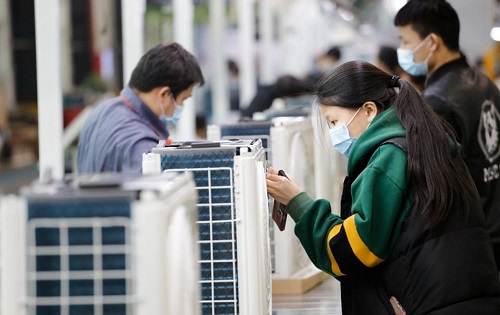 to Los Angeles is 23 to 31 days; shorter than from any other country except Mexico.
Bangladesh revamps logistics, increases wages
The second largest garment exporter after China, Bangladesh produces apparels for some of the biggest retailers in the world. Its garment manufacturing activity accounts for 80 per cent of the country’s export earnings. For the period ended October 2019, the country shipped apparels worth $5.1 billion to the United States, an increase of 10 per cent from previous year. Footwear imports increased a whopping 32.6 per cent during the same period. The country has revamped its logistics facilities, and increased wages in 2019 besides putting most garment workers under one digital wage system.
Growing trade deficits hampers Vietnam’s reputation
Vietnam’s apparels exports to the United States in the period ended October 2019 increased 10.9 per cent. Caused by an increase in wages the value of its exports also increased about $11.7 billion. The CGS report reveals the country received an influx of investment during this period and currently enjoys the benefits of the Comprehensive and Progressive Agreement for Trans-Pacific Partnership, an agreement which gives partner nations duty-free access to Vietnam made goods. Since the country is closer to China in location, it is easy for companies to transfer production there. Many Chinese apparel companies have built their factories, mills, and wholesale supply chains in the country. This enhances Vietnam’s reputation as a production site. However, its growing trade deficit may elicit tariffs.
India building vertical resources to enhance exports
India’s exports to the US during the period ended October 2019 increased by 6.9 per cent to $3.6 billion. Of this footwear exports increased 5.4 per cent. To improve its exports further, India is building its vertical resources. It has so far approved 74 textile parks, 18 these are operational, and 32 are under development. The government is inspecting thousands of factories. In Spring 2019, the United States changed India’s designation as a beneficiary developing country under the Generalized System of Preference program.
Uncertainty, labor issues impact Mexico exports
Apparel exports from Mexico to the US declined 5.6 per cent in the first 10 months of 2019. However, its exports of denim products increased by 2.9 per cent to $690.4 million. Though a new United States, Mexico, Canada Agreement was signed it is likely to boost exports from Mexico, the uncertainty over implementation of the agreement has forced companies to balance risk and opportunities. The country also faces labor rights issues which could be disruptive. In addition, the government raised minimum wage by 20 per cent on January 2020. Its footwear exports fell by 13.2 per cent in the first 10 months of 2019.
While companies have diverted their shifting from China, they are yet to decide on the destination for sourcing. Retailers are also seeking options outside China to produce apparel. However, other countries lack the operational sophistication that China has.
China’s recovery from Coronavirus is likely to be slow and painful. However, US retailers cannot wait. They have to place orders for Christmas 2020. For this, they need to divert their production to nearby countries. COVID-19 has added uncertainty to their near-term plans and urgency to accelerate their shift in production.
Coronavirus: Textile, apparel makers shift to medical equipment
 With the global pandemic, US textile and apparel industry is stepping up in a big way to answer the call for much-needed medical equipment. Parkdale Inc, a large yarn spinner in Gastonia, N.C., has collaborated with Hanesbrands, Fruit of the Loom, American Giant, Los Angeles Apparel, AST Sportswear, Sanmar, America Knits, Beverly Knits and Riegel Linen to set up a manufacturing supply chain and begin ramping up production of masks.
The companies have already begun production and will make the first deliveries by mid-week. They will create a high output of facemasks. Once fully ramped up in four to five weeks, the companies expect to produce up to 10 million facemasks per week in the US and Central America.
The industry is also reaching out to cut-and-sew operations across the spectrum to help fill the need created by the health crisis. While some companies are already producing medical-related textiles, others are now trying to ramp up their operations to fill the need. Even hospitals are working directly with these companies, while others are tapping into their own supply chains.
Parkdale was able to get involved in the coalition and has converted its factory in Middlesex, N.C., from T-shirt production to medical mask manufacturing. Production should start Tuesday, according to Winthrop, as fabric arrives from Miami, while special machinery he has purchased is in place. Similarly, Beverly Knits Inc., which is involved in the effort led by Hanes and Parkdale, is ramping up production to provide face masks by retooling its production lines. The company is coordinating the production of up to 1.5 million masks produced domestically per week.
The Americas Apparel Production Network (AAPN) has set up a special message board to expand the number of companies wanting to participate in the effort. Its members have shared specs and patters, along with resources and company contacts to aid the movement.
Across the spectrum
Many companies are also pitching in on their own to ease the burden during the COVID-19 crisis. For instance, Milliken & Company has increased domestic production of BioSmart fabric. The company has prioritised the production of advanced material in their supply chain to better protect healthcare professionals regularly exposed to bacteria and viruses.
Similarly, BioSmart integrates anti-microbial protection into the most common medical products like scrubs, lab coats and privacy curtains. The patented, bleach-activated technology harnesses the proven power of chlorine bleach to kill 99.9 percent of bacteria and viruses. Manufactured in the US, BioSmart fabric is available through Prime Medical and is equipped with advanced molecular engineering that binds chlorine to fibers to turn otherwise passive textiles into one more layer of active defense against inadvertent microbial exposure, contamination and infection.
In response to the national shortage of surgical-grade face masks, designer Michael Costello has designed a cotton-nylon blend protective mask with a 70 to 74 per cent air filtration effectiveness rate, in comparison to the 97 per cent effectiveness of surgical face masks. The designer reached out to the Centers for Disease Control and Prevention to identify best fabrics for masks, then partnered with a manufacturer to activate specialised machinery that will help his team produce 20,000 protective face masks, which the designer plans to donate to medical professionals, first responders and hospitals in Los Angeles.
Kitsbow, a premium bike apparel brand based in Old Fort, NC, diverted its apparel production to making face shields for first responders, as well as reusable face masks. The company obtained the design of a face shield from the University of Wisconsin-Madison Makerspace. It currently sells the masks at cost to local first responders and medical staff, but plans to distribute internationally as it makes more.
Made in America
It may be early yet to talk about whether the crisis will result in a more companies wanting to manufacture in the US to reduce risks in supply chain but more than half manufacturers are likely to likely to bring production and sourcing back to North America. Many North American companies are forging ahead and seeking solutions, including turning toward domestic sources of supply, a trend which will help shape the next wave of manufacturing.
Prices of men’s jeans increases 46 per cent since 2018
A new report by retail data analytics firm Edited reveals the average advertised full price of men’s jeans has climbed considerably since 2018. The full price of men’s jeans, as of March 17, 2020, is up 46 percent to $211.60. This growth reflects how the male consumer is evolving into a key fashion consumer. Meanwhile, the price of women’s jeans grew 16 percent to $170—demonstrating it’s the more competitive market.
Though $200-plus price tags are a hallmark of the premium denim sector, Edited’s data shows a shift away from the inexpensive fast-fashion styles that have plagued the denim industry for years. Even Gap is inching closer to the $100 mark, Edited noted, with 55 percent of its U.S. women’s jeans being advertised full price for $70-$80.
Prices for women’s jeans by mass market brands like Uniqlo and Zara in the US, however, continue to hover around $30-$40. The rising price of jeans falls in line with the growing number of sustainable jeans hitting the market, and the stories brands are creating around their eco products. In fact, Edited’s data shows that the amount of new sustainable denim arrivals online has nearly doubled from Q1 2008 to Q1 2020.
These garments are primarily made with recycled or repurposed fabrics and alternative fibers like organic cotton, Repreve and hemp, and are coupled with consumer-oriented messaging on how to care for the jeans.
WRAP offers £1.5-m grant fund to support textiles projects
The Waste & Resources Action Programme (WRAP), a UK-registered charity organisation, has offered a £1.5 million in grants to support projects that provide innovative ways for textile waste to be recycled or re-used, keeping it out of landfill or incineration so that it remains a valuable resource. The money is part of the department for environment, food and rural affairs’ £18 million Resource Action Fund, set up to support key priority policy areas.
WRAP works with governments, businesses and citizens to create a world in which we source and use resources sustainably. The grants, of between £20,000 and £170,000, are available to organisations of any size, both commercial and not-for-profit. The money is for capital expenditure only; either for equipment or technologies (excluding software and apps) that enable recycling or re-use of clothing or linen waste textiles.
Each project will require match funding: 10 per cent from not-for-profit and 50 per cent from commercial organisations. Successful projects will need to demonstrate ‘innovation beyond normal practice’ and will be assessed against a number of criteria, WRAP said in a press release.
Increased textiles collection and reprocessing is required in the United Kingdom to help deliver the Resource and Waste Strategy (R&WS) and the Circular Economy Package (CEP) objectives. Existing markets for recycled textiles are small scale and traditional, with little innovation or growth potential.
To meet the requirement for separate collections of textiles by 2025, new processes and markets need to be found, to avoid separately collected items simply being discarded. In addition, feedback from the textiles recycling sector suggests that export markets may diminish over time as other countries increase their exports of used textiles.
The aim of this grant fund is to address the need for increased capacity, sorting, handling, and reprocessing textiles from municipal sources.
Mark Langer steps down as CEO of Hugo Boss
The German Fashion House Hugo Boss’ Chief Executive Officer Mark Langer has stepped down. Langer will leave the company on September 30 but will continue as a consultant until the end of the year due to the COVID-19 outbreak. Langer has been holding the office since 2016 and prior to this he had been Finance Chief of the company from 2010.
Hugo Boss discarded the outlook it gave for 2020 and took action to protect its cash liquidity, suspending store renovations and new openings and limiting the inflow of stock.
Back in 2016, when Hugo Boss was suffering from steep fall in sales in the US and China, Mark took over from Claus-Dietrich Lahrs. Until the COVID-19 outbreak, he had managed to stem the decline, but the stock had still underperformed.
Mark wanted Hugo Boss to return its roots selling premium men’s clothing and offer more casual and sportswear, while his predecessor had pushed to make the label more of a luxury brand and invested in womenswear.
HSBC announces relief measures for garment sector
HSBC Bangladesh has announced a set of measures to help textile and garments clients tide over the economic fallout of COVID-19 pandemic. The lender will provide special short-term loans of up to one year with principal moratorium for four months. It will also allow three months' moratorium against existing term loans enjoyed by businesses belonging to the textile and garments sector, according to a press release issued by HSBC Bangladesh.
During the moratorium period, clients will not be required to give any installment and the lender will not seek any repayment amount from them as well. HSBC will provide up to 90-day extension of import liability maturing in next three months where export shipments are delayed.
It will work to ease cash flow pressures faced by businesses and help customers tackle the market uncertainties, including disruptions to their supply chains. To ease the pressure on Bangladeshi economy, clients will be allowed to enjoy trade relief in the form of waiver of letters-of-credit (LCs) commission and margin requirements for the import of medicine, medical equipment and accessories used to treat COVID-19.
Customers facing delivery disruptions owing to late shipment and presentation of documents will have amendment fees on LCs waived, said HSBC, one of the largest banks in the globe serving more than 40 million customers in 64 countries and territories of the world.
The bank will provide support to customers to onboard onto HSBC's digital platforms to enable the flow of trade to continue. Along with the textile and garments sector, the lender will actively evaluate and try to introduce specific initiatives to support its customers in other sectors as required.
With buyer sentiment low, Indian fashion brands focus on e-com
As the lockdown continues across the country with low buyer sentiment for garments, Indian fashion brands are focusing on e-commerce. Fashion shows have been cancelled and supply chain management has been severely affected. Many start-ups are hoping the government comes out with some relief measures to compensate for their business losses.
Brand Sarah & Sandeep’s focus has shifted towards its e-commerce platform and its international clients with whom it consults over Skype. The company has also extended delivery periods for earlier orders. It expects to break even at least for the coming month as it has cut all unnecessary costs.
With all their stores closed at the moment, online orders of FabAlley and Indya have slipped by 25 per cent. With a ban on social gatherings, occasion wear brand Indya has witnessed a dip in orders. Moreover, given the uncertainty of the crisis, people are not spending on apparel, they said.
Supply chain management across various functions has been adversely impacted, hampering overall business execution. Every business in such a situation will face a hit and that is something unavoidable.
Similarly, the members of South India Imported Machine Knitters Association are not in a position to repay bank loans as a result of which banks may classify the units as non-performing assets.
There is no clarity on when all the export and domestic supply chains will come back to normal and when will the finance ministry implement remedies. The exports are expected to return to normalcy in June or July.
Footwear brand Liberty Shoes adopts a ‘wait and watch’ approach
While Liberty Shoes had a positive outlook on growth and expansion plans for the coming fiscal, however, it is now adopting a “wait and watch” approach in the wake of the Covid-19 pandemic. Footwear purchase, which is more of discretionary spend, could get impacted on the back of poor sentiments particularly when travel plans are getting curtailed and celebrations are getting cancelled.
However, on a positive note, it could be an opportunity for India to reduce its dependence on China in terms of imports and focus on domestic manufacturing. Liberty Shoes plans to establish a firm footing in Tier-II and III towns of northern and central India, where it is among the dominant players. The company aims to add 50-100 stores every year, primarily in the Tier-II and III towns.
The company has been witnessing good growth from comfort footwear segment under its brand Healers as people are becoming increasingly conscious of the need for comfortable footwear. It is also witnessing good growth in the sports category and the kids segment.
Bangladesh negotiates ways to offset losses with importers
The Bangladesh government is currently negotiating with major importer countries on how to offset the loss incurred from the Coronavirus spread. It is in discussion with the EU, the US and G7 countries. The BGMEA says, export loss due to COVID-19 would be around $2 billion. The government has assigned its concerned department to assess the loss in exports and in remittances.
Local enterprises are producing corona preventive gears and already countries like the USA has requested Bangladesh to supply the gears. Corona preventive equipment from China is likely to arrive in the country soon by a special flight. Some private firms are also importing corona preventive equipment from China which will be available within a couple of days. Meanwhile the pandemic is taking a huge toll on Bangladesh, which is the world's second-largest garment exporter. The industry is rapidly losing orders, and millions of jobs are at stake. Foreign brands are increasingly delaying and canceling orders. "Our orders until June have been canceled,” says Siddiqur Rahman, VP, Federation of the Bangladesh Chambers of Commerce and Industries (FBCCI). The situation is dire, he added. BGMEA claims that foreign companies are also canceling orders that are already in production or completed.
China to ship first facemask machine to Italy
March 23, Beijing Chonglee Machinery Engineering Co.Ltd., a subsidiary to China Textile Academy, signed a business contract at its medical-purpose equipment and protective gear workshop to start up the export of its first batch of facemask lines to Italy.
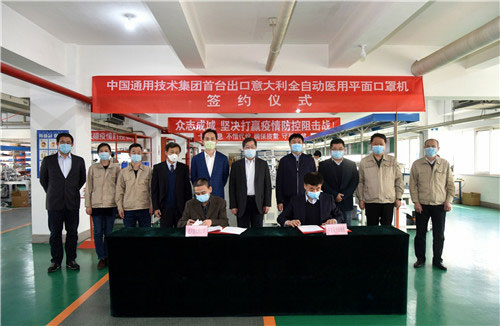 |
| (Mr, Wang Xusheng{in the middle}, Vice President of China General Technology Group and Mr. Zhuang Xiaoxiong (the forth on the right in the rear line), Chairman of China Textile Academy, are at the ceremony to congratulate on contract signing) |
The signing ceremony was actually an in-house event as the seller and buyer both live under one roof because Beijing Chonglee Machinery Engineering on the seller side and Italian Branch Company of China General Technology on the buyer side both are parts of China General Technology Group Corp., and the latter responded quickly to the critical demand of medical supplies in Italy and contacted Chonglee Machinery Engineering at the first-things-first time for placing purchase order to import the fully-automatic machines for flat-type face masks to be shipped to Italy ahead of those local manufacturers as in-time “ammunition” for local government to combat the spreading disease.
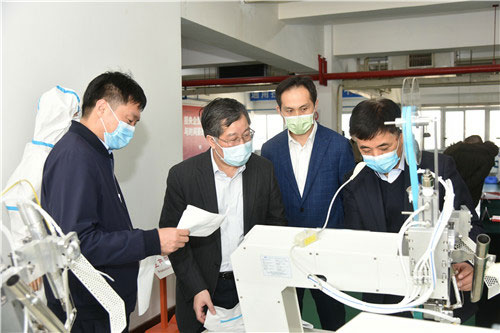
Ever since its first automatic flat face mask machine was rolled out, there have been 37 machines sold within half a month, including 13 ones for domestic market to ease the shortage of mask production. The contract for the mask machines to go to Italy is a milestone for Chonglee Machinery Engineering for doing business to European countries, and also a breakthrough for medical protective gear and technology to the advanced country in consideration of the fact that Italy itself is a highly advanced country in terms of textile machinery technology and manufacturing.
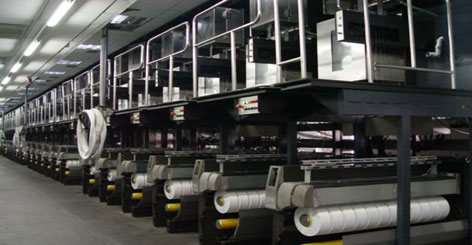
The contract was signed at the time when the COVID-19 situation continues to improve in China’s endeavors for the infection control and prevention, and China General Technology Group has its advantage of synergetic resources for engineering, trading and manufacturing to render assistance to overseas combat against the rampant virus. Beijing Chonglee Machinery Engineering will continue to speed up its R&D for medical protective gear and technology for further production increase and expansion in quick response to the market needs by virtue of its technological and manufacturing strengths. Besides this new line of business started becuas of the market crisis, Chonglee is best known for its man-made fiber equipment and technology in China, its high speed POY spinning line, FDY combination series, industrial yarn spinning machine, differentiated fiber spinning line, and the highly applaudable automatic winders and texturizers etc., all make it a reliable business partner both at home and abroad.
Its mother organization, China Textile Academy, which was a science and technology institute of the ex-Ministry of Textile Industry in China, and is now also part of China General Technology Group as a result of the state-owned assets reformation and restructuring in more market-oriented direction, adds up more value to its scientific origin of birth, and to its technical strength in the present big family under the new umbrella.
Contributed by Mr. ZHAO Hong
He is working for CHINA TEXTILE magazine as Editor-in-Chief in addition to being involved in a plethora of activities for the textile industry. He has worked for the Engineering Institute of Ministry of Textile Industry, and for China National Textile Council and continues to serve the industry in the capacity of Deputy Director of China Textile International Exchange Centre, V. President of China Knitting Industry Association, V. President of China Textile Magazine and its Editor-in-Chief for the English Version, Deputy Director of News Centre of China National Textile and Apparel Council (CNTAC), Deputy Director of International Trade Office, CNTAC, Deputy Director of China Textile Economic Research Centre. He was also elected once ACT Chair of Private Sector Consulting Committee of International Textile and Clothing Bureau (ITCB)