


FW
Bangladesh seeks trade benefits from EU, US even as it moves out of LDC list
Bangladesh has sought trade benefits in the EU and the US. From EU, it has sought an extension to the current zero duty benefit even after its graduation to a developing country as the COVID-19 pandemic is taking a heavy toll on the south Asian nation's economy. Bangladesh has been enjoying zero duty benefits on export since 1973 under the EU's generous Everything but Arms (EBA) scheme, meant for the least developed countries (LDCs).
Officially, Bangladesh will become a developing country in 2024 and three more years will be given as a grace period for preparation. Normally, the EU does not give trade benefits under the EBA after a country's graduation. So, after 2027, Bangladesh will have to either be granted the GSP Plus or the extension of the current EBA to enjoy the zero-duty benefit to the EU, the destination for 64 per cent of Bangladesh's annual garment shipment of $34 billion.
In the US too, Bangladesh has demanded trade facilities as the government has already assigned a special committee to attract more American investment here. However, Bangladesh might not get zero duty benefit on garment export to the US, as the Trump administration gives zero duty benefit on export of garment items only to some African countries under the African Growth and Opportunity Act.
As a result, Bangladeshi exporters face 15.62 per cent duty while sending apparels to the US, the country's single largest export destination where over $ 6 billion worth of garment items are shipped a year.
India: DGFT allows export 50 lakh PPE suits monthly
In a big win for PPE manufacturers, the Directorate General of Foreign Trade (DGFT) has allowed the export of PPE suits. However, as of now DGFT has restricted the monthly export quote to 50 lakh PPE suits/medical coveralls for which the interested firms will need to apply for export license.
For quite some time, PPE manufacturers were upset with the government for not allowing them to export PPE even after lakhs of suits piling up in their units due to over production. An estimated 4.5 lakh to 5 lakh suits per day were being manufactured in India and country went on to become second largest manufacturer of PPE suits in the world within no time.
The development is significant for Punjab’s industry especially Ludhiana where from more than 110 manufacturers have got approval from the centre government laboratories like DRDO & SITRA to manufacture PPE suits.
AEPC asks for faster clearance of Chinese imports
Apparel Export Promotion Council (AEPC) has urged the Union government to expedite clearance of import consignments from China as undue delay is impacting their operations and might result in further financial losses. AEPC has complained that all import consignments are held up at Mumbai airports and seaports for a100 per cent open examination by Customs who are not processing the documents for shipments originated from China, Hong Kong and Taiwan.
While there has been no official instruction on 100 per cent checking of consignments coming from China, Chennai and some other ports began closer scrutiny of Chinese imports a few days ago. The apparel industry is dependent for several inputs that are domestically not available or as per buyers’ nomination has to be imported.
So far, such imports were subject to random and partial checks only, the Council says and emphasized that special priority should be given to manufacturer exporters who are dependent on these imports to service their export orders.
Textile Exchange begins work on Responsible Alpaca Standard
Textile Exchange has begun work on a Responsible Alpaca Standard. The draft Responsible Alpaca Standard is aligned with the organization’s existing Responsible Wool Standard and Responsible Mohair Standard. It is structured around the Textile Exchange Animal Welfare Framework that sets principles and expectations that guide and connect Textile Exchange’s Animal Welfare Standards.
The standard would verify and identify alpaca fiber produced in farming systems that respect animal welfare and the environment. Textile Exchange would apply a “strong assurance system to perform regular audits of the farms and to track the material from the farm to the final product.”
Textile Exchange noted that alpaca farming has high animal welfare potential due to a husbandry system based on extensive grazing and free ranging with animals adapted to their environment. The Responsible Alpaca Standard will be developed to ensure that this high welfare potential is realized and to provide a mechanism to verify that alpaca fiber comes from animals that have been treated responsibly and that land and biodiversity has been managed appropriately.
33% supply chain leaders to exit China by 2023: Survey
According to a recent Gartner survey, 33 percent of supply chain leaders either already have moved their sourcing and manufacturing activities out of China, or plan to do so by 2023.
. An exit from China would follow growing consumer sentiment against buying products made in the country. As many as 47.8 percent of consumers to a June Coresight Research survey said they either agree or strongly agree that U.S. retailers should source fewer products from China.
In light of the pandemic and the sentiments that have emerged surrounding it, 39.7 percent said they are now less willing to buy products manufactured in the so-called “world’s factory.” It would be shortsighted to blame the pandemic alone for the pressures within the chain, especially given that the trade war between the U.S. and China has lingered for two-plus years.
The US will seek a broader reset of tariffs at the World Trade Organization (WTO), in which the U.S. will be working to raise its WTO tariff ceilings.
Field To Market and US Cotton Trust Protocol partner to for sustainable cotton production
Field to Market: The Alliance for Sustainable Agriculture and the U.S. Cotton Trust Protocol have formalized a partnership to document and accelerate sustainable outcomes for US cotton production. The new partnership strengthens the ability of cotton growers and the value chain to drive continuous improvement, combining two of the industry’s leading sustainability assessment frameworks.
Together, Field to Market and the US Cotton Trust Protocol will assess progress against the U.S. cotton industry’s established environmental targets. By 2025, the industry aims to achieve targeted reductions in soil loss, water use, greenhouse gas emissions, and energy use, alongside increased land use efficiency and soil carbon. The Trust Protocol completed a successful project pilot in 2019, and has begun fully implementing its programs in 2020, with a goal to enroll at least 500 producers by December 2020.
DyStar joins ZDHC Foundation
DyStar has joined the ZDHC Foundation, which manages the Roadmap to Zero Programme with the aim of phasing out hazardous chemicals in the textile, apparel, footwear and leather value chain by promoting safer cheonmistry and driving innovation.
This initiative is a collective effort from the Global Chemical Industry Round Table (GCIRT), a group of the leading chemical solution providers in the textile and leather industry with the aim of driving the industry further to become more sustainable. The GCIRT members are: DyStar Singapore; Archroma; CHT Germany GmbH; Colourtex Industries; Huntsman Textile Effects; Kisco; Pulcra Chemicals Group; Rudolf GmbH; Tanatex Chemicals BV
As part of this initiative, Dystar will uploading its key products onto the ZDHC Gateway Chemical Module and support the ZDHC Manufacturing Restricted Substance List (MRSL) and the related “pyramid” conformity system designed to eliminate duplicative approaches. DyStar will actively engage in various task forces focused on supporting the continuous improvement programs of ZDHC.
Retailers survive on debts as dwindling sales squeeze liquidity
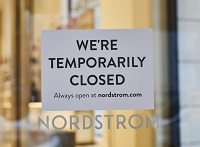 The last few months have been extremely challenging for apparel retailers. As sales stagnated and revenues declined, many had to survive on borrowed capital. S&P Global Market Intelligence study affirms, apparel retail industry drew down $7.2 billion credit during closures. Specialty retailers also drew $5.4 billion, department store sector drew $5.1 billion, online and direct-to-consumer retailers drew $2.3 billion, home goods retailers drew $1.7 billion and electronics retailers drew another $1.5 billion. Many retailers issued bonds, negotiated rent payments and stretched out vendor payments to preserve cash to stay afloat while stores were closed.
Some retailers including Ascena, RTW Retailwinds, J. Jill, Francesca's, Tailored Brands and others drew on their available credit. The draws that these companies made were essentially a run on capital. They were a source of liquidity for these retailers to run their business during shutdown. They took liquidity out of the system, creating multiple challenges for banks and other lenders, points out Bill Kearney, Senior Managing Director, Encina Business Credit. They also ate into profits, revolvers being lower-margin vehicles for lenders.
Bond issues to raise capital
As the situation stabilized, retailers also raised cash by selling new bonds. The first retailer to issue a new bond was the luxury department store Nordstorm, which closed on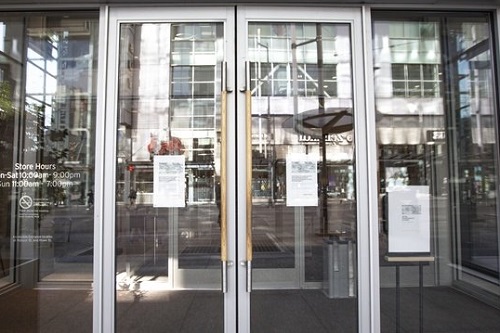 $600 million in new secured notes as well as an amended revolving line of credit in mid-April. This gave the retailer additional liquidity and flexibility in response to uncertainty related to COVID-19. As the discretionary retail world shuttered in response to the pandemic, appetite for retail debt picked up. Following Nordstrom many other retailers also issued new bonds.
To save liquidity, some retailers also put off their rent obligations. Real estate investment trusts (REITs) were able to collect an average 28.9 per cent of April rent payments by late May, say Jefferies analysts. Most of this rent was put off into the future. Even if this rent is paid out later, it would eventually amount to a cash liability, says Raja Sokolyanksha, Vice President, Moody's. According to him, vendor payments are another bill retailers put off as they tried to maintain their cash positions. As these bills from retailers remain pending, money is going to soon have to go back out the door.
More loan write-offs likely in future
Some retailers who don’t need cash in the near term, maybe able to pay their debts as stores reopen. However, they are holding on to the cash from their draws on fear of a second wave of the virus hitting sales again. Hence, there are likely to be higher levels of loan write-offs in the coming quarters, says Secured Finance P Network. Heavy debt loads have a terminal impact on retailers. The interest that they have to pay on these loans could instead be used for upgrading website, omnichannel services, store remodels or maintenance, or to keep employees on staff.
Future uncertainty increasing loan burrowers
However, retailers who don’t avail of such loans also risk their unavailability in future. In future, these retailers might have less access to cash from their revolvers and other asset-based loans. Also, having less capital could reduce their eligibility to avail loans. This could force them to avail of more expensive and less flexible sources of capital. They also face the risk of sales plummeting again due to multiple deadly waves of mass COVID-19 infections. Unavailability of loans in such a scenario could cause bigger problems for them.
US apparel makers may continue PPE production post-COVID-19 as demand stays on
 As Coronavirus spread across the US, textile and apparel makers quickly diverted their production lines to manufacturing PPE items like face masks and hospital gowns that were in short supply. Though many apparel retailers and brands are anxious to return to core product lines, they may not be able to do so as most will have to first contend with the excess PPE inventory in warehouses. There are also retailers who plan to stick to their PPE production lines as they believe wearing face masks will now become a commonplace fixture in the American wardrobe. Prominent amongst these is Cone Denim which is shifting a part of its loom capacity to produce Maxima medical fabrics for its sister division, Burlington. The fabrics manufactured by the brand promote a more responsible, sustainable solution for the long term.
Torchbearers of the trend
Another brand that has forayed into PPE manufacturing is Hanesbrand which recently launched two non-medical-grade face mask styles, Cool Comfort and Signature Stretch- to-Fit. The company also supplies the US government with over 320 million reusable cloth face coverings and more than 20 million reusable long-sleeve medical gowns. It plans to create an ongoing product line of basic personal protective garments to serve its consumer in the commercial and governmental markets.
Similarly Gildan Activewear began manufacturing PPE in April to address the shortage in the market. The company supplies non-medical face masks to the health care sector. It also produces non-medical face masks and isolation gowns for various retailers to be distributed to health care organizations. In future, it plans to produce more than 150 million masks and gowns to service the consortium and retailers under this effort.
Emergence of a new thought process
Sherry Wood, Director-Merchandising, Texollin believes the pandemic has changed the thought processes of both the public and industry. It has forced manufacturers and retailers across the country to connect and contact each other through various platforms, organizations and associations.
The pandemic also created a new generation of leaders who are constantly pushing new ideas. The importance of PPE products has increased many folds giving manufacturers an opportunity to improve their skills, adopt new technologies and other new innovative ways to be ahead of the game. Its ability to retool overnight to making masks and gowns has created many success stories in the US’ PPE industry. One of these is Under Armour, the brand recognized the need for performance solutions that would support athletes navigating the pandemic climate. It began manufacturing face masks designed by its innovation team and distributed millions of units of PPE to health care and community organizations to help fight the spread of COVID-19.
Gartex Texprocess India announces new dates for Delhi and Mumbai editions
With an objective to support the swift revival of the garment and textile industry, India’s most comprehensive exhibition on garment and textile manufacturing supply chain – GartexTexprocess India is back with new dates for its Delhi and Mumbai editions.
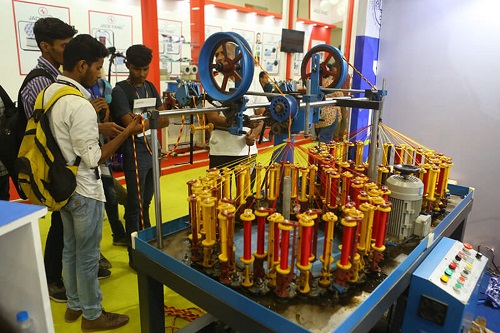
Following detailed consultations with industry stakeholders, organisers - MEX Exhibitions and Messe Frankfurt Trade Fairs India, have announced new dates for GartexTexprocess India’s Delhi and Mumbai editions. Originally scheduled in August 2020, the New Delhi edition of Gartex Texprocess India has now been pushed ahead to December 17-19, 2020 at India Expo Mart (IEML) in Greater Noida, Delhi-NCR, whereas the Mumbai edition will take place from March 19-21, 2021 at Bombay Exhibition Center, Mumbai.
The organisers believe that the new dates will ensure optimal revival of trade and provide additional time to exhibitors to plan their exhibits and product launchesmore effectively in the current environment. The decision which was taken on the basis of feedback from exhibitors, partners and industry associations, also aims to ensure that the event serves its objectives of business, knowledge and tech-exchange in a more meaningful way when the entire textile fraternity can come together.
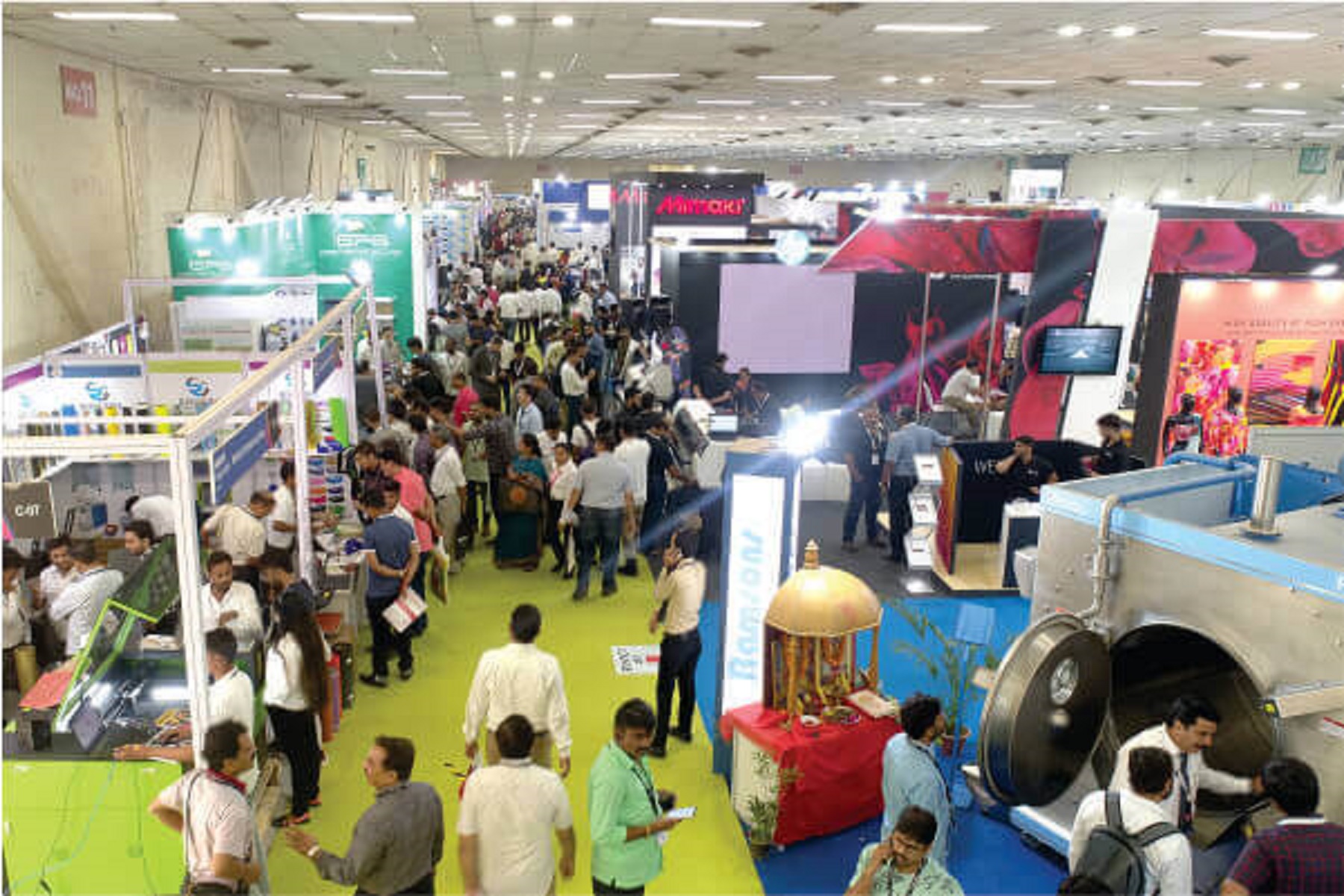
Exhibitions are a crucial tool to revive businesses and boost economy. Networking in a safe and controlled environment is an effective way for industries to get back on track, especially for the garment and textile industry that seesGartexTexprocess as an indispensable channel for marketing, showcasing innovations and forging valuable partnerships in the long run.
GartexTexprocess India is a trusted industry platform offering immersive experience to both exhibitors and visitors and has transformed the way stakeholders operate in garment & textile machinery industry. The key business event comes packed with the experience and expertise of two major exhibition organisers and draws thousands of quality visitors in every edition. The three-dayfair provides a holistic experience to participants not justby way of an extensive display of exhibits, but also through a series of seminars and workshops aimed at facilitating dialoguethat highlighton-going trends, opportunities and challenges forthe business of textiles. Prominent highlights of the show include Denim Show, Embroidery Zone, Garmenting & Apparel Machinery Zone, Digitex Show, India Laundry Show and Fabrics & Trims Show.











