


FW
US coalition sends proposal for PPE purchases
An US industry coalition representing the full spectrum of personal protective equipment (PPE) production recently sent a proposal to requesting the government to create strong domestic procurement rules for federal PPE purchases like the Berry Amendment in 1941 and the Kissel Amendment in 2009.
The coalition also requested for incentives to purchase indigenously-manufactured PPE, and assistance for reconstituting domestic PPE supply chains. Further, the coalition requested the government to implement forward-looking policies to shore up strategic national stockpile and to identify, incentivize and maintain a robust domestic supply chain for PPE and medical supplies.
Signatories to the proposal included National Council of Textile Organizations, the Alliance for American Manufacturing, American Sheep Institute, INDA: Association of the Nonwoven Fabrics Industry, the Narrow Fabrics Institute, the National Cotton Council, the Parachute Industry Association, the Rhode Island Textile Innovation Network, SEAMS: Association of the US Sewn Products Industry, the South Carolina Textile Council, the US Industrial Fabrics Institute and the United States Footwear Manufacturers Association.
Stoll-Karl Mayer merger completes
The merger between Karl Mayer and Stoll was completed as of July 1, 2020. As per merger plans, Stoll will now operate within the Karl Mayer Group as autonomous business unit and will represent expertise in the field of flat knitting technology. The company’s former CEO Andreas Schellhammer will be the head of its business unit within the Karl Mayer Group.
The production of Stoll machines in China will be integrated into Karl Mayer’s plant in Changzhou. The Chinese facility, having a surface area of 90,000 sq mt and modern halls, offers excellent conditions for Stoll to continue its high quality production. The integration project here is running smoothly despite the highest complexity and corona pandemic.
In addition, Chinese customers will be able to benefit from Karl Mayer’s (China) resources and organization in service and spare parts. Supply to Chinese customers from China will provide them with the shortest delivery times. The merger will also offer advantages in terms of digitalization. Stoll’s wide experience of the cloud software will enable Karl Mayer to develop innovative solutions with KM.ON cloud-based concepts and artificial intelligence.
JC Penney forges agreement with first-lien lenders
Filings by Securities and Exchange Commission reveal that JC Penney is fast emerging from bankruptcy by forging an agreement with first-lien lenders on a workable business plan. However, the retailer needs to meet certain conditions by July 31.
If Penney’s is able to fulfill these conditions, it may be able to conclude Chapter 11 proceedings, filed on May 15, by early autumn. But if it fails, Penny’s will shut down altogether or end up for sale. Buyers like rand management firm Authentic Brands Group and landlords Simon Property Group and Brookfield Asset Management are waiting to acquire the firm.
Already, Penney’s is in the process of closing about 150 stores, and just announced last week plans to cut 1,000 jobs. For its first quarter ended May 2, the retailer reported a wider net loss of $546 million, or $1.69 a diluted share, versus a net loss of $154 million, or 48 cents, in the year-ago period. Its total revenues fell by 53.2 percent to $1.20 billion from $2.56 billion, which includes a decline of 55.6 percent in net sales to $1.08 billion from $2.44 billion. The balance of revenue was from credit income, or revenue from its private-label credit card program.
Fung Group hands over WorkApp to Elevate
Fung Group handed over its smartphone-based tool WorkerApp to business risk and sustainability solutions provider Elevate for its further development and scaling.
As part of the agreement with Fung Group, Elevate will facilitate the expansion of WorkerApp into new countries and languages. It will be integrated into the company’s capacity building and advisory services, and brands and retailers will be able to tap the tool to increase visibility across their supply chains used.
Launched in 2018, the tool is designed for greater supply chain connectivity and allows digital training of garment workers. It could improve the conditions of garment workers by giving platform to voice their concerns. It could also improve transparency and social responsibility amongst brands.
More than 50 factories across Vietnam, Indonesia and India already use this tool which helps factory managers screen staff for diseases like COVID-19.
Erwin Chamber postpones Denim Days Festival
Held annually during the first weekend in October, Denim Days Festival has been postponed due to COVID-19. The Erwin Chamber hosts Denim Days Festival each year to celebrate the time when Amsterdam was known as the ‘Denim Capital of the World.’ This title came from when denim manufacturing was a thriving industry in Erwin Mill. The Erwin Mill, operated by Burlington Industries and later Swift Textiles, closed in 2000.
The Denim Days Celebration is a family event featuring concerts, performances, food and craft vendors, information booths, collectible and vintage cars, a parade, rides and slides for the kids and the annual Baby Denim Contest. Coats Area Chamber of Commerce also postponed the annual Farmers Day celebration until 2021 alongiwth Angier’s Crepe Myrtle Festival and Benson’s Mule Days.
Curve launches digital show Curve Connect
Cancelling its upcoming show at Javits Centre in New York, Curve, the lingerie brand of Eurovet America’s has introduced Curve Connect, a virtual offering scheduled to be held from September 13-25, 2020.
The virtual event will be powered by the Grip platform, which will enable the brand to focus on matchmaking within its lingerie and foundation-wear community. Through this experience, the brand expects to offer greater opportunities to emerging brands. The event will focus on matchmaking, networking and zoom meetings.
Curve will continue with the virtual component event after the restrictions are lifted, allowing its events to be hosted on-site. Over the last few months, the brand has cultivated a global audience through its webinars and digital offerings.
Kitex Garments defers investment plans
Kitex Garments, a global player in the infant wear segment, has deferred all its investment plans, considering the muted demand scenario amid uncertain market conditions in the export market. The company had investments worth Rs 920 crore last year. It had also envisaged a Rs 2,000-crore investment plan by 2025.
After a complete washout of March and April, the company has started shipping 3.5 lakh pieces per day since May, compared to 7.5 lakh on average in the pre-COVID-19 days. However, it initially faced some operational issues due to COVID-19 regulations. The company employs a massive workforce of 11,000 to meet its production requirements, which gives rise to certain risks. However, it managed to mitigate these risks by totally quarantining the factory and restricting both inward and outward movement of workers.
This year, the company also faced a production loss of around Rs 55 crore in March and April, following the total lockdown in the county. Delay in availability of raw materials from Tirupur, Gujarat and Coimbatore as well as supply chain disruptions forced the company to cut down production. However, it managed to minimize these obstacles to meet its export obligations.
Punjab garment makers seek government aid
Garment makers in Punjab are urging the state government to extend the moratorium on payment of loan installments. Around 10,000 textile units in Ludhiana have urged Punjab government to waive fixed electricity charges. The Punjab garment industry is staring at massive losses on account of almost 70 per cent drop in orders for winter wear in the wake of the coronavirus pandemic. The industry manufactures winter wear during June, July and August.
Most factories in the state are running at just 30-35 per cent capacities, Ludhiana-based garment makers said. The sharp fall in orders for winter garments is a double blow for the industry, which already suffered a setback with buyers cancelling or putting on hold orders for summer wear because of COVID-19 pandemic. Besides, there is uncertainty about demand for winter wear after September month.
Industry representatives pointed out that fashion products or garments manufacturing units would bear the maximum brunt of this fall in demand. Vinod Thapar, President, Knitwear Club of India said, as people do not have money they are likely to spend only on essential items rather than purchasing non-essential fashion wear.
CBN allocates N50 billion funds for Nigerian textile industry
The Central Bank of Nigeria (CBN) has allocated N50billion intervention fund for the textile industry. The fund will be administered at 4.5 per cent interest by the Bank of Industry (BoI), announced CBN in a release titled “Non-Interest Guidelines for Intervention in the Textile Sector”.
The funds would be used to resuscitate the ailing textile sector, restructure facilities and provide further facilities for textile firms with genuine need for intervention. The one-off intervention will terminate by December 31, 2025.
Activities to be covered in the Cotton Textile Garment (CTG) scheme include cotton ginning (lint production), spinning (yarn production), textile mills, integrated garment factories (for military, para-military and schools and other uniformed institutions).
Textile companies with an existing facility in the books of BoI under the CTG scheme, and those with existing facilities in Deposit Money Banks/Non Interest Financial Institutions (NIFIs) are not allowed to participate in these activities.
Brand accountability calls for collaborative efforts by suppliers
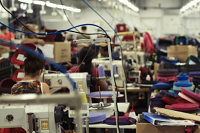 For decades, suppliers have been made a scapegoat by fashion companies and the same is true during COVID-19 as well. Taking undue advantage of the ongoing pandemic, companies have either been exploiting the loopholes in their contracts to cancel orders or voluntarily changing the terms of supplier agreements. Some companies are renegotiating contract terms leaving little room for disagreement from suppliers, says Global Insight. For instance, Arcadia has threatened to cancel orders if suppliers do not accept its ‘proposal’ of a 30 per cent discount.
Terming these agreements as asymmetric and unfair to suppliers, Ben Vanpeperstraete, Garment Policy Adviser, Traidcraft Exchange, says they enable brands to either ignore or amend provisions favorable to buyers. Fiona Gooch, Senior Private Sector Policy Advisor of the firm advises buyer companies to honor their original contracts and pay for orders, or pay for liability.
Suppliers take the final call
However, the ultimate responsibility to hold these companies accountability lies with suppliers, says Christie Miedema, Campaign and Outreach Coordinator, Clean Clothes Campaign. According to her, suppliers agree to buyers’ terms as they know buyers can source garments from elsewhere if they don’t agree. Suppliers also fail to use their legal rights due to fear of costs associated with transnational litigation, adds Vanpeperstraete. Hence, laws should be made with due diligence to hold these companies accountable.
More meat to laws
According to Els de Wind, Co-Chair of the IBA Global Employment Institute, laws need more strength to tackle multinational companies. They should address the issues of national employment law, labor law and public law and also advance the obligatory frameworks and bilateral investment treaties between supplier and buyer countries’. Scott Nova, Executive Director, Worker Rights Consortium, advises suppliers to act collectively across countries as it would give them a lot of leverage.
The Bangladesh Garment Manufacturers and Exporters Association (BGMEA) recently threatened to ban Edinburgh Woollen Mill (EWM) as the company was requesting up to 70 per cent discounts from suppliers. The association is also raising awareness about the actions of other buyers. Once suppliers make this into public issues, companies are forced to change their stance as for them their reputation matters most, says Nova.
Some brands are indeed taking action to address cancellations. For instance, Primark has committed to pay for all orders planned for handover by April17, 2020. The brand believes that solution to this problem cannot be achieved by individual companies, it needs collective action.











