


FW
WRC removes Gap from COVID-19 tracker list
Worker Rights Consortium (WRC) has decided to remove Gap Inc from its COVID-19 tracker of companies that failed to pay their manufacturers for canceled orders that were completed or were in production. This development comes after Gap Inc committed to pay suppliers in full for orders it has canceled due to the pandemic that was already completed or in production. The company has also assured vendors to compensate in full for finished goods or goods in production that were canceled or subjected to pack and hold. It is working towards providing low-cost financing to its vendors by working with their banking partners to increase the number of funds available within the program.
A WRC spokesperson hailed Gap’ as being creditworthy as the corporation was put through severe challenges during the crisis even more so than those confronting some of its competitors and given the large volume of orders at stake. WRC had previously criticized Gap for canceling orders and had demanded ‘sizable discounts’ to accept some orders and extend payment terms without providing adequate low-cost financing.
Bangladesh grants new stimulus package to export-oriented industries
The Bangladesh government gave yet another stimulus package worth Tk 3,000 crore for the export-oriented industries to help them provide wages and salaries to their workers for July. This is the third stimulus package for the export-oriented industries, which are now actively running their units, since March.
The development comes after the Bangladesh Garments Manufacturers and Exporters Association (BGMEA) and the Bangladesh Knitwear Manufacturers and Exporters Association (BKMEA), whose members generate most of the export receipts, jointly wrote to Finance Minister AHM Mustafa Kamal on June 22 seeking continuation of low-cost loans for three more months to September. Accordingly, the central bank yesterday sent a letter to 47 banks to release the fund from the stimulus package for the large borrowers in the industrial and service sectors. The package's allocation was raised to Tk 33,000 crore from Tk 30,000 crore for this end.
According to this package, borrowers will have to pay 4.50 per cent interest rate to avail the fund while banks will get 9 per cent interest as the government will give the rest as subsidy. Banks will be permitted to take up 50 per cent fund from the central bank's refinance scheme to provide the credit to the export-oriented industries smoothly. Borrowers will have to pay the loans within two years including a grace period of six months.
Japan’s Matsuoka Corp to produce protective clothing
Japanese apparel maker Matsuoka Corp plans to produce protective clothing by investing $28 million in its Vietnam manufacturing unit Anbam Matsuoka Garment Co. This move came after the Japanese government pledged to assist the apparel maker to diversify its supply chains and lessen its dependence on China amid the Coronavirus crisis.
Matsuoka is one of 30 firms supported by the Japanese government to move factories out of China and set them up in Southeast Asian markets like Vietnam, the Philippines, Thailand and Laos. According to an official list from Japan External Trade Organization (Jetro), 15 out of 30 Japanese firms including Matsuoka Corp. have registered to move to Vietnam.
Matsuoka established its Annam Matsuoka Garment Co in the central province of Nghe last November as part of an ongoing campaign to produce apparel products mainly in Southeast Asian countries.
Good on You grants high ratings to Kings of Indigo
Good On You, a consumer-facing platform that assesses brands based on their impact on people, planet and animals, has granted 4 out of 5 overall ratings to denim brand Kings of Indigo. The brand was also informed about its potential areas for future development. It has already started putting in efforts to improve in these categories. The company plans to adjust workers’ wages by 2021 to account for the cost of education and savings. It also aims to obtain a 2020 sustainability report that will continue research on living wages, request detailed opening costing from suppliers and participate in the Fair Wear living wage incubator 2.0 in order to achieve its goal.
Kings of Indigo has been certified by the Global Organic Textile Standard (GOTS), OEKO-TEX, OCS100 and GOTS. Its latest sustainability report also highlights its initiatives to reduce energy consumption. Out of the 82 jeans styles in the company's S/S ’20 collection, half are measured to have very low impact on the environment.
India, China to help boost Bangladesh apparel exports: Experts
With recent export reversals in traditional strongholds of the US and the EU, experts believe Asian markets of China and India and that of Japan can help Bangladesh apparel exporters to increase exports in the coming days. While China boasts of a domestic market that is next only to the US in terms of size, Indian fashion retail sector is expected to touch $115 billion by 2026. Bangladesh’s exports to India touched the billion dollar mark in 2019. Of the total amount, apparel sector alone earned $499.09 million in 2018-19 fiscal, 79.09 per cent higher compared to what was $278.67 million in the previous year.
Hence, Bangladeshi manufacturers must establish contacts with prominent Indian retail companies and try to develop a long-term business relationship based on mutual trust and benefit, said Asif Ibrahim, Managing Director, Newage Group in an earlier interview with Apparel Resources. Shahidullah Azim, former Vice President, BGMEA added that after the implementation of the Goods and Services Tax (GST), production cost in India has increased, which has further given a boost to apparel imports from Bangladesh.
Bangladesh should also focus more on the Asian markets to revive the country’s earnings from export amidst the COVID-19 outbreak, opined Mustafizur Rahman, distinguished fellow of the Centre for Policy Dialogue (CPD), adding that Asian markets, especially India and China, are very important from Bangladesh’s export perspective.
Apart from India, China has become a major export destination for Bangladeshi RMG makers lately. Apparel exporters from Bangladesh have been making steady inroads into China and exporting cotton-based apparel to the country said Mohammad Hatem, Vice President, BKMEA.
Global cotton production at a four-year low in 2020-21
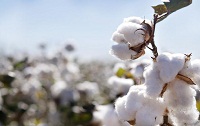 The 14th USDA Cotton and Wool Outlook predict global cotton production in 2020-21 will decline to a four-year low of 116.2 million bales. This is also 5.5 per cent decline from production in previous year. In 2020-21, the area under cotton cultivation is also forecasted to decline by 6 per cent to 33.0 million hectare. The top four cotton-producing countries will account for 73 per cent of total global cotton production, with India remaining the leading producer. Of the remaining three, China will contribute 23 per cent to the total production, while the US and Brazil will contribute 15 and 10 per cent of global cotton production respectively
Prominent declines in Brazil, India and China
India’s cotton production in 2020-21 is likely to decline by 2 million bales. Its area under cotton cultivation is likely to decline 6 per cent to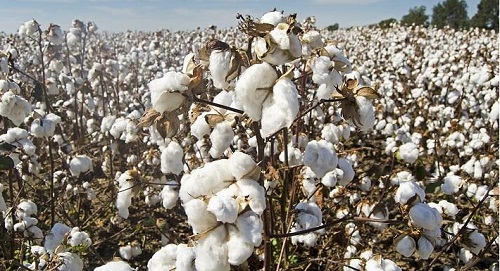 12.5 million hectares combined with a slightly lower yield expectation of 496 kg/hectare.
China’s cotton production in 2020-21is likely to decline by 3 per cent to 26.5 million bales, while that of Brazil’s is forecasted to decline 9 per cent to 12.0 million bales in 2020-21.Brazil’s total area under cotton cultivation is also expected to decline 2 per cent to 1,686 kg/hectare. In contrast, cotton production in Pakistan is projected to increase by 300,000 bales to 6.5 million bales. Cotton production in Australia is also likely to increase by 1.1 million bales to 1.7 million, while its area under cotton cultivation is forecast to grow to 180,000 hectares.
A 12 per cents increase in global cotton consumption
Despite reduction in estimates for world cotton mill use in July for both 2020-21 and 2019-20, global cotton consumption in 2020-21 is forecast to grow 12 per cent to 114.3 million bales or about 12 per cent above the revised 2019-20 estimate of 102.4 million bales.
In 2020-21, aided by adequate and relatively inexpensive cotton supplies, cotton mill use by all major countries is forecast to rebound. Use of mill cotton by China is forecast to account for 32 per cent of global cotton mill use in 2020-21, while in India it will account for an additional 20 per cent. The use of mill cotton by Pakistan is expected to account for 9 per cent, while that by Bangladesh, Turkey and Vietnam each will contribute to 6 per cent of global mill cotton use. Cotton trade across the globe is expected to rise by 4.5 per cent in 2020-21 to 41.8 million bales. Shipments from Brazil are expected to increase by 3 per cent to 9.0 million bales, while those from India are expected to increase by 1.5 million bales to reach 4.5 million bales.
China to lead cotton imports
In term of imports, China will be world’s leading importer of raw cotton with its imports rising by 24 per cent 9.0 million bales. The imports by Bangladesh and Vietnam are projected to increase by 6 per cent and 8 per cent to 7.1 million bales and 7.0 million bales respectively. Pakistan’s cotton imports are also expected to increase to 3.9 million bales.
Despite, world’s cotton reserves increasing to 102.8 million bales in 2020-21, stocks-to-use ratio is forecast to decrease from 99 per cent in to 90 per cent in 2020-21. However, as world cotton stocks outside of China are expected to be higher, the average world cotton price is expected to decline slightly.
Under Armour to open first Sydney store
Sportswear brand Under Armour is set to open its first Sydney store in Macquarie Shopping Centre this weekend.
The 200 sq m store will house a broad range of athletic performance wear, footwear, apparel and accessories for men, women and kids. The store will also stock product across the Run, Train and Golf categories.
To celebrate the opening, Under Armour is offering two gift-with-purchase incentives to customers who shop during the opening week. With every purchase of $150 or more, customers will receive a limited-edition Under Armour backpack. Customers will also receive a Under Armour Performance Wristband with every purchase.
The addition of this store will bring the brand's Australian store count to four, joining the brand's other stores in Melbourne, the Gold Coast and Brisbane.
The store will open with comprehensive health and safety procedures in place, including social distancing inside and outside the store, frequent cleaning of store surfaces and easily accessible hand sanitizer.
Stop sourcing from Chinese suppliers involved in forced labor, urges US Foundation
The Thomson Reuters Foundation urged brands from Adidas to Amazon to end sourcing of cotton and clothing from the region and cut ties with any suppliers in China that benefit from the forced labour of the ethnic Uighurs and other Muslim groups.
The Foundation sent emailed questions to more than 30 leading global retailers about their supply chains in China and the origins of the cotton they sourced.
United Nations experts estimate that at least a million Uighurs and other Muslims are held in detention centres in Xinjiang. China has denied mistreatment and said the camps offer vocational training and help to fight terrorism and extremism.
The United States this month hit senior Chinese officials with sanctions over alleged rights abuses against the Uighurs, and Britain and France have recently condemned their treatment.
While most fashion brands do not source from factories in Xinjiang, many of their supply chains are likely to be tainted by cotton picked by Uighurs that is exported across China and used by other suppliers, the rights groups said in a letter.
More than 80 per cent of China’s cotton comes from northwestern Xinjiang, which is home to about 11 million Uighurs.
Myanmar exports $2.73 billion worth o CMP garments in FY19-20
Myanmar’s exports of garments manufactured under the cut-make-pack (CMP) system were valued $2.73 billion in the period between 1 October and May-end in the current fiscal year 2019-2020, according to data from the Ministry of Commerce.
At present, some CMP garment factories have shut down on the reason for the lack of raw materials due to the coronavirus negative impacts, leaving thousands of workers unemployed. The labor-intensive enterprises are badly battered by the coronavirus impacts. However, foreign direct investments flow into many types of businesses including the garment enterprises.
The CMP garment sector which contributes to 30 per cent of Myanmar’s export sector is struggling because of the order cancellation from the European countries and suspension of the trade by western countries amid the pandemic. The export value of CMP garments was only $850 million in the 2015-2016 fiscal year, but it has tripled over the last two FYs.
Archroma collaborates with Soorty for a new denim collection
As part of its active engagement in the fight against COVID-19, Archroma, a global leader in color and specialty chemicals towards sustainable solutions, today announced a collaboration with Soorty for the development of the Pakistan-based denim manufacturer’s new collection combining eco-advanced colors with hygiene & protection technologies.
The collection will include some of the most advanced of Archroma’s technologies, innovations and systems for coloration, hygiene and protection such as an aniline-free* indigo system, Pure Indigo Flow, based on the new Denisol® Pure Indigo developed by Archroma to preserve the health of denim workers and aquatic life; a water-saving dyeing technology, Advanced Denim, based on innovative dyeing processes used with sulfur-based Diresul® RDT blue specialties and an antibacterial treatment based on Sanitized® technology and designed to keep the garment odor-free, fresh and germ-free.
The denim collection will be introduced by Soorty under the brand SmartCare+ and will include denim fabric, garments and, coming soon, masks.











