


FW
Bangladesh remains the third largest apparel sourcing country: Survey
According to the seventh edition of the survey report, conducted jointly by the United States Fashion Industry Association (USFIA) and the University of Delaware, Bangladesh became the third largest sourcing country for the US-based apparel and fashion companies in 2020, advancing from its last year's sixth position despite the COVID-19 pandemic, according to a latest study. Bangladesh's position improved mainly due to the 'most competitive price' it offers and exports similar products over the years, the study revealed.
Around half of the respondents revealed plans to modestly increase sourcing from a few Asian countries in the next two years including Bangladesh, Indonesia, Vietnam, and India. Bangladesh accounted for 9.4 per cent of US apparel imports in the first five months of 2020, which was a record high and up from 7.1 per cent in 2019.
The report indicated Bangladesh exported similar products to the United States from 2015 to 2019, its export to the US increased despite the COVID-19 and the US-China tariff war. The report also found Bangladesh offers the most competitive price, followed by Vietnam, Indonesia, Cambodia, India, and Sri Lanka. Other than the factor of labor cost, the strong capacity in cotton yarn and fabric production locally contributed to the cost advantage of ‘Made in Bangladesh’ products, it said.
However, respondents still regard sourcing from Bangladesh involving relatively higher compliance risks in general, with the rating score for the country at 2.0, the same as last year. Some respondents explicitly expressed their concerns about the dissolution of the Alliance and the Accord, a move that is widely viewed as not helpful with building more confidence in Bangladesh's social responsibility practices.
Columbia Sportswear to invest in strategic priorities
Columbia Sportswear Company will continue to invest in strategic priorities besides focusing on cost cutting. Second quarter sales, that ended on June 30, 2020, declined by 40 per cent to $316.6 million. The company incurred a net loss of $50.7 million compared to net income of $23.0 million in Q2 FY19. The company’s gross profit during Q2 FY20 declined to $146.2 million while its selling, general and administrative expenses declined to $217.6 million. Its loss from operations declined to $70.3 million.
The company’s sales in all its geographical regions reported a decline. While sales in the US fell by 42 per cent to $183.2 million, those in the LAAP region slipped by 34 per cent to $67.4 million. Sales in the EMEA region dropped by 36 per cent to $58.3 million while those in Canada decreased to $7.7 million.
Sale of Columbia’s brands declined 42 per cent to $265.8 million. The sales of Sorel brand declined to $13.3 million while those of Prana brand declined to $27.7 million. Apparel, accessories and equipment sales during the quarter plunged by 44 per cent to $243.8 million whereas footwear sales came down to $72.8 million.
Lectra India webinar focuses on need for fabric optimization in factories
A webinar organized by Lectra India – a leading fashion, textile, technical textile and automotive technology company – focused on the need for fabric optimization in factories by apparel industry stakeholders. The webinar was moderated by Suraj Niranjan, Marketing Head along with Rajeev Sharma, Solution Consultant, Lectra India. The webinar focused on how product development and production teams often struggle to bring innovative and cost-effective apparel products to the market quickly.
As around 40-60 per cent of the garment making cost is spent on fabrics, it is very important to save every square inch of fabric in order to secure profit margins and stay ahead of the competition, it said. Rajeev Sharma shed light on Lectra’s cloud-based software Diamino which helps apparel companies get the maximum output of their fabric by accurately estimating their fabric consumption. It also allows cutting room to automatically process markers to further create the most cost-efficient fabric layouts through its cloud application Quick Nest.
Inditex, IndustriALL sign joint declaration to support industry growth
Inditex, the leading multinational garment company owners of Zara and other high street brands, and IndustriALL Global Union have signed a joint declaration on August 4 to support the recovery of the global garment industry from the coronavirus pandemic.
The agreement commits to stabilize stable payment terms and financing support to suppliers’ cash flow. It pledges to respect freedom of association and collective bargaining rights, giving workers the right to join a union to advance their interests. It promotes social dialogue at all levels, and commits both organizations to working with governments and business organizations in source countries.
The agreement reinforces commitments to other multistakeholder initiatives, including the ILO Call to Action in the Global Garment Industry and the ACT initiative. It will ensure the health and safety of workers. Supplier companies will implement protective measures, and provide personal protective equipment.
Bangladesh's global clothing exports share rises to 6.8 per cent: WTO
According to the World Trade Statistical Review 2020, published by the World Trade Organization (WTO), Bangladesh’s share in global apparel exports increased by 0.4 percentage point to 6.8 per cent in 2019 after a slight fall in the previous year. The country performed better than previous year due to opportunity presented by the US-China trade war. The fall in global market also boosted its market share, says Faruque Hassan, Former Vice President, BGMEA.
Economists also think China shifting helped Bangladesh to gain more in the export market. The country currently holds a 7 per cent share in the global apparel market and continues to grow. It helps the country to reduce the gap with China, the largest exporters of clothing goods, affirms Khondaker Golam Moazzem, Research Director, Centre for Policy Dialogue (CPD).
However, Bangladesh’s success in retaining its market share will depend on how much the country can benefit from the China relocation. Moazzem suggests focusing on producing products, which are being produced by China that are currently withdrawn by manufacturers due to relocation of investment.
Manufacturers have demanded policy support to retain the market share as the COVID pandemic has hit the sector badly. If the government continues provides financial support as working capital and in other forms, the industry will be able to retain the growth momentum, adds Abdus Salam Murshedy, President, Exporters Association of Bangladesh (EAB).
Retailers in US, Europe face uncertain future with second round of store closures
 A resurgence of the pandemic in the US, Australia and some European countries has led to governments tapering off support for fashion businesses in these countries. Compounded by the stress of intermittent reopening and reclosing of stores, fashion retailers in these countries are planning to declare bankruptcy by the end of this year.
Despite US fashion retailers being allowed to operate during the crisis, they recorded a 7.3 per cent decline in merchandise revenues in the week ending July 19, reveals Affinity Solutions figures. Revenue of retailers in California, Texas and Arizona also declined. Revenues of California retailers declined by 19.9 per cent while those of Texas dropped 13.2 per cent and Arizona 18 per cent, states data from Opportunity Insights, a team of economists based at Harvard University.
Germany retailers, who closed down most of their nonfood shops for two months, also expects a 30 per cent decline in revenues,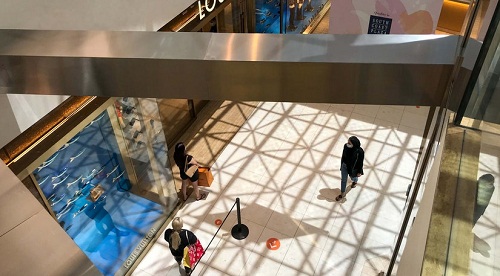 particularly in the fashion industry, says Neil McMillan, Director-Advocacy and Political Affairs, EuroCommerce, the association for retail and wholesale in Europe.
Second wave to hit retailers harder
Both European and Australian retail associations expect the effect of second round of shutdowns to hit harder incase governments withdraw support schemes introduced during the pandemic’s first wave. The Australian government recently announced plans to reduce funds provided for unemployed workers via its job keeper support scheme by around three-quarters. UK also plans to end its equivalent employee support scheme in the coming months. In the US, support is still on its way as the two main political parties continue to debate over the stimulus packages. It may be too late before this support actually comes as many retailers like JC Penney, Neiman Marcus, Lucky Brand, Brooks Brothers and Ascena have already filed for bankruptcy.
Besides uncertain government support, retailers also have to deal with sporadic changes in restrictions. UK forced all its non-essential stores to close only two weeks after opening. Though these stores have started to reopen, they are facing a 42 per cent decline in footfalls. Retailers need a clear communication on closures and reopening to help them secure premises, plan furloughs and manage stock levels to minimize waste, says Simon Jenner, Director, Leicester Business Improvement District.
Drastic impact on small retailers
Rising virus cases often compels retailers to shutter stores even without government mandates. As US considers shopping to be a safer activity than going to gyms, bars or restaurants, it has directed only Californian stores enclosed within indoor malls to close, says Jason Brewer, EVP-Communications and State Affairs, Retail Industry Leaders Association. Hence, the country directed only
The country reopened about 14,000 shopping and retail firms on March 1. However, they were soon closed again, says data from business directory website Yelp. Some of the other stores in affected areas also plan to close soon. However, this constant shutting and opening process may take a huge toll on small businesses who are already struggling to secure their future.
World textiles, apparel exports fell in 2019, India remained among top exporter: WTO
 Global economic slowdown and US-China trade war caused the world merchandise trade to fall for the first time in 2019 since the 2008 global financial crisis. According to newly released World Trade Statistical Review 2020 report by WTO, world merchandise trade fell by 3 per cent in value and 0.1 per cent in volume during 2018-2019 as compared to the positive growth of 2.8 per cent witnessed during 2017-2018. The report estimates the value of world textiles and apparel exports to have decreased by 2.4 per and 0.4 per cent to $305 billion and $492 billion respectively in 2019.
Textile imports pattern remains stable
However, the pattern of world textile exports remained stable during the year with China, European Union (EU28), and India retaining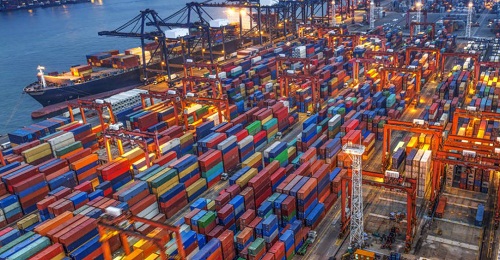 their positions as the world’s top three textile exporters. Exports by these three economies accounted for 66.9 per cent of the value of world textile exports in 2019. Textile exports by Vietnam noted a positive growth of 8.3 during the year with the country surpassing Taiwan to rank the world’s seventh-largest textile exporter in 2019.
Reduced China share leads to 71.4 per cent decline in apparel exports
Though China, the European Union (EU28), Bangladesh, and Vietnam remained the world’s top four apparel exporters in 2019, their share in the world apparel export market declined from 74 per cent in 2018 to 71.4 per cent in 2019.
This was primarily owing to the reduced market shares of China in world apparel exports. Since 2014, China has been exporting less apparel and more textiles to the world. The country’s share in world apparel exports declined to 30.8 per cent in 2019. Apparel exports by Vietnam and Bangladesh grew but their share in the world market was limited.
Vietnam remains largest textile importer
The global textile import market is being increasingly driven by apparel-exporting countries in the developing world. In 2019, Vietnam was one of the world’s top three largest textile importers. In contrast, the market shares of the US and the EU declined from 40 per cent in 2010 to only 31.2 per cent in 2019.
US and the EU imported more finished textile products such as home furnishings and carpets as well as highly specialized technical textiles. Their demand for import of intermediary textile raw materials weakened during the year.
Emerging economies drive apparel imports
Most of the global apparel import demand is coming from emerging economies with a booming middle class. During the year, the European Union (EU28), US, and Japan emerged as the world’s top three importers of apparel. They absorbed 58.1 per cent of world apparel demand in 2019. However, their imports dropped by almost 84 per cent since 2005. This was a result of emerging economies becoming the world largest apparel consumption markets during the year. For example China’s apparel imports grew by 8.1 per cent to $8.9 billion. From 2010 to 2019, the country imported apparels at the rate of 15 per cent annually against 1.9 per cent imports by the traditional top three importers.
This story is taken from the blog by Dr. Sheng Lu, Associate Professor, Department of Fashion & Apparel Studies, University of Delaware, where he has analysed WTO report in details
Uniqlo sales rise by 4%
Fast Retailing brand Uniqlo’s same-store sales (including online) in July rose by 4.4 per cent year-on-year. Its total sales rose by 4.7 percent.
Uniqlo is usually heavily dependent on the weather in the Japanese market with the right temperatures at the right time of year regularly helping to boost or suppress sales of its basics such as T-shirts or its weather-specific items such as its Heattech series.
But this time, despite the long spell of rain and low temperatures experienced during the month, same-store sales rose in July on the back of strong sales of items that perfectly suited the recent demand for stay-at-home clothing. The company also said that its stores are largely open and that as of the end of July, only seven shops remained temporarily closed, although 93 are still operating shorter working hours due to the pandemic.
New COVID-19 wave may hit Vietnam T&A sector badly
A fresh wave of COVID-19 may worsen the situation of Vietnam’s textile and footwear industries, still reeling from the impact of the first. According to the ministry of industry and trade, apparel production in July rose by 13.2 per cent over June but was nearly 5 per cent down year on year. Exports of textiles and footwear are down by 21 per cent and 8 per cent respectively. TNG Investment and Trading JSC, which manufactures clothing and footwear, reported first half revenues and net profit down by 10 per cent and 29 per cent at VND1.84 trillion ($79.3 million) and VND66 billion ($2.84 million) respectively.
The Vietnam National Textile and Garment Group (Vinatex) reported a 15 per cent fall in revenues and 25 per cent decrease in profits despite partially switching to manufacturing face masks and protective clothing and retaining all its workers. The situation was better than predicted, according to Vinatex's deputy general director, Cao Huu Hieu, who said the company had anticipated declines of 30 per cent in revenues and 50 per cent in profits. Song Hong Garment JSC’s profit had fallen by 44 per cent to just VND122 billion ($5.26 million), according to a report in a Vietnamese newspaper.
While the switch to making face masks and protective clothing was considered a lifesaver for many garment firms in the first half of the year, a global oversupply of these products has caused prices to plummet. Firms such as TNG have even stopped manufacturing masks and started focusing on high-value products.
ITKIB urges government for financial support
Istanabul Textile and Apparel Exporters Association (ITKIB) urged the government to provide financial support, including tax exemptions and debt delays, to help the sector remain competitive during the coronavirus pandemic.
Mustafa Gültepe, Chairman,said that the industry experienced a 16.5 per cent contraction in exports during the January-July period compared to the previous year following the global demand plunge induced by the pandemic.
Gültepe noted that the sector initially set a target of a 10 per cent increase in exports for 2020 but had to revise these projections after orders drastically declined in March following the global spread of the virus.
He noted that the monthslong closure of clothing shops and businesses in the country during the peak of the pandemic contracted the domestic market, putting additional pressure on the sector.
The sector recorded an upward trend in July, however, posting a 25% increase in exports thanks to the gradual reopening of world economies and the rapid recovery in the European Union markets, Gültepe said.
Gültepe said the industry is seeking the lifting of customs duties that were recently introduced for imports of intermediate products used in textile factories such as zippers, buttons and fasteners.











