


FW
Pakistan needs swift action to boost textile exports
What was slated to be a year of opportunity for Pakistan’s cotton importers (read spinners) may fast turn into a missed window. Although textile exporters insist that it will be long before major buyer destinations reopen and demand resurges, international cotton prices are already back to pre-lockdown levels of December 2019.
That means Pakistan’s textile sector needs to make some quick decisions. A double-digit month-on-month slowdown in textile exports – both in volume and value terms - between July and August lends credence to the theory that the volatility in export destinations markets shall continue as the northern hemisphere braces for a second wave of COVID cases followed by another round of lockdowns.
Yet, damage to domestic crop last season - amid conflicting reporting by governmental departments leading to several downward revisions of output from 12.5 million bales to eventual 7.5 million bales - has hurt confidence of value adding industry in reliability of local cotton estimates. While Pakistan was saved in nick of time from highest ever cotton import bill due to COVID-19, 2020-21 may prove to be drastically different.
White House honors NRF with Presidential Award
White House has honored the National Retail Federation with the Pledge to America’s Workers Presidential Award, recognizing the NRF Foundation’s RISE Up initiative. Ivanka Trump and Commerce Secretary Wilbur Ross highlighted NRF and eight additional businesses and trade organizations for their workforce development programs.
A White House initiative, the “Pledge to America’s Workers” aims to increase the skills of the U.S. workforce by expanding apprenticeships, educational opportunities and job training programs. NRF was among the original signers of the pledge in 2018 and committed to create enhanced career opportunities for 250,000 individuals over the next five years.
Developed and managed by the NRF Foundation, the RISE Up (Retail Industry Skills & Education) training and credentialing program aims to change lives for young people and those with barriers to employment by empowering them with the confidence and tools needed to succeed in the retail industry. The credentials cover a wide array of knowledge including sales, customer service, inventory, retail math and distribution, and the training is available through online and classroom formats. To date, the NRF Foundation has reached over 400,000 individuals with RISE Up training — 75,000 since 2018 — through 800 training partners in 47 states.
COVID-19 highlights need for technical textiles
COVID-19 has clearly highlighted the need for technical textiles that go into making PPEs. More importantly, lack of continued investing in this sector even in the United States has exposed its vulnerability in critical lifesaving products.
Cost competitiveness, good quality and value-added products are the way forward for the industry. United States and Europe are still leading consumers and the economy in these regions will determine the speedy recovery of the global textile industry.
Interestingly, the current global crisis is reshaping the global textile sector’s space with more eyes on East Africa, Vietnam and Bangladesh. While China is the 600 pound gorilla, continuing trade tensions, COVID-19 impacts, and Xinjiang issue are watched carefully by competing countries like India to capture the market share. Cotton exporting countries like USA and Australia value China as a major player because of its buying power and need, however attention needs to be paid on recent geopolitical conditions.
Cotton textile manufacturing giants like India are seriously expanding their product basket so that weak links, such as finishing, garmenting and synthetic fiber sector, can enhance their strength against China. Given the strength of Bangladesh in its garment sector due to relative low cost labor and beneficial trade agreements that exist for Vietnam and Bangladesh, developing value-added products and enhancing the product basket are viable options for India.
6th Hygienix™ to be held from November 17
The sixth edition of Hygienix™ — the premier event devoted to the absorbent hygiene and personal care industry will be held from November 17-19. The event’s new virtual format will focus on global pandemic impacts and up-to-the-minute discoveries in sustainable technologies, packaging and labeling challenges, the future of absorbent hygiene, product development patents of note, and intellectual property, smart diapers, testing, and market trends. The event announced three finalists for the Hygienix Innovation Award™
The three finalists for the award were selected from twenty-two nominees by INDA’s Technical Advisory Board comprised of technical professionals from INDA member companies. The finalists are:
Male Drip Protection from Dermasteel is an innovative male leak protection product, with a patent-pending, proprietary design that is discreet, form-fitting, and tailored to the male anatomy. This new product provides effective containment of bodily fluids, protecting the wearer’s skin while affording him comfort and confidence.
Full-Care® 6217 from HB Fuller is a new class of adhesives for positioning femcare articles to the new variety of fabrics making up women’s underwear, thus meeting the evolving needs of millennial consumers with active lifestyles that require increased product functionality. This new product generation provides manufacturers cost savings through weight production, consistently higher peels with no adhesive transfer, higher performance on different fabrics, and excellent adhesion on both fabric sides.
High Gel Strength (HGS) SAF™ from Technical Absorbents is a new range of fabrics that allow the design and manufacture of materials with greater integrity and robustness for demanding absorbent hygiene applications. HGS SAF™ nonwovens provide decreased levels of absorbency, compared to standard SAF™ fibres, which can be advantageous in certain washable applications where durability is more important than absorbency.
Finalists will present their innovations virtually to hygiene and personal care professionals at Hygienix™ on November 18. The Hygienix Innovation Award™ winner will be announced on November 19.
NCTO’s video campaign showcases industry’s response to PPE crisis
The National Council of Textile Organizations (NCTO), representing the full spectrum of U.S. textiles, from fiber through finished sewn products, launched a paid social media video campaign today, highlighting the extraordinary efforts the industry has taken to respond to the shortages of lifesaving personal protective equipment (PPE) spawned by the COVID-19 pandemic.
The campaign underscores the importance of ending our over reliance on China for PPE and calls on Congress to craft policies that support domestic procurement requirements and the onshoring of jobs. It is high time the US had a national strategic plan in place to spur investment in the industry and ensure the country has a permanent domestic PPE supply chain to confront the next pandemic our country faces.
With e-com expecting festive season boost, small cities to see high traction
 Benefitting in a big way from the COVID-19 pandemic, the $27 billion Indian e-commerce market is expected to grow by 40 per cent in 2020. Redseer Consulting expects the market to gross $38 billion in 2020. They expect the total number of online shoppers to jump from 135 million in 2019 to 160 million in 2020 owing largely to digitization caused by the pandemic. It expects the percentage of online penetration to increase from 3 per cent in 2019 to 5 per cent in 2020. Studies also show with growing Internet usage across India, new consumers are emerging from Tier II and III, even rural India. A study by Unicommerce states demand is slowly shifting. Currently, Tier II and beyond cities contribute around two-third of the total online consumer demand in India and this share is expected to rise in the coming years. The aspirational young Indian consumer in these cities is driving growth for the sector. Tier III and beyond cities witnessed 53 percent growth, making it the fastest-growing region.
E-grocery to lead retail growth
Present in 35 cities. India’s largest e-grocer BigBasket saw sales double from February to July. The e-tailer’s customer base grew by 80 per cent during this period while its existing customers bought 25 per cent more, goods. Now, the grocer has upped its growth targets for FY21by 40-50 per cent and is on track to achieve it.
Another B2B platform for over 22,000 kirana stores, MaxWholesale expects a 20-40 per cent spike in demand around the festival season driven by purchases of healthier/natural snacks, dry fruits, pulses, juices, mithai, chocolates, beverages, etc. From a Rs 25-crore revenue last fiscal, the company is set to achieve Rs 300 crore revenue this fiscal, informs Samarth Agrawal, CEO and Co-Founder
Expert say e-grocery category will be the fastest growing category in Calendar Year (CY) 20 with 70 per cent Year-on-Year (YoY) growth. This is significantly higher than the CY 2016-2019 average YoY growth rate of 50 per cent for this category.
As per Amit Monga, Co-Founder, ANS Commerce, this year offline retail has recovered by just 40 per cent, retail brands aim to achieve 30-50 per cent of their sales from online retail. His firm ANS Commerce works with 90 large brands, of which 30 were acquired in the last three months alone.
Sellers’ confidence increases
As evident from the 50-60 per cent increase in seller registrations on Amazon.in, sellers’ confidence in online retail is increasing. More sellers are registering themselves on e-commerce platforms as there has been a huge jump in demand for pet toys, athletic and open footwear, essential ‘stay at home’ clothes, furniture, gourmet food, TVs, laptops and sports equipment on Amazon.in, points out Manish Tiwary, Vice President, Amazon India.
Flipkart recently onboarded 50,000 kiranas to provide fast, personalized e-commerce services to its customers during the upcoming Big Billion Days sale. The company attributes the growing preference for online shopping to the safety and convenience attached to it. It has seen a significant spike in demand for its work-from-home essentials like electronic devices and furniture. Demand is also being propelled by kitchen appliances and medical equipment, a Flipkart spokesperson.
Meanwhile the Unicommerce report says: Major ecommerce players like Snapdeal have developed a strong foothold in these cities. The two big players, Amazon and Flipkart, are also focusing on targeting customers and sellers from Tier II and beyond. The ecommerce industry is also helping artisans and small retailers to get a platform where they can sell their products to consumers across the world. And goes on to add: “Most ecommerce companies have launched a website in Hindi and other regional languages to attract more consumers and retailers. During the festive season sale, most brands witness the maximum volume of orders from Tier II and III cities,”
Conscious consumption can lead to a positive future in fashion
 With top brands focusing on health, the global fashion industry has witnessed a major upheaval in 2020. Garments reflecting the current health concerns are being launched by brands. Diesel launched a new Upfreshing collection that features antibacterial coating, writes Bel Jacobs in ‘A new way of living and dressing’ for BBC Style. In his article Jacobs writes what we wear reveals our values and aspirations particularly in times of turbulence. Perhaps, it’s now a time for change.
Streetwear brand Dumbgood launched a new range of facemasks featuring phrases like ‘I know too much about life to have any optimism’. There is an upswing in demand for survivalist clothing and modular designs that can adapt to different climates and protect their wearer. Nike’s ISPA is a prime example of this: In future, clothing is likely to be an extension of our homes and offer comfort and reliability amidst global turbulence, says Caroline Stevenson, Head-Cultural and Historical Studies, London College of Fashion. According to her, customers’ are likely to value cosy and ‘worn-in’ garments more.
Pandemic to alter growth ideas
The pandemic is likely to alter customers’ ideas of exponential growth, personal success, gratification and identity through consumerism. It can lead to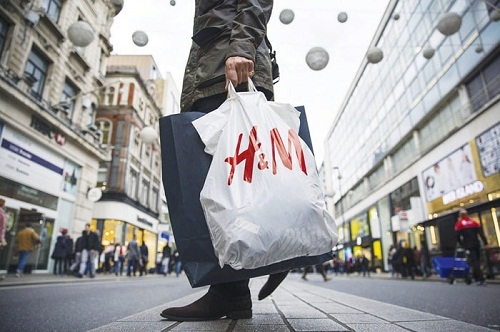 more contracting, regrouping, reconsidering and refocusing on part of the consumers says Abi Buller, The Future Laboratory. Tom Berry, Director-Sustainability agrees, an increased awareness around conscious consumption may fuel further change.
As unconscious consumption is falling out of fashion, people are investing in higher quality items. However, this needs to trickle down through all levels of the market, says fashion historian Allison Pfingst.
Growing interest in pre-owned market
An understanding that whatever we have is sufficient for decades has spurred interest in making and mending clothes. Recently, British menswear brand Connolly hired Portobello Market vintage-clothing stall owner and stylist, Frank Akinsete, to upcycle pieces from previous collections. Similarly designer Christopher Raeburn launched Raefound, an evolving, non-seasonal range of unworn military clothing and accessories.
Raeburn urges young designers Kevin Germaier and Maddie Williams to develop new business models for repurposing and reusing old clothing. Berry agrees, there’s a significant interest in the pre-owned market as consumers not only want to buy pre-owned products but also use services that help them sell unused items.
The fashion industry needs to live up to its responsibilities and help create a more positive future, adds Berry. According to him, in 2030, everyday garments will become more utilitarian and include creative digital collections. Retail models will focus on made-to-garment and circular designs.
Iran exports 4,527 tonne clothing to 29 countries
In the first five months of the current Iranian year (March 20-September 21), Iran exported 4,527 tonne of clothing worth $35,190,052 million to more than 29 countries. In the last Iranian year, the country exported to only four countries including Afghanistan, Russia, Iraq, and Yemen.
The Customs Administration spokesman noted, Currently, Iran exports its garments and textile to Iraq, Kuwait, Australia, Armenia, Azerbaijan, Uzbekistan, Russia, Afghanistan, Pakistan, Turkmenistan, Kyrgyzstan, Germany, Korea, Japan, UAE, England, Venezuela, Ivory Coast, Italy, Turkey, Canada, Qatar, Oman, Nigeria, Switzerland, Pakistan, Georgia, Spain, and Denmark.
Although the commercial import of clothing is prohibited, the amount of clothing import during this period hit less than two 2.5 tons worth $ 514,441 thousand.
New dates announced for Expo Produccion
Tarsus Mexico and Exposition Development Company, have announced new dates for sixth edition of Expo Produccion which will be held from June 15-17, 2021 instead of the originally scheduled March 2021 dates at Centro Citibanamex, Mexico City.
This biennial show will present its 6th edition at Centro Citibanamex, in Mexico City, facilitating a bigger event that will allow exhibitors to showcase their latest machinery, equipment, technology, parts, products, and supplies for the apparel, home and technical textiles industries. The exhibition is highlighted with a comprehensive conference program facilitated by leading experts in the industry.
Expo Produccion has become a leading international exhibition and conference which includes textile engineering, production management, design and marketing, as well as the development of new products, technologies and research of the production chain of the clothing, textile and fashion industries, home textiles and technical textiles directed to all Mexico and Central America professionals within these industries.
Nike’s Q1 revenues beat expectations
The first quarter revenues of Nike, the renowned American apparel and footwear maker, beat all the predictions made by analysts and experts.
The Q1 revenue for the world’s largest sportswear brand touched $10.6 billion – much higher than US $ 9.1 billion estimated by analysts. The sales rose by 6 per cent in China, while the e-commerce sales for Nike, during the quarter, shot up by a whopping 82 per cent – and it’s going to only get better with holiday season approaching.
The net income, for the quarter ended 31 August, jumped to $1.52 billion from 1.37 billion a year back. While the retailer has performed well in China and done remarkably well digitally, it has also not stopped launching new products even in these tough times.
Nike has been selling more merchandise directly to consumers and has been depending less on outside retailers. This has benefitted Nike a lot at a time when several bigwigs like J. Crew and JCPenney have filed for bankruptcy protection.











