


FW
China records 50% growth in apparel exports during Jan-Feb’21
China reported a 50 per cent Y-o-Y rise in the apparel and accessory exports during January-February’21, says latest data released by the General Administration of Customs China (GACC). As per Apparel Resources, the country also recorded a 48 per cent rise in its garment imports to $1.93 billion in the first two months of 2021. China’s garment and accessory imports rose by 18.20 per cent on Y-o-Y basis in February’21 to $ 815.67 million. However, they dropped on M-o-M basis due to the Chinese New Year holidays.
However, the value of China textile imports declined by around 3 per cent to $2.08 billion during the January-February ’21 period. The country noted 42.20 per cent growth in January ’21 value, while it dropped by around 45.50 per cent on Y-o-Y in February ’21.
Restrict exports of cotton yarn, urges AEPC
To curb price rise and increase supply for domestic manufacturers, the Apparel Export Promotion Council (AEPC) urged the government to restrict India’s exports of cotton yarn. A Sakthivel, Chairman, AEPC requested the government to impose quantitative restrictions on exports of cotton yarn of 26 counts and above.
Sakthivel said, the sector would be hit hard if yarn is exported at the cost of domestic and export-oriented manufacturing industry. He also recommended a duty on export of cotton yarn to reduce domestic yarn prices and increase value addition and employment in the country. According to him, this will also help in increasing garment exports besides resulting in only normal profits to yarn spinners, not the super normal profit owing to the profiteering currently happening.
China forces foreign brands to reject labor abuses report
China is forcing foreign shoe and clothing brands to reject reports of abuses in Xinjiang. The country has targeted H&M, Nike, Adidas and other brands after Western governments banned cotton from its Xinjiang factories due to instances of labor abuses. As per reports, China has confined over one million members of the Uyghur and other predominantly Muslim ethnic minorities to camps in Xinjiang in China's Northwest. Authorities there are accused of imposing forced labour and coercive birth control measures.
The Chinese government has rejected these complaints and said the camps are for job training to support economic development and combat Islamic radicalism. Chinese Official media criticized H&M, Nike, Adidas, Uniqlo and Burberry for expressing concern about reports of forced labor in Xinjiang.
The Chinese Communist Party is known to pressurize foreign clothing, travel and other brands over actions by their governments or to compel them to adopt its positions on Taiwan, Tibet and other sensitive issues. Most comply because China is one of the biggest, fastest-growing markets for global fashion, electronics and other consumer brands.
Bangladesh six per cent RMG units adopt sustainable business models: Study
A new study states, around 6 per cent local garment factories have incorporated sustainability into their business models as a part of their post-pandemic recovery, reports Daily Star. Conducted by BGMEA in association with UNDP and Global Report Initiative (GRI), the study says, post pandemic around 42 per cent factories aim to reduce energy, waste and resource consumption in the next three years by 2 to 15 per cent and greenhouse gas emissions and water consumption every year by 5 to 25 per cent.
Around 34 per cent have been practicing ‘reuse’ or ‘recycle’ for waste policy. Nearly 98 per cent have an environmental grievance mechanism system, of which 6 per cent have taken immediate action on receiving complaints about disposal of solid waste in local waters. Some 15 per cent have used recycled water in production or sanitation facilities and 23 per cent practised rainwater harvesting for gardening, car washing or sanitation facilities.
A majority or 91 per cent use borewell water while 32 per cent sourcing it from municipality infrastructure. The factories claim to discharge water from effluent treatment plants on testing parameters as per the ZDHC guidelines including hydrogen levels, chemical and biochemical oxygen demand, total suspended and dissolved solids, temperature and colour.
The Zero Discharge of Hazardous Chemicals (ZDHC) program has been taken up by a group of apparel and footwear brands and retailers while 9 per cent claimed to discharge treated water in rivers and the rest into sewer lines.
The data claims all participants had an environment management system and reduced plastic consumption by an average of 30 per cent in the past three years
Pandemic accelerates demand for secondhand fashion in India
 The pandemic has changed the age old, shabby and worn out image of secondhand fashion and encouraged young Indian fashionistas to embrace pre-worn or used clothes. A report by The Times of India shows, Indian market for secondhand clothes is expected to grow 185 per cent over the next 10 years with many global brands jumping on the secondhand bandwagon. Gucci plans to enter the resale market through its partnership with the The RealReal while denim brand Levi’s launched a buyback program known as Levi’s Secondhand to encourage circular fashion. The economic downturn, brought in by the pandemic, is also boosting demand for secondhand fashion amongst Indians.
Changing trend for seconds
Namrata Iyer, Designer, Illustrator and Founder, The Local Thrift, believes, secondhand fashion has always been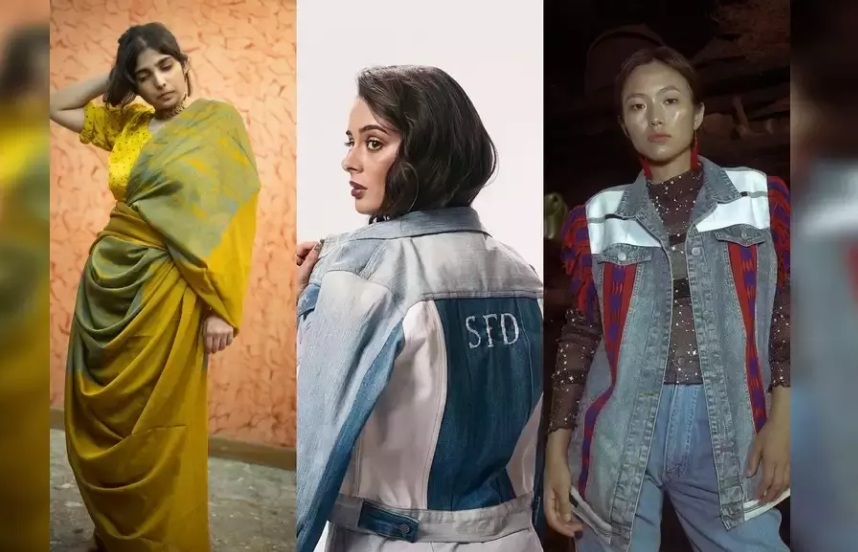 in demand in India with Instagram shops and garage sales existing even before 2020. The pandemic has intensified its significance with young consumers increasingly moving towards responsible fashion. She feels, thrift garments are unique in style, and can help reduce the number of discarded garments. The trends in secondhand fashion also change according to seasons. Stores often have their own hot selling items, dictated by market trends. For instance, earlier, corsets and lingerie were most commonly sold. Now, lighter clothing is more in demand.
New launches, social media spurring demand
Asenla Jamir, Founder and Creative Director, Otsü Clothing Co, attributes the growing popularity of secondhand fashion to shutting down of trendy and reasonable fashion shopping sites. Jamir says secondhand clothing are reasonable compared to other big brands. Her brand upcycles Naga textiles and rescued fabrics to create new shirts, skirts, blazer/jackets, pants, and dresses. This helps reduce mass production, social impact, and environmental wastage and helps promote its own individual and unique styles. The brand also re-uses rescued fabrics in its designs.
Actress Evelyn Sharma has also launched a range of upcycled garments called Seams for Dreams. The owner of a fashion charity foundation says lesser incomes, limited access to retail stores and several other restrictions are driving more consumers to secondhand clothing as they reduce their consumption of fast fashion.
Social media has also helped catalyze demand for secondhand clothes in India, adds Iyer. She cites the example of Instagram which dedicates several pages dedicated to designers and homegrown labels dealing in secondhand clothes. Platforms like these also help consumers across the globe stay connected with each other and promote thrifting/circular/secondhand fashion, adds Asenla.
Readjusting their outlooks can help brands drive plus-size clothing sales
 In recent times, many brands have either launched new plus size ranges or expanded existing size ranges. Yet, only a few have been able to sustain their offerings due to outdated marketing styles or sizing issues and more, says a report by the Business of Fashion. Coresight Research estimates plus-size women’s clothing sales were worth $28.3 billion last year, or about 21 per cent of the overall market. Yet, brands lack commitment to serve plus size customers, says Marie Denee, Publisher, The Curvy Fashionista Blog.
Additional costs restrict brands’ size expansion
One reason is the additional costs incurred during the making of plus size clothes. This prompts brands to restrict their offerings to only top-selling and highest-margin items, especially during testing times like the pandemic. However, analysts at Edited term this as a short sighted approach as it alienates the next generation of consumers.
In 2018, brand Savage X Fenty launched a new range in 2018 that reached size 22. The brand also cast plus-size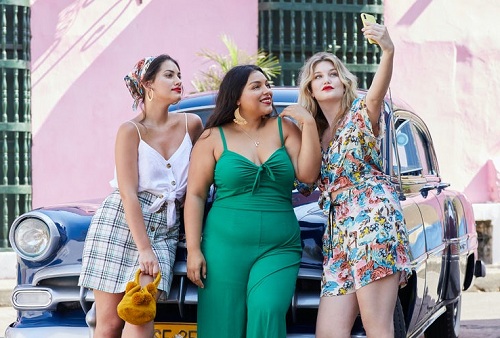 models to promote the collection besides launching a runway show streamed by Amazon. The collection increased the brand’s 2019 revenues to $150 million, though it still did not make profits, wrote The New York Times. Size-inclusive denim brand Good American also recorded $1 million in sales on the first day of its launch and has further expanded into loungewear, shoes and other categories.
However, not many brands received such a warm reception from consumers. Launched in 2014, Mango’s plus-size range Violeta By Mango received a backlash from consumers for its campaign featuring normal size models walking the ramp in plus size clothes.
Being customer-friendly
To launch a plus size range successfully, brands need to ensure the clothes actually fit consumers and are made according to their tastes and preferences. Retailers also need to feature plus-size models in their campaigns, adds Denee. She classifies plus-size as those typically ranging from a US 14 to a US 24, while extended sizing extends up to a US size 40.
Marketing platform Persado advises brands to use phrases such as ‘celebrating your curves,’ to drive sales of their plus-size offerings.
Assets, not liabilities
Brands need to train retail associates to complement their expansion into plus-size offerings. Gap-owned athleisure brand Athleta launched a curriculum to teach retailers the principles of body-positive appropriate language such as words to avoid, reading customer’s body language and assessing comfort level of their customers. The brand now offers up to women’s size 26, or 3X.
Another reason for low sales of plus size fashion is brands’ hesitation in stocking them in stores. Brands neither stock their plus size offerings in stores nor include them in their marketing strategies, physical events or fashion shows. There is a need for brands to look at their plus size offerings as assets rather than liabilities.
High-value apparel products will help India mitigate COVID-19 effects: KPMG
 Fashion retail markets across the world were under severe stress even before the COVID-19 crisis. A new KPMG report ‘Covid-19: Mitigation strategy for Indian textile and apparel sector’ highlights issues like deep discounting and damp consumer sentiments were already threatening the future prospects of the industry. The onset of the COVID-19 pandemic has plunged the industry further into darkness with production lockdowns, severe supply chain disruptions and market closures becoming the order of the day.
As per the report, the pandemic is likely to impact approximately one fifth of global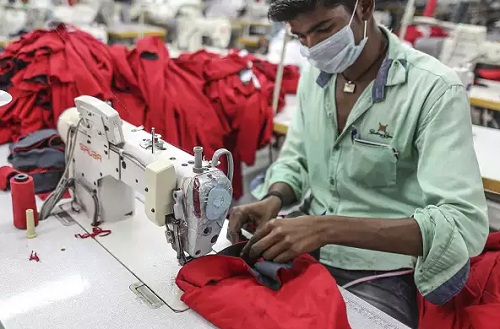 apparel trade, creating supply chain disruptions across the world. The Italian market is expected to be the worst hit amongst European economies with market revival taking at least 12-15 months despite a strong economic boost from the government. The Spanish market is also expected to bear the brunt of the pandemic for the next 12-15 months while the UK market will face long-term ramifications though a good economic stimulus from the government will help alleviate some of the pain.
Worth nearly $38.9 billion, the largest European market, Germany is expected to revive in the next 9-12 months. Similar recovery is expected for the Japan, Canada and France markets while Belgium recovery is likely to delayed due to the high penetration of COVID-19 and limited financial stimulus.
Varied impact across segments
The report indicates impact on Indian market is likely to vary across sectors. The cotton fiber market is likely to be seriously impacted due to a contraction in the global market and order cancellations. Low downstream demand will restrict imports to specialized cotton fibers only and the market may face some liquidity issues resulting in shortage of working capital
MMF Fibers: With limited exports, overall impact on MMF fiber segment is expected to be low. The segment is likely import high-value functional fibers as PTA exports are likely to face supply chain disruptions. This will create a liquidity issues in the segment.
Yarn: With $6.2 billion exports global contraction in fabric manufacturing is drying up the demand for yarn across the world. The segment also faces raw material shortages due to supply chain disruptions. The huge buildup of inventory is also leading to a huge crunch of working capital in the segment.
Fiber processing market: With limited exports, overall impact on the fiber processing segment is expected to be low. However, raw materials shortages will impact operations in the segment.
Fabrics: Demand for fabrics in the domestic market is likely to decline due to a decrease in global apparel market. The segment depends on imports for its requirement of specialized and functional fabrics. Decentralized manufacturing will lead to a severe capital crunch with raw material availability also likely to be a challenge in the medium term.
Technical Textiles: The economic slowdown is likely to shrink Indian exports of technical textiles. The domestic market will be severely hit due to its significant dependence on raw material imports for value added products
Focus on core strengths
Considering this significant impact of COVID-19 on its textile value chain, Indian manufacturers need a fresh approach towards their business that focuses on the core strengths of the Indian industry. Manufacturers need to explore new markets opened by the COVID-19 pandemic in PPE sector. They need to emphasize on manufacturing of masks, PPEs and other meditech products that would enable them to tap burgeoning global market.
Indian textiles players are already at an advantage with abundance of natural raw materials, a young workforce and end-to-end value chain capabilities. However, they need to develop their core competencies in high-value raw materials and aim to capture a major share in the global trade of high-value product categories.
UST, Piktorlabs collaborate for an online e-commerce solution for Uniqlo India
Digital transformation solutions company UST and Piktorlabs, UST’s future-focused product innovation lab have jointly developed an online e-commerce platform solution for Uniqlo India to launch its nationwide ‘Shop From Home’ service through online.uniqlo.in.
With their efficiency in providing and building secure digital solutions, UST and Piktorlabs provided Uniqlo the ‘Shop from Home’ service that was built upon Vera Commerce platform with customised solutions, UST said in a press release.
Uniqlo made its formal India debut in 2019 when its first brick and mortar store was opened in New Delhi. With consumer behaviour shifting in the midst of the pandemic, enhancing their online presence across India became a top priority for Uniqlo. The brand believes the new service would help it deliver a seamless online shopping service to its customers.
Koovs, Blue Saint team up for an affordable activewear brand
Online fashion marketplace Koovs and British design house Blue Saint have jointly launched an affordable activewear brand for the etailer. Blue Saint manufactures sustainable apparel and are suppliers for international fashion brands including ASOS, Topshop and Urban Outfitters.
The new label one/Zero has launched a collaborative collection of sell shorts, vests, tops, leggings, joggers, sports bras and jackets for men and women.
Mary Turner, CEO of Koovs, said, the collection aims is to ensure that Koovs remains the affordable fashion destination for young adults in India. Backed by Kishore Biyani’s Future Lifestyle, Koovs is a London-listed India-focussed fashion marketplace.
Performance sportswear is a rapidly growing segment in India, with the market for activewear apparel (excluding footwear) predicted to grow at 13.4 per cent CAGR from Rs 193.3 billion in 2018 to Rs 410.4 billion in 2024. Currently, the market is dominated by premium-priced global brands.
Munich Fabric Start to return to physical events in July 2021
Munich Fabric Start, the organizer of View Premium Selection, Bluezone and the eponymous main event, hopes to return to in-person events as soon as July 2021.
As per Sourcing Journal, the organizer is planning to hold events to showcase Fall/Winter 22-23 collections. View Premium Selection will take place July 13-14; Munich Fabric Start will take place Aug. 31-Sept. 2; and Bluezone, the event dedicated to denim fabric and trims suppliers, is scheduled for Aug. 31-Sept. 1.
The trade shows will take place in and around the MOC Munich exhibition center. The grounds offer exhibitors and attendees a spacious venue and outside areas, generous stand and catering spaces, wide walking paths to maintain minimum distances and nearby accommodations. The center also has efficient ventilation systems circulating a fresh air supply.











