


FW
Green energy projects need policy support to boost COVID-19 recovery
 Nearly all governments across the world have announced fiscal stimulus packages for their economies to recover from the effects of COVID-19. However, the proportion of funds allotted for sustainability initiatives in these packages is much lower than those announced during the Great Recession, says a report by the World Resources Institute. The report highlights, even countries like United States and Japan have failed to focus on sustainability in their relief packages. Its $2 trillion coronavirus stimulus does not include any green initiatives. About 30 per cent of the total stimulus is allocated to economic sectors that are likely to have a large impact on the environment. This leaves still plenty of room for companies to increase their green investments for a healthier, more prosperous future.
Investments in renewable energy
For long, investments in clean energy research and manufacturing have helped countries build new industries. The renewable energy programs launched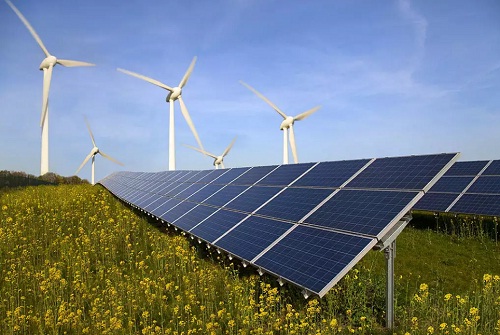 by China, the United States and Germany during the Great Recession helped these countries become world leaders in green energy. They were able to able to spend their green stimulus more quickly than others. South Korea disbursed almost 20 per cent of green funds by mid-2009, compared to only 3 per cent for most countries. Countries were also able to launch renewable energy incentives or build efficiency retrofits. However, they could not launch highly complex projects like high-speed rail or a project to capture and store carbon. Australia was forced to cancel its home retrofits stimulus program due to a poorly regulated rollout, use of efficiency technologies and safety issues. However, investments in existing programs and new comprehensive retrofit options helped the United States to implement these projects successfully.
Support projects with policy changes
Lack of transparency in many countries makes it difficult for consumers to hold governments accountable for their stimulus decisions. Some of the projects launched by countries post 2008 recession, like China’s funding of rail and grid infrastructure or the river restoration project in South Korea, could be not termed as green projects as their impact on greenhouse gas emissions remains unclear. While it’s hard to determine the impact of green stimulus spending on GHG emissions, lack of reforms in other parts of the economy have known to boost these emissions. Governments can still readjust their COVID-19 packages. The US government can introduce new green stimulus spending while Japan can focus on creating a green society in its next recovery package.
To optimize green investments, governments need to focus on projects that can scale up quickly and support these with policy changes including setting new emission targets, introducing carbon prices and eliminating fossil fuel subsidies.
Wrap to launch Textiles 2030 program on April 12
Charity organization Wrap plans to launch ‘Textiles 2030’ program on April 12, 2021 to reduce the impact of textiles on environment. Wrap will also launch ‘Textiles 2030 roadmap’ simultaneously to set targets for water and carbon reduction. Over 10 brands and retailers including John Lewis, M&S, Next and Primark have signed up to the agreement, as well as 20 textile reuse and recycling organizations.
Over the next decade, the voluntary agreement aims to slash the impact that UK clothing and home fabrics have on the environment through practical interventions along the entire textiles chain. It will adopt a “target-measure-act” approach to encourage textiles businesses set tough targets, measure impact and track progress on both an individual business basis, and towards national targets and public reporting.
The agreement was launched after Wrap’s SCAP 2020 program missed its target for waste reduction.
US apparel imports decline 13.84 per cent: OTEXA
Despite pickup in demand and vaccine roll out, US apparel imports declined by 13.84 per cent to $10.92 billion in the first two months of 2021, reports OTEXA. Only imports from Pakistan increased by 13.45 per cent to $270 million while imports from China declined 9.22 per cent to $2.45 billion. Among the other major Asian producers, imports from Vietnam declined 12.09 per cent to $2.1 billion while those from Bangladesh fell 13.11 percent to $1 billion.
Imports from Cambodia decreased by 14.08 per cent to $451 million, India’s shipments declined by 21.89 per cent to $594 million and imports from Indonesia fell by 29.62 per cent to $553 million. Volume of US’ apparel imports in February on a Y-o-Y grew by 3.2 per cent to 2.07 billion sq. mt. equivalents (SME).
As per the US Census Bureau and Bureau of Economic Analysis, the US trade deficit increased $3.3 billion to $71.1 billion in February. This reflected an increase in the goods deficit of $2.8 billion to $88 billion and a decrease in the services surplus of $50 million to $16.9 billion.
US Cotton Trust Protocol becomes a member of Sustainable Apparel Coalition
The US Cotton Trust Protocol has become a member of the Sustainable Apparel Coalition (SAC), a global industry-wide nonprofit of over 250 members working to reduce environmental impact and promote social justice throughout the global value chain.
As a SAC member, the Trust Protocol will provide a unique perspective from the US cotton industry to measure sustainability progress, collaborate on research, and identify and mitigate industry challenges. It will focus on six key sustainability metrics including land use, soil carbon, water management, soil loss, greenhouse gas emissions and energy efficiency.
The Trust Protocol added 300 brand, retailer, mill and manufacturer members since its launch in 2020. This includes Gap Inc and its collection of purpose-led lifestyle brands Old Navy, Gap, Banana Republic and Athleta as well as UK retailers Byford and Next Plc. Other Trust Protocol member announcements include the first 10 US mills.
The Trust Protocol is on the Textile Exchange’s list of 36 preferred fibers and materials that more than 170 participating brands and retailers can select from as part of Textile Exchange’s Material Change Index program.
ROICA™ V550 fiber awarded by Semken Shimbun
ROICA™ V550 fiber by Asahi Kasei has been awarded by Senken Shimbun with the ‘Synthetic Fiber Prize.’ The premium stretch fiber addresses the needs of consumers. It has always been characterized by a strong innovation DNA and it started delivering new and sustainable values and performances since July 2017.
ROICA Eco-Smart™ is a family of innovative stretch yarns that lately has been confirmed to be the most glamorous and responsible one. In April 2018, the world first Global Recycled Standard –GRS- recycled stretch yarn ROICA™ EF that uses more than 50% pre-consumer recycled content,
Globally recognized for their innovation, technology and a strong commitment to provide comfort with style and a responsible attitude, RIOCA yarns are certified with Hohenstein Environment Compatibility Certification and Gold Level Material Health Certificate by Cradle-to-Cradle Product Innovation Institute.
RCI to foster network amongst members
Renewable Carbon Initiative (RCI) aims to foster networks among members and build new value chains to replace fossil carbon by biomass, CO2 utilisation and recycling.
Founded in September 2020, the initiative addresses the core problem of climate change, which is largely related to extracting and using additional carbon from the ground. It was launched by the Nova-Institute, the board members of 11 pioneer companies. It is jointly directed by all members, for example through participation in thematic working groups. This facilitates the exchange of knowledge and experiences and allows members to bring their own proposals to the table, to address matters that concern them the most, and discuss them in the community.
Since its launch, the initiative has been busy raising awareness and reaching out to industry, policy and the public. Besides creating a webpage with comprehensive information and press releases on current policy issues such as the European Green Deal, the RCI regularly holds public webinars to address questions around renewable carbon.
Kering completes Phase I of global logistic hub in Italy
Kering has completed the first phase of new global logistics hub in Trecate, Northern Italy. The first part of the building has been operating since March 2020, and the second part is scheduled to be operative by the end of the second quarter 2021.
The logistics hub covers more than 162,000 sq. m. and combines state-of-the-art technology and automation, scalability, innovative sustainability and features for the well-being of employees. The hub will meet the demand from regional warehouses, retail stores, wholesalers and e-commerce worldwide, and will significantly increase the Group’s capabilities in terms of shipping and storage It will also allow to reduce lead times by 50 per cent by increasing the speed of deliveries and to enhance collaboration with the Group’s brands.
The Trecate plant will have one of Europe’s largest rooftop solar systems, with its photovoltaic panels providing a total of 12.7 MWp on completion of the building, saving an estimated 7,500 tons CO2 a year. The site will also be the first industrial complex in Italy to produce more energy than it consumes. The excess electricity will be fed into Italy’s power distribution grid, for use at Kering stores and corporate offfices in the country.
Clean Clothes Campaign introduces Europe Floor Wage
Clean Clothes Campaign has introduced the Europe Floor Wage: a cross-border base living wage benchmark for Central, East and Southeast Europe. The benchmark is based on the costs of living in 15 European garment production countries, including 7 EU member states. The methodology for the benchmark has been developed through 6 years of thorough research. During the development various experts were consulted within and outside the Clean Clothes Campaign network, among other the Asia Floor Wage Alliance.
The Europe Floor Wage benchmark is a concrete tool to show brands and governments what wage is needed to live on and it can be used by unions and labour NGOs to strengthen their bargaining power.
Mario Ivekovic, President, Novi Sindikat (New Union), Croatia demands public, concrete, measurable steps by retailers and brands to ensure garment workers are paid a living wage within a reasonable timeframe He urges the EU and national governments in consumer and producing countries in Europe to protect workers’ human right to a living wage and implement legal minimum wages that fight poverty.
With vaccine rollout, Levi Strauss raises revenue growth forecast
And much like Levi Strauss, several apparel retailers like Nike and Kohl’s Corp have also reported a boom in online sales in recent months. Chip Bergh, CEO, Levi’s said, his brand is confident of emerging stronger from the pandemic. More than 40 per cent of European stores are currently closed while the rest are operating on reduced hours due to lockdown restrictions.
The denim brand expects revenue to increase 25 per cent in the first half of the fiscal against the earlier projection of 20 per cent. Founded In 1853, Levi Strauss & Co is one of the world's largest brand-name apparel companies and a global leader in jeanswear. It designs and markets jeans, casual wear and related accessories for men, women, and children under the Levi's®, Dockers®, Signature by Levi Strauss & Co.™ and Denizen® brands.
Textile and garment manufacturers call for reduction in yarn prices
Textile and clothing manufacturers are urging the government to reduce yarn prices in the country as it is increasing their production cost by almost 4o per cent. According to Hemant Abbi, Executive Member, Moti Nagar United Factory Association, the rate of yarn used in shawl manufacturing has increased more than Rs 150 per kg in the past few months. The price of Acrylic yarn has shot up from Rs 240-Rs 250 per kg, to Rs 370 per kg. However, despite such huge increases, manufacturers have not increased their rates and absorbed the losses.
Sanju Dhir, Chairman, Ludhiana Woollen Manufacturers’ Association, said, the prices of some types of yarn have increased by almost 100 per cent. He terms this as an unprecedented situation, as earlier too the rates increased, but after a while they came down. His association has requested the Textile Ministry to intervene in this matter.











