


FW
Exempt garment factories from COVID-19 lockdowns, urges AEPC
A Sakthivel, Chairman, AEPC has urged the state government to exempt garment factories from COVID-19 related lockdowns. He says, the industry supports over 13 million workers directly and many more indirectly, in rural and backward areas and largely comprises MSMEs. Lockdown will severely disrupt the functioning of these factories.
He said all factories have been taking stringent measures and following strict health protocols. Exporters are willing to follow even more strict safety measures but would want to avoid even partial lockdowns as they create widespread disruption and impact not just in the short term but also the long term health of the industry.
Any lockdown, will disrupt the last year of hard work put in by the industry in getting back on the global map, Sakthivel added. Incorporated in 1978, AEPC is the official body of apparel exporters in India that provides invaluable assistance to Indian exporters as well as importers/international buyers who choose India as their preferred sourcing destination for garments.
60th Dornbirn GFC Congress to have a highly interactive platform
Organizers of the 60th Dornbirn GFC Congress have created a highly interactive platform for the virtual edition of the show to be held from September 15-17 this year. As per Friedrich Weninger, Managing Director, Austrian Fibers Institute, the 2021 edition of the tradeshow will present outstanding new ideas, motivate networking and promote a unique learning experience. It will feature the latest scientific results and ninety lectures by top experts from industry. Panel discussions, breakout sessions and virtual meeting lounges will provide opportunities for networking and information exchange.”
Featuring 25 exhibitors, the show will focus on fibre innovations. Its major themes will be sustainability and the circular economy, nonwovens and technical textiles and surface modifications and additives. The Dornbirn Global Fiber Congress is the lead event and communication platform for fiber innovations and its downstream manufacturing stages. The Dornbirn-GFC takes place in the Kulturhaus Dornbirn/Vorarlberg, Austria every year in September to enable the networking between the industry, universities, technical colleges and trade associations. In more than 100 expert lectures more than 700 participants from around 30 nations are informed about the latest trends, developments and innovations.
EFI Reggiani completes three new sales contracts in Russia
EFI Reggiani together with its partner in Russia, Nissa Distribution, have completed three new sales contracts for supply and installation of industrial solutions for direct-to-fabric and sublimation industrial textile printing. Russia’s first EFI Reggiani Power 180 and Power 240 digital printers were recently sold to D-TEX Digital Textile Printing, located in Stupino, in the Moscow Oblast, and to MIRtex, in Furnmanov, Russia. © Mirtex
The EFI Reggiani Power 180 and Power 240 are industrial digital printing machines for direct printing on fabric, knitwear and textiles in widths of 1.8 and 2.4 metres, respectively. They are equipped with a high-precision continuous transportation belt for reliable, accurate fabric feeding without wrinkles. Both machines can use EFI Reggiani’s water-based, eco-friendly inks, including popular EFI Reggiani BDR Diamond reactive inks.
Russia’s first EFI Reggiani Next 340 printer is being installed at the largest wholesale textile company in Russia, Sima-Land. The Yekaterinburg-based company offers more than 1 million different products, including décor textiles for the home and office and men’s, women’s and children’s clothing.
The EFI Reggiani NEXT 340 is a 3.4-metre-wide, beltless industrial digital printing machine for direct and sublimation printing. Sima-Land’s printer is equipped with four Kyocera industrial printheads and will give the wholesaler productivity running in a CMYK x 2 configuration or in an eight-colour configuration for superior quality. Using eco-friendly, water-based EFI Reggiani IRIS inks will give Sima-Land the ability to print bright vivid shades and colours and ensure an extraordinary level of print durability.
Fast fashion to decline with consumers’ growing eco-awareness
A report by investment firm UBS expects the craze for fast fashion will decline as more consumers become aware of the environmental and human costs of apparel production. The report says, revenues in fast fashion could decline 30 per cent over the next 10 years as apparel companies, including fast fashion, are increasingly addressing rising consumer concerns. H&M is launching its new collection made from eco-friendly textiles.
Analyst at UBS urge apparel companies to reduce their output — an idea antithetical to the production and supply chain methods honed by fast fashion in the past several decades. In a survey of consumers in the US, UK and Germany, UBS found more than half are aware of people who have changed their shopping behavior over environmental concerns. Around 58 per cent of consumers said they were previously unaware of apparel's environmental impact, 25 per cent said, they would buy less clothing now and 31 per cent promised to seek out sustainably manufactured clothing.
UBS analysts also view public pressure campaigns as effective in stoking strong feelings resulting in a fundamental change of habits.
China’s cotton imports to rise marginally in 2021-22
After a surge this season, China’s cotton imports are expected to rise marginally in 2021-22. As per forecasts by the US Department of Agriculture’s Beijing bureau, China’s cotton imports are expected to grow by 460,000 bales to 11.02 million bales in 2021-22. This would represent a far smaller increase in imports by China than estimated for this season, when recovery from the pandemic was forecast sending purchases soaring by 3.43 million bales.
According to the National Bureau of Statistics, China’s textile exports skyrocketed 28 per cent in 2020 while apparel exports declined by 9.2 per cent compared to 2019, with textile exports boosted by increased demand for medical PPE during the pandemic. The bureau expects PPE to continue to drive textile exports, while exports of general textile and apparel products will face uncertainty.
The bureau expects the ban on US’ imports of clothing made from Xingjiang to affect China’s cotton consumption to some extent. Yet, despite the curbs, cotton sowings for 2021-22 in Xinjiang are forecast at 2.48 million hectare. China’s overall cotton output this year is forecast to grow by 100,000 bales to 35.86 million bales.
Denimazing shows the way as a virtual marketplace for denim companies
 It’s said, winners seek opportunity in every adversity. So, when 2020 forced retailers to shut physical stores, Laura Pianazza, Founder, Denimazing, came up with a unique idea of launching an online platform for facilitating B2Bb/B2C sales of denims.
Denimazing, the platform is a combination of two words: Denim + Amazing. It helps small and medium sized companies increase online sales by developing intelligent marketing strategies through technology and professional experience. The platform helps denim fabric manufacturers, finished product brands and distribution companies sell their products to a large customer base.
Fabric selling services and courses
The platform also helps B2B companies sell their own fabrics through 3D presentations and virtual showrooms. Brands can sell their fabrics on an e-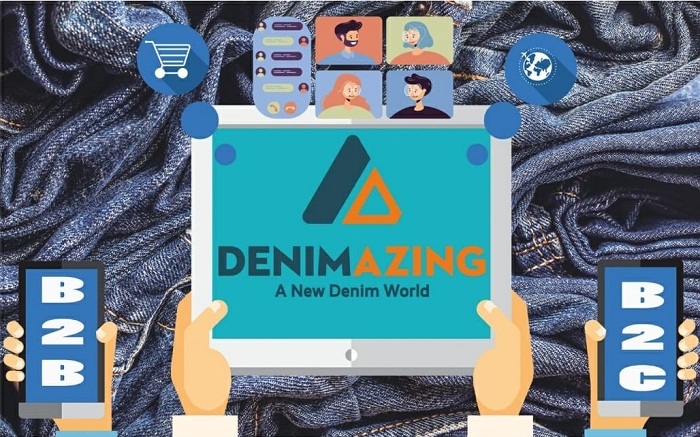 commerce site through virtual showrooms and chats or video calls with customers. Service providers like coloring, washing etc, can avail individual virtual rooms to interact directly with sales managers from brands and companies.
Denimazing’s partnership with the marketing and online sales agency Velvet Media, helps the platform grow during various phases of its construction, marketing and advertising; both traditional and via web and social medias. The platform also offers a series of high-level technology/web master courses by a team of qualified professionals having vast experience in denim, design, sales and marketing.
Digital challenges in denim selling
A vast experience in the editorial department of a European denim-focused trade magazine helps Laura Pianazza develop a strong network with entrepreneurs, top management and marketing agencies. Her constant interaction with customers enables her to highlight the current digital challenges that most Italian companies face including the disintegration of online services and a lack of connect between technology and marketing strategies. And as Pianazza explains, many firms fail to invest time and resources in this transformational in business shift.
Innovation and resilience to boost Bangladesh denim industry’s growth levels
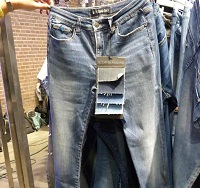 From production of basic wear, the Bangladesh and garment industry is fast transforming into a manufacturer of sophisticated garments aided by high-end technologies. A large part of this growth is being led by the denim industry, says a Denim Focus report.
Already a reputed name in the world denim market, Bangladesh exports over $6 billion worth of denim jeans to the global market. It is also the top importer of denim fabrics in the world and the top exporter of denim jeans to the EU and US. Though the country has all backward linkages in place including weaving, dyeing, finishing and washing, around 50 per cent of its demand for denim fabric is full-filled through imports.
New products, capacity addition to boost exports
Bangladesh currently exports over $6 billion worth of denim jeans to the world. It is the top denim jeans exporter to the US and EU and has an opportunity to expand exports through value-addition. Around 32 of its factories operate with vertically integrated weaving, dyeing and finishing facilities while over 400 garments factories manufacture only jeans. Its factories’ resilience can be noted from the fact that in the latter half of 2020, Bangladesh exported the highest amount of denim products. To increase the scope of exports further, Bangladesh now plans to introduce new products and finishes.
The country needs to also increase the capacity of its fabric and jeans manufacturing with more investments. It needs to make priority gas connections available to the industry to lessen its utility costs.
Rebranding for a more credible industry
Another way Bangladesh can boost its denim industry is by promoting the industry through new dimensions and diversifying from the US and EU markets. It also needs to rebrand its denims to make them more credible attract foreign buyers. A two-way strategy of increasing productivity, cost effectiveness and resilience with product and market innovation, and branding will help Bangladesh take its denim industry to the next level.
A new EU legislation may help thwart ‘land grab’ culture in Uzbekistan
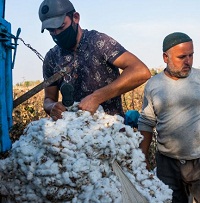 The ban on Xinjiang cotton has shifted apparel brands’ attention to Uzbek cotton as well. As Apparel Insider report, huge tracts of land in Uzbekistan are being transferred to private operators for cotton cultivation. However, this has left many farmers destitute and poor. Farmers in the country are being coerced into voluntarily giving up their land leases with a devastating effect on their livelihoods.
As per latest data, the Government of Uzbekistan has transferred around 27.5 per cent of its 907,783 hectare to 96 private clusters for growing cotton. These clusters have been accused of imposing below-market prices for cotton states an April 2020, Uzbek Forum for Human Rights report. They are also known to set unrealistic production targets, demand inflated costs for inputs such as fuel and seeds and defer payments for delivered cotton.
Rising land grabbing culture
Another negative effect of privatization is the growing incidence of land-grabbing in the country which is negatively impacting rural population. Private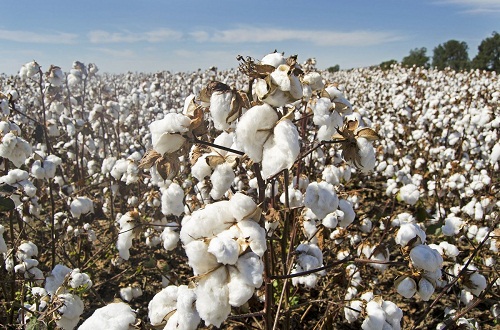 cluster operators in the country are taking over huge farmlands as land lease terminations in the country are voluntary. Many of these land transfers are executed by local officials or hokims who either instruct farmers to voluntarily sign away the lease on their land or are notified that their land leases have been terminated.
One of the clusters to have gained land from farmers with the support of government officials is the Surxon Cotton Cluster. Established on December 1, 2020, the Surxon Cotton Textile cluster received 22, 400 hectares of land confiscated from 475 farmers. Owned by Petromaruz, a private investor with 25 businesses, the cluster gained this land by threatening farmers and destroying their crops. Blogger Otabek Sattoriy, who supported these farmers was arrested on January 30, 2020 on extortion charges.
In 2018, Uzebek government transferred 50,000 hectare in Kashkadarya and Syrdarya regions to Indorama Agro, part of the Indorama Group, where 2,897 farms operated. Farmers who owned this land were promised employment with the company. They were also promised full time pay, other benefits and security. However, two years have passed and the promises are not yet fulfilled. The rural communities are not being allowed to rent land for agricultural purposes to supplement their incomes. Most farmers are planning to migrate to countries like Russia to work as migrant workers.
Similarly, Silverleafe International, a subsidiary of the US-based Silverleafe Capital Investors group is yet to compensate farmers for the 11,700 hectare of land it received in the Pakhtakor district of Jizzakh region. According to the agreement between the two parties, farmers were to receive compensation for the costs of seeds and cultivation on 921 hectares of their land which were plowed and destroyed by the cluster. Although the farmers were reimbursed for their crops, they received no compensation for the loss land leases or livelihoods.
New laws to protect human rights
The Uzbekistan cotton sector has been privatized with the aid of multi-million-dollar loans from international financial institutions, including the International Finance Corporation (IFC), the European Bank for Reconstruction and Development (EBRD) and the World Bank. The country’s FDI reserves have grown from $1.6 billion in 2018 to $4.2 billion in 2019. The Finance Ministry predicts FDIs to reach $7.81 billion in 2021.
Uzbekistan government’s Impact Assessment Reports fail to grasp the consequences of handing over its farmland to private owners with zero agricultural experience. Its ill-conceived mitigation measures are known to perpetuate and reinforce another form of forced labor, leaving farmers even deeper in debt.
International investors therefore, need to ensure that their projects in Uzbekistan do not violate human rights and ruin the lives of its rural communities. The proposed EU legislation that threatens to penalize companies for not complying with this norm may help them achieve their goal.
Neiman Marcus jeopardizes ties with luxury brands
Neiman Marcus stores appear to be losing their grip on Gucci bags and other luxe goods since the swanky retailer emerged from bankruptcy last fall, The Post has learned. The apparent rift comes as Neiman Chief Executive Geoffroy van Raemdonck — who has racked up millions of dollars in bonuses before and since the bankruptcy — has been blasted by staffers for a tone-deaf approach to belt-tightening, flaunting his wealth in a glossy magazine spread last fall even as pink slips were being handed out.
Vendors smarting from unpaid bills have been ramping down their business with Neiman, according to sources. Even the firms that provide insurance for deliveries to Neiman are tightening their terms or suspending coverage, according to company documents.
The pandemic has been brutal for luxury stores and Neiman has been no exception. Moody’s Investors Service recently added Neiman to its bankruptcy watch list. Neiman’s in-store sales plunged 34 percent over the six months ended Jan. 30, while its online sales dropped 6 percent over the same period, according to the confidential March 18 financial document obtained by The Post.
Asia-Pacific Rayon secures Rp 4.5 trillion loan
Asia Pacific Rayon, the largest integrated rayon fiber producer in Indonesia, has secured a syndicated loan facility of Rp 4.5 trillion ($300 million) with national and international affiliated banks. The funding will be used to support continued capital investment in the company's production facilities at Pangkalan Kerinci, Riau Province, Sumatra.
APR is vertically integrated through its supply chain, from renewable fiber plantations to high-value textile development. It commenced operations in 2019 and was formally inaugurated by President Jokowi Widodo in February 2020. APR plans to increase its production capacity over the coming year to capture the strong growth potential of viscose staple fiber (VSF), strengthening its market position in Indonesia and in export markets across the region. APR is a member of the RGE group of companies. Founded by Sukanto Tanoto, RGE manages a group of resource-based manufacturing companies with global operations.
The syndicated loan participating banks are PT Bank Rakyat Indonesia (Persero) Tbk, PT Bank Central Asia Tbk, PT Bank Pan Indonesia Tbk, PT Bank Pembangunan Daerah Jawa Barat, PT Bank Woori Saudara Indonesia 1906 Tbk and PT Bank KEB Hana Indonesia
The joint mandated lead arrangers and bookrunners for the syndicated loan are PT Bank Rakyat Indonesia (Persero) Tbk, PT Bank Central Asia Tbk, and PT BANK Pan Indonesia Tbk.











