


FW
Steven Madden acquires 48.9 per cent share in European JV
American footwear, accessories and apparel group Steve Madden has acquired 49.9 per cent share in its European joint venture. The European business of the company distributes Steve Madden-branded footwear and accessories to a number of countries throughout the continent.
Founded in June 2016, the joint ventue has grown in double-digits over the last four years. This includes a 21 per cent year-over-year revenue gain in 2020. The company owns brands including its namesake Steve Madden label, Dolce Vita and Betsey Johnson. Its annual revenues decreased by 32.8 per cent year-over-year to $1.2 billion in 2020. Its annual net loss was $18.4 million, compared to net income of $141.3 million in the previous fiscal year.
By end 2020, Steve Madden had 218 company-operated retail locations, including seven internet stores, as well as 17 concessions in international markets.
India’s yarn exports increase in February 2021 as fibre exports decline
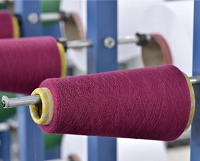 In February 2021, India’s export of basic textiles comprising fibres, spun and filament yarns increased 24 per cent Y-o-Y to $822 million. As per a report by Textile Value Chain, they accounted for about 2.9 per cent of total merchandise exported from India during the month. Driven by a sharp increase in cotton exports, these exports increased by 6.8 per cent on a cumulative basis in the first 11 months of 2020-21, compared same period a year ago.
China, largest importer of spun yarns
Export of spun yarns increased by 3.4 per cent Y-o-Y to 111 million kg worth $530 million in February 2021. Compared to January 2021, these exports declined by 16 per cent. With its import value doubling over the year, China emerged as the largest importer in spun yarns, followed by Bangladesh whose imports declined by 14 per cent. Together, these two markets accounted for about 45 per cent to total yarn imports during the month.
The volume of cotton yarn exports increased to 86 million kg worth $284 million during the month. Most of this yarn was shipped to 72 countries at an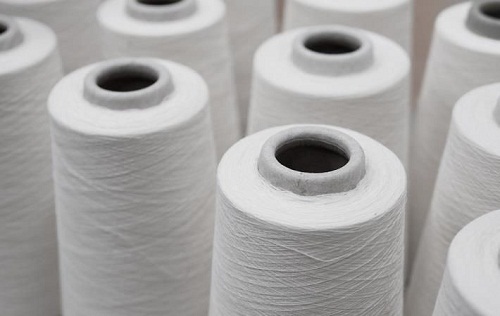 average price of $3.30 a kg, up US cents 32 from previous month and US cents 38 from a year ago. China remained the top market for cotton yarn, followed by Bangladesh, Vietnam and Peru.
Polyester dominates India’s yarn exports
The exports of 100 per cent man-made fibre yarns reached 9.2 million kg in February 2021. Majority of this included polyester yarn with exports worth 3.9 million kg, viscose yarn with exports worth 2.8 million kg and acrylic yarn with 2.3 million kg exports. The value of polyester yarn exports was $8.2 million with Brazil being the largest importer followed by the US and Turkey. The value of viscose spun yarns exports was $9 million and with Turkey being the largest importer of viscose yarn, followed by Bangladesh and Belgium.
India exported blended spun yarns worth $42 million in February. This included export of 12 million kg of PC yarns and 2.8 million kg of PV yarns. Brazil was the largest importers of PC yarn from India followed by Peru while Turkey was the largest importer of PV yarns from India followed distantly by South Africa.
India’s export of all kinds of filament yarns increased to 61 million kg. It was valued at $102 million. Its export of Nylon and viscose filament declined sharply from its level a year ago while export of polyester filament yarn increased by 1 per cent Y-o-Y and those of PP filament yarns increased by 4 per cent.
Manmade fiber exports reach 34 million kg
During the month, India exported 34 million kg of manmade staple fibres. The total value of these exports was $38 million. Of this, the volume and value of Polyester staple fibre exports declined by 8 per cent. On the other hand, the volume of viscose fibre yarn exports increased by 9 per cent while their value increased by 14 per cent.
India’s export of cotton fibers declined in February 2021 though the volume of these exports increased by 71 per cent to1.11 lakh bales worth $332 million. Bangladesh emerged as the largest market for Indian cotton during the month, followed by China and Vietnam.
India’s export price realisation for cotton declined below the Cotlook A index to US cents 80.29 per pound during February. During the month, Cotlook averaged $93.60 per pound, maintaining the competiveness of Indian cotton competitive in the global market.
Vaccine rollouts, localization to boost India’s luxury retailer’s prospects
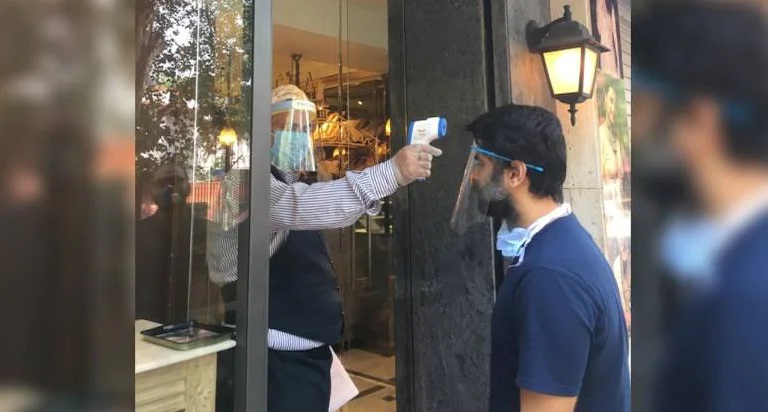
Like all other markets, the luxury fashion rental market too is bearing the brunt of recurrent COVID-induced lockdowns. As per Money Control, almost 80 per cent property owners in Indian high streets have witnessed 14 per cent decline in their rents. One of these prominent high streets is New Delhi’s Khan Market whose rents have fallen and thereby Khan Market’s position as one amongst the top 20 most expensive retail high street markets in APAC has dropped to rank 21, says a report by Cushman & Wakefield.
However, despite this, Khan Market continues to be the most expensive retail market in India with a rent of $195 per sq ft. The second position in this category is occupied by old retail hub Connaught Place which covets a rent of $153 per sq ft. The third most expensive market is the DLF Galleria in Gurgaon whose rent is $113 per sq ft.
Lockdowns lead to 9 per cent decline in rents
As per the Cushman & Wakefield report, recurrent lockdowns have led to an average 9 per cent decline in rents across India. This rents ranged between 18 per cent and 14 per cent in Kolkata and Bengaluru respectively while the decline was limited to less than 2 per cent in Chennai and Ahmedabad.
Rents for almost 60 per cent high streets in the Asia Pacific region declined in 2020. One of the worst impacted was Hong Kong’s premier shopping district Causeway Bay, whose rents declined 43 per cent to HK$870 per sq ft per month.
Anshul Jain, Managing Director India and South East Asia says, the APAC region already has the largest base of global e-commerce users. Hence, its shift to online shopping post pandemic is perfectly comprehensible. The pandemic has also led to rise of the localization trend as shoppers preferred to shop from local brands to help them survive through the pandemic.
Around 50 per cent of 8,000 consumers surveyed by Rakuten Advertising reported spending on local brands. They are also avoiding international online brands and spending their money on domestic markets.
Omnichannel retail to boost luxury purchases
The pandemic has also increased the share of online luxury purchases from 12 per cent in 2019 to 23 per cent in 2020, says analyst Bain & Company. Consumers can now enjoy an omni-channel retail experience while shopping for luxury goods. This is likely to boost their luxury purchases leading to a further evolution of the luxury fashion goods sector, says the report.
Though the recovery of high streets is likely to be slow, global roll out of vaccine programs and the gradual return of retailers to normalcy will accelerate the overall recovery of retail sector, says the report.
However, this would also split consumer spending between value added and luxury goods. The global luxury retail sector rebounded within a year after the 2008 global financial crisis. This time too, the quick recovery of Chinese luxury sector paints an optimistic picture for luxury retailers.
Scotland clothing retailers reopen stores
Many clothing retailers in Scotland reopened their stores after the Scottish government permitted non-essential shops to function. Big retailer Frasers Group also launched its new Cruise collection in Glasgow. Small clothing retailer Jane Davidson reopened by appointments only to give its VIP customers first picks of their Spring/Summer ’21 collection.
Shoppers mainly bought T-shirts and casualwear. They were more thrilled with the idea of coming out on the streets, going out with family and friends and enjoying – though with restrictions. A shop manager at a women’s wear store reported a drop in e-commerce sales as people eagerly waited to buy from stores after they reopen. Retailers hope, the momentum continues for the rest of week despite a not-so-good weather in the country.
Vietnam’s textile, apparel firms concentrate on sportswear as PPE demand falls
Falling demand for masks and PPE is encouraging Vietnamese textile and apparel industry to concentrate on sportswear and yarn, says Le Tien Troung, General Director, Viet Nam National Textile and Garment Group. Many clothing and footwear companies in Vietnam are looking for new markets after COVID-19. Sportswear is the most profitable avenue for such businesses, as public perception of physical activity increased during the pandemic. Euromonitor International expects demand for sportswear to fall by just 8 per cent in 2020. Over the last five years, the sportswear market has grown at 6.5 per cent CAGR, 1.5 times the industry average, and is predicted to be worth $479 billion globally by 2025.
One of Vietnam’s most profitable businesses in 2020, The Thanh Cong Textile Garment Investment Trading JSC, has stopped taking orders for medical protective gear and antibacterial masks in favor of traditional items like T-shirts and sportswear. According to the Viet Nam Textile and Apparel Association, several businesses have received orders until the end of April, mostly for sportswear. The Ky Yarn Joint Stock Company also intends to concentrate on high-quality, competitive yarn, says Dang Trieu Hao, President.
Diesel choses Supreme Green Cotton for Green Label
Italian brand Diesel has chosen premium quality yarn collection, Supreme Green Cotton for its Green Label. Launched by Varvaressos SA European Spinning Mills, Supreme Green Cotton uses a customized satellite-powered drip irrigation system in the fields that allows saving up to 40 per cent of water. Its advanced drip irrigation system allows plants to be watered and fed without wasting a single drop.
A custom-developed app connected via satellite and meteorological stations in selected cotton fields allows farmers to monitor the fields in real time. The IoT – Internet of Things system warns them to take action to ensure plants to flourish healthily and high a higher yield in a sustainable way.
The smart yarns are made in Greece and have been certified as Made in Green by Oeko-Tex® which assures transparency and traceability, moreover the company has also obtained the Step by Oeko-Tex.®.
TCM approves SGS as its third-party laboratory member
The Microfibre Consortium (TCM) has approved leading inspection, verification, testing and certification company SGS as its first third-party laboratory member. As per Innovation in Textiles, the collaboration will help SGS extend its fibre fragmentation testing services to consortium member organizations and the wider textile and apparel industry.
Yvonne Tse, Vice President, SGS Softlines has welcomed to opportunity to work collaboratively with TMC members and the wider textile and apparel industry to support them in taking the practical steps needed to accelerate reductions in fibre fragmentation. With more than 89,000 employees, SGS operates a network of over 2,600 offices and laboratories around the world.
The collaboration will provide TMC’s brand, retail and supplier members with bespoke support and standardized testing services. These members will gain access to extensive testing services to help them understand requirements, whilst demonstrating their environmental responsibility and improving sustainability along the supply chain.
Founded in 2018, TMC aims to facilitate the development of practical solutions for the industry to minimize the fragmentation of fibres and the release of microfibres into the environment from textile manufacturing and product life cycles.
Patagonia moves away from corporate logos on products
American outdoor apparel brand Patagonia is moving away from adding corporate logos to its products due to environmental reasons. As per SGB Media reports, the brand has realized adding an additional non-removable logo reduces the life span of a garment. The extra logo makes for an awkward re-gift as people avoid passing logo clothes down to their kids. In 2018 alone, 11.3 million tonne of textiles ended up in landfills.
The brand hopes customers will support its efforts to extend the lifespan of its garments. The American outdoor clothes manufacturer was founded in 1973. Patagonia has expanded its product line to include apparel targeted towards other sports, such as surfing. In addition to clothing, they offer other products such as athletic equipment, backpacks, sleeping bags, and camping food
In April 2017, Patagonia announced merchandise in good condition can be returned for new merchandise credits. The used merchandise is cleaned, repaired and sold on its ‘Worn Wear’ website. As of April 2020, Worn Wear had sold more than 120,000 items. In 2019, it launched a program named ReCrafted that creates and sells clothing made from scraps of fabric coming from used Patagonia gear.
CFDA plans physical edition of New York Fashion Week in September
The Council of Fashion Designs of America (CFDA) has announced plans to hold the physical edition of New York Fashion Week in September this year. The event is likely to be held from September 8 to12 depending on the local restrictions linked to the ongoing health crisis. Some designers may opt to keep their presentations online.
Vast majority of shows held during the past two fashion weeks in February and last September were virtual, with just a few designers including Christian Siriano and Rebecca Minkoff organizing a live event. However, encouraged by New York's ongoing vaccination campaign, CFDA now looks forward to a strong fashion season that celebrates the best of American fashion in both physical and digital presentation formats, says Steven Kolb, CEO
This time, Fashion Week will culminate with the Met Gala -- a star-studded benefit that coincides with the Met's Costume Institute exhibit -- on September 13. The extravagant event will take place on a smaller scale in September 2021 before another ball the following spring.
UAE approaches India for FTA revival
United Arab Emirates (UAE), GCC’s biggest trading member, has approached India to revive FTA talks that got stalled in 2008. As per SRTEPC reports, two rounds of negotiations were held between India and the GCC on feasibility of a free trade agreement in 2008. However, talks stopped after the latter began a review of its negotiations with all countries and economic groups.
India is keen to increase exports to the UAE. In FY21, it imported goods worth $80.5 billion from GCC countries, while its exports amounted to $40.5 billion. About half of this trade was with the UAE.
India’s exports to UAE in April-January FY21 amounted to $12.9 billion with the main items being mineral fuels, apparel, gems and jewellery, and electrical machinery. During the same period, India’s imports from the UAE were worth $19.65 billion.
Industry experts say, India can export products made of leather, plastic, and iron and steel to the UAE, while it may have to give tariff concessions to import petroleum-related products and fertilizers.











