FW
Adidas raises 2021 sales outlook
German sportswear giant Adidas raised its 2021 sales outlook as it expects strong demand for new products despite ongoing lockdowns in Europe, supply chain challenges and political tensions.
Adidas now expects sales to grow at a high-teens percentage rate in 2021, compared to the forecast it gave in March for growth of a mid to high teens rate, with a jump of around 50 per cent expected in the second quarter.
It said the acceleration would be driven by new products as well as big sports events like the European soccer championship and the Copa America.
Brands including Adidas and rivals Nike and Puma faced online attacks in China in March over statements about their sourcing of cotton from Xinjiang after reports of human rights abuses against Uyghur Muslims.
Adidas’s new outlook takes into account the geo-political situation as well as the impact of prolonged lockdowns in Europe and industry-wide supply chain challenges.
However, it saw sales jump 156 per cent in greater China in the first quarter, a year after the coronavirus pandemic hit there. At the end of the first quarter, 89 per cent of the company's stores had reopened.
Adidas’ first-quarter sales rose 20 per cent to €.268 billion ($6.35 billion), ahead of average analyst consensus for 5 billion, while net income from continuing operations jumped to €502 million.
The company stuck to its forecast for 2021 net income from continuing operations to rise to between 1.25 billion and 1.45 billion euros.
Industry set for long-lasting change with growing emphasis on slow fashion
 Consumers for long were driven by an insatiable appetite for latest trends. Lured by affordable prices and easy accessibility, they bought clothes in large amounts. However, they soon realized the redundancy of their purchases as most items were used only a handful of times and then discarded. In case, of children, the lifespan of garments was shorter as kids outgrew their sizes.
COVID-19 pandemic has forced consumers and brands to relook their consumption patterns. It has highlighted the unethical methods and techniques used for production of these materials and labor exploitation techniques adopted by brands.
Slow fashion back in the forefront
Another trend the pandemic has brought to fore is of slow fashion. Slow fashion includes the slowing down of apparel design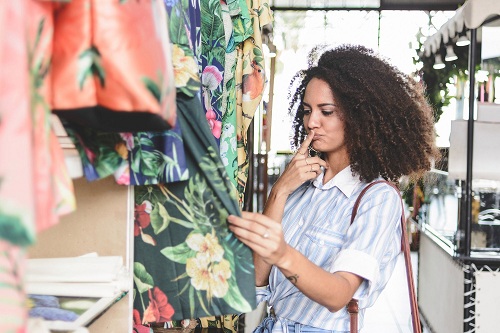 and production processes. The term encompasses environmental impact of apparel production, social justice, supporting artisanal crafts, businesses supporting developing economies, etc. It mandates improvement in current apparel production processes without comprising fashion and style.
As designers control, 80 per cent of a product’s environmental impact, they need to embed sustainability into their garments right from the designing stage, views Sustainable Apparel Coalition. This calls for certain changes in established supply chains of big fashion companies. Brands can be sustainable and fashionable at the same time by focusing on the designing of their garments. They need to ensure the quality, creativity, longevity, craftsmananship and fair wages in their factories meets required standards.
A fillip to fashion resale
On their part, consumers need to invest in clothes that outlast their children’s wear-and-tear. They need to focus on mending or repairing damaged clothes and encourage their kids to value their wardrobes by donating clothes they no longer use.
This will boost the fashion resale market which according to the Thredup 2020 Resale Report, is expected to grow five times over the next five years. On the other hand, traditional retail is expected to shrink as the fashion industry focuses on creating a greener, more sustainable future. With brands transforming their processes, and consumers moving towards conscious shopping, the fashion industry is set for a long-lasting change.
Kontoor Brands increases Q1 revenues by 29%
In its first quarter of the current financial year Kontoor Brands, Inc. a global lifestyle apparel company, increased its revenues by 29 per cent to $652 million on a reported basis and by 27 per cent on constant currency basis.
The company’s revenue increases compared to the prior year were primarily driven by strength in digital, including its own website and digital wholesale, as well as improved performance across the US. wholesale business and accelerating trends in international markets.
Its revenues in the US increased by 29 per cent to $488 million over the same period in the prior year driven by growth in US wholesale, new business development wins and strength in Digital. Compared to adjusted revenue in the first quarter of 2019, reported revenue increased 11 percent, with its own website increasing 70 percent and digital wholesale increasing 132 percent.
Kontoor Brands’ gross margin increased by 830 basis points to 46.1 percent of revenue, compared to gross margin during the same period in the prior year, or 820 basis points on an adjusted basis. Favorable channel, customer and product mix, as well as quality-of-sales initiatives, were the primary drivers of gross margin gains in the quarter.
Operating income on a reported basis was $93 million. Adjusted operating income was $119 million, increasing 437 percent compared to the same period in the prior year. Adjusted operating margin increased 1,390 basis points to 18.3 percent of revenue, reflecting the benefits of gross margin improvements, fixed cost leverage on better revenue and tight expense control. Adjusted operating margin increased 750 basis points compared to the first quarter of 2019.
Earnings Before Interest, Tax, Depreciation and Amortization (EBITDA) on a reported basis was $102 million. Adjusted EBITDA was $127 million, increasing 325 percent compared to the same period in the prior year. Adjusted EBITDA margin increased 1,360 basis points to 19.5 percent of revenue. Adjusted EBITDA margin increased 750 basis points compared to the first quarter of 2019.
ILP to expand production capacity with $300 million investment
Textile Company Interloop Limited (ILP) plans to invest $300 million to expand its production capacity and install apparel factory to capture the pent-up demand in foreign markets.
As per The News, ILP is Pakistan’s leading textile player, has an immense growth potential as it has continuously expanded and diversified its product line. Nearly 90 percent of its revenue comes from exports where major customers in the hosiery segment include Nike, Target, Puma and Adidas.
The four clients contribute more than half of the export revenue. With the rollout of vaccination in US and European region, the demand is expected to remain resilient in the coming months. This coupled with order diversion to Pakistan from US/China trade spat and shift in orders from India and Bangladesh during pandemic will likely help ILP to achieve a sustainable growth going forward. In July-March, exports of textile and clothing grew 9.1 percent to $11.35 billion. Value-added sectors drove the growth.
The company’s e denim expansion is on track, and is expected to complete in 4QFY21. In the hosiery segment, capacity would be enhanced in a phased manner starting from September 2021 as the company is operating at maximum rated capacity.
Australian brands raise capital for COVID-hit India
Australian fashion and homewares retailers with suppliers in India are raising money and donating to charities, as the country faces a catastrophic surge of coronavirus cases.
Online clothing and homewares store Sage and Clare has already raised $10,000 of a $15,000 target by selling its popular bathmats. The sales will go toward Give India’s funding for families of those who have died from COVID-19.
India is currently experiencing the world’s biggest surge in coronavirus infections, which has seen 10 million cases recorded in the space of four months. However, due to the country’s testing capabilities, experts believe the number is at least five times higher.
Emily Wright, founder of Melbourne-based leathergoods and clothing brand Nancybird, says the situation is devastating.Nancybird works closely with five manufacturers in India, which are a mix of non-profit collective, Fair Trade certified workshops and larger makers.During India’s 10-week lockdown last year all of Nancybird’s suppliers closed their factories. Wright says this time a couple of her manufacturers have closed but surprisingly, some of them are still able to be open albeit with restrictions.
Olli Ela, a sustainable clothing, toys and homewares brand, is showing its support by donating to charities and continuing to manufacture with them despite the disruptions.The retailer has also donated $5,000 to Help India Breathe.
H&M’s AGM approves board proposals for fees and elected members
Held under the chairmanship of lawyer Sven Unger, H&M’s annual general meeting (AGM) approved the board’s proposal to pay no dividends and carry forward the amount at the disposal of the board. The AGM adopted the income statement and balance sheet for the parent company and the group. It discharged the members of the board and the chief executive officers from liability for the 2019/2020 financial year.
The AGM also reelected regular board members Karl-Johan Persson, Stina Bergfors, Anders Dahlvig, Danica Kragic Jensfelt, Lena Patriksson Keller, Christian Sievert, Erica Wiking Häger and Niklas Zennström. Karl-Johan Persson was re-elected as chairman of the board. The regular members appointed by the trade unions are Margareta Welinder, Ingrid Godin and Tim Gahnström, with Louise Wikholm, Helena Isberg and Hampus Glanzelius as deputy members.
The AGM approved the nomination committee’s proposal to retain previous year’s fees of the board. It also resolved to appoint Deloitte AB as auditor until the close of the 2022 AGM. The auditor’s fees are to be paid based on approved invoices.
The AGM approved the nomination committee’s proposed principles for its elected members that included Stefan Persson (Ramsbury Invest AB), Lottie Tham, Jan Andersson (Swedbank Robur fonder), Erik Durhan (Nordea fonder) and the chairman of the board Karl-Johan Persson.
The AGM approved the board’s remuneration report and the resolutions proposed by the board concerning guidelines for remuneration to senior executives and amendments to the articles of association.
Hyosung launches new spandex range for swimwear and athlesiure fabrics
World’s largest spandex brand Hyosung has launched Creora® highclo, a thread that protects fabrics from water damage. As per Texbrasil, the thread can be used to make beachwear and fitness products that usually have a shorter life span due to exposure to water and chlorine, sunscreens and tanning oil.
Spandex improves the durability of the fabric and provides a more lasting fit, it guarantees the compression and modeling of the articles made and conservation of the shape. Furthermore, it can also be used in products focused on outdoor sports, as it protects the fabric from UV rays.
Another feature of the thread is stretchability up to 500 per cent of its original shape, providing comfort and softness in the fabrics produced in its composition. The thread also has a risk of almost no fiber breakage and a class of polymers that support up to 135 degrees in the dyeing process.
A world-class manufacturer of fibers and products, Hyosung has 10 industrial plants located in South Korea, China, Turkey, Vietnam, Brazil, and India. In Brazil, it has been present since 2011, when it installed the industrial plant located in the city of Araquari, in Santa Catarina, with a land of 250,000 sq. mt. and a built area of 40,000 sq. mt.
Puma adds new board members
German sports equipment brand Puma has promoted Arne Freundt, Managing Director-EMEA region as its new chief commercial officer from June 1. Besides continuing to oversee the EMEA region, Freundt will be responsible for Puma’s global commercial operations, from brick-and-mortar retail to e-commerce and logistics. In this capacity, Freundt will also join Puma’s board of directors.
Puma also elected, Hubert Hinterseher, Global Head-Financial Controlling to the board. The new members will sit alongside Bjorn Gulden, CEO, Puma, who oversees product development and marketing, and Chief Sourcing Officer Anne-Laure Descours.
The board is chaired by Jean-François Palus, COO, Kering, the French luxury group that is a former owner of Puma and still a shareholder. Recently, Puma increased its first quarter sales by 26 per cent.
Puma SE is a German multinational corporation that designs and manufactures athletic and casual footwear, apparel and accessories, which is headquartered in Herzogenaurach, Bavaria, Germany. Puma is the third largest sportswear manufacturer in the world. The company was founded in 1948 by Rudolf Dassler.
Superdry’s Q4 revenues increase by 0.8
Helped by the popularity of online and wholesale business, British fashion brand Superdry returned to growth in its fourth quarter. As per Business of Fashion, the brand’s revenues in the fourth quarter increased 0.8 per cent to £118.3 million, with a 26.6 per cent rise in online and a 13.5 per cent rise in wholesale offsetting a 51.5 percent drop in store sales.
Known for sweatshirts, hoodies and jackets, Superdry has been hammered by the pandemic. The brand registered a 21 per cent decline in sales last year due to COVID-19 disruptions. The company recorded an underlying pretax loss of £10.6 million ($14.4 million) in the six months to October 24, and it suffered a further blow when stores were forced to close during the Christmas period.
Superdry is a contemporary brand which focuses on high-quality products that fuse vintage Americana and Japanese-inspired graphics with a British style. The brand has a significant and growing presence around the world, operating through 768 Superdry branded locations in 65 countries. There are 245 own stores across the UK and mainland Europe, 497 franchised and licensed stores and 26 concessions. Superdry sells to over 100 countries worldwide, operating from 21 international websites.
Premium Exhibitions cancels July’s physical editions
Scheduled to debut as physical events, Seek, Premium and Fashiontech have been cancelled by Premium Exhibitions. As per Spin Off reports, these events were scheduled to from July 6 to 8 in Frankfurt/Main, Germany. Cancellations are a result of current situation in Europe including lack of permissions, adjustments to official measures at short notice, travel restrictions, potential quarantine obligations and short-term work in many companies. These events will now be held in the Main metropolis from January 19-21, 2022.
In July, Frankfurt Fashion Week (FFW) will be held in a digital format. The event will open with Frankfurt Fashion Week Studio encompassing the whole FFW ecosystem. The key themes will be fashion business, sustainability and digitization and it will bring together German fashion trade shows, conferences and events under one roof, first as a digital venue, then as a hybrid one.