


FW
Devan Chemicals launches two new bio-based textile finishes
Textile innovator Devan Chemicals has launched two new bio-based textile finishes. One is a softener and the other is a quick-dry finish. Both are derived from vegetable oils and are in line with the company’s latest innovations on bio-based chemistry.
The first, Passerelle Soft NTL is a durable softness technology based on vegetable ingredients. The technology is wash durable and can be used with natural fibers like hemp, cotton, but is also fit for synthetic fibers like rPES, PA.
The second, Passerelle Quick-Dry NTL is a moisture management technology that has a high wicking and evaporation capability which helps to evaporate water/sweat easier and faster. The technology is also > 60% (28 days) biodegradable according to OECD 301B.
Since 2019, Devan Chemicals has launched Bio-flam, bio-based PCM’s, a natural antimicrobial and plant-based fragrance under SceNTL brand name. The company aims to reduce the carbon footprint of the global textile industry and continue innovating its product range through bio-based and sustainable chemistry.
Kornit Digital partners Asos, Fashion-Enter for new technology
Digital textile printing specialist Kornit Digital plans to implement Kornit Presto technology in partnership with UK fashion e-tailer Asos and its supplier Fashion-Enter. As per Spin off International, the direct-to-fabric printing technology will enable Fashion-Enter to rapidly deliver test-and-repeat small product runs on behalf of Asos.
The technology will help Kornit Digital imprint designs on multiple fabrics at the push of a button, through a lower-impact production process that has zero water waste and accelerates production speeds by cutting out typical dyeing processes. It will also allow Fashion-Enter to develop an in-house new microfactory concept providing an interconnected fashion world, which shall have the capacity to eliminate waste, risks, limitations, and pollutants from current outdated batch production.
Simon Platts, Responsible Sourcing Director, Asos says, the technology will help the company reduce fashion impact across its supply chain. It will also enable it to expore the full potential of this technology, enhance its ability to react quickly and establish more efficient and lower-impact production processes.
China’s cotton exports under scanner as US looks to diversify sourcing
 International cotton trade is becoming more complicated for China with the US keeping a close watch on its exports. The CCF Group reports, these days China’s cotton exports are being closely monitored by the US for their purchase invoice, certificate of origin and declaration of noncompulsory labor importers. The value of China’s cotton textiles and apparels exports to the US was already declining before COVID-19. The pandemic in 2020 soured this value further. Now, the US’ sanctions against Xinjiang are expected to compound the crisis.
US’ moves to other sourcing destinations
With imports worth $45-47 billion, the US has been one of the major importers of Chinese cotton textiles and apparels every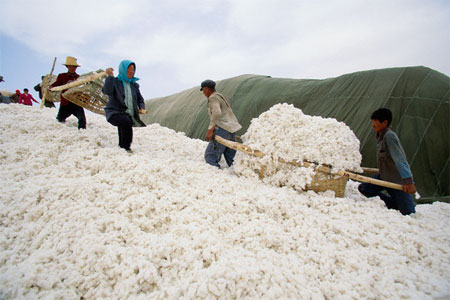 year. In 2020 however, the country drastically declined its cotton imports from China and moved to other sourcing destinations such as India, ASEAN, Pakistan and Bangladesh. Currently, exports from these countries account for over 80 per cent of US cotton textile and apparel imports. The US has also banned import of cotton fabrics containing Xinjiang cotton. This may not only affect China’s exports but also those of Bangladesh and ASEAN countries such as Vietnam, Cambodia and Indonesia as these do not have a complete textile and apparel industry chain. They are highly dependent on intermediate links and feedstock imports, of which China is a major source.
Exports to RCEP members grow
In the first quarter of this financial year, China’s trade with other 14 RCEP member countries grew by 22.9 per cent year-on-year to 2.67 trillion yuan. It accounted for 31.5 per cent of its total foreign trade value. China’s exports during the quarter grew by 27.5 per cent to 1.25 trillion yuan while imports grew 19 per cent to 1.42 trillion yuan. Its trade with ASEAN, Japan and South Korea increased by 26.1 per cent, 20.8 per cent and 19.5 per cent respectively. Of these, export of textiles and apparel increased by 27.9 per cent while those of mechanical and electrical products grew by 28.7 per cent to 659.85 billion yuan.
Denim industry adapts itself to changing demands in 2021
 In 2020, growing preference for comfortable and stretchy clothing hit the global denim industry hard compelling brands like G-Star Raw and True Religion to file for bankruptcy. However, the industry soon bounced back by adapting itself to new changes. It geared itself to offer comfortable, stylish and sustainable denim products, reports Fashion Capital.
Emerging denim trends
In contrast to the traditional black and blue, denims are now available in grey shades also. The Pantone Color Institute launched a new range of grey denims that offer a vintage look. Brands are also moving away from tight, constricting styles to loose, soft silhouette. Dior and Gucci launched wide-leg denim trousers, kimono jackets, trench coats, puff sleeve tops, workwear and practical multi-pocket separates in pale blue, white and grey colors.
One of the most popular denim trends is patchwork style made from recycled or deadstock materials. Marianne Gallagher McDonald, Creative Director,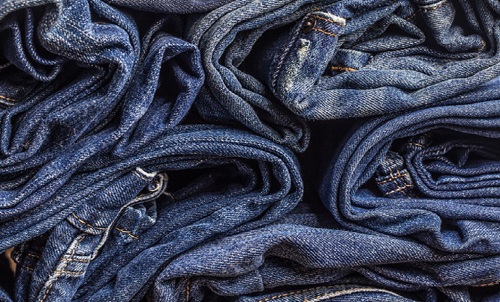 Citizens of Humanity, a US-based denim brand, expects this trend to become a common feature as the industry looks to reduce consumption of natural resources and create a more just and equitable world.
Rise of the ‘sustainable’ denim
Denim mills, suppliers and brands across the world are looking to outstep each other in sustainability game. For example, Pakistani-based denim mill, Artistic Milliners has launched a capsule collection called ‘Reflection’ made from eight new fabrics. The fabrics are made from a combination of Lenzing’s Tencel™ X Refibra™ Modal Indigo Color Technology and the company’s inbuilt S3 Yarn Technology.
Austria-based Lenzing has launched Tencel™ branded modal fiber with indigo color technology that incorporates indigo pigment directly into Tencel™ branded modal fibers. The pigment is incorporated using a one-step spun-dyeing process, and delivers superior color fastness using fewer resources. Lenzing promotes this technology in partnership with supply chain partners including Cone Denim”
To minimize waste and take the industry towards a circular model, denim players are also adhering to Making Fashion Circular-The Jeans Redesign guidelines. Over 60 leading brands, manufacturers, and fabric mills, including Boyish Jeans, Denim Expert and Cone Denim Mills are using these guidelines to launch sustainable jeans.
The guidelines encourage brands to use their denim products for a longer period, and recycle using natural chemicals and production processes. The guidelines have attracted reputed denim brands indicating the industry’s growing shift to sustainability.
Shengze Fashion Week and Textile Expo Cloud Exhibition to display Shengze’s fashion vitality
To be held from June 16 to 20, 202` at the Suzhou High-tech Zone, the 2021 Shengze Fashion Week and the 9th Jiangsu (Shengze) Textile Expo Cloud Exhibition will integrate fashion trends and Jiangnan culture to fully demonstrate the fashion vitality of Shengze under the“city-industry integration initiative and the construction of Jiangnan cultural brands.
Shengze, a time-honored silk town, is a fast-growing fashion capital known as a world-renowned textile city. The town created the best embroidery of Song brocade, nurtured Wang Yongheng, Sang Luo and a large number of silk brands, and built a number of innovation carriers, including the first national advanced functional fiber innovation center in Jiangsu Province.
During the fashion week, fashion brands from Italy, France, Spain, the United States and other countries will come together in Shengze. Visitors can enjoy different fashion styles and culture which further showcase complementary Eastern aesthetics and Western classics.
Texcare International to be held in Frankfurt, Germany
Texcare International, the international trade fair for laundry, cleaning, and textiles will be held from November 27 to December 1, 2021, in Frankfurt am Main, Germany. As per reports, the fair will focus on hygiene, sustainability with regard to the circular economy, smart solutions using artificial intelligence, and digital customer contacts.
Texcare International will showcase products including machines and equipment, washing and cleaning substances, IT, logistics solutions, workwear and laundry. The expo will be a vital hub for textile-hygiene innovations, from disinfecting processes for textile dry cleaning, via hygienic washing methods and detergents, as well as new documentary aspects, to anti-viral finishing of textiles during the washing phase.
ZDHC Foundation adds three new members to Roadmap to Zero Program
The ZDHC Foundation has added three new members to its Roadmap to Zero program. These include the Italian high street fashion retailer Teddy Group which owns the retail brands Terranova and Calliope and is the distributor of the Rinascimento, Kitana and QB 24 brands.
The other two members to join ZDHC Foundation include Swedish cellulosic fibre technology pioneer TreeToTextile and Asahi Kasei Corporation Fibers & Textiles, which makes regenerated cellulose fibre derived from cotton, has joined on the same basis.
TreeToTextile aims to deploy new technologies for sustainable man-made cellulosic textile fiber while Asahi Kasei’s product Bemberg contributes to creating sustainable economic and social value through its production system with particular consideration for controlling chemicals and the environment, among other things. A non-profit organization, ZDHC has over 160 contributors across the world. The organization aims to completely eliminate harmful substances from the textile value chain.
VITAS to support sustainable development of the garment sector
Under the United Nations Development Goals, the Vietnam Textile and Apparel Association (VITAS) aims to support the garment sector’s sustainable development and improve the standard of living of employees. The global fashion industry consumed 79 billion cubic metres of water, emitted 1,715 million tonne of CO2, and generated 92 million tonne of waste in 2015. The figures are forecast to grow by at least 50 percent by 2030.
Vu Duc Giang, President, VITAS opines, to achieve sustainable development and compete in the fashion industry’s global supply chain, Vietnam should focus on quality, technology, productivity, delivery time, and transparency It should also minimize its energy and resource consumption and invest in advanced technologies to meet international standards on work and the environment, he adds.
Dr Do Quynh Chi, Director, Research Centre for Employment Relations (ERC), says, Vietnamese manufacturers should improve their production values and invest in compliance with international labor and environmental standards to build a long-term and direct relationship with fashion brands.
Manufacturers should establish links with peer producers to fully explore their strengths, adds Giang. She emphasizes the importance of developing policies that promote SMEs in terms of technology and management, enabling them to participate in sustainable development standards and move up global supply chains.
Suryalakshmi Cotton Mills posts Rs 9.08 crore profit in FY’21 Q4
For its fourth quarter ended March 31, 2021, Suryalakshmi Cotton Mills posted a net profit of Rs 9.08 crore as against a loss of Rs 0.15 crore posted during the third quarter ended December 31, 2020. As per Equity Bulls, the company reported total income of Rs 189.39 crore during the period ended March 31, 2021 as compared to Rs155.97 crore during the period ended December 31, 2020.
On a yearly basis, Suryalakshmi Cotton Mills posted net profit of Rs 9.08 crore for the period ended March 2021 as against net loss of Rs 14.34 crore for the period ended March 31, 2020. The company reported total income of Rs 189.39 crore during the period ended March 31, 2021 as compared to Rs.130.49 crore during the period ended March 31, 2020.
Turkey’s apparel and home textiles exports to grow exponentially in 2021
Turkey’s apparel and home textiles exports are expected to record exponential growth in the upcoming period of 2021. As per China Textile, Turkey’s exports to the US increased considerably last year. Exports to the UK also grew after post-Brexit trade agreement took effect this year.
Last year, Turkey’s apparel and home textiles exports to the US increased more than 20 per cent year-on-year to cross the $10 billion-mark. The country mainly exported carpets, ready-to-wear and apparels. Its exports of carpets increased by more than 30 percent over the previous year, while those of ready-to-wear and apparels climbed by more than 20 percent in 2020.
This year, Turkey’s exports to the UK grew considerably from January-March 2021, according to the Turkish Exporters’ Assembly TIM. Turkey plans to open foreign logistics centers in the target markets, especially in the US. This would further accelerate local exporters’ access to markets and stimulate the exports. The logistics centers opened abroad will work as a regional base for exporters, reduce the costs of market access and accelerate access to new markets.











