


FW
American Eagle launches new limited edition jeans collection
American Eagle Outfitters, Inc has launched a limited American Eagle jeans collection using guidelines as a part of the Ellen MacArthur Foundation’s Jeans Redesign project, reports Fashion Network.
By using guidelines developed by the Foundation's Make Fashion Circular team alongside over 80 denim experts, the AE x Jeans Redesign collection adheres to the principles of a circular economy where clothes are made with limited impact, are recyclable and are long-lasting to be kept in use.
The collection will be made of 100-percent organic cotton with easy-to-remove hardware, making the jeans easily recyclable, and will be produced without the use of harmful chemicals and processes, among other sustainable aspects.
Since the launch of its sustainable efforts, American Eagle has decreased the amount of water used to make jeans by nearly 7 gallons per jean, compared with 2017; saved a total of 4.5 billion gallons of water since 2017, due to recycling and reduction efforts; and conserved an estimated 2.4 billion gallons of water in 2020 as a result of cotton sourcing practices, and more.
ABG bids 1 million for Reebok
Authentic Brands Group (ABG) has made a $1million bid for Reebok. As per Fashion Network, If a deal materializes, the licensing company would add Reebok to a roster of brands such as Juicy Couture, Nine West and Frye.
Adidas, Reebok’s parent company, confirmed it was considering a buyer for the sneaker brand in December 2020, although whispers of a sale — and suspicions that ABG would be involved — first circulated in 2019.
Adidas wrote down Reebok’s value to €842 million (about $1 billion) in 2020, while its namesake brand generated is worth nearly 16 times that. Reebok has spent most of the last decade competing with sportswear and sneaker giants like Nike, attempting its hand at headline-making partnerships with celebrities and fashion figures like Cardi B, Victoria Beckham and Kerby Jean-Raymond.
ABG has purchased a slew of fashion brands over the past two years, including Brooks Brothers, Lucky Brand, Barneys New York and most recently, Eddie Bauer.
Retailers, union groups extend Accord agreement by three months in Bangladesh
Retailers and union groups have succeeded in extending the tenure of the Accord agreement by three months. As per a Reuters report, over 200 brands and retailers were negotiating to extend the agreement period.
The signatories include top apparel retailers like Zara-owner Inditex and H&M. However, trade unions have threatened to pull out of the organization currently running the Accord if retailers do not commit to the legally binding portion of the agreement, obliging them to pay for fixes at supplier factories and banning them from working with these factories until they are deemed safe by accord inspectors.
The Accord on Fire and Building Safety in Bangladesh was signed in 2013 after the collapse of garment production complex Rana Plaza killed at least 1,100 people. It created an independent body to run inspections at factories and obliged retailers to pay for any repairs, collecting $500,000 from each signatory per year to fund its activities.
Originally due to expire in May 2018, the Accord was extended that year, culminating in the creation of a new organization called the Ready-Made Garments Sustainability Council (RSC).
Governed by factories, unions and retailers, the RSC took over the accord’s team and duties in June 2020 but did not immediately commit to extending the legally binding portion of the agreement beyond its expiration date of 31 May.
Luxury brands explore blockchain to increase efficiency, improve customer experience
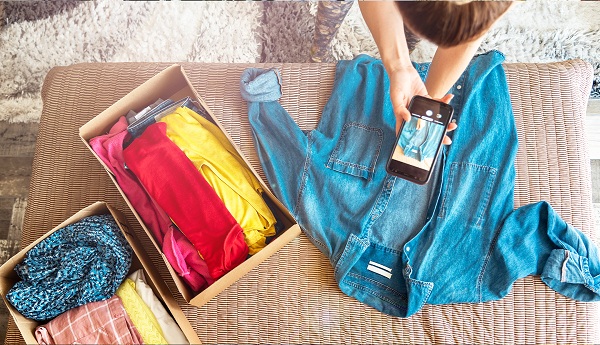
The global luxury fashion market continues to struggle with three challenges: counterfeiting, environmentalism and labor abuse. As per Global Brand Counterfeiting Report, the industry loses $100 billion every year to counterfeiting. Consumers are increasing their investments in sustainable products to over $30 billion, reveals IBM’s US Retail Index for 2020. Over 70 per cent consumers now opt for sustainable and environmentally responsible products. Around 76 per cent support recycling while 72 per cent prefer using natural ingredients in their clothes.
Time and again, media channels have highlighted instances of human rights violations in apparel factories. Luxury brands are addressing these issues through blockchain technologies.
Digital twin helps trace apparel journey
As per an Everledger report, blockchain technologies are helping brands prove their substantial and ethical credentials by creating a unique digital identity for each product. Digital twin of products helps trace the journey of an apparel from raw material to design and sale, to resale and recycling. The technology also helps brands replace the fragmented supply chain data into a single unchallenged record that can be viewed by all concerned parties.
The technology enables retailers to build customer-centric supply chains. Consumers can learn about the origins of raw materials of garments, their design and manufacturing process and their previous owners. Further, Blockchain enables the Everledger Platform support apparel and luxury brands by securing their records and accessibility to end consumers.
Encouraging conscious consumerism
Fashion label MCQ uses the blockchain technology to demonstrate its sustainability commitments. The brand has designed MYMCQ, a blockchain powered technology platform where designers and consumers can securely register trade clothing items. Consumers can also secure a digital record of each of these items. They can purchase any garment item with confidence. Through this technology, MCQ aims to encourage a more mindful consumerism. An outstanding achievement by MCQ, the MYMCQ platform enables luxury and apparel brands to increase their efficiency and customer experiences. By offering a more unified and trustworthy information, the technology enables stakeholders to improve customers’ shopping experiences by offering more authentic products.
Denmark eyes circularity milestone with new textile recycling project
 Denmark is set to achieve a new milestone in circularity with a new textile recycling project called ReSuit (Recycling Technologies and Sustainable Textile Product Design). Launched by the Danish Technological Institute, project ReSuit or Recycling Technologies and Sustainable Product Design, is being supported by Innovation Fund Denmark. It will be developed in consortium with brands including Bestseller, Elis, Design School Kolding; raw material producer A/S Dansk, consumer behavior specialist Naboskab and recycling experts Arhus University and Fraunhofer.
A textile gamechanger
As per a Bestseller report, the project aims to gather textile waste in Denmark and recycle it into new raw materials for other products. The project will prove to be a gamechanger in the Danish textile industry, says Anders Lindhart, Project Incharge, Danish Technological Institute.
The main focus will be on creating a sustainable design for textile products to help eliminate substances not suitable for future recycling technologies. It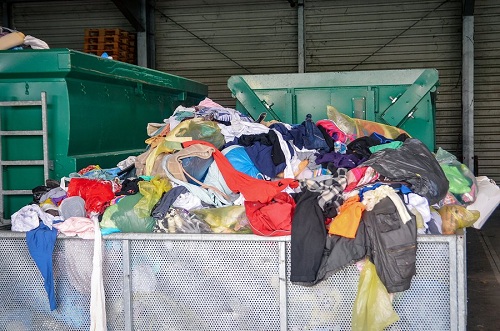 will help create a unified solution offering long-term benefits not just for Bestseller or Denmark but the entire world, explains Camilla Skjønning Jørgensen, Sustainable Materials & Innovation Manager, Bestseller. Through this project, consumer behavior specialist Naboskab will motivate consumers to act more sustainably
EU countries to join from 2025
Around 85,000 tons of textile and clothes enter the Danish market every year. More than half are ultimately incinerated as waste. The ReSuit Project will start sorting this waste from 2022. It will develop a technology based on chemical recycling to recycle polyester materials, adds Lindhardt.
Besides Polyester, the project will recycle the remaining materials with a technology called HTL (hydrothermal liquefaction). The technology converts complex textile stream into products that be used for the production of plastic, fuel or synthetic fibers. It uses water, heat and pressure to achieve this. A groundbreaking technology, HTL will be further expanded in collaboration with A/S Dansk Shell, which aims to recycle bio-oil products. The rest of the European Union will join this initiative from 2025.
Under Armour tightens inventory to boost margins
Under Armour is tighteningits inventory, says a report by Retail Dive.
This will help the brand better how much product sits in its reserve, limit low-demand products and focus on getting the items that are in demand. The strategy has involved consolidating vendors and cutting SKUs.
Controlling inventory and simplifying its supply chain has helped the brand boost its profit margins in the past. And the better-than-expected margins for its Q1 2021 gives hope that it can work going forward, too. The potential financial benefits to managing inventory may somewhat balance out with the freight increases expected due to transportation and logistic challenges.
Under Armourhas been impacted by the barrage of supply chain challenges over the last year. As a result, the company shifted to figuring out what they could do to mitigate issues by optimizing the inventory they could get.
Tight inventory management has translated into items selling faster and reducing returns, allowing for Under Armour to set prices that are more favorable, compared to relying on promotional sales to move inventory, Bergman said.
The company expects Q2 gross margins to decrease about 120 to 140 basis points in the second half of the year due to container-availability issues and port delays, but it said its supply chain is currently navigating the challenges "fairly well."
Rieter expects orders worth CHF 800 million in H1 2021
Rieter expects an order intake of around CHF 800 million in the first half of 2021.As per the Textile Value Chain, the company received orders worth CHF 300 million in April 2021. The order intake in April was broadly based internationally with the main focus on Turkey, Uzbekistan and India.
In addition to the regional development of the market, Rieter also attributes the business performance to a catch-up effect due to the low propensity to invest in 2019/2020.
As already announced, Rieter anticipates that sales in the first half of 2021 will be below the break-even point. Rieter expects an operating profit for the full year 2021. On July 15, 2021 Rieter will give an updated outlook for 2021 in connection with the semi-annual results, taking into consideration the ongoing challenges resulting from the COVID-19 pandemic.
The Rieter Board of Directors has approved the implementation of the CAMPUS project. The Rieter CAMPUS comprises a customer and technology center as well as an administration building at the Winterthur location. It will make an important contribution to the implementation of the innovation strategy and to the enhancement of Rieter’s technology leadership position.
Senators Rob Portman and Gary Peters applaud passing for legislation to strengthen PPE production
US Senators Rob Portman, Ranking Member of the Senate Homeland Security and Governmental Affairs Committee and Gary Peters Chairman. Senate Homeland Security and Governmental Affairs Committee applauded the Senate Homeland Security and Governmental Affairs Committee for passing a bipartisan legislation to strengthen efforts to onshore production of personal protective equipment (PPE) in the United States by requiring federal agencies to issue long-term contracts for American-made PPE.
Reshoring production will ensure American workers, health care professionals, and more have the PPE they need as the economy continues to reopen. Domestic production of PPE supplies also will create American manufacturing jobs and ensure that America is better prepared for the next pandemic.
Senator Portman, said, multi-year contracts give producers the certainty to know that their investment in the United States will be worth it because the government will be there to buy the PPE they produce. By re-shoring production of PPE, we can continue to support a safe and effective reopening of our schools, workplaces, and the economy.
Demand for wool grease rises
As per Nigel Hale, CEO, WoolWorks, wool grease is currently in high demand as it is used in cosmetics, skincare, and pharmaceuticals.
WoolWorks New Zealand is the only company in the country that produces and exports wool grease. Its prices have risen significantly due to the demand generated demand for COVID-19 vaccines.
As per Textile Value Chain, New Zealand wool grease is one of the best in the world because it is so high in cholesterol. Mills in Asia have been working overtime to produce more but that product is mostly being used domestically.
Ninety-nine percent of the wool grease is exported to mills all around the world including Japan, Mexico, The US, UK, India and Belgium.
Thredup posts bigger than expected loss in first quarter
Online second-hand apparel retailer ThredUp Inc posted a bigger-than-expected quarterly loss in Q1 and warned of clothing budgets remaining constrained even as the US economy reopens. The company’s total operating expenses jumped 18.5 per cent to $54.4 million in the first quarter and the company does not expect to generate positive cash flow in the near term as it re-invests in its expansion.
ThredUp’s net loss widened to $16.2 million in the three months ended March, from $13.2 million a year earlier. On a pro-forma basis, the company lost 17 cents per share, bigger than the 16 cents loss analysts expected, according to IBES data from Refinitiv.
ThredUp also forecast second-quarter revenue of $53 million to $55 million, above estimates of $48.8 million. The company expects things to normalize in the third quarter.











