


FW
Retail footfalls in Europe drop 26-40 per cent in 2020: Report
Retail footfalls in major European countries declined in the range of 26 per cent to 40 per cent in 2020 on account of recurrent national and regional lockdowns, says a study by retail intelligence specialist TC Group. Based on data gathered between 9 a.m. and 9.30 p.m. daily on passers-by taller than 120 cm, the study showed a degree of disparity between countries.
For instance, consumer footfalls in UK’s main commercial high streets declined just 26.4 per cent or 3,225 people per day. The UK managed to stem the decrease in footfall by easing lockdown restrictions roughly in parallel with periods when footfall normally tends to increase, such as June-July and October-December. The worst result was recorded by Portugal, which witnessed a 40 per cent slump in footfall, equivalent to 2,245 people per day. Germany too was badly affected with footfalls on commercial streets falling by 38 per cent and in-store visits declining by 46.8 per cent, on average 217 people per day.
In Italy, high-street footfall fell by 31 per cent with the number of in-store visits decreasing by 40 per cent. In Portugal, pedestrian traffic fell by 30 per cent while in-store visits decreased by 41.3 per cent. France managed to limit its footfall decrease to 28.2 per cent while the number of in-store visits in the country plummeted, by 49.1 per cent, on average 334 people per day in the year.
Spain fared a little better, with high-street footfall falling by only 27.9 per cent while the number of in-store visits fell by 37.5 per cent at peak times.
Copanhagen Fashion Week to present a strong brand lineup at S/S’22
For its upcoming edition of S/S’22 from August 10-13, Copenhagen Fashion Week aims to feature a strong line-up of labels. The event will feature 38 labels including established names and new talent. Some big brands participating in the event include Nordic brands such as Ganno, Stine Goya, Holzweiler, Saks Potts and Marimekko. The event will also feature returning brands such as Han Kjøbenhavn, Helmstedt, Brøgger and Hope.
Around 30 of the 38 brands will host physical shows which will be live-streamed on the fashion week’s website along with remaining digital shows. The event will also focus on menswear with a curated selection of brands, including, Schnayderman's, (di)vision, Berner Kühl and Nikolaj Storm Copenhagen. Established names such as Henrik Vibskov, Souland and Samsøe Samsøe will present both womenswear and menswear.
This year’s inaugural Talent Slot will be held by A Roege Hove, who will explore knitwear to indicate future Nordic design dexterity. Louise Lyngh Bjerregaard, will also debut at the event and The Royal Danish Academy will present a selection of its MA students' graduate collections.
BGMEA urges Bangladesh Bank to help RMG sector overcome COVID-19 effects
Bangladesh Garment Manufacturers and Exporters Association (BGMEA) has urged Bangladesh Bank to support the RMG sector struggling to overcome the impacts of COVID-19 and retaining competitiveness in global market. Faruque Hasan, President, BGMEA thanked the Bangladesh Bank for coming forward with policy support for the garment industry when fell into deep trouble following the pandemic.
The bank’s support in simplification and relaxation of financial policies pertaining to the RMG industry would help the sector to address the challenges and turn around, he says. Earlier, Bangladesh Bank had extended the loan limit of garment and textile factories from the export development fund (EDF) to $30 million from $25 million. Hassan urged the bank to extend the time limit for the enhanced EDF by six months.
He requested BB to extend the payback period of the loans under the COVID response stimulus package from two years to five years as the sector is going through a rough patch. He also urged the central bank to write off all debts, interest, and cost of fund charges for the 133 sick RMG factories, taking them into special consideration.
Copanhagen Fashion Week to present a strong brand lineup at SS22
For its upcoming edition of SS22 from August 10-13, Copenhagen Fashion Week aims to feature a strong line-up of labels. As per Fashion Network, the event will feature 38 labels including established names and new talent.
Some of the big brands to participate in the event include Nordic brands such as Ganno, Stine Goya, Holzweiler, Saks Potts and Marimekko. The event will also feature returning brands such as Han Kjøbenhavn, Helmstedt, Brøgger and Hope.
Around 30 of the 38 brands will host physical shows which will live-streamed on the fashion week’s website alongwith the remaining digital shows. The event will also focus on menswear with a curated selection of brands, including, Schnayderman's, (di)vision, BernerKühl and Nikolaj Storm Copenhagen. Established names such as HenrikVibskov, Souland and SamsøeSamsøe will present both womenswear and menswear.
This year’s inaugural Talent Slot will be held by A Roege Hove, who will explore knitwear to indicate future Nordic design dexterity. Louise LynghBjerregaard, will also debut at the event and The Royal Danish Academy will present a selection of its MA students' graduate collections.
adidas Golf launches new collection made from Primeblue
adidas Golf has launched a new apparel and footwear collection made from recycled technical material Primeblue. The collection features polos, layering pieces and shorts, along with the new CODECHAOS21 footwear. It is made from the company’s high-performance recycled material made in part with Parley Ocean Plastic. The material meets a minimum standard of 40 per cent recycled content overall.
adidas Golf has also launched a new CODECHAOS21 range of footwear. This range is made from Primeblue recycled yarns that contain more than 50 per cent Parley Ocean Plastic. It is waterproof and includes overlapping microfiber panels on both the lateral and medial side of the shoe to give golfers more stability and protection when they play. It will be offered in multiple colourways, including a special scarlet and white colourway beginning today.
The shoes also have a spikeless outsole featuring Twistgrip technology where adidas Golf used heat-map studies to determine the most optimal location for the lugs, providing all players with the best grip possible. Other features found in CODECHAOS21 include full-length boost cushioning for added comfort and torsion X stability bar for added stability throughout the swing.
Vietnam eyes $39 bn exports through FTAs, diversification and trademarks
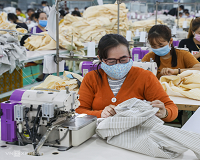 The Vietnam National Textile and Garment Group (Vinatex) has set an ambitious target of achieving $39 billion in export revenue this year, equal to that of 2019. Last year, the group could achieve exports worth only $35 billion due to the pandemic, US-China trade tensions and Brexit. However, Vietnam was the only country among the world’s top five garment-textile exporters that did not cease production during the pandemic. According to Vietnam Times, the country was able to achieve export revenues worth VND 15.5 trillion last year and a profit of 628.9 billion.
In the first four months of the current financial year, Vietnam’s textile and garment exports increased 13.33 per cent to $11.747 billion compared to the same period last year, reveals Vietnam Textile and Apparel Association (VITAS).
Exports dominate with $8,766 bn revenues
Garment exports dominated during the year with revenues worth $8,766 billion. This was followed by fiber exports worth $1,638 billion, and fabric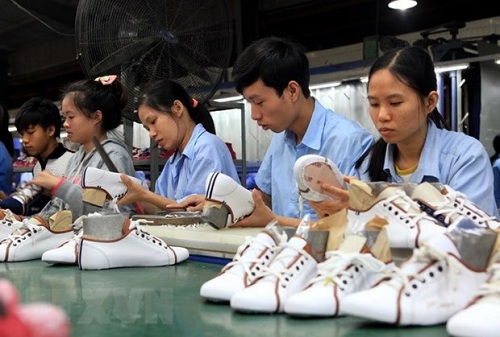 exports amounting to $740 million. Most exports were to the US, Europe and Japan during the year.
Experts attribute this vigorous growth in exports to the gradual recovery in several of its key markets and opportunities being offered by new free trade agreements. Vietnam’s local textile sector index during the period increased 8.1 per cent year-on–year, while clothing industry index increased 9.1 per cent. The combined turnover of the garment and textile industry during the year increased 15 per cent while that of all kinds of fibers and yarns increased 60 per cent.
Vietnam’s garments and textiles are known to enjoy a competitive advantage in several markets like the EU and the US. According to Le Tien Troung, Chairman, Vinatex, the country’s garments and textiles enjoy a competitive advantage in several major markets, including the EU and the US. The sector is known for its sustainable and clean production techniques.
Introduce export-oriented policies
However, a representative of Hue Textile and Garment Joint Stock Company believes, impacted by the pandemic, Vietnam’s garment sector may face a difficult period in the second quarter of this year. He along with a VITAS representative advise local businesses to keep a close tab on market changes and adjust production strategies accordingly. They also recommend incorporation of green solutions in their textile and garment products and seeking new orders.
Truong advises the government to cut of long-term interest rates as the textile and garment firms may find it difficult to repay loans due to declining businesses. The government also needs to adopt specific policies to support growth in the sector, he adds.
Though textile and garment production in Vietnam has revived, it is yet to achieve previous growth levels. The Ministry of Industry and Trade will continue to promote exports by exploring new FTAs, diversifying export and import markets, making exports more competitive and developing new trademarks.
India-UK trade deal should protect UK jobs and businesses, says UKFT
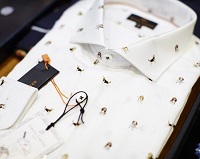 Realizing India’s potential as a future trade partner in the fashion industry, the Paul Alger, Director-International Business, UK Fashion and Textile Association (UKFT) has urged the government to strike a deal that would allow it access the £2trillion Indian market comprising 1.4 billion consumers.
The UKFT believes, such a deal would have a huge impact on the UK fashion and textile industry as India is not only the largest country in the Commonwealth, but also a part of the world with which UK would like to have an FTA. Also, India’s strong links to the UK and its proficiency in English language makes it the most likely beneficiary to the UK.
Protectionism hinders India-UK exports
However, the road ahead might not be easy as India is known for its protectionist attitude towards world trade, warns Drapers Online. The country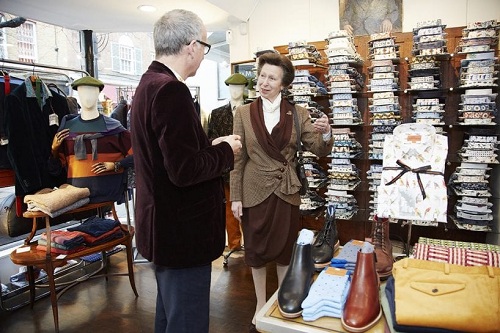 emphasizes on manufacturing its raw materials rather than importing them. This makes it very difficult for UK brands to export their materials to India.
Also, India’s business culture does not support fashion and textile imports. Several brands have had to either relocate their manufacturing to nearby countries or readjust production according to local demands. A case in point is menswear brand Simon Carter which could build a fantastic business in India only after adjusting to local production standards.
To increase exports of luxury goods to India, UK first needs to reduce its imports from the country. UK imports a lot of fashion and textiles from India which are taxed at 13.8 per cent import tariff rates owing to India’s status as the most favored nation.
Explore opportunities with other trade partners
To reduce tax rates, UK needs to explore more trade opportunities with other emerging economies like Pakistan and Bangladesh who benefit from the preferential tariffs on exports to UK.
Currently, UK companies are cautious about investing in India. A trade deal between the two will encourage more UK companies to do business with India. These companies can explore the Indian embroidery sector to boost its exports.
Experts feel, India-UK deal should focus on protecting British jobs and employment besides enhancing mutual trade between the two countries. It should also support British businesses and encourage them to step up their investments in India.
Walmart retains top spot in India Retail Rankings for 2020
Walmart Inc has retained its top spot in market research organization Euromonitor International’s India Retail Rankings for 2020 with rival Amazon taking the second place.
As per Live Mint, the rankings of the Tata group dropped from five in 2019 to number six, while the Aditya Birla Group dropped from number seven in 2019 to number eight in the same period Euromonitor’s annual rankings were based on the value of goods sold by Indian retailers across segments such as grocery, apparel, lifestyle, and pharmacy from January to December 2020. Overall retail sales declined in 2020, the market research organization said, without revealing numbers.
Reliance Group, which runs Reliance Retail with presence across online and offline retailing in multiple categories ranked third, the same as a year ago. Avenue Supermarts, which runs the DMart chain of supermarkets, improved its rankings moving up to the fifth spot from sixth in the previous year. Paytm parent One97 Communications Ltd moved up one spot from its earlier rank.
The India-specific list is part of the ‘Top 100 Retailers in Asia 2021; rankings released by Euromonitor International. The report covered the overall retail industry in the Asia-Pacific including markets such as Indonesia, China, Thailand, Taiwan, Vietnam, and India.
India reported a decline in overall retail sales in 2020 after registering double-digit value growth over the last few years, the research organization said.
After a year of decline in 2020, retailing in India is set to report an “immediate strong rebound" to growth in current value terms in 2021, said analysts at Euromonitor. This, they said, will be driven by expansion led by large format stores and investments in e-commerce.
British retailers see huge sales boost post lockdown: BRC
As per the British Retailer Consortium (BRC), British retailers reported a big boost in sales in May, after lockdown measures ended the month before and a relaxation of COVID restrictions on hospitality drew more shoppers into town centres.
Total sales among the consortium’s members, who include supermarkets and high-street chains, increased by 10 per cent last month than in May two years ago.
This was the biggest increase in sales compared with 2019 for any month since the start of the pandemic.
Compared with May 2020, when most non-food retailers were shut due to lockdown restrictions, total sales were 28.4 per cent higher.
Sales of clothes, shoes and furniture benefited from shoppers being able to view goods in person since non-essential retailers were allowed to reopen in April after months of closure, said BRC.
Relaxed restrictions on socializing also encouraged shoppers to buy new summer clothes.
Payment processor Barclaycard, which sees almost half of credit and debit card transactions, said consumer spending was 7.6 per cent higher than in May two years ago.
However, spending at restaurants declined by 54 per cent while that at pubsand bars declined by 19 per cent from two years. Foreign travel remains highly restricted. Spending with airlines was 74 per cent lower than in May 2019, little better than April.
Government permits Tirupur exporters to resume operations
The government has permitted export units in Tirupur to resume operations in compliance with COVID-19 guidelines. The government has allowed export units and their vendors to operate with 10 per cent workforce. Welcoming the decision, Raja Shanmugham, President, Tirupur Exporters Association said, exporters in the city have decided to focus on completing pending orders and preparing samples. Other industries in the garment cluster, like knitting and dying also plan to simultaneously resume operations within a few days
On the other hand, Tirupur Exporters and Manufacturers’ Association (Teama) has advised members against resuming business for a week. GR Senthilvel, Secretary said, the association can make alternative transport arrangements even if exports are delayed for a week. Meanwhile, the South India Spinners Association (Sispa) has urged chief minister MK Stalin to allow them operate spinning mills with workers staying on mill premises.











