


FW
Q1 revenues of Ted Baker fall by 20%
The first quarter revenues of upmarket British retailer Ted Baker fell by 20 per cent due to coronavirus restrictions during the period.
The British company also reported an underlying pretax loss of €59.2 million ($83.53 million) for the year ended January 30, compared to a €4.8 million profit the previous year. Its average pretax loss amounted to €76 million, according to Eikon data from Refinitiv.
Ted Baker's annual sales also plummeted 44 per cent to €352 million partly due to its focus on formal and occasion wear. E-commerce sales rose by 22 per cent to €144.9 million pounds.
The London-listed company, under new boss Osborne, has been working on winning back customers and investor trust after a string of setbacks that followed the departure of previous chief executive and founder Ray Kelvin following misconduct allegations. He has denied the accusations.
Founder by Ray Kelvin, who named the company after a self-styled alter ego, Ted Baker established its first store in March 1988 in Glasgow, and opened further stores in Manchester, and Nottingham. In 1990 Ted Baker opened a store in Covent Gardenand Kelvin bought the company outright from part-owners Goldberg and Sons. A new range, Ted Baker Woman, was launched in 1995.
Billion Dollar Collection enables ten startups make positive climate impact
The Billion Dollar Collection, launched by non-profit H&M Foundation, presents ten sustainable start-ups with the potential to make a positive impact on the fashion industry.
Showcased as garments in a virtual fashion collection, each start-up features a price tag reflecting the estimated support each company believes they need to achieve scale for their disruptive innovations.
It has been estimated that billions of dollars are needed to change the fashion industry and the virtual Billion Dollar Collection highlights ten previous Global Change Award winners with potential to create multi-dimensional value with the industry’s support.
The ten innovations selected for the edgy collection of evolved casual classics come from across the globe and encompass elements from materials to traceability. The collection – characterized by asymmetrical details, trinket-like finishing, non-standard colours and bold volumes – has been exclusively created in computer-generated imagery by Mackevision, part of Accenture Interactive. Using the latest CGI character design technology, Mackevision created a unique digital avatar from scratch, which brings the textures and intricate details of the collection to life through movement. If the fashion industry and its communities, embrace these 10 disruptive innovations, this collection could become reality and be produced at scale.
Vietnam textile and garment firms launch new capacity enhancement plans
Textile and garment enterprises across Vietnam have launched new projects to enhance capacity, complete supply chains, and explore new FTAs. According to Vietnam Plus, one such company is Century Synthetic Fiber Corporation, which recently approved a $120 million investment plan for the Unitex synthetic fibre factory project in Tay Ninh province. Investment will increase the plant’s capacity to 120,000 ton per year making Century Fiber Corporation he second-largest fibre producer in the country.
The Viet Tien Garment Corporation also plans to invest 300 billion VND ($13 million) in several projects this year, including 100 billion VND ($4.3 million) in the establishment of the Viet Thai Tech Co. Ltd, with a view to securing raw material resources.
Similarly, the Thanh Cong Textile Garment Investment Trading Joint Stock Company (TCM) will start construction of its Vinh Long 2 factory this year. With an investment capital of $10 million the factory can manufacture 9 million items a year.
Vietnam has become the third-largest textile exporter in the world, after China and India. Its textile-garments industry enjoys advantages from a number of FTAs that are a driving force for them to continue investing in expanding production. These new investment projects, especially in the production of raw materials such as yarn and fabric, will resolve shortages of input materials in the industry.
RSA report accuses fast fashion retailers not meeting commitments on sustainable fashion
A report from the Royal Society of Arts (RSA) has accused fast fashion retailers of not meeting their commitments on sustainable fashion. The report analyzes more than 10,000 items from UK's leading fast fashion websites, including Asos, Boohoo, Misguided and PrettyLittleThing. As per Fashion Network, it reveals nearly half of the clothes listed in these e-stores are made entirely from new petrochemicals. The RSA report states, nearly 80 per cent of the items listed on the fashion websites surveyed contained new plastics. It cites the example of PrettyLittleThings with around 89 per cent of its clothing made from new plastics.
Around 49 per cent of clothes on these websites are made entirely from new petrochemicals, the report says further. This figure increases to 60 per cent in case of fast fashion brands.
Further, the RSA report reveals, though some fast fashion giants have focused their recent marketing on sustainability and circularity, with more recycled materials, in reality, these represent only a tiny fraction of the fibers used to manufacture clothes. On average, only 3 per cent of the clothes listed were made with recycled materials. And for some brands that falls as low as 1 per cent. Across all websites analyzed, certain garments containing both recycled and virgin plastics were still found to feature the term "recycled" in the product title, the report adds. It concludes by saying, only 49 per cent of fast fashion shoppers admit buying clothes made from synthetic materials.
SIMA urges for withdrawal of import duty on cotton
Ashwin Chandran, Chairman, The Southern India Mills’ Association (SIMA), has appealed to Union finance minister Nirmala Sitharaman to withdraw the 5 per cent BCD and 5 per cent AIDC with applicable cess on cotton imports to avoid severe detrimental impact on the high value-added segments, help garments and home textile exporters maintain competitiveness.
Chandran said, the cotton segment provides jobs to around 12 lakh people. It has taken over a decade for the Indian textile industry to build market share in this segment and the imposition of import duty will erode competitiveness of exporters in countries such as Bangladesh, Sri Lanka, Pakistan and Vietnam. Though the import duty might fetch the government an additional Rs 360 crores revenue per annum but the government will lose annual GST revenues of around Rs 1,800 crore. The import duty will also not benefit Indian cotton farmers owing to negligible volume of imports and the non-availability of speciality cottons in India at the moment, Chandran added.
John Lewis to expand online operations next year
UK-based department store chain John Lewis plans to expand its online fashion offerings over the next year. The company aims to add over 100 fashion brands on its website. It will add 40 new brands in the next six months including plus-size lingerie brand Oola and menswear labels Raging Bull and Spoke London. It will also offer other affordable brands, including Crew Clothing, Dorina Lingerie, Lands’ End, Knowledge Cotton Apparel, Dedicated and Lefrik.
The retailer has also strengthened its online offering under its digital-first transformation strategy. Last year, the retailer had announced plans to ‘transform’ 60 per cent to 70 per cent of its business online by 2025.
Last year, it announced plans to add 30 third party brands to its platform by the end of this year.The brands would include clothing brands FatFace and Calvin Klein, sportswear brand Fila and accessory brand Longchamp.
Burberry to slash carbon emissions by 2030
To achieve its goal of becoming Climate Positive by 2040, luxury fashion house Burberry aims to slash carbon emissions across its extended supply chain by 46 per cent by 2030. The company also aims to become net-zero by 2040 by advancing low-carbon future solutions and investing in nature-based projects to protect natural ecosystems through its Burberry Regeneration Fund that supports several verified carbon offsetting and insetting projects. For its inaugural insetting project, the fashion house has joined forces with PUR Project to execute a regenerative agricultural program with wool producers in Australia.
Burberry plans to invest in programs that capture carbon from the atmosphere, climate resilience projects to help frontline communities adapt to the effects of climate change and advocate for a change in the fashion industry. As a part of its support of Fashion Avengers, it is helping Forest for Change, a UN Global Goals installation developed by British designer Es Devlin for the 2021 London Design Biennale, which involves transforming the courtyard of Somerset House in London into a forest with visitors having the opportunity to explore the 17 UN Global Goals until June 27.
Furthermore, it has launched a program with the Apparel Impact Institute to help Italian manufacturers make the fashion industry in Italy sustainable and in September of last year, it was the first luxury brand to issue a sustainability bond.
COVID-19 impacts textile machinery shipments across the world
 Experiencing a complete knockout due to the pandemic outbreak, the global textile machinery market slumped 30 per cent in 2020. Shipments of all types of textile machines including spinning, texturing, weaving, knitting and finishing machines declined during the year. As the 43rd annual International Textile Machinery Manufacturers Shipment Statistics released by the International Textile Manufacturers Federation (ITMF) show, shipments of finishing machines declined 17 per cent on average. In this segment, the largest decline was witnessed in the shipment of knitting machines which declined by 53 per cent while the shipment of draw-texturing spindles declined 30 per cent and those of shuttle-less looms shrunk by 16 per cent. An exception in this segment were large circular machines whose shipments increased by 13 per cent.
Short-staple spindles shipments decline 3.3 million
In the spinning machinery category, shipment of short-staple spindles fell by about 3.3 million units in 2020 to 3.63 million units. Around 88 per cent of short-staple spindles were shipped to Asia and Oceania, which however saw a 50 per cent decline in shipments from the last year. The six largest importers of short-staple spindles during the year were: China, India, Turkey, Pakistan, Bangladesh, and Uzbekistan.
China emerges largest importer of open-end rotors
The second largest shipment in spinning machinery during the year was witnessed in open-end rotors with around 422,000 units. This was however, 151,000 units less than those exported in 2019. Around 83 per cent of rotors were exported to Asia and Oceania with Turkey, and Pakistan emerging world’s second and third largest importers of open-end rotors after China. Import by these two countries increased 290 per cent and 42 per cent respectively.
Driven by a fall in deliveries to Asia and Oceania, global shipment of long-staple (wool) spindles decreased 46 per cent from about 40,000 in 2019 to nearly 22,000 in 2020. Around 80 per cent of these shipments were directed to Iran, Turkey, and Italy.
Asia, Oceania dominate texturing machines import
In the texturing machinery category, shipments of single heater draw-texturing spindles decreased 36 per cent from nearly 26,000 units in 2019 to 16,000 in 2020. Asia and Oceania were the largest importers of spindles with a share of 89 per cent. In Asia, China Japan and Taipei were the largest importers with imports worth 63 per cent, 9 per cent, and 8 per cent of global deliveries, respectively. Shipment of double heater draw-texturing spindles decreased 30 per cent to 325,000. China was the largest importer of these spindles with around 78 per cent imports.
Asia imports 98 per cent weaving machinery
In 2020, worldwide shipments of shuttle-less looms decreased 16 per cent to 112,000 units. In this, the shipments of ‘air-jet’ and ‘rapier and projectile’ declined -3 per cent to 29’337 units and -15 per cent to 21’542, respectively. The delivery of water-jet looms decreased by -21 per cent to 61’483. The main importers of shuttle-less looms in 2020 were Asia and Oceania with 94 per cent of imports.
In total, Asia and Oceania imported world’s 98 per cent, 93 per cent of water-jet, air-jet and rapier/projectile looms responsible. China was the largest importer of all three types of machines with 74 per cent of total global imports.
Shipment of circular knitting machines grow, flat machines decline
Against the rest of machines, global shipments of large circular knitting machines grew by +12 per cent to 30’231 units in 2020. Asia and Oceania were the largest importers accounting for 81 per cent of wordwide shipments. In Asia, China was the largest importers accounting for 62 per cent imports. The country imported 15,980 units of knitting machines during the year, followed by India with 2,433 units and Turkey 2,381 units, respectively.
In 2020, global shipments of electronic flat knitting machines decreased -52 per cent to around 66,000 units. The main importers were Asia and Oceania with China’s imports amounting to 38 per cent of global shipments. However, compared to 69,000 last year, China’s imports dropped to 17, 000 units this year.
Fabric continuous segment grows
The fabric continuous segment witnessed 75 per cent growth in shipments of Sanforizers and Compacters in 2020. The shipment of stenters is expected to have reached 1,731 units in 2020 while those of jigger dyeing/bean dyeing machines in the ‘fabric discontinuous’ segment declined 8.5 per cent to 529 units. Global shipments of ‘Air Jet Dyeing’ and ‘Overflow Dyeing ’machines also declined 18 per cent and -21 per cent respectively.
ITMA ASIA+CITME 2020 surpasses expectations with over 1,200 exhibitors
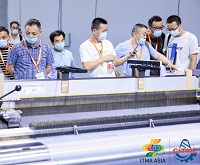 The better than expected exhibitor response to ITMA Asia + CITME 2020 is an indication of the robust growth of Chinese textile machinery market. The exhibition which took off today and will last till June 16, 2021, is showcasing 1,237 exhibitors from 20 countries and regions. Ernesto Maurer, President, CEMATEX, says, the response to the combined exhibition seals its reputation as the leading-edge business platform in Asia for textile machinery. The exhibition is being organized by Beijing Textile Machinery International Exhibition and co-organized by ITMA Service.
China’s dominance continues with major exhibitors
China continues to be largest exhibitor at ITMA ASIA+CITME 2020 with over 1,000 exhibitors showcasing their products on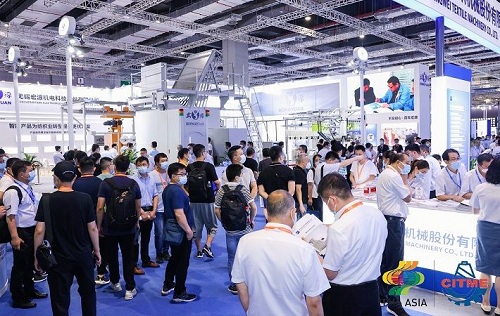 56,000 sq. mt. net exhibit space. Major Chinese exhibitors include: CHTC, Fong’s, Ningbo Cixing, Wuxi Hongyuan, Hangzhou Honghua, Jiangsu Yingyou Textile Machinery and Changshu Textile Machinery.
After China, CEMATEX territories dominate with 170 exhibitors. Together they exhibitors occupy 13 per cent of the net exhibition space totaling over 9,200 sq. mt. From these territories, Germany and Italy are the two of the largest exhibitors with 57 exhibitors from Germany and 63 from Italy. The German pavilion spans 3,700 sq. mt. while the Italian pavilion spreads over 2,500 sq.mt. The third largest group of exhibitors at ITMA ASIA+CITME 2020 is from Japan, occupying over 2,200 sq. mt. net space. Japanese participation is coordinated by the Japan Textile Machinery Association, a strategic partner of the combined show.
ITMA ASIA + CITME 2020 features leading names from Europe and Japan like: Automatex Solution, Fil Control, Groz-Beckert, Itema, Jeanologia, Karl Mayer, MS Printing Solutions, Meech International, Muratec, Oerlikon Barmag, Picanol, Reggiani Macchine, Rieter, Santoni, Saurer, Savio, Shima Seiki, Staubli, Toyota, Tsudakoma, Vandewiele and Vanwyk. The products on display include: spinning machines which make up 25 per cent of all products displayed followed by finishing machines with 24 per cent of product category. Knitting machinery at 13 per cent, weaving machines 12 per cent and printing machines 8 per cent form the remaining exhibits at the trade show.
Universities in Research and Innovation Zone
A major attraction is the Research and Innovation zone which features 11 local universities and colleges. Some universities being featured are: Donghua University, Jiangnan University, Qingdao University, Tianjin University of Technology, Wuhan Textile University, Xi'an University of Technology, Zhejiang University of Technology and other institutions.
The extensive promotions carried out by the organizers via online and offline channels are expected to boost visitor turnout. Over 400 local textile and garment manufacturers’ associations and their members are expected to visit the exhibition which is also being supported by over 100 media partners from around the world.
Building long term business relations
In view of the ongoing pandemic, organizers are implementing safety measures to ensure participants’ safety. They are conducing mandatory temperature checks and strict badge verification with facial recognition at hall entry. Visitors are also being advised to observe social distancing. The exhibition is instrumental in uplifting the textile industry in China and Asia. It allows companies to reconnect face-to-face with clients and build long term business relationships, adds Wang Shutian, Honorary President, China Textile Machinery Association (CTMA).
Stoll, KM.ON collaborate to launch new design software for knitted fabrics
Karl Mayer’s two brands Stoll and KM.ON have collaborated to launch new design software known as Create for flat knitted fabrics.
Stoll is a pioneer in flat knitting technology and brings unique process knowledge to its business, which results in perfect flat knitting solutions and excellent customer support. KM.ON is an agile specialist in innovative software products, as well as digital solutions and services for the textile industry.
The software Create focuses on an accelerated design-to-market workflow. Its key features include possibility to create shapes and to implement customized adaptations or size adjustments just as easily. An important part of the tool is a shape library with numerous presets.
For the creation of knitted fabrics, an integrated yarn library offers a first selection of standard and fancy yarns, that will be continuously updated. Additionally, there is the possibility to create your own yarns.
The software includes an extensive library with different stitch constructions that can be used for the design. Additionally, the customer can create own digital stitch constructions with simultaneous stitch simulation and to run technical design checks.
The virtual fabric views have a true-to-life imitation of the stitches and their distortions, which makes it possible to conceptualize and plan a collection with fewer or no physical sample pieces. With a colorway generator, different color combinations can also be tried out.
The design program can be used as a basis for the knitting program. Once a technician has completed various checks, the knitting process can then be started immediately.











