


FW
Grasim Nagda plant to be world’s first 'Viscose Zero Liquid Discharge Unit'
Grasim’s Nagda Plant will be the first viscose unit in the world to achieve Zero Liquid Discharge.
The plant has adopted state of the art novel technologies such as membrane processes, which could clean up and recycle the wastewater. Dilip Gaur, Managing Director, Grasim Industries informs, the plant also meets water needs of the entire city, railway and irrigation needs of the farmers thru the 30 billion litres storage capacity built by Grasim. K Suresh, Unit Head, SFD Nagda adds, Grasim Nagda plant makes large range of dope-dyed fibers which are dyed at the time of manufacturing of fiber itself. This technology consumes 50 per cent less chemicals and does not require any additional water for coloring, reducing the water requirement in the post fiber stage for coloring to zero.
The newly developed fibre Livaeco by Birla Cellulose uses 40 per cent less water compared to the European Best Available Technology limits. The plant will be completed in 2021.
Singed by the pandemic, textile machinery sector sees a sharp drop

Like other sectors, the textile machinery segment has also suffered from COVID-19-induced downturn. Released by the International Textile Manufacturers Federation (ITMF), the 43rd annual International Textile Machinery Shipment Statistics (ITMSSS) show, global shipments of all types of textile machines including spinning, texturing, weaving, knitting and finishing machines decreased in 2020 as compared to 2019. Exports of spindles, both long-staple and short-staple fell 46 per and 48 per cent respectively while those of draw texturing spindles dropped by 30 per cent.
Flat knitting machines witness larger decline
In the knitting machinery segment, the flat knitting machines segment witnessed a larger decline of 52 per cent to 66,000 units in 2020. Of these, 77 per cent were exported to Asia & Oceania. China once again dominated with a 38 per cent share. However, imports by China dropped 74 per cent to 17,000 units in 2020. Global shipments of large circular knitting machines dropped 12 per cent to 30,231 units in 2020. Of this, around 81 per cent were shipped to Asia and Oceania. China was the largest importer with 62 per cent followed by India and Turkey with 2,433 and 2,381 units respectively.
Asia, Oceania emerge largest importers of spindles
Exports of short-staple spindles declined 3.3 million units in 2020. In all, 3.63 million units of short-staple spindles were exported with 88 per cent shipped to Asia and Oceania. China, India, Turkey, Pakistan, Bangladesh and Uzbekistan were the six main export destinations though shipments to Europe also increased 76 per cent. Deliveries of open-end rotors declined 27 per cent to 422,000 units during 2020. Shipments to Asia and Oceania declined 32 per cent to 351,000 units. China was the largest importer though its imports declined 30 per cent from 2019; followed by Turkey and Pakistan whose imports increased 290 per cent and 42 per cent respectively.
Driven by a 75 per cent decline in investments and falling exports to Asia and Oceania, exports of long-staple (wool) spindles declined 46 per cent to nearly 22,000 units in 2020. Almost 80 per cent of total deliveries were shipped to Iran, Turkey, and Italy.
Decline in single heater draw-texturing spindles dominates
In the texturing machinery segment, shipments of single heater draw-texturing spindles decreased 36 per cent to 16,000 units in 2020. Asia and Oceania were the largest importers with 89 per cent shipments directed to these two regions. The main importers included China, Japan and Taipei with 63 per cent, 9 per cent and 8 per cent share in global exports respectively. Shipments of double heater draw-texturing spindles declined 30 per cent to 325,000 spindles with 90 per cent shipped to Asia. China remained the largest importer with 78 per cent of global shipments.
China imports largest amount of global weaving machinery
Global exports of shutterless looms declined 16 per cent to 112,000 units in 2020. Shipments of ‘airjet’ and ‘rapier and projectile’ looms contracted 3 per cent to 29,337 units, and 15 per cent to 21,542 units respectively.
Waterjet looms witnessed a 21 per cent decline in deliveries. In total, 61,483 units of waterjet looms were exported during 2020, with Asia and Oceania constituting 94 per cent. Together, these two regions received 98 percent, 93 per cent and 81 per cent of global waterjet, airjet, and rapier/projectile looms. One major importer of all three types of looms was China with 74 per cent of total imports.
Deliveries of sanforizers / compacters in the fabrics continuous segment grew 75 per cent in 2020 while exports of jigger dyeing/beam dyeing dropped 8.5 per cent to 529 units. In this category, exports of ‘airjet dyeing’ and ‘overflow dyeing’ respectively decreased 18 per cent and 21 per cent respectively.
Trend-free styles can ensure a sustainable future for the fashion industry
 For years, fashion experts have been advocating clothing rental as an ideal solution for the rising fashion pollution. Popularized by rental platforms including Rent the Runway, Rebag and GlamCorner, the ‘sharing economy’ has become the latest trend in fashion. Brands including Levi’s and Lululemon have launched their own rental services spurring growth in online rental fashion that is expected to reach $1.96 billion by 2023.
Packaging, transportation add emissions
However, a new study published in Environmental Research Letter opines, renting clothes could prove to be more harmful than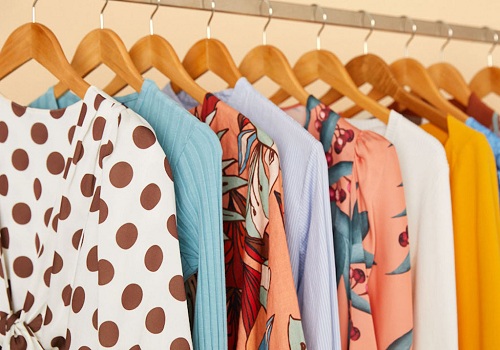 throwing them away. It states, renting clothes mandates the goods to be transported from warehouses to renters. This involves a lot of packaging from cardboard boxes to plastic bags.
Renting is an energy intensive process as clothes need to be dry cleaned and sanitized after each use. Warehouse maintenance also leads to an increase in carbon emissions. Companies can reduce this by using bikes and electric vehicles instead of fossil fuel-based cars for transporting goods. Another way to curb emissions is to lease clothes to people living nearby instead of consumers located far away.
Reducing consumption with durable purchases
Fashion companies can also make renting more eco-friendly by doubling the use of their clothes. This would help them to reach approximately the same level of global warming potential (GWP) as the Reuse scenario.
One of the best approaches to tackle fashion pollution is to buy less but better quality of clothes. Encouraging consumers to buy less and keep their clothes longer can help the sector ensure a more sustainable future.
L Catterton to buy 60% stake in Etro
Private equity firm backed by French luxury giant LVMH, L Catterton has agreed to buy a 60 per cent stake in Italian fashion company Etro. The deal values Etro at about €500 million.
Etro said in a statement that L Catterton was taking a majority stake in the company, while the Etro family would retain a significant minority interest. Gerolamo Etro, who founded the company in 1968, will be the chairman and the deal is set to be closed by the end of the year.
In April, the Milan-based luxury brand considered an expression of interest from L Catterton, an investment firm born out of a partnership among Catterton, LVMH and its billionaire owner Bernard Arnault.
One of the sources said Etro’s four children would stay on as shareholders with a 40 per cent stake and would remain owners of Etro’s real estate property and directly operated stores.
L Catterton recently bought German sandal maker Birkenstock. LVMH, which owns a string of Italian labels including jeweller Bulgari, also boosted its stake in Italian luxury shoemaker Tod’s to 10 per cent in April
Kemin Textile Auxiliaries Opens Garmon Studio in China
Global ingredient manufacturer Kemin Industries has announced that Garmon Chemicals (Garmon), Kemin’s textile auxiliaries business unit and the chemical solutions brand for the denim and fashion industry, is opening its fashion laboratory, Garmon Studio, in Jiangmen, Guangdong Province, China.
Garmon Studio China is the first applications laboratory that Kemin Textile Auxiliaries has opened outside of San Marino – a milestone with important implications for the company.
The biggest benefit of opening its first international Garmon Studio in China is that Kemin Textile Auxiliaries is now closer to local customers – both denim mills and laundries – broadening the opportunity for its technicians to work with a group of companies that previously faced language barriers or travel restrictions. With Garmon Studio China, Kemin Textile Auxiliaries will also be able to create local collections that better match domestic styles and trends.
The second major advantage of the new Garmon Studio’s location is that it provides Kemin Textile Auxiliaries technicians in China the ability to sharpen their skills, giving them the equipment, space and time needed to perform tests and experiments to get the most out of Garmon’s products. The fashion laboratory will be equipped with the most modern equipment available, including Kemin Textile Auxiliaries’ revolutionary Smart Foam system that reduces water consumption by up to 80 percent.
IEG to host online meet for hosiery supply chain on July 22
On July 22, the hosiery, sportswear, lingerie, seamless and 3D footwear supply chain will meet online to analyze the sector’s global development trends and opportunities, marking the start of the countdown to FIMAST 2021, Italian Exhibition Group’s much-awaited B2B trade show event scheduled to take place, with physical attendance, at the Brixia Forum in Brescia from October 19- 22, 2021.
FIMAST is setting off on a new development route for the trade show which will focus on responsible and sustainable innovation along the supply chain it represents. The first steps in this direction include activating a top-level partnership with the ecohub C.L.A.S.S. (Creativity Lifestyle and Sustainable Synergy) and constant dialogue with the sector’s global players.
The event will consist of two online talks, coordinated and moderated by C.L.A.S.S. The first, entitled “Smart-tech visions to meet responsible innovation values”, will be held in English and start at 11 am, with focus on responsible and sustainable innovation for hosiery, lingerie, sportswear and fashion supply chains. The Lonati Group, Karl Mayer Group, Fulgar and ROICA™ by Asahi Kasei are the companies that will intervene by putting their international experience into play to explore the supply chain’s different technological aspects, from cutting-edge textile machinery to new generation fibres.
The second talk, “Conversations about sustainability journeys”, scheduled for 4 pm, will highlight sustainability among the current and future challenges for companies operating in the fashion and accessory industry in order to meet the needs of an increasingly more global market and consumers who are increasingly aware and responsible. Two international brands of reference, both inspirational companies in the sector, will share their views: Calzedonia Group and Wolford.
Furthermore, professional profiled visitors visiting the event and companies on the FIMAS CONNECT platform will have the chance to meet and do business.
14th Maredamare planned from July 24-26, 2021
The fourteenth edition of Maredamare will be held at the Fortezza da Basso up in Florence from July 24 to 26.
The event will have 50 per cent foreign exhibitors. MAREDAMARE has recently been recognized as an international fair and a European and world reference in the beachwear sector. It has activated important collaborations for the promotion. First of all with ICE (Agency for the promotion abroad and the internationalization of Italian companies) which will promote the fair and the italians exhibitors to international buyers; with ICEX (a public corporation at the national level whose mission involves promoting the internationalisation of Spanish companies and attracting foreign investment to Spain).
ICEX, together with the Economic and Commercial Office of Spain in Milan, will coordinate the participation of a selection of Spanish companies and will be present in fair with a dedicated area. Also ABIT (Brazilian Textile and Apparel Industry Association) encouraged the presence in Fair of a selection of Brazilian companies. This is proof of the interest and trust given to the event which, even during the pandemic, was a point of reference for the sector through the virtual fair Hub and through Maredamare Academy.
Prosperity Index of China’s textile and apparel market declines 0.16 percentage points in June
Data by China Commercial Circulation Association of Textile and Apparel (CATA) shows, national textile and apparel specialized market manager’s prosperity index declined 0.16 percentage points to 50.00 in June 2021 as compared to 50.16 in May. As per China Textiles, the merchant’s prosperity index for specialized markets declined by 0.46 percentage poihts to 49.71, from 50.17 in May. In June, the specialized market of textile and apparel was basically stable, and the prosperity index fluctuated slightly.
The overall prosperity indexes of managers and merchants in the national textile and apparel specialized market dropped compared with May. The manager’s prosperity index dropped by 0.16 percentage points while the the merchant’s prosperity index dropped by 0.46 percentage points
In June, 67.74 per cent of the total market operations were flat, and 67.74 per cent of the market logistics shipments were flat, both exceeding 50 per cent. The total market operations index and logistics shipment index were generally stable, and the off-season continues in the textile and apparel specialized market.
The data shows that for managers, the next manager’s prosperity index declined by 0.32 percentage points to 50.65 from 50.97 in May; the next business environment index declined by 0.32 percentage points to 49.68. As for merchants, the next merchant’s prosperity index declined by 0.14 percentage points to 50.48 in May; the next operating environment index declined by 0.07 percentage points to 50.48 from 50.55
British high-street brands lack transparency in operations: Report
A new report by Fashion Revolution says, majority of British high street brands are not transparent about their operations. Around 99 per cent brands hide the actual number of workers getting living wage in their supply chains. Only 17 per cent of the big global brands disclose their carbon footprint, says the report. They also fail to disclose the origin of raw materials.
The report ranks swimwear company Speedo as the most transparent British brand with a score of 53 per cent; followed by Sainsbury’s and Marks & Spencer with a score of 48 per cent. The report surveyed 250 brands including smaller companies such as the Bristol-based Yes Friends.
However, introduction of a legislation holdings brands accountable for their environmental impact has helped raise transparency over the years, says the report. Around 32 per cent brands have introduced new recycled schemes in their companies. They have also launched new eco-friendly ranges.
Malaysian fashion players urge government to allow operations under NRP II
Fashion organizations in Malaysia have appealed to the government to allow them to operate under Phase Two of the National Recovery Plan (NRP), reports The Star. Datuk Seri Tan Thian Poh, President, Federation of Malaysian Fashion said, his federation is concerned with the current situation as it might only be allowed to operate when the country reaches Phase Three of the NRP. This will lead to a loss of RM163 million per day for retailers and manufacturers, he added.
To avoid the collapse of industry, it is important to be allowed to operate under Phase II, he added. Since the first movement control order in 2020, about 15 per cent of fashion, textile and apparel businesses had ceased operations while 30 per cent were on the verge of closing down due to a lack of cash flow and future uncertainties, he added.
The situation will deteriorate further and will be beyond salvaging as some members are facing litigation and risk losing their overseas customers, Tan warned.











